Senses
There is a particular kind of self-preservation that looks like surrender. Not the dramatic collapse, but the quiet, methodical process of shutting off sensation so that pain, and with it the possibility of further damage, cannot reach you. Most people recognise this mechanism from the inside. Arlo Parks has made a song about it.
"Senses," a quietly devastating centrepiece of Parks' third album "Ambiguous Desire," confronts what happens when emotional self-protection hardens into something more chronic. Featuring Sampha, a British soul artist and pianist whose own work has always orbited grief and vulnerability, the song functions, in Parks' own framing, like a therapy session between two friends.[1] It is also something more architecturally complicated than that: a portrait of a person who has spent years making art about feeling while slowly losing access to her own interior life.
A Meeting of Wounded Voices
Sampha Sisay is one of contemporary music's most precise chroniclers of loss. His debut album "Process" (2017) was shaped by his mother's death, and his ability to hold grief with a kind of suspended, luminous attention made him one of the most admired voices of his generation.[2] When Parks and Sampha share space on "Senses," the combination is not merely a feature arrangement. It is a duet of mutual recognition between two artists who have both learned, as their primary artistic method, the act of turning inward and reporting back.[3]
The track is structured so that Parks voices one perspective and Sampha offers another, and the space between their two positions generates the song's emotional tension. The best duets are not about harmony but about productive disagreement, about two people who care about each other arriving at the same territory from different directions. "Senses" is built on that kind of creative friction.[1]
The Weight of Self-Erasure
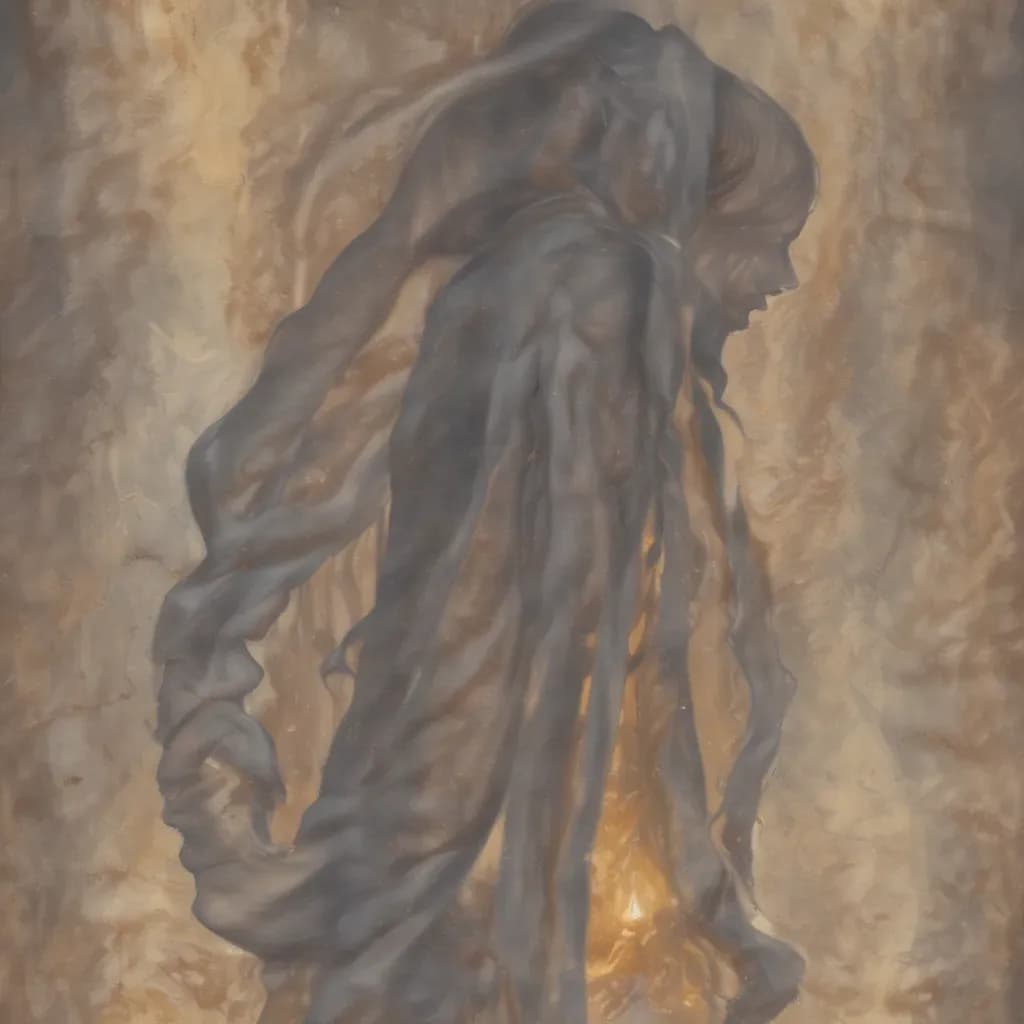
At its core, "Senses" is a meditation on emotional numbing as a survival strategy. Parks' contribution to the song acknowledges something she has practised without fully recognising: the habit of dulling her own perceptions, of placing a layer of gauze between herself and the full impact of experience. She describes hiding, not in obvious ways, but in the things she loves most, specifically art and intimate relationships. The song does not position this as failure. It understands it as a reasonable, if costly, response to repeated wounding.[4][5]
What makes this admission so precise is its framing not as drama but as discovery. Parks is not describing something she knew and chose to continue. She is tracing a pattern that, in retrospect, explains a great deal. She articulates, with some difficulty, that she has been unable to locate love for herself even while being capable of immense love for others. That asymmetry, generous outward and hollow inward, is one of the more common forms of emotional injury, and one of the least discussed.
The biographical context matters here. By the time "Ambiguous Desire" was written, Parks had lived through several years of significant upheaval: an exhausting tour cycle, a relocation from London to Los Angeles, and the end of a high-profile romantic relationship.[6] She was also, simultaneously, one of the most recognised young artists in British music, her Mercury Prize win for "Collapsed in Sunbeams" having placed her in a category of one.[7] The pressure of visibility, combined with personal dislocation, created precisely the conditions in which self-numbing becomes a kind of professional hazard.
The Counter-Voice: Pain as Clarity
Sampha's contribution to "Senses" does not simply respond to Parks' account of numbing. It reframes the problem entirely. His verse advances a position that is almost paradoxical on first hearing: that clarity is located not away from pain but directly within it. To move toward what hurts, rather than away from it, is presented as the only route to something real.[3]
This is not comfort in the conventional sense. It is the harder kind, the kind that refuses to offer an exit and instead points toward the thing you are avoiding. The emotions Parks describes, the gauze, the hiding, the deficit of self-love, are not resolved by further numbing. They require exactly the opposite.
The musical texture of the track reinforces this tension. The production on "Ambiguous Desire" draws from club music and late-night electronics, but "Senses" leans toward something more intimate, more suspended.[8] The percussion drives the track forward in a way that refuses to release into easy catharsis. The listener is held in the uncomfortable space between two perspectives that are simultaneously irreconcilable and mutually necessary.[9]
Nocturnal Healing in Context
"Ambiguous Desire" is, at its broadest, an album about the specific kind of self-discovery available in nocturnal spaces. Parks has described spending 2024 and 2025 immersed in clubs across Los Angeles, Greenpoint in Brooklyn, and London, finding in those environments a freedom to be whoever she needed to be on a given night.[1][6] The album's production reflects this, with breakbeat rhythms, modular synthesizers, and an architecture drawn from the history of dance music as a site of communal healing.
Within this framework, "Senses" occupies a particular position. It is the album's interior, the track that pauses the movement outward and turns inward instead. If the rest of the record documents the euphoric relief of losing yourself in a crowd, "Senses" asks what you find when you come home. It is the 3 a.m. reckoning after the dancefloor, the moment when the music stops and something quieter and more demanding takes its place.
Parks has consistently been interested in the relationship between surfaces and depths, between the energy that keeps you moving and the stillness that eventually catches up.[10] "Senses" is where that stillness arrives on "Ambiguous Desire."
Why This Song Resonates
Emotional numbing is not unique to Arlo Parks. It is, if anything, a defining feature of a generation that came of age during compounding crises, including a pandemic that made physical isolation the responsible choice and emotional isolation an almost inevitable side effect.[11] The pattern Parks describes, using creativity as a way of processing feeling from a safe distance rather than experiencing it directly, is recognisable to many people who have turned to art as a buffer between themselves and their own lives.
What Parks adds to this shared experience is specificity. She is a queer Black British woman who has written, from the beginning of her career, about the experience of finding belonging in art when the world offered limited other options.[7] On "Senses," that history is present. The hiding she describes is not random. It follows the shape of what was available, what felt safe, what would not require her to remain visible in the most vulnerable possible way.
Sampha, as her interlocutor, brings his own history. His work has always addressed the question of how grief transforms a person and what, if anything, remains unchanged.[2] That he is here, offering a counter-perspective that is neither dismissive nor simple, says something about what kind of conversation "Senses" is reaching for. This is not a song about being told to feel better. It is a song about two people sitting with the actual complexity of the problem.
Other Ways of Hearing It
"Senses" is legible as an account of one specific relationship, one in which Parks made herself smaller and less permeable in order to survive. But it also resists being sealed into that reading. The habits she describes have the quality of something practised over many years, across multiple contexts.
There is also a reading in which the numbing Parks describes is not primarily relational but creative, a dissociation between the feelings that generate her art and the feelings she is permitted to actually experience. This would make "Senses" a song about the specific cost of being a confessional songwriter, the paradox of writing with great emotional precision about experiences you may not fully let yourself feel. It would explain why the hiding takes place specifically in art.
And then there is the question of what the song intends to perform, beyond describing its central problem. It is possible that the articulation of numbing is itself a small act of un-numbing, that naming the gauze is the beginning of removing it. If that is the case, then "Senses" is not only a description of a condition but the opening gesture of a response to it.
Arlo Parks has always known how to make you feel the thing she is describing, even when, perhaps especially when, the thing she is describing is the difficulty of feeling. "Senses" is one of her most accomplished exercises in this kind of paradox. It takes two voices, two positions, and a space of genuine uncertainty, and holds them without collapsing into resolution.
What Parks and Sampha make together is something that asks more of the listener than comfort and offers something more useful in return: the precise language for an experience that most people have lived and fewer have been able to name. That is, finally, what the best songs do. Not answer questions, but make you realise you have been carrying them.
References
- On 'Ambiguous Desire', Arlo Parks Turns Fleeting Nocturnal Moments Into Lasting Songs — Parks describes 'Senses' as a therapy session with Sampha; discusses nocturnal spaces and the album's themes of healing
- Ambiguous Desire — Track listing, release date, credits and overview of the album including Sampha feature
- Arlo Parks: Ambiguous Desire Review — Critical reception noting Parks' incisive lyricism and the Sampha collaboration
- Arlo Parks on New Album 'Ambiguous Desire' — Interview on personal vulnerability, creative process, and what the album excavates emotionally
- Arlo Parks: Senses Featuring Sampha Lyrics — Lyrics page confirming the song's themes of self-numbing, hiding in art, and self-love deficit
- Arlo Parks: Nocturnal Awakening — Parks on her move to LA, personal upheaval, and how nocturnal club culture shaped the album
- Arlo Parks — Biographical information including Mercury Prize win, queer identity, background and discography
- Arlo Parks: Ambiguous Desire Album Review — Review addressing the album's production, club influences, and intimate tracks
- Album Review: Arlo Parks - Ambiguous Desire — Review discussing the emotional arc of the album and the therapy-session quality of 'Senses'
- Arlo Parks: Ambiguous Desire — Critical analysis of Parks' interest in surfaces vs depths across her discography
- She May Feel 'Ambiguous Desire' But Arlo Parks's Ambition Is Single-Minded — Review contextualising the album within a post-pandemic landscape of emotional recovery