Shadows
There is a particular kind of loneliness that comes not from being alone but from feeling that your worst parts would cost you love if anyone saw them. "Shadows," the eighth track on Sabrina Carpenter's 2016 album EVOLution, addresses that loneliness directly and gently. It does not promise to fix the darkness. It simply says: I see it, I have it too, and none of it changes anything.
A Song That Almost Wasn't
EVOLution was released on October 14, 2016, when Carpenter was 17 years old and still starring as Maya Hart on Disney Channel's Girl Meets World.[1] The album marked a conscious departure from her folk-pop debut, Eyes Wide Open (2015), pushing into dance-pop, electropop, and R&B-tinged production.[2] Carpenter co-wrote nine of the album's ten tracks, a significant step toward claiming creative ownership while still operating within the Hollywood Records machine.[2]
"Shadows" was co-written by Carpenter with Steph Jones and producer Rob Persaud, and it holds a notable place in the album's creation story: it was the last song added to the tracklist and nearly did not make the final cut at all.[3] That survival matters, because Carpenter has described the song as a deliberate message to her fans, a promise to stand with them in their insecurities rather than above them.[3]
The song also contrasts markedly with EVOLution's dominant sonic palette. Where much of the album leans on club-ready production and electronic textures, "Shadows" is more piano-driven and intimate, sitting closer to a confessional letter than a radio bid.[4]
Solidarity, Not Sympathy
The central conceit of "Shadows" is elegantly simple: the darkest, most hidden parts of a person are not a reason for distance but a source of connection. The song's narrator addresses someone carrying their own shadows, whether doubts, flaws, fears, or shame, and rather than offering reassurance through idealization, offers something more honest: the singer carries her own shadows, and they look familiar.[5]
This is an important distinction. Plenty of pop songs traffic in the language of unconditional acceptance, but "Shadows" arrives at acceptance through solidarity rather than elevation. It does not place the singer above the listener, offering grace from on high. It levels the ground between them.
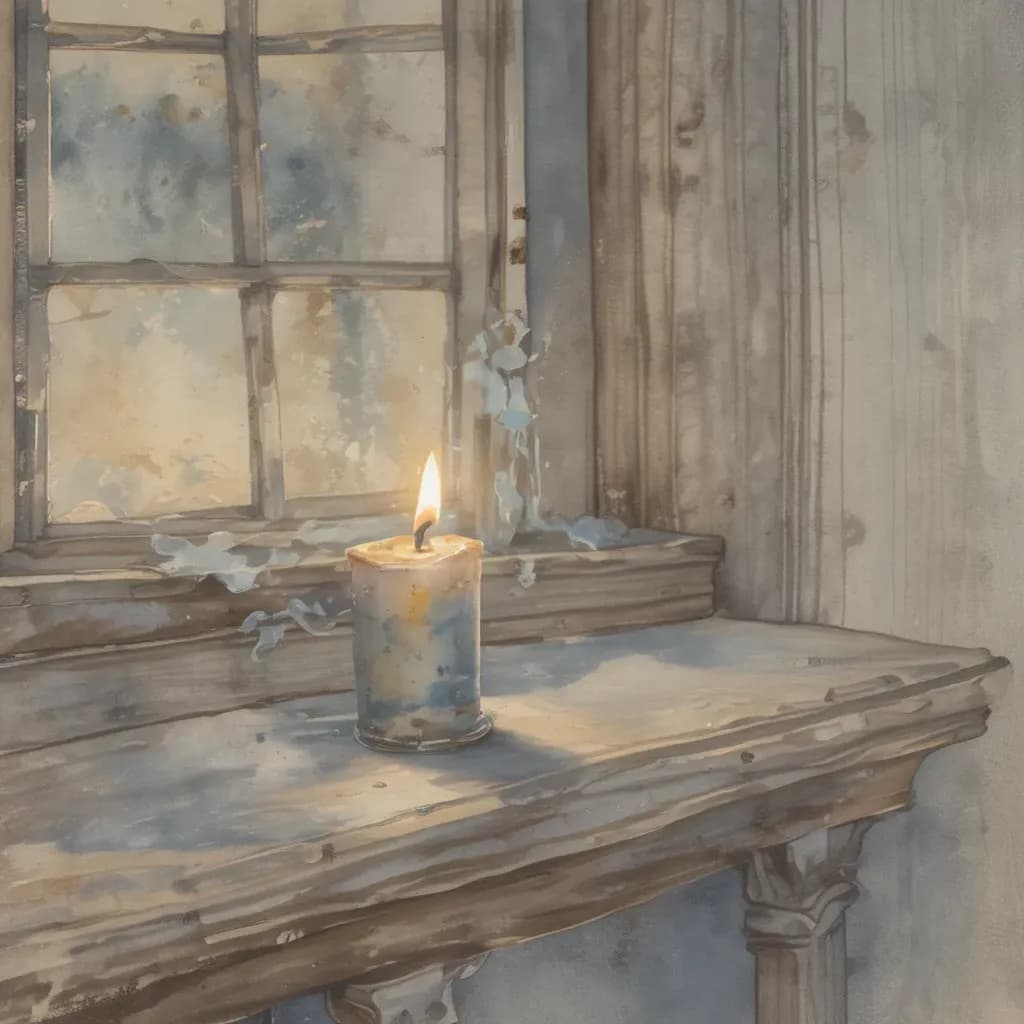
The metaphor of light and shadow runs throughout. Shadows, in this framing, are not malignant forces to be driven out but natural features of any lit existence. Light creates shadow; to be visible at all is to cast one. The imagery implies that anyone who has lived, felt, or loved has shadows, and their presence is proof of depth rather than defect.
There is also a temporal dimension to the song's comfort. Shadows lengthen and shorten; they change with the angle of the light. The song does not claim the darkness will vanish permanently, only that it can be navigated, and that it need not be navigated alone.
An Open Letter to Anyone Who Feels Unseen
Carpenter has been explicit about who she wrote "Shadows" for. Her stated intent was to make her fans feel less alone in their insecurities, to communicate that she is right there with them rather than somewhere above the fray.[3] This directional intention matters: the song operates simultaneously as a love song to a single person and as an open letter to an audience. Neither reading cancels the other.
For the fanbase Carpenter had cultivated through Girl Meets World, there was particular resonance. Her character Maya Hart was a teenager from an unstable home who carried visible pain even while projecting bravado.[1] Carpenter addressing shadows directly from her own voice, not through a character, created a circuit between her public persona and her private one. She was, in effect, saying: the fictional girl who struggles on screen and I are not so different.
This directness was relatively unusual for the Disney-Hollywood Records pop ecosystem of 2016, where teen artists were typically packaged within aspirational positivity. Acknowledging shared darkness and making it the structural center of a song rather than the problem the chorus resolves represented a meaningful departure from the formula.[6]
How Listeners Received It
Critical response to "Shadows" was mixed, though EVOLution as a whole received generally positive notices. AllMusic gave the album 3.5 out of 5 stars, describing it as a mix of heartfelt acoustic balladry, R&B-influenced pop, and dance-oriented anthems.[4] One independent review dismissed "Shadows" as forgettable, a ballad that fails to leave an impact, the clearest dissenting note in an otherwise warm reception.[6]
Fan reception told a different story. One close listener ranked it among the album's standout tracks, citing a lyrical depth the other songs lack and praising Carpenter's vocal performance as genuinely beautiful.[7] The song consistently surfaces in fan conversations about what made the EVOLution era meaningful, often cited alongside "Thumbs" and "On Purpose" as evidence of Carpenter's early range.
The Artist She Was Becoming
"Shadows" arrived near the end of a transitional album, nearly cut, clearly personal. In retrospect, it reads as an early preview of the Sabrina Carpenter who would eventually write with the confessional precision and emotional maturity of her later work. The transparency she demonstrates here, the willingness to center her own imperfection rather than project invulnerability, became the signature of her most celebrated recordings.
The song also captures something that much of popular music resists: the idea that being known fully, shadows and all, is what real connection actually requires. Not the polished version of yourself, not the carefully managed image, but the whole complicated thing. For a 17-year-old pop star still working under the Disney banner, writing that clearly and that honestly was its own kind of courage.
What the Song Leaves Behind
"Shadows" will never be Sabrina Carpenter's most streamed song or her most celebrated. It was nearly not included on the album that housed it. But in its quiet insistence that shared darkness is a form of intimacy rather than a liability, it laid groundwork for the artist Carpenter would become.
The song's staying power comes not from production ambition or lyrical cleverness but from the sincerity of its central offer. A person carrying her own shadows turns to look at yours, and finds them familiar. That recognition, simply offered and deeply meant, is what the song is made of.
References
- Sabrina Carpenter - Wikipedia — Biographical context: birth, Girl Meets World role as Maya Hart, career arc
- EVOLution - Wikipedia — Album release date, chart performance, tracklist, co-writing credits, genre shift from debut
- Shadows - Sabrina Carpenter Wiki (Fandom) — Song-specific details: last added to tracklist, nearly cut, Carpenter's stated dedication to fans
- EVOLution - AllMusic Review — Critical reception: 3.5/5 stars, describes mix of balladry, R&B-pop, and dance-pop
- Shadows Lyrics Meaning - Lyreka — Fan lyrical analysis focusing on shared imperfection and the solidarity the chorus offers
- Album Review: Sabrina Carpenter - EVOLution (Bleached Is The Word) — Dissenting critical view: dismisses Shadows as a forgettable ballad, useful for contrast
- Sabrina Carpenter: EVOLution Song Ranking - Anna's Music World — Fan-critic ranking: calls Shadows one of the album's best for lyrical depth and vocal beauty