Smoke and Fire
Fire is one of the oldest metaphors in the human emotional vocabulary. It destroys but also illuminates. It consumes but leaves something behind: ash, warmth, and the faint smell of smoke that clings to everything long after the flames go out. When sixteen-year-old Sabrina Carpenter reached for this imagery in early 2016, she was drawing on a primal vocabulary to describe something very specific and very new to her: the aftermath of a first heartbreak.
"Smoke and Fire," released on February 19, 2016, as a standalone single on Hollywood Records, arrived at a genuine turning point in Carpenter's young career.[1] She had just released her debut folk-pop album Eyes Wide Open the previous year, and the music industry, along with her own evolving instincts, was pushing her to define what came next. The answer she found was a synth-pop breakup anthem that felt more urgent, more physically present, and more alive than anything she had recorded before.
Before the Evolution
At the time of the song's release, Carpenter was sixteen years old, navigating a double life that would feel familiar to any young performer of her era. On one side was her starring role as Maya Hart on Disney Channel's Girl Meets World, the show that had made her a household name among tweens and teenagers across North America.[2] On the other was her music career, still new enough to be malleable but old enough to carry real expectations.
Her debut album, Eyes Wide Open (2015), had peaked at number 43 on the Billboard 200, a solid start for a teenager on a major label but artistically squarely within the acoustic folk-pop mold expected of young female performers emerging from that entertainment ecosystem.[2] After the album's release, she had returned to writing, accumulating fragments of experience and emotion in her phone, capturing images and feelings as she encountered them in everyday life.[3]
The emotional raw material for "Smoke and Fire" is widely believed to connect to Carpenter's relationship with fellow Disney Channel actor Bradley Steven Perry, which appears to have begun in 2014 and ended sometime around the summer of 2015.[4] Carpenter never confirmed this explicitly, characterizing the inspiration more broadly as the experience of going through a first relationship's end -- something she described as producing very "fiery images" in her thinking.[3]
The song was co-written with producer Ido Zmishlany, who also handled production duties.[1] In many ways it represents a collaboration between an experienced pop professional's sonic instincts and a teenager's raw emotional directness. The result is a polished record with a genuinely felt undercurrent.
The Architecture of a Burning House
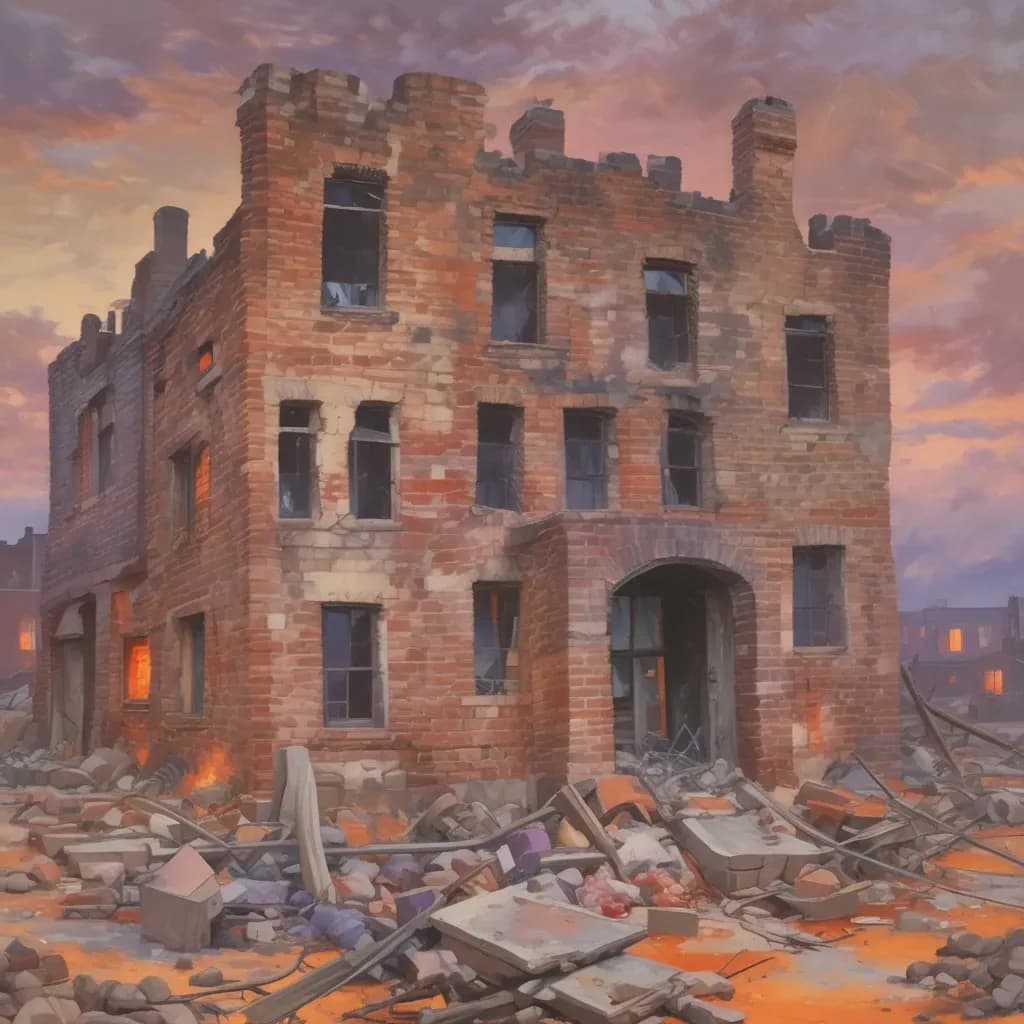
The organizing metaphor of "Smoke and Fire" is architectural: the relationship is imagined as a building that has caught fire, and the narrator is someone standing before the wreckage. What gives the song its real emotional weight, though, is its insistence on the aftermath rather than the event. The narrator does not simply describe the flames. She describes what it is like to be surrounded by smoke when the fire has already done its damage, to breathe air that still carries traces of the burn, to look at the space where something once stood.
Within this imagery, the lyrics set up a central tension: the instinct to charge back into danger, to be the person who runs toward fire rather than away from it, against the harder-won recognition that sometimes the only wise response to a burning building is to step back and breathe. This is where the song lives emotionally, in the gap between what the narrator wants to do (rescue something, be heroic, fight) and what she knows she needs to do (let it go, inhale clean air, move through the smoke).
That tension is not resolved neatly. The song does not offer catharsis so much as recognition, which is part of what makes it feel honest rather than manipulative.
The Social Noise Around a Private Grief
One of the less-remarked dimensions of the song is its attention to the social environment surrounding a breakup. The lyrics gesture toward the experience of having a private grief filtered through outside voices: rumors, whispered judgments, and the low-level noise of public opinion arriving at exactly the moment when clarity would be most valuable.
This is a recognizable experience for anyone, but it carries particular weight for a sixteen-year-old semi-public figure whose personal life was already attracting fan speculation. The song does not dramatize this social pressure in a loud or confrontational way. Instead it appears as part of the general atmosphere, something that makes it harder to see clearly and breathe freely. If the fire is the relationship, the smoke is, at least in part, everything else: the commentary, the rumors, the world's tendency to insert itself into private grief.
Feeling Versus Knowing
There is also a strand of psychological honesty running through the song that earns it more credit than its radio-pop surface might initially suggest. The narrator clearly knows, on some level, what is real: the relationship is over, the building is ash, the right move is to stop running toward the heat. But the song refuses to collapse the distance between knowing something and feeling it. The desire to be a firefighter is real even when it is futile. The grief is real even when its object no longer deserves it.
This refusal to wrap the emotional experience in a tidy resolution is, in retrospect, a mark of real craft. Carpenter was not writing a revenge anthem or a liberation ballad. She was writing about the specific, unglamorous experience of living inside the aftermath of something painful: the days of clearing ash, trying to remember how to breathe normally, sorting through what the smoke has left behind.
A Well-Worn Path, Walked With Purpose
The tradition of Disney Channel pop acts using their music to signal artistic growth and independence is long and well-documented. Miley Cyrus, Selena Gomez, and Demi Lovato all navigated some version of the same transition, and in each case music served as the primary vehicle for communicating something beyond what appeared on screen.[2] "Smoke and Fire" fits clearly into this tradition. Its synth-pop production, emotionally direct lyrical content, and mature subject matter all signaled Carpenter's intentions: she was not going to remain in the acoustic folk lane of her debut.
What makes Carpenter's version of this trajectory particularly interesting is what happened next. The song was actually cut from her second album, EVOLution (October 2016), because Carpenter came to feel it represented where she had been, not where she was headed.[3] In that sense, "Smoke and Fire" ended up being a transitional document in the most literal possible way: a record of a moment that was already past by the time the world heard it.
The single debuted with approximately 6,000 downloads in its first week, making it Carpenter's strongest opening sales numbers for a single to that point.[5] It did not chart on the Billboard Hot 100. Wide commercial crossover success remained nearly a decade away.
Singular and Universal
Carpenter herself worked to frame the song as something other than a personal diary entry. She spoke publicly about hoping it would feel uplifting and relatable to anyone going through heartbreak, describing her aim as taking the raw material of a difficult personal experience and turning it into something that could serve other people.[3]
The music video, directed by Jessie Hill and released on March 11, 2016, leans into this universality.[1] It follows a ballerina who slips away from rehearsal to meet a boy, weaving between scenes of remembered romance and present-day emotional reality. Rather than depicting anything literal about fire or destruction, the video constructs an emotional atmosphere: a tender wistfulness giving way to the quiet weight of something lost. Carpenter described the concept as showing viewers they are not alone, which is the same thing the song itself is trying to do.[3]
A purely biographical reading of the song, tethered to a specific relationship or a specific person, ultimately diminishes it. The best breakup songs are not really about the people who inspired them. They are about the experience itself. "Smoke and Fire" earns its place in Carpenter's catalog by being more interested in the feeling of aftermath than in the story of what caused it.
After the Fire
Heard a decade after its release, and in the wake of Carpenter's arrival as a genuine global pop star with Short n' Sweet and "Espresso," "Smoke and Fire" functions as a kind of archaeological artifact: a record of who an artist was before she became who she is.[2] The craft is already evident. The emotional intelligence is already present. What the song captures is a specific moment in a developmental arc, a teenager who had just experienced something difficult and had found a way to turn that difficulty into something other people could hold and recognize.
The fire metaphor has not aged poorly. Love that ends badly does feel like combustion. The heat is real, the damage is real, and the smoke lingers in ways that take longer to clear than the event itself. What makes "Smoke and Fire" more than a competent exercise in genre convention is the way it inhabits the aftermath: not the dramatic moment of loss, but the quieter, more persistent experience of what comes after. The ash, the changed air, the slow work of breathing normally again.
That is not an experience specific to Disney Channel performers or to 2016. It is specific to being young, having felt something real, and discovering that the feeling does not end when the relationship does.
References
- Smoke and Fire (Sabrina Carpenter song) - Wikipedia — Release date, songwriting credits, production details, and music video information
- Sabrina Carpenter - Wikipedia — Career overview, Disney Channel context, and trajectory from teen pop to mainstream stardom
- Sabrina Carpenter Premieres 'Smoke and Fire' Music Video - AceShowbiz — Interview quotes from Carpenter on the writing process, personal inspiration, music video concept, and why the song was cut from EVOLution
- A Look At Sabrina Carpenter's Star-Studded Relationship History - The List — Background on Carpenter's relationship with Bradley Steven Perry believed to have inspired the song
- Sabrina Carpenter's 'Smoke and Fire' Debuted With 6K First Week Sales - Headline Planet — First-week sales data and chart performance context