South Seconds
Most love songs stake their claim at the extremes: the first rush of connection, the devastation of loss, the triumph of reunion. "South Seconds" occupies quieter, rarer territory. It catches the trembling moment just before any of that, the instant when someone has gotten close enough to see inside you, and the question of whether that is going to be okay has not yet been answered.
It is a song about being seen before you have had time to decide whether you want to be seen. That is, in Arlo Parks' hands, one of the most frightening and most necessary things that can happen to a person.
A Quiet Heart in a Nocturnal Album
Arlo Parks arrived at her third studio album, Ambiguous Desire (released April 3, 2026, via Transgressive Records), at a genuine crossroads, one that was both personal and artistic.[1] After the Mercury Prize triumph for Collapsed in Sunbeams in 2021 and the critically admired My Soft Machine in 2023, Parks had relocated from London to Los Angeles, ended a significant relationship, and spent two years absorbing the culture of underground club spaces across LA, New York, and London.[2]
The album that emerged from those experiences is the most sonically adventurous thing Parks has released. Drawing on Burial's subterranean dread, LCD Soundsystem's euphoric functionalism, The Streets' confessional immediacy, and Theo Parrish's deep-house warmth, Ambiguous Desire grafts Parks' signature poetic voice onto breakbeat rhythms and nocturnal electronics.[1] Most of it was recorded with producer Baird (known for work with Brockhampton and Kevin Abstract) in his downtown Los Angeles loft, where songs came together quickly, shaped by the atmosphere of the spaces Parks had been inhabiting.[3]
Parks has described the album's creation as a necessary catharsis, rooted in healing, falling in love, and working toward self-acceptance.[4] She has spoken of spending two years in nocturnal spaces, of the particular freedom that arrives in the dark, of being able to be whoever you want to be for the duration of a night.[2]
"South Seconds" sits at the album's precise midpoint, seventh in a twelve-track sequence, and it functions as the record's lung, its moment of stillness. Where the surrounding tracks pulse with the energy of the dancefloor, this song draws inward. It is not the club but the walk home afterward, when the music has fallen silent and you are left with what you actually feel.
The Geography of Intimacy
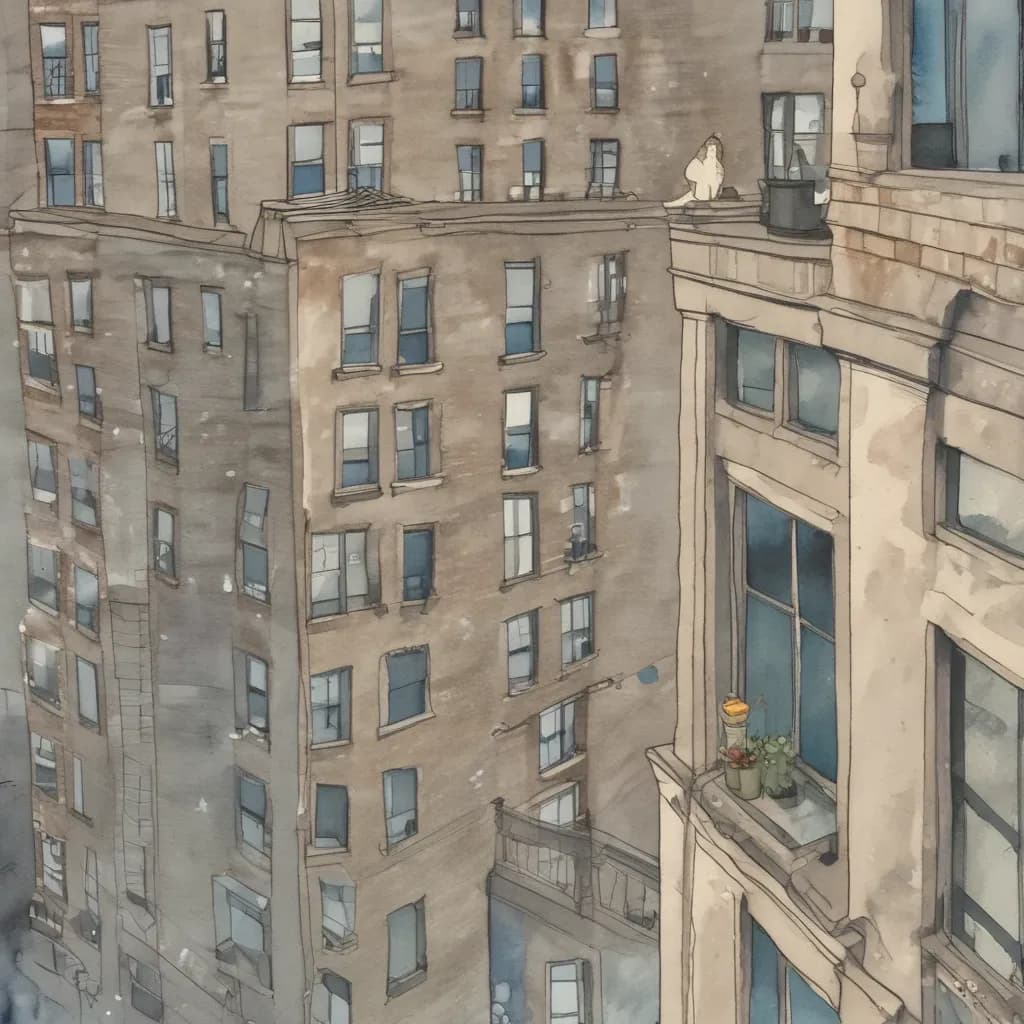
The song's title carries a specific weight that becomes more meaningful the longer you sit with it. Parks has noted that "South Seconds" refers to South 2nd Street in the Williamsburg neighborhood of Brooklyn, the former address of her current partner.[3] That detail is characteristic of how Parks writes. She has always worked by finding the exact coordinate of a feeling, the precise location rather than the abstract principle.
A street address in Brooklyn becomes, in her hands, shorthand for a whole person, for a life she is only now beginning to enter, for the specific geography of a relationship at its most uncertain. This is not metaphor in the traditional sense. There is no distance between the vehicle and the tenor. The street is the feeling.
That insistence on specificity is also a form of courage. It is easier, and certainly safer, to write about love as something that happens in an unlocated emotional space, somewhere beyond biography. Parks refuses that safety. The address she names is real; the fear she describes is real; the person she is singing about is real and alive and almost certainly knows this song exists.
Fear and Trust
The song's emotional architecture is built on an unusual pairing: confession and trust delivered simultaneously. Parks describes the experience of being penetrated by another person's seeing, of feeling someone get past the defenses she carries, and she does something that many songwriters would not: she refuses to decide in advance whether that is a good or bad thing.[5] The sensation is both wounding and welcome, and she holds both qualities at once rather than collapsing them into a simpler narrative.
What follows is the song's most disarming moment. Parks names her fear directly, without irony or rhetorical softening. Then, immediately, she states that she is trying to trust that both of them want the same things. The word "trying" carries enormous weight. She is not declaring certainty. She is not reassuring her partner (or herself) that everything is fine. She is describing the act of choosing to move toward trust while the fear is fully present and fully named.
This is not the grammar of a pop love song. It is the grammar of an honest conversation.
The production serves this emotional precision exactly. At under two minutes, stripped to near silence, with only the sparsest textures supporting Parks' voice, the song refuses ornamentation. There is nowhere to hide in the sound, which means there is nowhere to hide from what she is saying.[3]
The Voice Note Coda
The song closes with something unexpected: a sampled voice note, an overheard fragment of warmth from what sounds like a close friendship. Reviews have described it as a longing for people gone by, for connections that existed before the moves and the losses and the new beginnings.[5] It arrives without warning, appended to the song's final breath, and it changes the meaning of everything that came before.
Parks has just opened herself to the possibility of new love, confessed her fear, reached toward trust. Then she adds this: a small sound from an older world, from before the album's nocturnal adventures, before the relocation, before the new relationship. It does not contradict what came before. It deepens it.
Opening yourself to a new love does not erase the grief of what you have left behind or who you have grown away from. Sometimes those two feelings, the reaching forward and the longing back, exist in the same moment, in the same two minutes of recorded sound.
It is a compositional choice that could only have come from a writer who understands that emotional honesty requires holding contradictions at once, rather than resolving them prematurely into something tidier and less true.
An Intimate Voice in a Loud World
Parks has spoken openly and consistently about her identity as a queer Black British artist, and about the significance of representing that combination of identities at the level of mainstream success she has reached.[2] "South Seconds" does not announce its queerness. It does not need to. What it offers is the precise texture of her own experience: who she loves, why loving frightens her, where that love is located in the world. The specificity is itself a kind of representation, more durable and more meaningful than any explicit declaration.
The broader history matters here. For much of pop music's history, queer artists were expected, and often required, to generalize their love songs into gender-neutral abstractions, to make the love story legible and comfortable for audiences who did not share their experience. Parks has never shown much interest in that arrangement. Her commitment to naming the actual address, the actual fear, the actual person is a form of refusal: a refusal to translate, to smooth, to apologize for the specifics of her own life.[4]
Paradoxically, this specificity is exactly what makes the song reach beyond its author's experience. Listeners who will never set foot on South 2nd Street can still recognize the quality of standing at a threshold, unsure whether the person in front of you will receive what you are about to offer. The particular and the universal are not opposites. Parks has always understood this.
Ambiguous Desire received generally favorable critical reviews, with a Metacritic score of 76 from twelve critics.[6] "South Seconds" was consistently singled out as the record's emotional still point, the moment where all the nocturnal energy pauses and something more essential comes into view. Paste Magazine described it as the album's heartbreaking halfway point, a characterization that captures both its position in the tracklist and its function.[5]
A Small Song About the Largest Thing
"South Seconds" lasts under two minutes. That is barely enough time to establish a key change, let alone a fully realized emotional statement. Parks uses every second. She takes the oldest subject in popular music and finds a way to render it that feels entirely new, because it is entirely hers.
There is no resolution here. The fear Parks describes does not go away. The song does not end with reassurance, or arrival, or the comfortable click of two people fitting together. It ends with a voice note and whatever feeling that voice note produces in you. That incompleteness is not a failure of nerve. It is the point.
Love does not arrive resolved. It arrives at a threshold, and the only question is whether you are willing to step across. Parks says, quietly, that she is trying. For a song built so entirely around uncertainty, that is a very brave thing to say.
References
- Ambiguous Desire - Wikipedia — Album overview, tracklist, release date, and critical reception aggregates
- Arlo Parks: Ambiguous Desire Interview - NME — Parks on nocturnal spaces, the recording process, and her creative freedom during the album's creation
- Arlo Parks Interview - Billboard — Parks on working with producer Baird, the South Seconds title, and the album's geographic inspirations
- Arlo Parks on Healing and Falling in Love - Rolling Stone — Parks on catharsis, healing, self-acceptance, and the biographical context behind the album
- Ambiguous Desire Review - Paste Magazine — Critical reception including description of South Seconds as the album's heartbreaking halfway point and the voice note coda
- Ambiguous Desire - Metacritic — Aggregated critical scores: 76 out of 100 from twelve critics