Spread Eagle Cross the Block
The Weight of a Phrase
The title alone carries considerable freight. "Spread eagle" is a body position of total exposure, limbs thrown outward, nothing hidden or protected. "Cross the block" anchors that exposure in communal space, the neighborhood, the street, the patch of sidewalk where reputation is built or destroyed in front of witnesses. Put them together and you have something that reads simultaneously as a threat, a confession, and a battle cry. That combination of vulnerability and aggression, staged in public, is what Death Grips built their third track on Exmilitary around.
The phrase also has a specific origin in skateboarding slang, where "spread eagle cross the block" describes a catastrophic bail in which a skater lands doing the splits across an obstacle, slamming their body into the pavement in the most exposed and painful way possible.[1] That usage matters. It isn't simply about dominance or aggression; it's about recklessness willingly absorbed, about taking the worst fall imaginable and making it the title of your anthem.
Brand New and Already Uncompromising
Death Grips officially formed on December 21, 2010, in Sacramento, California, and by April 25, 2011 they had released Exmilitary as a free download through the Grindcore Karaoke netlabel.[2] The speed is part of the story. The band did not spend years workshopping their sound. They arrived already fully formed, and "Spread Eagle Cross the Block" captures that quality of first-burst conviction, music made by people who know exactly what they're doing and have no interest in softening it for easier consumption.
Sacramento provided the psychic landscape. California's state capital is an administered city, built around institutions of governance and policing, economically stratified in ways that coexist uneasily with the broader image of the state as a prosperous coastal haven. In early interviews, the band described the city in terms of surveillance and control, a place where the machinery of authority presses against daily life in ways that breed either complicity or resistance.[3] MC Ride, born Stefan Burnett, had navigated that city through periods of economic precarity, working at local restaurants and bakeries while painting and making music, existing in the difficult space between artistic ambition and material survival.[4]
What the Production Borrows and Why
The track samples Link Wray's "Rumble" from 1958, an instrumental so sonically threatening that radio stations across the country banned it for supposedly inciting juvenile delinquency.[5] The very quality that got it banned, the way it seemed to radiate menace without words, is exactly what Death Grips transplanted into their production. Wray's guitar doesn't describe danger; it embodies it, and the song inherits that quality directly.
The Beastie Boys contributions are equally pointed. Fragments from both "(You Gotta) Fight for Your Right (To Party!)" and "Girls" appear woven through the track.[5] Those records are totems of adolescent male energy, teenage rebellion commodified and sold back to suburban audiences as fun. Death Grips takes that iconography and drags it through something considerably darker. The rebellion encoded in those samples is stripped of its cartoonishness and pressed against something rawer and less reassuring.
Zach Hill's drumming functions as the track's structural spine, providing rhythmic violence in the form of percussion that sounds less composed than unleashed. Andy Morin's electronic textures saturate the mix with a quality that critics reached to describe as sun-scorched, all harsh brightness and dry heat.[6] The combined effect is music that sounds like it was made outdoors in Sacramento's relentless summer, under a sky that offers no shade and no relief.
Ownership, Territory, and the Self
At the center of the song's lyrical logic is a declaration of radical self-ownership. MC Ride asserts possession over his environment, his art, and his body in terms that border on the totemic, returning again and again to the insistence that what he has made and what he occupies belongs entirely to him.[6] This is not the polished boasting of commercial hip-hop. It's something rawer and more desperate, possession claimed not from a position of security but from one of defiance against forces that would dispossess.
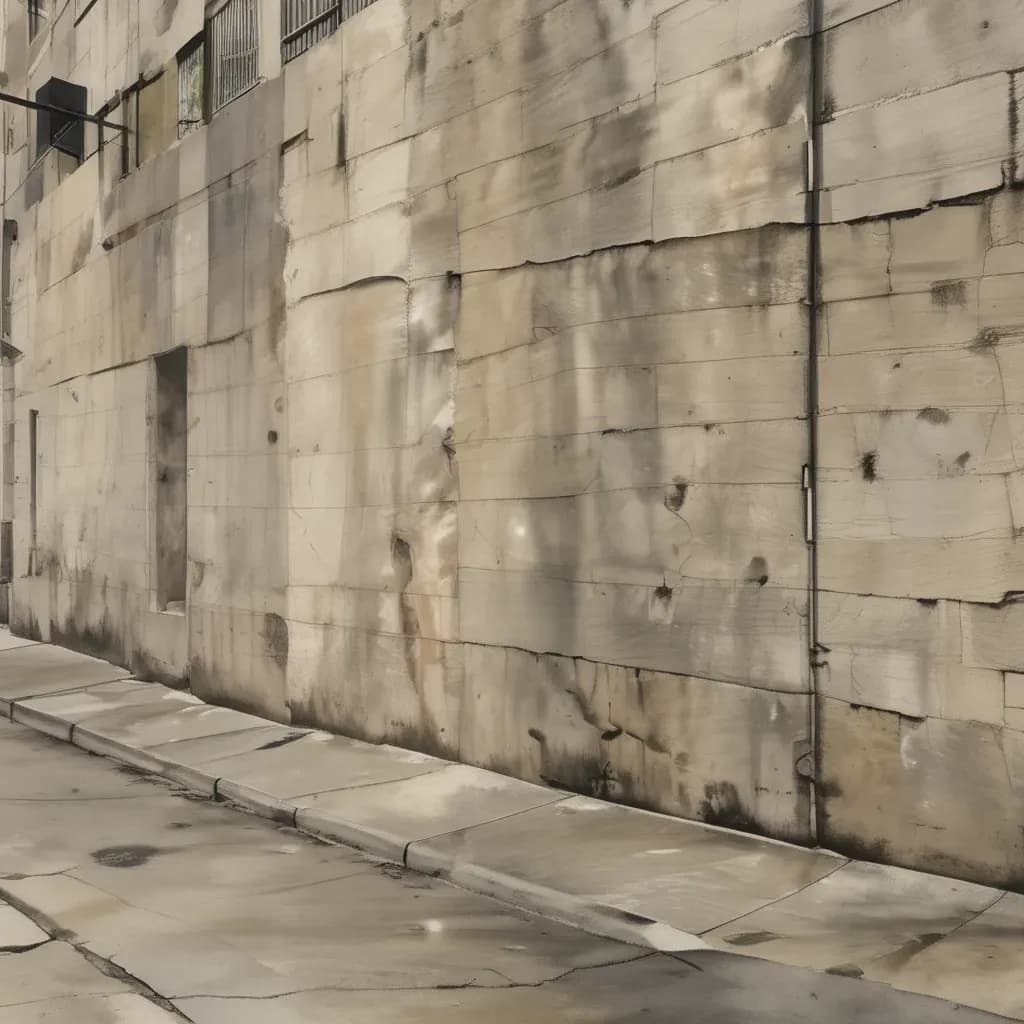
That territorial insistence connects to the song's street-level geography. The block is a real place, a specific unit of social space, and asserting dominance there means something different than abstract declarations of success. It means claiming your ground in a context where that ground is contested and its occupancy is never guaranteed. Spread eagle, wide open, nothing protected, in full view of everyone: there's a kind of bravado in that posture that is also, unmistakably, a kind of madness.
Interwoven with this territorial insistence is a lyrical strand that critics identified as concerned with substance use, a narrator moving through an altered state, acquiring and consuming and narrating that process with the same compulsive intensity that defines the track's delivery.[7] The altered state and the territorial assertion bleed into each other. Both involve a kind of heightened possession of the immediate moment, a refusal to exist anywhere but here, in this body, on this block, right now.
The Voice as Instrument of Exposure
MC Ride does not rap in any conventional sense on this track. His delivery occupies a space between yelling, barking, and something close to speaking in tongues: a non-melodic but highly rhythmic vocalization that dispenses with smoothness in favor of total exposure.[8] The voice itself enacts the title. Spread eagle, nothing protected, every internal pressure forced to the surface.
This is the thread that connects Death Grips to hardcore punk as much as to hip-hop. The Minutemen, Black Flag, and their heirs understood the scream as a form of honesty, a rejection of performed coolness in favor of something unmediated. Ride occupies that tradition while working with the vocabulary of rap, producing a delivery that doesn't sound derivative of either parent genre but genuinely new.[4]
Skate Culture and the Visual Document
The official music video, directed by TerrorEyes and released on May 9, 2011, makes the skateboarding etymology of the title explicit.[9] It features underground skateboarders pulling off gnarly, unglamorous tricks in settings that have nothing to do with polished commercial skate media. No sponsors, no perfect ramps, no staged glory shots. The skaters featured, including Tristen Moss, Vincent Thor Kenney, and Apollo Cuts among others, are doing it on their own terms, in their own spaces, for their own reasons.
The DIY ethos of underground skateboarding and the DIY posture of Death Grips share the same root: a refusal to seek legitimacy from institutions that would rather you didn't exist. A skater bailing spectacularly, spread eagle across a concrete ledge, and MC Ride screaming his territorial assertions into a microphone are two expressions of the same impulse. Complete commitment, regardless of cost, regardless of how it looks from the outside.
Critical Reception and a Lineage Established
When Exmilitary landed in the spring of 2011, critics reached for words that could register its strangeness. Consequence called it "the real deal, the absolute extent of your parents' worst nightmares when you came home with your first rap album," noting that it induced "true, genuine fear."[8] RapReviews awarded it an eight out of ten while warning listeners of potential "headaches and long-term hearing damage," simultaneously praising it as "one of the most refreshing hip-hop albums to come out in 2011."[7]
"Spread Eagle Cross the Block" sits near the front of that record, establishing early what kind of world Exmilitary inhabits: a world where the street and the body are contested terrain, where self-assertion sounds indistinguishable from self-destruction, and where the line between a triumph and a spectacular bail is something you only discover after you've already left the ground.
What the Song Keeps Resisting
It's worth noting what the song refuses to offer. There's no redemption arc, no narrative of triumph earned through discipline, no acknowledgment that the risk pays off in any conventional sense. The recklessness isn't framed as a phase to be grown out of or a mistake to be learned from. It's fully inhabited, and the song does not ask you to approve.
That refusal is part of what keeps it feeling vital more than a decade after its release. Much confrontational music from 2011 has aged into comfortable nostalgia, audible now as a period document rather than as something that still generates genuine unease. "Spread Eagle Cross the Block" has resisted that softening. The Link Wray sample still sounds like something banned for a reason. The voice still sounds unhinged in the most purposeful possible sense. The block the song claims is still contested.[10]
Death Grips did not invent noise rap or experimental hip-hop, but on this track and across Exmilitary they codified a mode that dozens of artists would spend the next decade exploring. The willingness to throw yourself spread eagle across the pavement and make that the central image of your art is as clear a statement of artistic principle as the genre has produced.
References
- spread eagle cross the block – Urban Dictionary — Skateboarding slang origin of the phrase: a catastrophic bail landing spread-eagle across an obstacle
- Exmilitary – Wikipedia — Album overview including release date, label, critical reception
- Relentless Raw Movement: Death Grips Interviewed – The Quietus — July 2011 interview in which the band discusses Sacramento, information overload, and the primal foundations of their sound
- Death Grips – Wikipedia — Band formation, member biographies, career overview
- WhoSampled: Spread Eagle Cross the Block — Full sampling credits including Link Wray's 'Rumble' and Beastie Boys tracks
- Songtell: Death Grips – Spread Eagle Cross the Block — Thematic analysis including territorial ownership and production detail
- Death Grips – Exmilitary – RapReviews — 8/10 review noting substance use themes and warning of hearing damage
- Album Review: Death Grips – Exmilitary – Consequence — B-grade review describing the album as inducing 'true, genuine fear'
- Death Grips: Spread Eagle Cross the Block – Skateism — Coverage of the official music video featuring underground skateboarders
- Lost '11: Death Grips – Exmilitary – Drowned in Sound — 9/10 retrospective review praising the album's lasting power and sonic extremity