Strange Fruit
There are songs that entertain, songs that move, and songs that accuse. "Strange Fruit," recorded by Billie Holiday on April 20, 1939, belongs to none of those categories cleanly. It is something rarer and more difficult: a song that serves as testimony. When Holiday finished the first performance of this song at Cafe Society in Greenwich Village, the audience went completely silent. Then a single person began to applaud. Then the whole room followed.[1] That pause before the applause tells you everything about what this song does to a listener.
A Poem Born from a Photograph
The song began not with music but with a photograph. On August 7, 1930, a white mob in Marion, Indiana, broke into a jail, dragged out two young Black men named Thomas Shipp and Abner Smith, and lynched them publicly in the town square. A local photographer named Lawrence Beitler captured the scene. His image shows the two bodies hanging from a tree, surrounded by a large, smiling white crowd. Beitler sold thousands of copies of the photograph as a postcard.[2]
Abel Meeropol, a Jewish American schoolteacher from the Bronx who taught English at DeWitt Clinton High School, encountered that photograph sometime later. He later said it "haunted me for days."[3] His response was to write a poem he called "Bitter Fruit," which he published in January 1937 in The New York Teacher, a union publication, and later in the Marxist journal The New Masses. He set it to music himself and published it under the pseudonym "Lewis Allan" -- the names of his two stillborn children. His wife Anne Shaffer first sang it publicly at social gatherings.
The song reached Holiday through Barney Josephson, the founder of Cafe Society, New York City's first racially integrated nightclub.[1] Josephson had built Cafe Society in Greenwich Village as a deliberate experiment in interracial entertainment and wanted Holiday to perform the song there. She agreed, though she was genuinely frightened by what she was taking on.
The Recording Columbia Refused to Make
Holiday was under contract with Columbia Records when she decided to record the song. The label refused outright. Even John Hammond, her producer at Columbia and a noted champion of Black musicians, declined to move forward with it. The label feared retaliation from Southern retailers and from affiliates of the CBS radio network, which co-owned Columbia.[4]
Holiday turned to Milt Gabler, owner of Commodore Records, an independent label. When she sang it for him a cappella, he reportedly wept and immediately agreed to record it. Columbia granted Holiday a one-session release from her exclusive contract specifically so she could make this recording.[4] The April 1939 session at World Broadcasting Studio produced not only "Strange Fruit" but also "Fine and Mellow," which appeared as the B-side of the original 78 RPM single (Commodore 526).
The recording sold one million copies, making it the best-selling record of Holiday's entire career.[2] Southern radio stations largely refused to play it. The song existed in a strange parallel reality: acclaimed in New York, suppressed in much of the country.
The Weight of the Metaphor
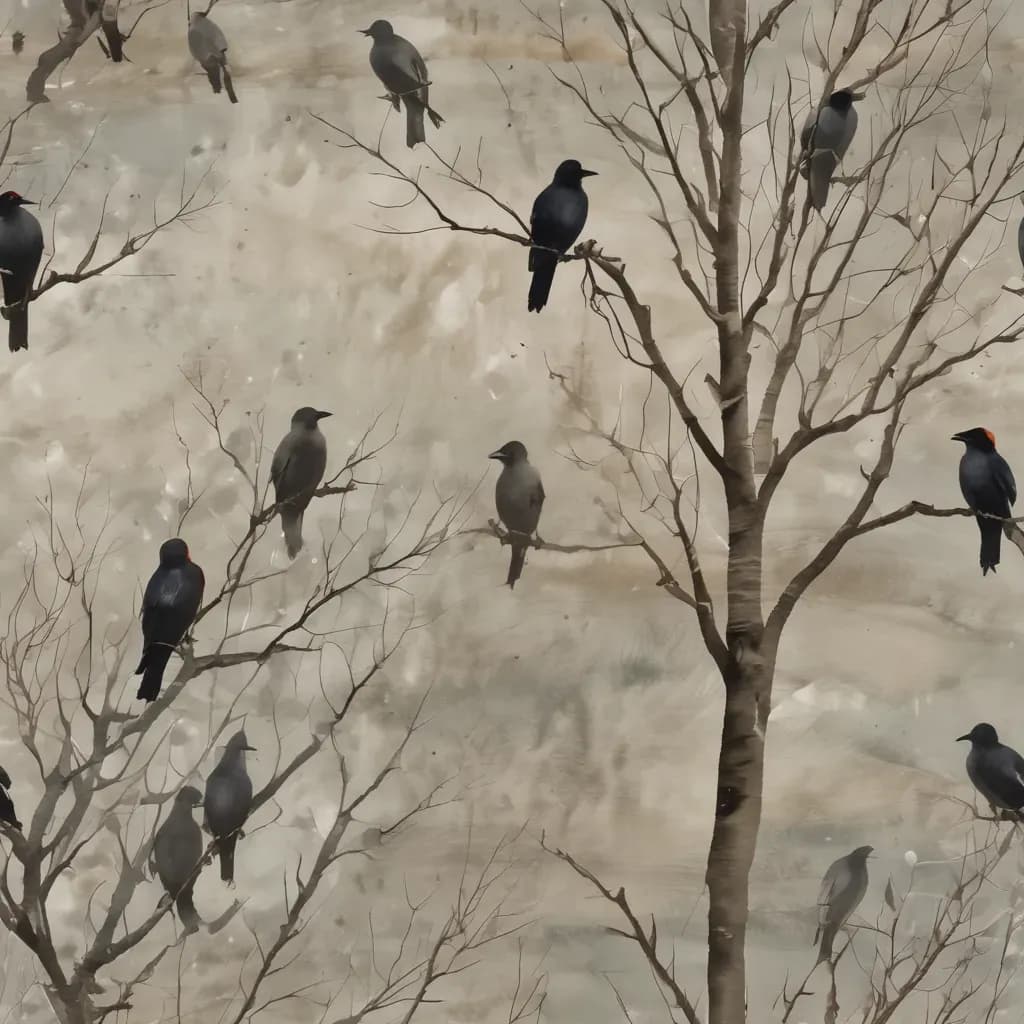
What Meeropol created, and what Holiday made definitively her own, is a work of devastating irony. The song opens by invoking the beauty of the American South -- its pastoral landscapes, its trees, its magnolias. Then, with quiet precision, it reveals what is actually hanging from those trees. The fruit of the title is not fruit at all. It is a human body. The pastoral becomes a crime scene.
This structure -- the beautiful surface concealing a horror underneath -- mirrors exactly how lynching operated in American society. Lynchings were public, photographed, treated as festive community events by white participants. The violence was not hidden. It was the normality surrounding the violence that required confrontation. Meeropol's genius was to use the language of Southern romanticism, the very idiom used to celebrate and sentimentalize the Jim Crow South, as the vehicle for the indictment.
The song moves through three distinct emotional registers. It begins with observation, describing a landscape. It then moves to description of the human cost, the bodies themselves, depicted with clinical precision that makes the imagery more horrifying, not less. Finally, it names what it has been describing, completing a rhetorical act that forces the listener to confront the thing directly.[5]
Holiday's voice occupies a specific position in this structure. She is not the victim in these lyrics. She is the witness. Her voice carries grief, but it is a controlled, formal grief, the grief of someone who has processed horror into testimony rather than collapsed under it. This is an extraordinarily difficult emotional posture to sustain, and it is what separates a performance of this song from mere recitation.
Personal Stakes
Holiday's connection to the song was never purely political or artistic. In her autobiography, she wrote: "It reminds me of how Pop died."[6] Her father, Clarence Holiday, a jazz guitarist, died at age 39 after being turned away from a segregated hospital when he developed a lung condition. He could not receive treatment because of the color of his skin. Holiday understood the song not as a metaphor but as a direct account of a system she had watched kill people she loved.
She also knew the personal cost of performing it. At Cafe Society, Josephson established a strict ritual around the song: waiters stopped serving, the house lights went down, a single spotlight lit only Holiday's face, and when she finished, there was no encore.[1] Some patrons walked out in protest or discomfort. Others were shattered. Holiday continued performing it this way for years, closing every set with it, understanding that the song required a particular kind of attention and that providing that context was part of the performance.
She said she was scared people would hate it the first time she sang it. She almost walked off the stage. The courage that required, from a Black woman in 1939 who depended on white-owned venues and labels for her livelihood, cannot be overstated.[7]
The Price She Paid
The federal government noticed. Harry Anslinger, the openly racist commissioner of the Federal Bureau of Narcotics, made Holiday a personal target. He reportedly singled her out specifically because of "Strange Fruit," viewing the song as a threat to public order and to the racial hierarchy it challenged.[8] In 1947, Holiday was framed on heroin charges and imprisoned for over a year. Upon her release in 1948, New York City authorities revoked her cabaret performer's license, which effectively barred her from performing in venues that served alcohol and gutted her nightclub career.
Anslinger's campaign against her continued even as she lay dying in 1959 at age 44. Federal agents arrested her in her hospital bed, handcuffing her to the bed frame in the final weeks of her life.[8] The state that she had spent twenty years holding to account repaid her by pursuing her until her death. The fact that she kept singing the song anyway is inseparable from what the song means.
What the Critics Heard
The song's reception in 1939 was not uniformly positive. Time magazine reviewed it with a kind of nervous energy, acknowledging its power while uncertain what to do with it. Syndicated columnist Samuel Grafton, writing in the New York Post, made the stakes explicit: "If the anger of the exploited ever mounts high enough in the South, it now has its Marseillaise."[2]
Atlantic Records co-founder Ahmet Ertegun went further decades later, calling it "a declaration of war" and arguing that it represented "the beginning of the civil rights movement."[9] Whether or not that is historically precise -- the civil rights movement had many beginnings -- Ertegun's framing captures something true about what the song accomplished culturally: it forced the subject of racial terror into mainstream entertainment spaces and made it impossible, however briefly, to look away.
In 1999, Time magazine named it the Song of the Century. In 1978, it was inducted into the Grammy Hall of Fame. In 2002, it was added to the Library of Congress National Recording Registry. Rolling Stone ranked it among the greatest protest songs ever recorded.[2] The honors arrive steadily, generation after generation, as each new era rediscovers what the song is saying.
Alternative Readings
Some scholars have read the song through the lens of its composer's political commitments. Meeropol was a member of the Communist Party, and "Bitter Fruit" was published first in left-wing union and Marxist publications.[3] From this angle, the song can be seen as part of a broader 1930s project of using art as a vehicle for class consciousness and resistance to capitalist-backed racial terror. The anti-lynching movement had allies across the political spectrum, but Meeropol's leftist framework gave the poem a particular edge.
Others have emphasized the Jewish dimension of Meeropol's authorship. A Jewish American schoolteacher, himself a member of an historically persecuted group, looked at a photograph of a racist atrocity and wrote one of the most powerful responses in American cultural history. Some interpreters read in the song a solidarity that crosses ethnic lines, the recognition of terror by someone who understood from his own history what systematic hatred could do.[3]
And there is a question about what singing the song did to Holiday herself. Was it cathartic, a controlled ritual of grief that gave her agency over horror? Or was it traumatic, the repeated inhabiting of an unbearable subject? The evidence suggests some of both. She said she had to keep singing it because the things that killed her father were still happening. That is not catharsis. That is determination.
Why This Song Still Matters
More than sixty artists have covered "Strange Fruit" since 1939, among them Nina Simone, Diana Ross, Jeff Buckley, Tori Amos, Annie Lennox, and Herbie Hancock.[10] Each new recording is implicitly an argument that the song's subject has not been resolved. And each recording is also an act of inheritance -- taking on a burden that Holiday herself described as heavy but necessary.
The song endures because it solved a formal problem that no protest song had solved before it: how to make an atrocity visible to people who have been trained not to see it. Meeropol's answer was to use the atrocity's own context, the romantic imagery of the South, as the frame for the indictment. Holiday's answer was to deliver that indictment not with rage but with a terrible, controlled sorrow that made the argument more devastating than anger ever could.
When Holiday sang this song, she was standing in rooms full of white people, in the most prestigious entertainment venues in New York, and telling them exactly what their country was doing in their name. She did it every night. She did it knowing it had cost her the support of her label, the goodwill of federal authorities, and eventually her freedom. She kept doing it because, as she said, the things that killed her father were still happening.
That is not a song. That is a life's work. And it is why, more than eighty years later, the silence that falls when this recording begins still feels like something is about to be said that needs to be heard.
References
- The Story Behind Billie Holiday's Strange Fruit - PBS American Masters — Detailed account of how Holiday came to perform the song and its reception at Cafe Society
- Strange Fruit - Wikipedia — Comprehensive history of the song's origins, recording, and cultural impact
- The Strange Story of the Man Behind Strange Fruit - NPR — Profile of Abel Meeropol, the song's composer, and his background and motivations
- Billie Holiday's Label Wouldn't Touch Strange Fruit - Smithsonian Magazine — Account of Columbia Records' refusal and the Commodore Records recording
- Strange Fruit: The World's First Protest Song - HistoryHit — Analysis of the song as a pioneering protest work and its enduring relevance
- Behind the Song: Billie Holiday, Strange Fruit - American Songwriter — Holiday's statements about the song and its personal significance
- The Tragic Story Behind Billie Holiday's Strange Fruit - Biography.com — Billie Holiday's biography and her personal relationship to the song's themes
- How Billie Holiday's Strange Fruit Confronted an Ugly Era - History.com — Historical context of lynching in America and Holiday's personal connection to the song
- Strange Fruit - Britannica — Overview of the song's history and lasting significance
- Strange Fruit - udiscovermusic — Critical assessment of the recording and its place in music history