Tarantino
A pop star walks through a hotel corridor with a mission, a letter in her hand and a line of obstacles between her and the door she wants to reach. That is the whole premise of the "Tarantino" music video, and it is also a fairly complete summary of the song. LISA has built a three-minute action movie, then cast herself as the one person who can finish it.
It is a swaggering, playful track, but it is not frivolous. Underneath the references to a famous director sits a statement about authorship, about who gets to be the hero of a story, and about what it means to step out from a very large group and carry a film on your own.
Where the song comes from
"Tarantino" is the focus track of PRESS PLAY, a six-track EP released on October 23, 2026 through LLOUD Co. and RCA Records.[2] It follows her 2025 solo debut Alter Ego, and the EP lists the song fourth, between "Cobra" and "Cut U Off."[1][3] LISA co-wrote it with Thom Bridges and Christian Astrop, and Bridges produced it alongside Beau Nox.[1] According to Songfacts, it began as an idea on a mood board, which fits a song that behaves like a set of images before it behaves like a story.[1]
The track arrived with unusual fanfare. A fifty-second PlayStation 5 commercial previewed it, showing LISA moving through several video game worlds, and the campaign included a custom controller designed with her input.[4] The song has therefore lived in three places at once: as a pop single, as a cinematic short, and as a piece of brand storytelling. That mix is very much in the spirit of its subject.
The director as a symbol
The title is the name of one of Hollywood's most recognizable directors, and the song leans on his best known revenge picture for its attitude. Songfacts describes LISA taking on the assassin mood of the heroine from the Kill Bill films, the kind of character who moves through a room of enemies with total composure.[1] The writing also nods to the habit of doing one's own stunts and to another of the director's movies about danger on the road, so the references are less a plot than a wardrobe.[1]
What matters is not the director himself. Nothing in the coverage suggests he had any involvement with the song, and he is mentioned in the press mostly because he has announced that his tenth film will be his last.[4] The name works as shorthand. It stands for style, for confidence, and for a certain kind of cinema in which the protagonist is stylish, unbothered and unstoppable. LISA borrows that shorthand to describe her own persona.
One reviewer made a similar point, noting that the references are mostly about the Kill Bill films and his work as a director, rather than a deeper engagement with his filmography.[3] That is a fair reading. The song is less an essay on a filmmaker than an invitation to imagine yourself inside his visual world.
Becoming the action hero
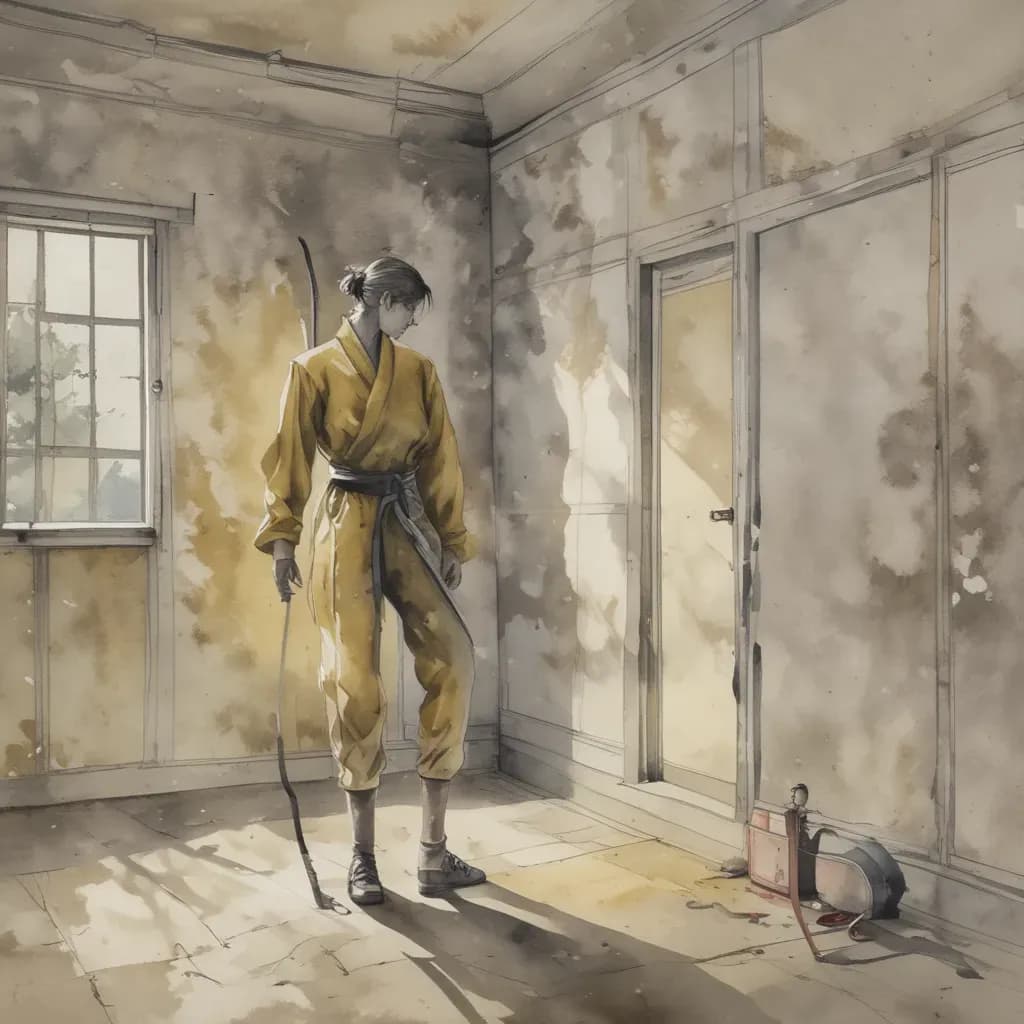
The central conceit is the transformation of a pop singer into a fearless action figure. In the video, LISA fights her way through a hotel on a mission to deliver a note to her favorite director, throwing punches at anyone who stands in her way.[2] The director of the clip is credited as James Mackel, and the styling leans into spy-film conventions.[7]
The delivery of the note is a revealing detail. This hero is not out for money or vengeance. She is a fan with a message, and the entire spectacle of violence exists to serve a small, earnest gesture. That sweetness keeps the song from reading as pure bravado, and it hints at a person who is still, underneath the armor, a devoted admirer of the art form she is imitating.
Songfacts reads the whole thing as a vivid metaphor for pop dominance, a way of asserting her own voice outside the group that made her famous.[1] In that interpretation, the action-movie bravado is a declaration of independence. Every punch in the video is also a punch at the assumption that a member of a group needs the group to be compelling.
Solo identity and the persona project
The song makes more sense when placed beside Alter Ego, an album built around five invented personalities, each with its own look and attitude. Reviews were mixed, and some critics argued that listeners ended up better acquainted with the characters than with LISA herself.[8] "Tarantino" can be read as an answer to that complaint, or at least a refinement of the method. The persona is still there, but it is a single, coherent one, and it is explicitly framed as a role she has chosen.
That distinction matters. Playing a character is a way of being honest about performance. A pop star is always staging something, and LISA's approach is to say so openly. The cinematic framing admits that the confidence on display is constructed, and then asks the audience to enjoy the construction rather than hunt for a hidden truth beneath it.
Her own description of the EP supports this. She told a late-night host that PRESS PLAY follows her journey from her roots to where she is now, that every song has its own character and mood, and that together they feel like a movie where you only have to press play.[5] The song is one scene in a larger film about herself.
Thai roots in an American genre
Even a song named for a Hollywood director carries traces of home. Songfacts ties a fuzzy guitar riff to her Thai roots and says the song celebrates her culture, in the same spirit as her earlier hit "SaWaDiKa," whose title is the Thai word for hello.[1][2] LISA herself noted that the EP contains plenty of Thai elements.[5]
The combination is telling. The imagery is borrowed from American cinema, but the heroine delivering the letter is a Thai artist who has become a global star, and who is writing herself into a tradition that rarely cast people like her as the lead. The song takes a form that has been dominated by Western protagonists and quietly substitutes a new one.
This is part of why the song feels like more than a novelty. A collage of spy movie, hip-hop bluster and guitar-driven pop could easily be empty. The cultural thread gives it a point of view.
How it sounds
The track is driven by a hypnotic groove and a gritty guitar figure, with the swagger of hip-hop braggadocio cut against a big, sung chorus.[1] A reviewer wrote that it brings hints of rock into the EP's pop and K-pop sound, called it the best song on the record, and praised the chorus as some of the strongest singing LISA has ever delivered.[3]
The vocal contrast is part of the storytelling. The verses behave like the tough, deadpan lines of a character who never raises her voice, while the chorus opens up into something more openly emotional. It is as if the cool exterior of the action hero cracks for a moment to show the person inside.
The same reviewer notes that the whistle from the Kill Bill films appears as a sample on the neighboring track "Cut U Off," which makes the two songs feel like companions.[3] The EP is stitched together with these cinematic echoes, which is how a collection of separate songs manages to feel like one movie.
A second reading: the self-aware brand
Not everyone will hear the song as pure self-assertion. Its release was bound up with a PlayStation campaign, a branded controller and merchandise, and it is fair to ask whether a song that celebrates independence is also an advertisement.[4] The video itself includes a PS5 reference near the end.
There is no need to treat these readings as opposed. Contemporary pop stardom is inseparable from partnerships, and LISA's decision to play an action hero inside an actual commercial could be seen as the most honest version of the fantasy. The hero fights through a hotel full of obstacles, and some of those obstacles are the conditions of working in a global entertainment industry. She wins anyway, and she does it with style.
Why it resonates
The song arrived at a moment of real momentum. Bandwagon notes that "SaWaDiKa" debuted on the Billboard Hot 100, that she won a major award at the MTV Video Music Awards, and that she was about to begin a Las Vegas residency.[2] The EP itself entered the Billboard 200 at number 35, a more modest result than her debut album had achieved.[3]
Even so, the song works because it taps into a durable pleasure: watching someone competent and charming handle a hostile environment without breaking a sweat. It offers the audience a fantasy of mastery, and it offers LISA a way to claim, in public, that she is the lead of her own story.
Conclusion
"Tarantino" is a song about cinema, but it is really about authorship. By borrowing the language of the revenge film, LISA presents herself as a protagonist who earns her ending through skill, humor and a little menace. The note she carries through the hotel is the quiet heart of it, a reminder that behind the choreography is a fan who loves the medium she is playing with.
Whether it lands as a brilliant act of self-definition or an elegantly produced piece of pop spectacle may depend on the listener. The best answer is probably that it is both, and that the fun of the song lies in how comfortably it holds those two things together.
References
Keep reading
More Pop
- Who Do You Think You Are Take That
- Saint Take That
- Ooh Laka Laka La Enrique Iglesias
- take me home (4 christmas) Olivia Rodrigo
- I'm Still Here Take That
- Masterpiece Take That