The Be Be King
A King Who Wants to Be
There is something quietly subversive about the title "The Be Be King." Kings rule. They command. They are served. But in this compact, two-minute-and-twenty-two-second track near the end of Gnarls Barkley's third and final album Atlanta, the so-called king wants only one thing: to be for someone else. To be their morning coffee, their gas in the tank, their smile in the mirror. To be the thing that starts the day right and keeps the lights on when everything goes dark.
The stutter in the title is intentional. "Be be" echoes like a skipped record, a repetition that refuses to settle. It toys with the idea of royalty while turning the word "be" into an existential verb, the act of becoming and remaining. A king who defines his crown not by what he takes but by what he gives.
The Album, the City, and the Return
"Atlanta" arrived on March 6, 2026, eighteen years after Gnarls Barkley's second record, The Odd Couple.[1] In that time, both CeeLo Green and Danger Mouse had lived entire additional careers. Danger Mouse became one of the most decorated producers of his generation, accumulating six Grammy Awards while working with Beck, Adele, The Black Keys, Red Hot Chili Peppers, and many others.[2] CeeLo scored a global solo hit, coached the early seasons of NBC's The Voice, and navigated a period of considerable personal and legal turbulence.[3]
The reunion was framed from the beginning as a closing chapter. CeeLo and Danger Mouse described Atlanta as their third and final studio album.[4] Named for the city where both men's stories began, the album functions as an accounting: of time, of loss, of what endures. Where their debut St. Elsewhere (2006) was psychedelic and experimental, and The Odd Couple (2008) was more emotionally direct,[5] Atlanta is a homecoming in the fullest sense.
CeeLo Green was born in Atlanta in 1975. Both of his parents were Baptist ministers. His father died when he was just two years old. His mother was paralyzed in a car accident when he was sixteen and died when he was eighteen.[3] These losses are the bedrock of his creative identity. They surface in the more confessional moments of The Odd Couple, and they quietly haunt Atlanta from underneath.
"The Be Be King" sits at track eleven of thirteen, near the far end of an album that has already traveled through nostalgia, identity, and reckoning. By the time this song arrives, the listener has been through the louder, more complicated emotional terrain of earlier tracks. It feels like a clearing. A breath. A love song stripped to its most essential question: what would you be willing to become for someone you care about?
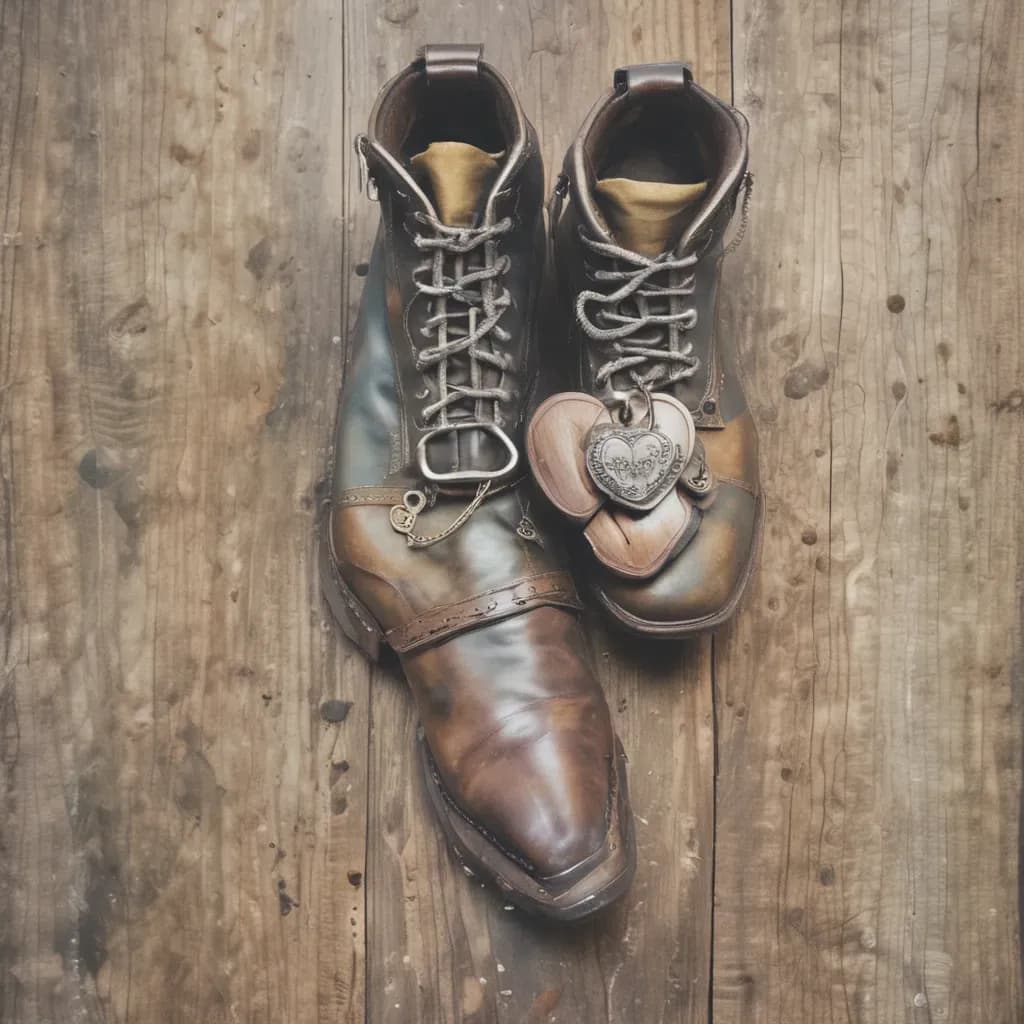
The Grammar of Devotion
The song builds entirely on a single grammatical structure repeated in variation. The speaker enumerates, in waves, the things he wants to be. This anaphoric technique is ancient. It appears in psalms, in wedding vows, in spirituals. Used here, it creates a cumulative effect. Each verse adds a new layer to the portrait of devotion, and each layer is more intimate and more surprising than the last.
The opening reaches for morning rituals and comfort food. The imagery is specific to a Southern breakfast table: the kind of meal that is simultaneously an act of nourishment and an act of care. The speaker is not reaching for grand gestures. He wants to be the thing that starts your day right, that gives your morning a shape and a warmth. This is love as a kind of presence rather than an event.
From there the song moves outward into practicality: the means to get somewhere and the means to come back. It sounds mundane, and that is precisely the point. The speaker is not romanticizing love by abstracting it. He is insisting that devotion lives in logistics, in making sure the person you love can move through their life without running empty.
The Ordinary Made Sacred
What CeeLo does throughout "The Be Be King" is take the everyday and render it holy. The comfort food of the opening is Southern and specific. Dishes like cheese grits carry deep roots in Southeastern American food culture, passed down through generations as both a regional staple and a household inheritance. To want to be that, to want to be the thing that warms someone from the inside and connects them to where they come from, is to claim a very particular kind of love.
The same logic applies to each subsequent register: the practical, the intimate (a design permanently under the skin, a face kept close to the heart), the affirming (the quiet confidence that survives disaster, the voice that says you told them so when the world finally catches up), the professional (steady pay, a little left over). CeeLo is building an inventory of everything that makes a life feel supported, seen, and steady. He wants to be all of it.
This is not generic sentiment. It reflects a Southern soul tradition that has always found the transcendent in the material: in Otis Redding's insistence on the concrete detail, in Al Green's physical immediacy, in Stevie Wonder's ability to make gratitude sound like ecstasy. "The Be Be King" is a direct heir to that lineage.
Standing in Front of the Bullet
The song's most striking turn comes in a verse where the speaker expresses a willingness to die in place of the person he loves, to step into danger and dare it to arrive. This is no longer comfort food. This is something older and more primal: the protective impulse that overrides self-preservation.
And then comes the image that changes everything's weight. The speaker says, in substance, that he has already lived enough, and what he wants now is for the other person to live longer. This one thought carries the entire biography of CeeLo Green inside it. A man who lost his father before he could form a memory of him, who lost his mother at eighteen, who then proceeded to live decades of his own turbulent, triumphant, complicated life: such a person would know what it means to have already lived enough.[3] Not as resignation, but as a kind of fullness that can now be transferred to someone else.
This is the emotional core of the song. Everything that surrounds it, the morning table and the tank of gas and the intimate tokens and the daily confidence, is a preamble to this moment of clarity. The speaker has done his living. Now he wants to be the reason someone else gets to do theirs.
What Kind of Love Is This?
"The Be Be King" does not specify who it is addressed to. It could be romantic love. The intimate imagery of tokens worn close to the body and a favorite song belted out alone in the shower has the texture of a long partnership rather than a new infatuation.
But the song also resonates as something broader. CeeLo's childhood losses and the mortality-awareness of that central verse invite a reading in terms of parental or familial love: the love of someone who has watched the generations turn and wants to shore up the person coming behind them. Or, since both of CeeLo's parents died young, perhaps an imagined reversal: being for someone else what no one was able to be for him long enough.[3]
A third reading is available, particularly given that Atlanta is explicitly a farewell album. "The Be Be King" could be read as a love letter to the city, to the listeners, or to the creative partnership itself. Gnarls Barkley is ending. This song arrives near their last moment together. The wish to be everything that sustains another person could be the wish of an artist to remain useful, nourishing, present, even after the music stops.
None of these readings cancels the others. The song works precisely because it stays open.
Why It Lingers
"The Be Be King" is not the most sonically complex track on Atlanta. It does not have the album's most unusual production or its most daring formal structure. What it has is clarity. It knows exactly what it wants to say and says it without hesitation or ornament.
The title pun is gentle but precise. "Be be" as stutter, as insistence, as the word "be" making a crown out of pure repetition. To be again and again, to insist on presence, to refuse to stop showing up: that is the logic of the song and the logic of the title, together.
In the context of a final album from two artists who spent a decade and a half apart and chose to come back for one last record named after their hometown, the song reads as a small masterpiece of plainness.[4] All the accumulated weight of CeeLo's biography and Danger Mouse's decades of sonic architecture, distilled into a little over two minutes about wanting to be someone's breakfast and someone's last thought before the lights come back on.
There is a kind of royalty in that. Not the kind that demands. The kind that gives itself away and keeps giving.
References
- Atlanta (Gnarls Barkley album) - Wikipedia — Album release date, label, track listing, and production credits
- Danger Mouse (musician) - Wikipedia — Danger Mouse's career, Grammy Awards, and major collaborations
- CeeLo Green - Wikipedia — CeeLo Green's biography, including childhood losses and career history
- Gnarls Barkley Announce Final Album Atlanta, Share First New Single in 18 Years — Announcement of Atlanta as third and final Gnarls Barkley album
- The Odd Couple (Gnarls Barkley album) - Wikipedia — Context on Gnarls Barkley's second album and its emotional themes