The Boxer
A Young Man Still in the Ring
There is a moment near the end of "The Boxer" when the narrator announces his departure and then simply does not go. He says it again. He still does not go. That gap between the declaration and the reality is where the song lives. It is not a song about winning. It is a song about staying, about the particular stubbornness of a person who has absorbed punishment and cannot bring himself to walk away.
Paul Simon wrote it in 1968 as a young man feeling misunderstood and publicly beaten up by critics. Somehow it has since been summoned at moments of national grief, personal crisis, and quiet individual reckoning for more than half a century. That passage from intimate wound to collective anthem is the story worth tracing.
When It Was Made
By 1968, Simon and Garfunkel were among the most commercially successful acts in the world. They had scored one of the decade's defining songs with "The Sound of Silence," contributed the soundtrack to The Graduate, and won a Grammy for "Mrs. Robinson." On paper, they had everything. In practice, Simon was beginning to feel the sting of critical re-evaluation. Folk purists who had first celebrated them were now questioning whether two polished young men from Queens had ever been authentically part of the folk tradition at all.
Simon confirmed in a 1984 conversation with Playboy that he wrote the song about himself. He described feeling as though critics had decided he was inauthentic -- a pretender. The biographical identification runs deep: he characterized the song as being about being beaten up, and announcing he would leave if it did not stop.[1]
Simon also noted that part of the song may have been written during time spent in England, pointing to his use of the word "railway" rather than the American "railroad" as evidence.[2] Whether the choice was conscious or instinctive, it gives the song a faintly displaced quality -- American in its emotional landscape, slightly out of time and place in its diction.
The recording was one of the most technically ambitious sessions of the duo's career. Work began in November 1968 at Columbia's Music Row Studios in Nashville and extended across multiple New York locations. Vocal harmonies were captured at St. Paul's Chapel at Columbia University to exploit the natural reverb of its stone ceiling. Drum overdubs were recorded in a hallway near an elevator shaft at Columbia's East 52nd Street studio. Producer Roy Halee synchronized two 8-track machines to achieve what was effectively 16-track recording. The song consumed more than 100 hours of studio time.[3]
"The Boxer" was released as a standalone single on March 21, 1969, reaching number seven on the Billboard Hot 100 and number six in the United Kingdom.[2] It appeared on Bridge Over Troubled Water nearly a year later, in January 1970. That album was recorded under its own considerable tensions: Art Garfunkel was frequently absent for the filming of Mike Nichols' Catch-22, leaving Simon largely alone for extended stretches. The strain fed directly into the duo's eventual split in July 1970.[4]
The Shape of the Song's Meaning
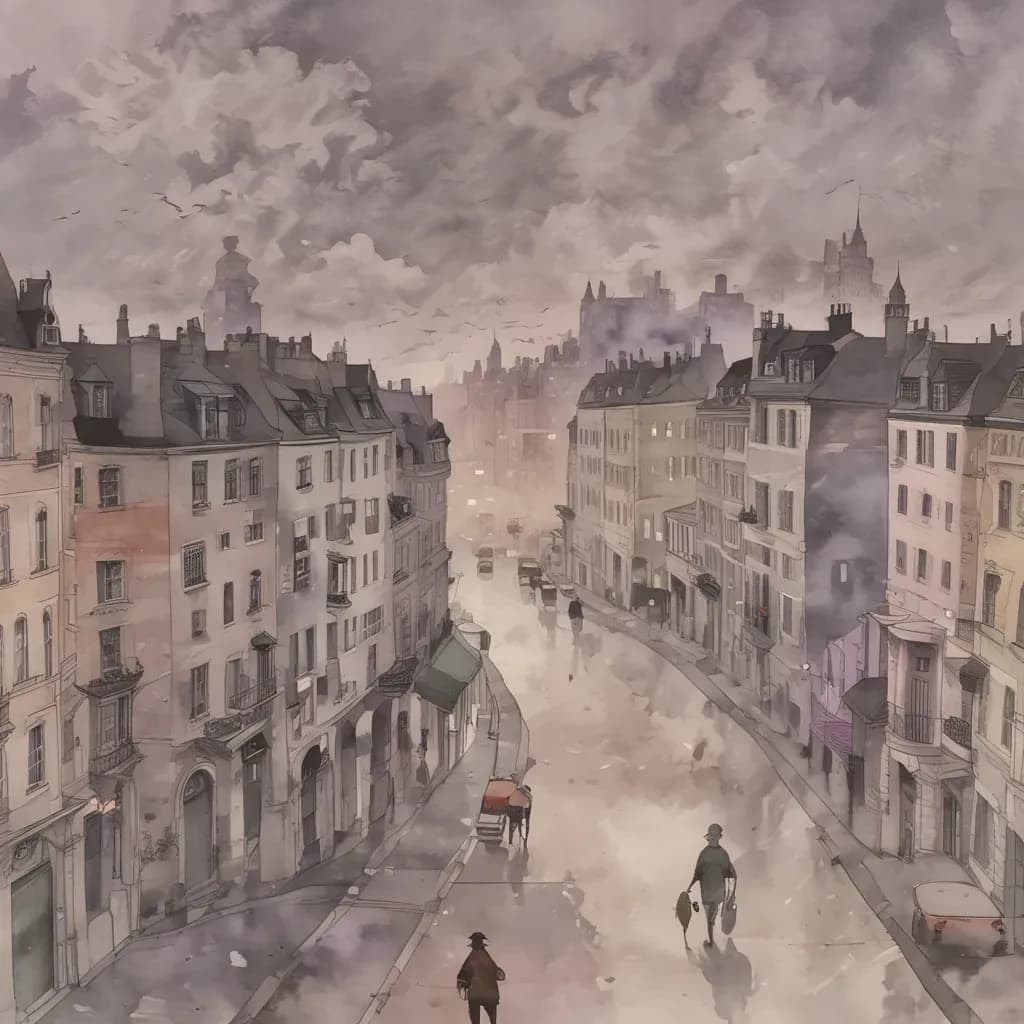
The song operates on two levels that reinforce each other without ever fully merging. On one level, it is a quietly personal confession: Simon as a young artist from a specific background, feeling the sting of not belonging and not being believed. On another, it is a universalized portrait of a working-class everyman -- a runaway from somewhere rural, arriving in New York City with nothing, surviving in the city's margins, and eventually becoming a prize fighter.
The boxer figure is compelling not because he wins, but because he remains. The song's final image is of a fighter retreating to his corner, bearing the evidence of every blow he has taken, yet still in the ring. This is not triumph. It is endurance. The song's central paradox is the narrator's declaration of departure that is itself an act of will -- the announcement of surrender that turns out to be something else entirely.
Simon has spoken about reading the Bible around the time of writing, and the song's language carries an Old Testament gravity. The imagery is archetypal and slightly formal, giving even the most personally rooted moments a resonance that feels larger than autobiography.[5] The narrator's particular story becomes a vehicle for a more ancient pattern of suffering, displacement, and stubborn persistence.
The narrative arc traces a journey through poverty and social precarity with a specificity that grounds the allegorical dimension in something recognizable. The protagonist seeks shelter in the city's overlooked neighborhoods. He finds company among people the rest of the city ignores. He ends up in the boxing ring. Each stage is stripped down, observed without sentimentality, and allowed to carry its own weight.
The Famous Unfinished Refrain
"The Boxer" contains one of the most celebrated moments of unfinished lyricism in popular music. The wordless refrain, a series of syllables that resolves into nothing verbal, was by Simon's own admission a placeholder that never got replaced. In a 1990 interview with SongTalk, he called it "a failure of songwriting" -- he simply ran out of words and left the sounds in.[6]
That failure became an asset. The syllables function as pure emotion, carrying the feeling of the song without the constraints of language. They are also, in a way, thematically appropriate. The narrator's defiance -- his refusal to leave even when he says he will -- is not the kind of thing that resolves into clean verbal statement. The refrain is the sound of feelings that exceed articulation, and it has proven more durable and more universally accessible than any lyric Simon might have found.
There is also a studio verse that was omitted from the recorded version but that Simon has performed regularly in concert. In it, the narrator reflects on the passage of time with a mixture of rue and quiet acceptance, observing that he is older than he was and younger than he will be. This passage adds a retrospective dimension that shifts the song's emotional register: the boxer is not only in the middle of the fight, he is also looking back at it. Simon performed this verse in March 2020, during the early weeks of the COVID-19 lockdowns, his first public musical appearance in years.[7]
Why the Song Has Lasted
"The Boxer" arrived in the spring of 1969 at one of the most turbulent moments in American postwar history. Nixon had just taken office. The Vietnam War was consuming working-class lives, with roughly 500,000 American troops deployed. Anti-war sentiment was at a fever pitch. The counterculture was simultaneously at its peak and beginning to splinter. The folk movement, of which Simon and Garfunkel were a commercially visible part, was also being fractured by questions of authenticity and political commitment.
The song did not address any of this directly, but its portrait of urban struggle, displacement, and quiet defiance spoke to a generation that felt ground down by events beyond their control. Rolling Stone ranked it number 106 on its list of the 500 Greatest Songs of All Time.[8]
Its most charged cultural moment came decades later. On September 29, 2001, the first broadcast of Saturday Night Live following the September 11 attacks, producer Lorne Michaels chose Simon to open the show. With Mayor Rudy Giuliani standing nearby and uniformed firefighters and police officers in the audience, Simon performed "The Boxer." It was not a political choice so much as a human one. Michaels later said he chose it because it would "somehow make a statement about persevering and enduring."[9] The image of a fighter still standing after absorbing everything that had been thrown at him was precisely what a devastated city needed.
The song has been covered by an unusually broad range of artists, among them Bob Dylan, Neil Diamond, and Emmylou Harris. That breadth of interpretation is the mark of writing that has crossed from autobiography into archetype.[1]
Other Ways of Hearing It
Several alternative readings of the song have circulated over the decades. The most persistent concerns the wordless refrain. Some listeners hear not empty syllables but a single repeated word -- "lie" -- and read the refrain as a commentary on self-deception, the narrator lying to himself each time he declares he is about to leave. Simon has not endorsed this interpretation but has not foreclosed it either. The ambiguity is real, and the song's power partly resides in it.[5]
A second strand of interpretation positions the song as social critique rather than personal confession. The protagonist's journey -- from rural origins to New York City, through precarious poverty and marginalization, to the boxing ring -- can be read as an indictment of the American Dream's broken promises. The city he arrives in offers not opportunity but indifference. He survives not by succeeding but by refusing to be destroyed. Under this reading, the song is less about a specific young man's feelings and more about the structural conditions that grind people down.
A third reading draws on Simon's background as a Jewish American from Queens. The themes of outsiderdom, the desire to be accepted by a culture that keeps its distance, the sense of being perpetually marginal despite visible success: these carry traces of immigrant and second-generation experience that Simon has touched on in other contexts.[10] The song's narrator looking for belonging among the city's excluded populations takes on a different resonance under this lens.
None of these interpretations cancel the others. They coexist, and that coexistence is part of what makes the song so broadly inhabitable.
The Fighter Still Remains
"The Boxer" was born from a specific wound: a young songwriter's feelings of rejection and misidentification at a moment of professional strain. What Simon could not have known in 1968 was that he was not writing just about himself. The experience he was processing -- of absorbing blows from a world that does not fully see you, of threatening to leave and discovering you cannot -- is one of the most common experiences there is. He found language for it, incomplete language, including syllables that are not words at all, and that incompleteness turns out to be part of the point.
The recording itself, with its layered production across multiple studio environments, its unauthorized sonic experiments, and its extraordinary investment of time and resources, mirrors the song's subject: something built painstakingly, at great cost, with the intention of getting something exactly right.[3]
More than fifty years later, the song retains its hold not because its emotional landscape is complicated, but because it is true. Defeat is familiar. So is the stubborn refusal to accept it. In the gap between the declaration of departure and the fighter who stays, there is room enough for almost any human story of struggle and endurance. That gap is still open.
References
- The Boxer - Songfacts — Paul Simon's own statements about the song's autobiographical meaning, including the 1984 Playboy interview
- The Boxer - Wikipedia — Overview of recording history, chart performance, and background context
- Recording Simon and Garfunkel's 'The Boxer' - BMI — Detailed account of the multi-location recording sessions and Roy Halee's production techniques
- Bridge Over Troubled Water - Wikipedia — Album context, recording sessions under strain from Garfunkel's absence, critical reception
- The Boxer by Simon and Garfunkel: Song Meaning — Thematic analysis including biblical influences and alternative interpretations
- How Paul Simon Wrote The Boxer — Simon on the 'lie-la-lie' placeholder and the songwriting process, drawing on SongTalk interview
- The Boxer by Simon and Garfunkel - Song Meanings and Facts — The missing studio verse and Simon's 2020 COVID-era live performance
- 500 Greatest Songs of All Time - Rolling Stone — Rolling Stone ranking of The Boxer at number 106
- Saturday Night Live 9/11 Oral History - Rolling Stone — Lorne Michaels and others on why Simon performed The Boxer on the first post-9/11 SNL
- Paul Simon's Secret Jewish Life - The Forward — Paul Simon's Jewish-American background and how it inflects his songwriting identity
- Simon and Garfunkel - Track by Track: The Boxer — Official Simon and Garfunkel commentary on the creation of the song