The Fear
There is a moment in certain songs when you realize you are no longer listening to music so much as being subjected to it. "The Fear," from Death Grips' 2018 album Year of the Snitch, is that kind of moment. It does not ease you in or offer comfort. It confronts you from the opening notes with something raw, immediate, and genuinely unsettling: the interior landscape of a mind standing at its own absolute edge.
What makes the song so arresting is not just the subject matter but the way it refuses to aestheticize its own darkness. Where many artists approach themes of psychological crisis with a kind of decorative melancholy, Death Grips arrive in full panic mode, carnival instruments and fractured rhythms included. It is among the most discussed tracks on the album within the band's fanbase, and its reputation is deserved.
Background
By 2018, Death Grips had spent nearly a decade operating as one of the most deliberately difficult and artistically uncompromising acts in contemporary music. Formed in Sacramento in late 2010 by MC Ride (Stefan Burnett), drummer Zach Hill, and producer Andy Morin (Flatlander), the trio built a reputation for dismantling expectations at every turn.[1]
Their catalog leading up to Year of the Snitch reads like a chronicle of productive self-destruction. They signed to and were dropped from Epic Records after leaking an album in breach of contract. They broke up onstage in 2014, leaving a handwritten note for their audience. They reunited, kept recording, and moved entirely to their own imprint, Third Worlds. By the time Year of the Snitch arrived on June 22, 2018, through Third Worlds and Harvest Records, the band had made seven previous records in seven years, each occupying its own sonic territory.[2]
The album brought together an unusual group of collaborators. DJ Swamp (Ronald K. Keys), a turntablist who appears on most of the record, is co-credited as a writer on "The Fear." Other contributors included Justin Chancellor, the bassist for Tool, and Andrew Adamson, the director of the Shrek and Chronicles of Narnia films. This eclectic assembly reflects the band's consistent willingness to pursue creative input from any source, regardless of genre or context.[2]
The album's title carries its own symbolic weight. It refers obliquely to Linda Kasabian, the Manson Family member who testified against her co-conspirators in the Tate-LaBianca murder trial, becoming in the group's parlance a "snitch." The title introduces themes of betrayal, surveillance, and the ambiguous ethics of loyalty that thread through the record and give "The Fear" part of its paranoid atmosphere.[2]
The Sound and the Feeling
To understand "The Fear" requires sitting with the texture of its production. The track is built around descending piano runs that carry a distinctly carnivalesque, almost grotesque quality, paired against Zach Hill's crash-ride percussion and time-stretched vocal samples. The effect is something like a funhouse mirror: familiar musical elements distorted past the point of comfort.[3]
MC Ride's vocal performance on the track is characteristic but pushed toward something rawer than usual. The delivery opens in a register that veers into the theatrical before the choruses tighten into something more direct and urgent.[3] The contrast itself communicates something essential: the absurdity of crisis, the way our minds can spiral into dark comedy even at the worst moments. The song inhabits the strange territory where horror and absurdism collapse into each other, and it does so without blinking.
Rolling Stone described Year of the Snitch as "one of their least aggressive offerings to date, but still quite disruptive," calling it a "cyber-noise-punk-rap disruption."[4] That description fits "The Fear" particularly well. It is disruptive not through sheer volume or chaos but through its willingness to dwell in a mental space that most art tries to skip over quickly.
The Territory of the Song
"The Fear" maps terrain that is difficult to discuss without lapsing into euphemism, so it is worth being direct: the song engages with suicidal ideation. Critics have described it as a first-person psychological standoff, a confrontation between the impulse toward self-destruction and the will to continue.[3] Rarely in popular music does this territory feel so unmediated.
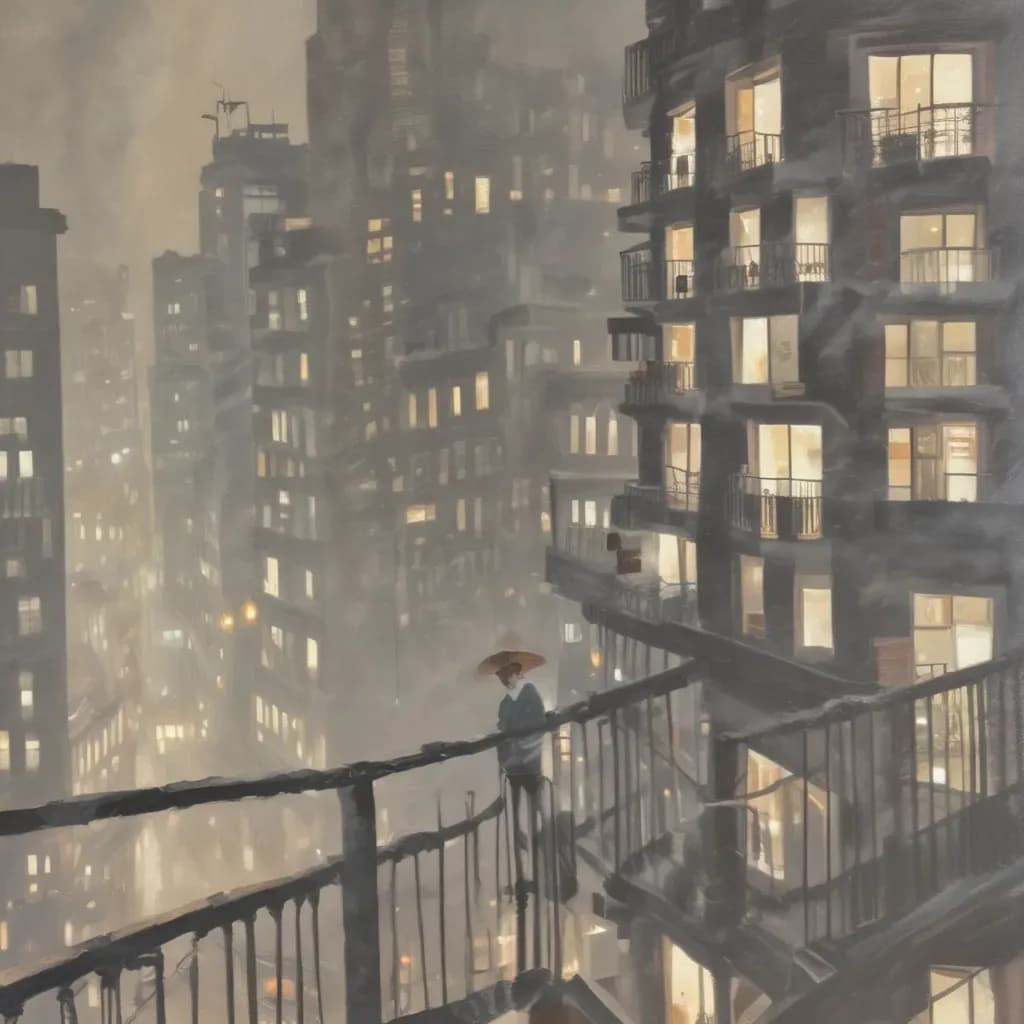
The song's imagery, as described by reviewers, includes a crisis moment at a precipitous edge, with internal voices pulling in opposite directions. Some fans and critics have connected this to a well-known photograph of MC Ride standing at a high balcony at the Chateau Marmont in Los Angeles, the image suggesting a real-world anchor for the song's portrait of crisis.[5]
Death Grips have always resisted the biographical reading. MC Ride has stated that the meaning of his lyrics matters less than what they produce in the listener's body. What "The Fear" produces is a sense of vertigo, a destabilization that is precisely the point. The song does not ask you to analyze the feeling; it asks you to have it.
A critical exploration of the album in Cherwell noted that "rarely has the topic of suicidal thought felt as raw, biting, and immediate" as it does on Year of the Snitch, with "The Fear" as one of its most concentrated expressions.[5] Post-Trash called it "possibly the song most talked about by fans" on the record, describing it as "wildly fun and dark."[3]
Identity and Dissolution
Death Grips have always been interested in what happens to identity when placed under extreme pressure. Across their catalog, themes of paranoia, bodily sensation, violence, and ego dissolution recur as a kind of through-line. "The Fear" sits within that broader project but gives it an unusually personal register.
The album as a whole moves through themes including mental illness, drug use, police brutality, and sex, but "The Fear" represents those themes at their most intimate and panicked.[6] Stereogum's review described Year of the Snitch as balancing the commercial promise of The Money Store with the paranoid defiance of No Love Deep Web.[6] "The Fear" lands firmly on the defiant, paranoid side of that spectrum.
What distinguishes the track within the Death Grips catalog is its structure as an internal dialogue. The fractured vocal delivery does not simply report a mental state; it enacts one. The listener is pulled into the competing pressures operating within the narrator's mind, not just asked to observe them from a safe distance.
This is consistent with what MC Ride has described as his creative approach: his interest is in the instinctual id, summoned and channeled before reason can impose its filters.[1] "The Fear," with its lurching transitions between the absurd and the deadly serious, is that philosophy fully embodied.
Why It Resonates
In an era when mental health has become a more open subject in music, the majority of that discourse still tends toward the therapeutic arc: acknowledgment, struggle, healing. Death Grips are not interested in that arc. "The Fear" does not resolve. It does not offer catharsis in the conventional sense. It ends where it ends, with the psychological tension it created largely intact.
That refusal to tidy things up is, paradoxically, part of why the song resonates so strongly with its audience. It treats the listener as someone capable of sitting with discomfort, of finding something true in the raw presentation of crisis without the reassurance of narrative resolution.
Highsnobiety, assessing Death Grips' broader legacy, has described the band as potentially "the most important hip-hop act of the decade," noting their unique capacity to reject every convention that typically defines success in music while still building a devoted global following.[7] "The Fear" is a microcosm of that capacity: a song that refuses easy entry but rewards the listener who stays with it.
Alternative Interpretations
The ambiguity built into Death Grips' approach means that "The Fear" can sustain readings beyond the psychodrama of suicidal crisis.
One interpretation frames the song as a meditation on creative terror: the fear not of death but of the artistic impulse to self-destruct, which Death Grips have enacted multiple times in their career through public breakups, label-burning, and unauthorized album leaks. The imagery of standing at the edge could be read as the artist confronting the desire to throw everything away.
Another reading locates the song within the album's broader surveillance-and-betrayal thematics. On this view, "the fear" is the paranoid vigilance of someone who has snitched, or been snitched on, living in constant anticipation of consequence. The album's Manson Family title frames a world in which trust is impossible and every relationship is a potential trap.
These readings are not mutually exclusive. Death Grips have never been a band that stabilizes meaning. They build systems of imagery and sound that reward multiple interpretations, and then withdraw from explaining themselves.[1]
Conclusion
"The Fear" endures because it does something that only the best confrontational art manages: it makes the listener feel the shape of an experience that most of us struggle to articulate. It does not prettify psychological crisis or wrap it in metaphor designed to keep the worst at a safe remove. It arrives fully formed, noise and piano and fractured voice, and demands that you meet it on its terms.
Death Grips have made a career of refusing the comfortable version of whatever they could easily be. Year of the Snitch, and "The Fear" in particular, represents that refusal at one of its most personal and unguarded points. The song is not about fear in any general sense. It is about the specific, embodied terror of standing somewhere no one should stand, and hearing two voices at once, and not knowing which one is going to win.
References
- Death Grips (Wikipedia) — Band biography, formation history, and MC Ride's creative philosophy
- Year of the Snitch (Wikipedia) — Album background, release details, collaborators, and chart performance
- Death Grips - Year of the Snitch (Post-Trash Review) — Detailed track-by-track analysis calling The Fear possibly the most talked-about song on the album
- Review: Death Grips' Year of the Snitch (Rolling Stone) — Rolling Stone calls the album a cyber-noise-punk-rap disruption
- An Exploration: Death Grips Year of the Snitch (Cherwell) — Critical analysis noting the album's raw depiction of suicidal thought and the Chateau Marmont connection
- Death Grips - Year of the Snitch Review (Stereogum) — Stereogum describes the album as balancing The Money Store with No Love Deep Web
- Are Death Grips the Most Important Hip-Hop Act of the Decade? (Highsnobiety) — Assessment of Death Grips' cultural legacy and influence