The Message
A Dispatch from the Edge
In the summer of 1982, hip-hop changed direction. Not gradually, and not through a gradual accumulation of small shifts, but in a single seven-minute recording that landed on radio like a dispatch from a war zone most of America preferred not to think about.[1]
"The Message" by Grandmaster Flash and the Furious Five did not sound like anything that had come before it in popular music. It was not angry in the way protest songs are typically angry. It was exhausted, precise, and unbearably specific. It described a world in which survival itself had become a daily act of extraordinary will, where the gap between a human being and catastrophe could be measured in the span of a single bad week.[2][3]
Forty years on, the song has accumulated a staggering list of honors. It was the first hip-hop recording added to the Library of Congress National Recording Registry, the first hip-hop track inducted into the Grammy Hall of Fame, and the basis for the Rock and Roll Hall of Fame induction of Grandmaster Flash and the Furious Five, making them the first hip-hop act so honored.[4][5] Rolling Stone named it the greatest hip-hop song ever recorded in 2012.[1] None of that should obscure what the song actually is: a seven-minute act of witness to the lives of people who were being systematically ignored.
An Unlikely Creation
The song's origins involve a story that complicates its famous authorship credit. "The Message" was created primarily by two people: Ed "Duke Bootee" Fletcher, a Sugar Hill Records house musician and songwriter from Elizabeth, New Jersey, and Melle Mel (Melvin Glover), the Furious Five's lead MC. Grandmaster Flash himself did not appear on the recording at all.[1][6]
Fletcher had been developing the core concept since around 1980 or 1981. He drew on electronic textures from Tom Tom Club, Zapp, and the collaborative work of Brian Eno and David Byrne, combining them with an eerie synthesizer hook and verses rooted in what he was observing in the neighborhoods around him.[6][7] When he presented the track, both the Furious Five and the Sugar Hill Gang passed on it. The song's relentless grimness struck the group as commercially unviable and tonally at odds with the celebratory party rap that had defined hip-hop's first commercial wave. Melle Mel pitched the concept, and the rest of the Furious Five reportedly laughed and walked out of the studio.[8][6]
It was Sugar Hill Records founder Sylvia Robinson who pushed the project forward over everyone's objections. She recognized the material's power and brought in Melle Mel to contribute verses, merging his firsthand street knowledge with Fletcher's sonic architecture.[6] Robinson also made the decision to keep Fletcher's own rap vocals on the final recording. He had originally laid them down as a guide track to teach the lines to Melle Mel, but Robinson insisted they stay.[7]
The finished recording ran seven minutes and eleven seconds. Robinson considered those numbers auspicious and rushed it to radio. The record went gold within eleven days of release.[1][6]
The World the Song Describes
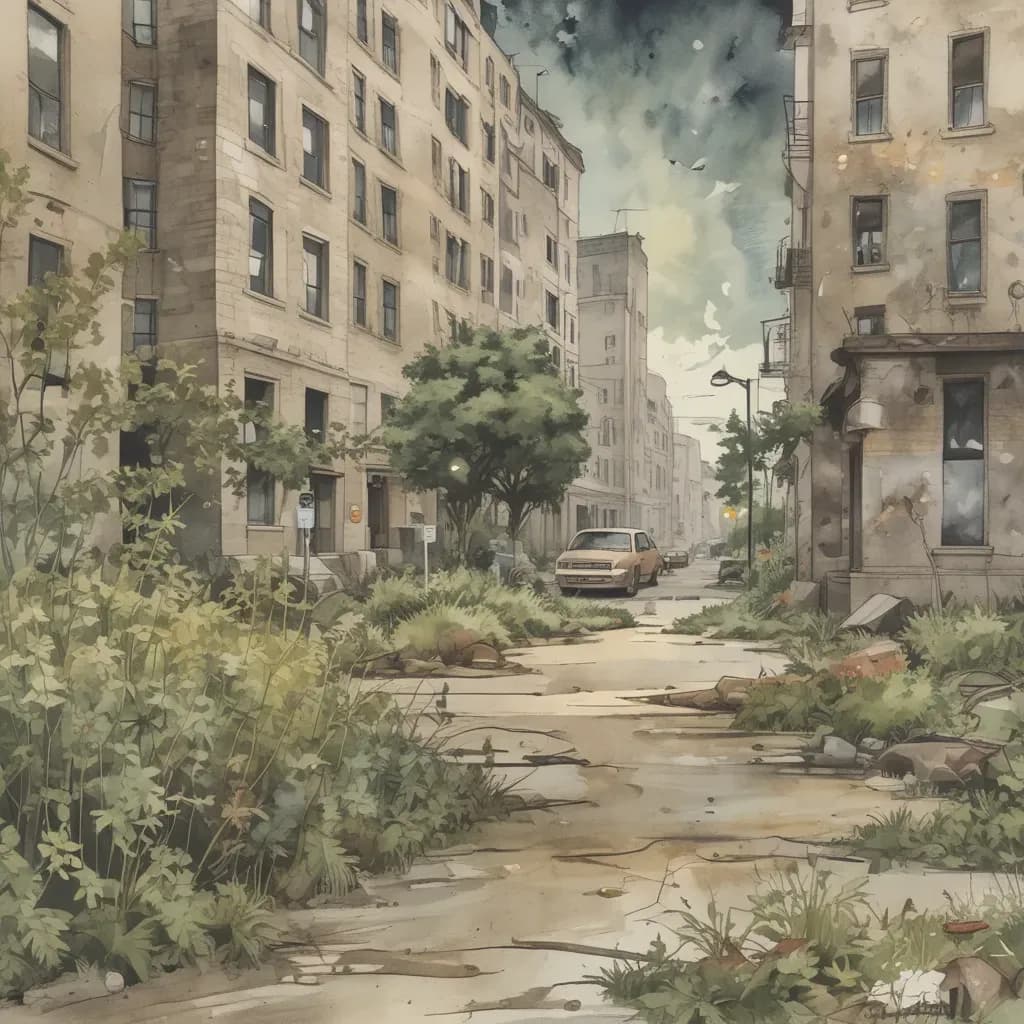
To understand "The Message," you need to understand the South Bronx in 1982. Between 1970 and 1980, the borough lost more than forty percent of its total population. Landlords burned their own buildings for insurance money rather than maintain properties that were no longer profitable. At the peak of this crisis, Bronx firefighters were responding to several fully involved building fires per shift, sometimes entire blocks in a single night.[9]
The phrase "the Bronx is burning," spoken by broadcaster Howard Cosell during the 1977 World Series after a fire broke out near Yankee Stadium, had already entered American consciousness as shorthand for urban catastrophe. The murder rate had nearly tripled over five years. Poverty, homelessness, drug addiction, underfunded schools, and gang violence were not background conditions but the defining facts of daily life for hundreds of thousands of people.[9][10]
Hip-hop had been born in this landscape, at block parties and park jams where DJs provided music for communities abandoned by municipal government and ignored by mainstream culture. But until "The Message," hip-hop's commercial recordings had largely focused on celebration: boastful wordplay, dancefloor energy, affirmations of skill. The song that would change everything was the one that refused to celebrate anything.[10][11]
A Gallery of the Dispossessed
"The Message" works as a series of portraits. The song moves through a gallery of figures in extremis: a person in the grip of addiction whose body and mind are in simultaneous collapse; a young woman driven to desperate choices by the absence of any viable alternative; a child born into poverty, abandoned by family and institution alike, whose trajectory the narrator can predict with heartbreaking accuracy; a man whose psychological endurance finally gives way under the accumulated weight of years of deprivation and humiliation.[1][3]
These are not characters observed from a safe distance. The narrators place themselves inside the same world, describing how pressure accumulates, how the streets test a person's endurance day after day, how the gap between aspiration and circumstance grinds people to a point of breaking.[12][10]
The recurring refrain at the heart of the song functions as both a pressure gauge and a breaking point. It acknowledges the proximity of violence, the nearness of psychological collapse, the sense of being cornered by forces too large and impersonal to fight. It is not a call to arms. It is a statement of fact, repeated until the listener can no longer dismiss it.[3][7]
What gives the song its particular power is the specificity of the imagery. Melle Mel and Fletcher are not dealing in abstractions. They are naming particular textures of poverty: the material, sensory, and social dimensions of a community under siege. Ed Fletcher later said he wanted listeners to feel they could smell the neighborhood he was describing. The song achieves exactly that.[6][7]
Street Journalism and the Oral Tradition
"The Message" belongs to a tradition of Black American oral reportage that predates hip-hop by decades. The Last Poets, Gil Scott-Heron, and the spoken-word traditions that ran through the civil rights era all understood that the most devastating political statement available was the accurate description of what was happening to people who were being ignored by everyone with the power to help.[11][3]
What Melle Mel and Fletcher did was apply that tradition to the specific conditions of early-1980s New York with a precision no prior pop or rock recording had achieved. The song's closing scene, in which the group is surrounded and arrested by police for no stated reason, makes explicit what the rest of the song has been building toward: the forces of order and the forces of the street are both arrayed against the people the song describes. The music video, shot in a single day in Harlem on a budget of eight thousand dollars, ends on that same note of arbitrary institutional violence.[1][6]
Melle Mel later characterized the track as "bigger than hip-hop." It is a fair description. The song operates as street journalism of the first order, and it resonates with anyone who has lived at the margins of a society that has decided they do not matter.[6]
Why Everything Changed
The commercial success of "The Message" restructured hip-hop's creative possibilities almost immediately. Before the song, the MC's role had been largely supportive, providing energy and showmanship over a DJ's beats. The DJ was the center of gravity in hip-hop's early years. "The Message" shifted that balance permanently, foregrounding the MC as storyteller, social critic, and witness.[11][3][5]
Chuck D of Public Enemy, one of the artists most directly shaped by the song, described Grandmaster Flash and the Furious Five as "the first dominant rap group with the most dominant MC saying something that meant something." The chain of influence runs directly from "The Message" through Boogie Down Productions, Public Enemy, and N.W.A, continuing through four decades of socially conscious rap and finding its most recent heir in the work of Kendrick Lamar.[5]
The song peaked at number four on the Billboard R&B chart and number sixty-two on the Hot 100, remarkable chart performance for a seven-minute record without a conventional hook or dancefloor structure. It earned hip-hop's first Grammy nomination, for Best R&B Performance by a Duo or Group, in 1983.[1][8]
In 2002, it became the first hip-hop recording added to the Library of Congress National Recording Registry.[4] In 2007, Grandmaster Flash and the Furious Five became the first hip-hop act inducted into the Rock and Roll Hall of Fame, with Jay-Z delivering the induction speech.[5] VH1 placed "The Message" first on their list of the hundred greatest hip-hop songs of all time.[1]
Nihilism or Documentary Urgency?
There is an interpretation of "The Message" that treats it as a work of social nihilism, a song that surveys devastation and offers no hope, no path forward, no redemption. This reading is understandable. The song's final sequence ends in arrest and erasure. Nobody is saved. The system does not relent. Nobody learns anything.[10][3]
But another reading is available. The act of witnessing, of refusing to let these lives go unrecorded, is itself a form of resistance. The song insists on the humanity of the people it describes at a moment when mainstream American culture was working hard to deny that humanity, to write off the South Bronx and its residents as collateral damage in a larger urban transformation.[11][7]
The song does not tell you what to do. It tells you what is happening and dares you to keep ignoring it. In 1982, that was a radical act. It remains one today.[10][11]
Coda: The Song That Lives On
Ed "Duke Bootee" Fletcher died on January 13, 2021, at the age of sixty-nine. He had spent his later years as a professor of media studies and education, continuing to engage directly with social reality through teaching and scholarship.[13][14]
Melle Mel continues to perform and has been recognized as one of the greatest MCs in the history of the form. The group received a Grammy Lifetime Achievement Award in 2021.[5]
"The Message" is now more than forty years old. The conditions it described have shifted in their particulars but not in their structural logic. The forces that produced the South Bronx of 1982, rooted in disinvestment, poverty, overpolicing, and the systematic abandonment of public goods, have not disappeared. They have relocated and taken new forms.
Which is why, four decades on, the song still sounds like news.[10][3]
References
- The Message (song) - Wikipedia — Comprehensive overview of the song's creation, chart performance, and cultural legacy
- The Message (album) - Wikipedia — Album context, track listing, and reception
- The Message: Timeless Cry and Hip-Hop Milestone - Hip Hop Golden Age — In-depth analysis of the song's thematic structure and its place in hip-hop history
- Library of Congress National Recording Registry - The Message — Official Library of Congress essay on the song's significance and its historic registry induction
- Grandmaster Flash and the Furious Five - Britannica — Overview of the group's history, significance, and honors
- The Making of The Message (Oral History) - Damien Love — Oral history featuring first-person accounts from Melle Mel, Duke Bootee, and Sylvia Robinson about the song's creation
- The Message feat. Melle Mel and Duke Bootee - Best Song — Analysis of the song's production, Duke Bootee's contribution, and Sylvia Robinson's role
- The Message - Songfacts — Chart performance data, Grammy nomination history, and production details
- South Bronx - Wikipedia — Historical context on the South Bronx's urban crisis in the 1970s and 1980s
- Grandmaster Flash's The Message Still Provides Accurate Social Commentary - NYS Music — Reassessment of the song's ongoing relevance and documentary power
- Protest Music Hall of Fame: The Message - Ongoing History of Protest Songs — Analysis of the song as protest music and its relationship to earlier Black American oral traditions
- The Message by Grandmaster Flash - Hip-Hop Heads — Analysis of the song's thematic content and portraiture of urban life
- Duke Bootee - Wikipedia — Biography of Ed Fletcher, the song's co-creator
- Duke Bootee Dead at 69 - Rolling Stone — Obituary covering Duke Bootee's life, career, and legacy