The Villest
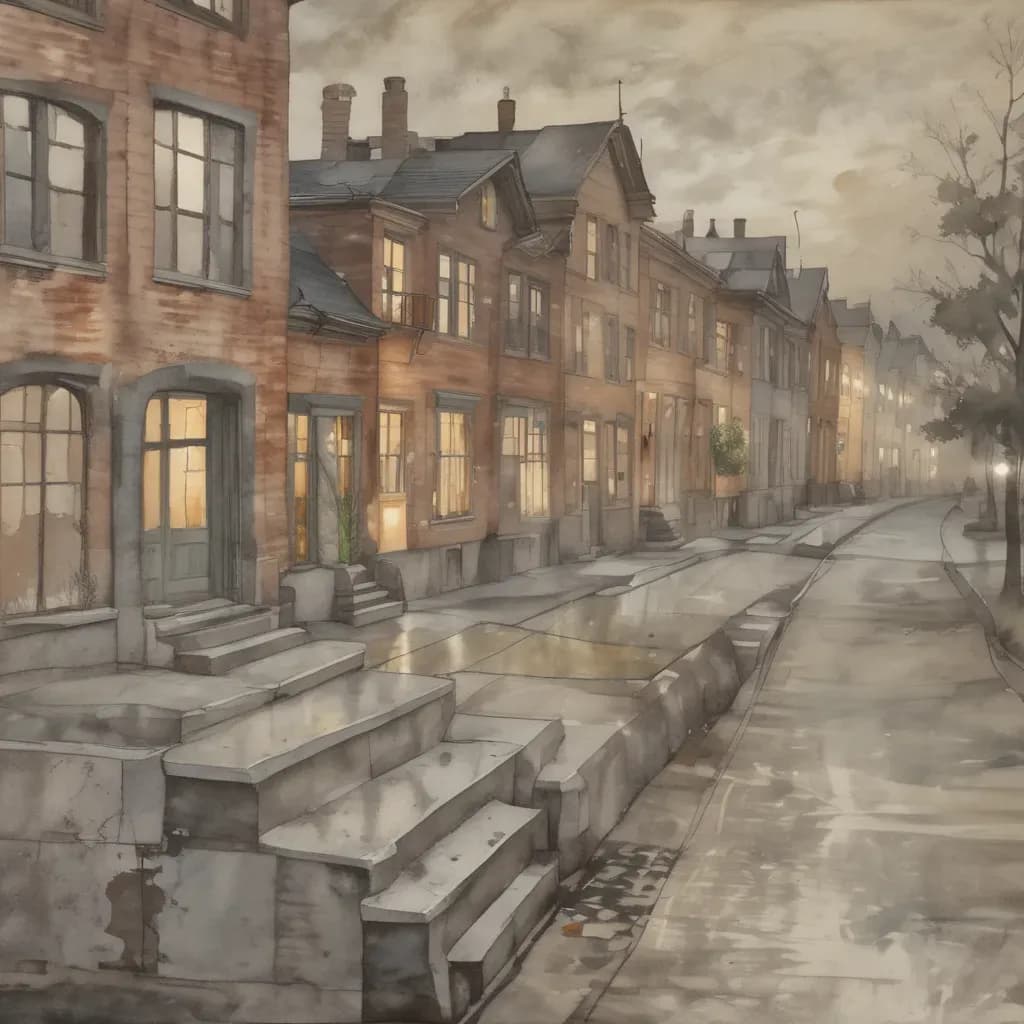
The title does double duty from the start. In Fayetteville, North Carolina, locals call their city "the Ville," a shorthand that J. Cole has carried with him through every chapter of a career built largely elsewhere. Attached to that is the hip-hop superlative: the villest, the baddest, the most uncompromising. Cole takes both seriously on this track, and the tension between them, between hometown roots and competitive excellence, between pride and grief, is where the song lives.
A Decade in the Making
"The Villest" arrives as track three on Disc 39, the second half of J. Cole's double album The Fall Off, released February 6, 2026. That date was not accidental. The number 2-6 corresponds to the prefix of Fayetteville's area code, a code the city's residents long ago compressed into an identity.[1] Cole released the record on his city's number, on what he has described as his final formal solo statement.
The album had been in the works for nearly a decade, first teased in 2018 and rooted in a 2016 songwriting session where Cole sought to rediscover his technical ambition. Its structure is organized around two imagined homecomings: Disc 29 finds Cole returning to Fayetteville at age 29, pulled between loyalty to his woman, his craft, and his city; Disc 39 revisits that same return at 39, now from the perspective of a married father who has finished his catalog.[2]
Disc 39 is the older man's record. The urgency is different: less to prove in the traditional sense, more to reckon with. "The Villest" sits near its emotional center, and it is not a comfortable place.
The Weight of Survival
The emotional core of "The Villest" is survivor's guilt. Cole reflects on a friend named James, killed in Fayetteville, and returns to a question that has no satisfying answer: why did Cole get out and James did not? The rap career, the chart positions, the sold-out arenas, none of it provides an answer. It only deepens the distance between where he is now and where James no longer is.[3]
This is not unfamiliar territory for Cole. Fayetteville has haunted his catalog since the beginning. But on Disc 39, the treatment is quieter and more precise. There is no performance of grief here, no catharsis delivered through volume or delivery. He speaks as someone who has had years to sit with loss and has found that sitting with it is approximately all one can do.
Cole does not ask the listener to feel sorry for him. He is one of the most commercially successful rappers of his generation, and he knows it. What he asks instead is for honesty about what success actually remedies and what it leaves untouched.
What Money Cannot Cure
Running alongside the grief is a sustained argument against the mythology of earned success. Cole holds up his own life as evidence against the idea that prosperity resolves pain. He observes people who accumulate wealth without accumulating peace, figures who won at the game the culture told them to play and discovered it did not pay what it promised.[3]
This critique is not original to Cole. But his angle is particular. He makes it personal rather than political, grounding it in specific rooms, specific faces, specific bottles passed at a funeral. The structural argument arrives through the autobiographical one, not the other way around.
What makes this persuasive is that Cole refuses to exempt himself from the critique. He is the man with the money, the platform, the reach, and he is also the man who cannot answer why James is gone. The song earns its honesty because he stands inside it.
Erykah Badu and the Weight of Tradition
Featuring Erykah Badu was not a neutral choice. Badu is one of the central architects of neo-soul, a singer and songwriter whose work has consistently centered spiritual inquiry, Black women's inner lives, and a principled resistance to anything slick or easy.[4] Placing her on this particular track signals that Cole wants to reach toward something older and more communal than contemporary rap can typically access alone.
Her vocals do not perform comfort. They hover over the track like something unresolved, a spiritual ache that never resolves into peace. The effect deepens the song's emotional ambiguity: this is not a redemption narrative, and Badu's presence helps hold that discomfort in place. Her ironic contrast with Cole's gritty confessions highlights the distance between promised dreams and lived reality.
There is also a generational dimension to the collaboration. Badu is an elder in the lineage of Black American music that has always interrogated what mainstream success costs the soul. Her presence places "The Villest" in that lineage explicitly.
Fayetteville's Inheritance
Cole situates his personal grief within a larger structural argument. He traces how conditions of poverty and violence that shaped his neighborhood were not spontaneous events but inherited circumstances, handed down through generations that had fewer options and narrower margins.[3] His father's generation, he suggests, left behind an environment that was already predatory before Cole's generation arrived in it.
This is not grievance for its own sake. It is the kind of historical accounting that separates genuine artistic ambition from simple autobiography. Cole is asking what a city does to its young men over time, and the question lands harder for being asked by someone who escaped the answer.
Fayetteville, a mid-sized Southern city built around Fort Bragg (now Fort Liberty), sits at a distance from the cultural centers that typically define hip-hop geography. Cole's insistence on claiming it, returning to it, and holding it accountable is itself an artistic position.
Mythology in the Ordinary
Several images in the song carry significant weight. The notebook, a recurring symbol in Cole's catalog, reappears as a container for everything he was before he was famous: the ambitions, the losses, the unprocessed emotions of a young man from a mid-sized Southern city who believed his way out would be through writing.[3] On Disc 39, the notebook is a relic, not a tool. Looking at it means looking at who you were.
The figure of Medusa represents the psychic armor required for survival in a dangerous environment, the process by which feeling is turned to stone by necessity. Cole uses her not as mythology for its own sake but as shorthand for an experience that many listeners from similar backgrounds will recognize without needing it explained.
And the serpent, associated with both temptation and mourning rituals in communities where formal grief resources are scarce, surfaces alongside alcohol. The bottle at a funeral is one of American culture's most loaded images. Cole handles it without sentimentality, which is what makes it register.
Competition Reframed
In hip-hop, declaring yourself "the villest" is a competitive move. You are asking to be measured against the best and found superior. Cole has always participated in that tradition, taking technical execution seriously and inviting comparison.
But on this track, he redirects the frame. To be the villest is also to have survived the most, to carry the most weight, to be most shaped by where you came from. The word becomes a mark of experience rather than just ability.[5] Greatness, he implies, is not only what you accomplish. It is what you carry while accomplishing it.
This is where hip-hop has been heading for years: toward a reckoning with what it means to grow old in a genre built on youth, competition, and the performance of invulnerability. Cole is not the first to arrive here, but few have arrived with as carefully constructed a body of work behind them.
An Honest Accounting
"The Villest" is what you get when a rapper lets the performance fall away. The grief is real, the success is real, and neither cancels the other out. Cole ends his solo career not with triumph but with something harder to fake: an honest accounting of what the journey cost, delivered alongside one of the great voices in Black American music, over a track that refuses to let anyone off the hook.
Whether the song translates depends on what you bring to it. For those who have lost someone to the conditions Cole describes, it will arrive differently than it does for someone encountering it as biography or cultural artifact. That range of entry points is part of what makes it significant.
Cole has always been a polarizing figure: praised as a craftsman, criticized as a sermonizer, admired for his consistency, dismissed for his caution. "The Villest" will not resolve those arguments. What it does is demonstrate that at 39, with the catalog closed, he can still locate something true and say it plainly. For a genre that sometimes confuses authenticity with aggression, that is its own kind of villest move.
References
- The Fall-Off (Wikipedia) — Album release context, date significance, tracklist, and chart performance
- J. Cole Fall-Off Tracklist (HipHopDX) — Disc 29 and Disc 39 concept; Cole's explanation of the two homecomings
- Meaning of The Villest by J. Cole (SongSense) — Thematic analysis of the song including survivor's guilt, imagery, and Erykah Badu's role
- J. Cole Reveals The Fall-Off Tracklist (Billboard) — Tracklist reveal including Erykah Badu collaboration announcement
- On his long-awaited Fall-Off, J. Cole returns a new man, old man and everyman (NPR) — NPR critical review of the album