The WhatsApp Shakespeare
When Poetry Becomes a Weapon
Consider the peculiar provocation embedded in this song's title. Shakespeare gave the English-speaking world its most celebrated declarations of romantic devotion. WhatsApp gives us read receipts and disappearing messages. To place those two things in the same name is to identify a certain kind of modern predator with devastating precision: the charmer who has traded the quill for the notification icon without losing any of the rhetorical fluency, or the manipulative intent.
"The WhatsApp Shakespeare" is one of the most bracing tracks on RAYE's second album, "This Music May Contain Hope," released March 27, 2026.[1] Where much of the record turns inward, tracing grief, ancestry, and faith, this song erupts outward into something closer to a public announcement. It takes the emotional terrain familiar from RAYE's debut and reconfigures it through a different lens: not only survival, but warning.
RAYE in Full Command
By 2026, RAYE's arc in British pop was already one of the more remarkable stories of recent years. Born Rachel Agatha Keen in Tooting, south London, she spent seven years at Polydor Records without being allowed to release a debut album. She broke publicly with the label in 2021, signed with distribution company Human Re Sources, and retained ownership of her masters. When "My 21st Century Blues" arrived in February 2023, it was vindication and revelation.
At the 2024 BRIT Awards she won six categories in a single ceremony, setting a record and becoming the first female recipient of the Songwriter of the Year award.[1] The weight of that achievement hangs over "This Music May Contain Hope," but not in the way of an artist coasting on momentum. Critics noted that RAYE seemed to be using her platform to demand more from herself and from her listeners. The album runs seventeen songs across seventy minutes, structured in four seasonal sections moving from Autumn through Winter and into Spring and Summer.[2] Rolling Stone described it as "wildly ambitious"[3]; the NME called it "showstopping musical maximalism."[2]
Within that sprawling architecture, "The WhatsApp Shakespeare" occupies a specific and vital function. The album as a whole moves toward hope. This track provides necessary friction along the way, reminding the listener that hope is not naive, and that the path to it requires naming what we are moving away from.
The South London Lover Boy
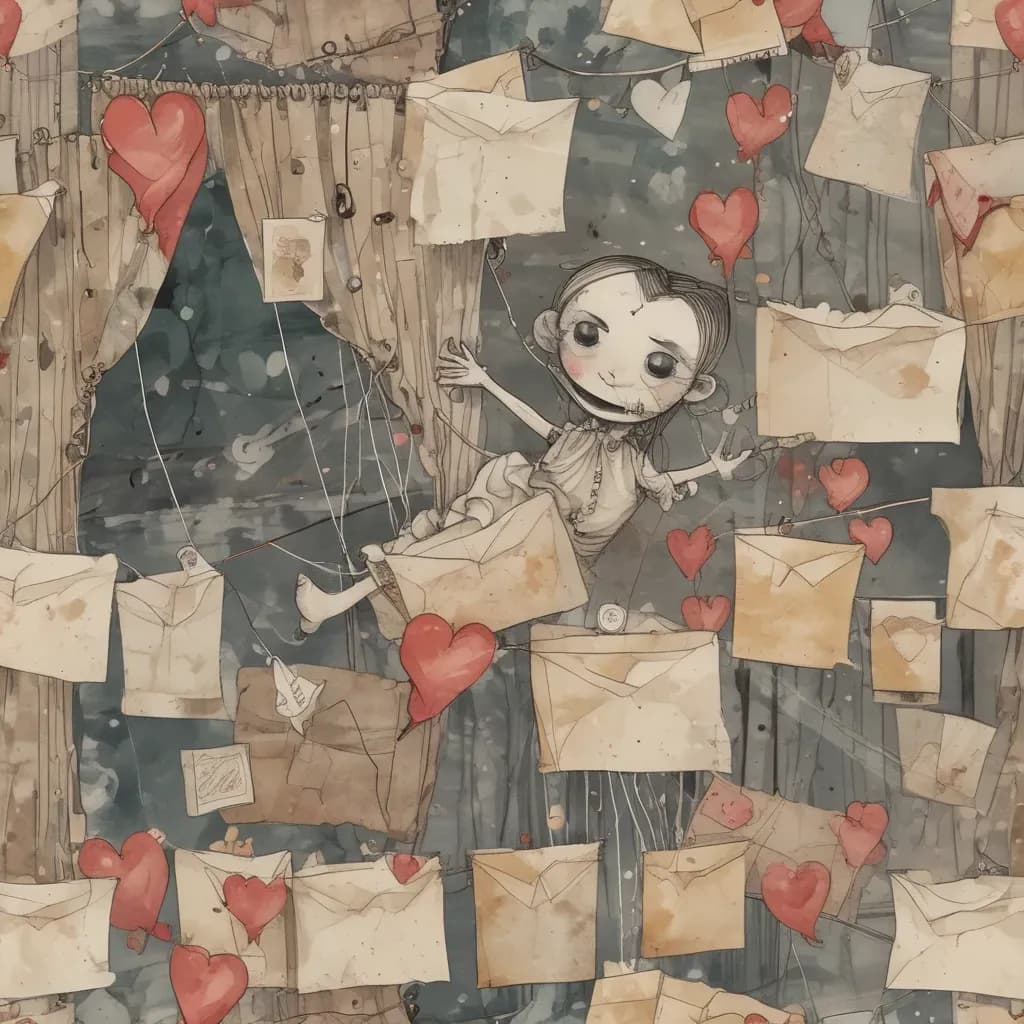
The song's central figure is what might be called a romantic predator of the digital age. He is charming, literate, persuasive. In the world of the song, he has developed a specific persona: the South London Lover Boy, eloquent enough to make his messages feel like correspondence from another century, cynical enough to send the same correspondence to multiple recipients simultaneously.[4]
RAYE maps the arc of his seduction with clinical precision. The opening establishes the appeal: the feeling of being courted by someone unusually articulate, someone whose words feel crafted rather than typed. The narrator is taken in. Of course she is. That is rather the point of the song's central irony.
The turn, when it comes, is not quiet disillusionment. The narrator discovers that she is not singular. She is one of several women receiving the same carefully composed devotion, each believing herself to be the only one. The "Shakespeare" of the title is not a compliment but an indictment: this man has treated emotional manipulation as a literary art form, workshopping his material across a pool of unwitting participants.
WhatsApp as Stage, Language as Costume
What makes the conceit so effective is its specificity about medium. Not digital communication in the abstract, but WhatsApp in particular. A platform designed for intimacy. End-to-end encrypted, personal, implying the kind of directness that email or social media cannot quite replicate. The manipulator choosing WhatsApp is choosing the venue that feels most like a private conversation, most like trust.
RAYE understands that contemporary emotional abuse often operates exactly here, in the space between public and private. The predator of the song is skilled precisely because he understands how platforms create the illusion of closeness. He is performing intimacy on a stage where the audience believes no performance is taking place.
The Shakespearean reference deepens this. Shakespeare's theatre was itself a place of disguise: men playing women, royalty portrayed by commoners, love declared in borrowed light. RAYE invokes this not to flatter her subject but to expose him. The beautiful language was always a costume.
The production reinforces the dual nature of the subject. A track-by-track review noted that the song shifts between "bouncy modern sounds with rhythmic triplets" and something closer to an "old-time swing number," keeping the listener off-balance in a way that mirrors the experience of being charmed by someone whose intentions are unclear.[4] The music itself refuses to settle, just as the man at the center of it refuses to be pinned down.
Community as Antidote
Where the song becomes genuinely original is in its closing movement. The narrator does not simply walk away with hard-won personal wisdom. She broadcasts it. The ending imagines the kind of communal warning system that women have always operated informally and that contemporary messaging platforms have now given new infrastructure. The implicit message is: share this. Pass it on. Let the next woman in line know what the read receipts are hiding.
This is not a subtle structural move, but it is an emotionally satisfying one. RAYE has never been an artist who mistakes anger for righteousness. The dark humor running through the track keeps it grounded and alive. It is funny before it is didactic, and it is a song you can sing along to before you have fully processed what you are singing.
In an NPR interview in April 2026, RAYE described the album as something she made for anyone who needed hope, a soft place to land.[5] "The WhatsApp Shakespeare" earns its place in that album not by offering hope directly but by clearing the undergrowth: naming the patterns that make hope difficult, that make genuine connection seem hazardous.
Cultural Resonance in 2026
The song arrives in a moment when the language of emotional manipulation has been substantially popularized. Terms like "love bombing" and "future-faking" have migrated from therapeutic contexts into mainstream conversation, and a generation of listeners has grown up with vocabulary to describe patterns that previous generations had to learn entirely from experience.
RAYE is not simply giving that vocabulary a melody. She is doing something more artistically interesting: she is finding a form for these experiences that is also musically alive, that turns the material into something with genuine propulsive energy. You can dance to "The WhatsApp Shakespeare" while also being understood by it.
The album's critical reception reflected this balance. Variety noted RAYE's "staggering ambition" in constructing a record this varied and demanding,[6] while reviewers consistently noted that ambition had not compromised accessibility. Several critics cited "The WhatsApp Shakespeare" as a standout precisely because of its tonal control: the equilibrium between wit and hurt, between warning and entertainment.
Another Way to Hear It
It is worth considering whether the song carries a secondary resonance beyond its immediate narrative. "The WhatsApp Shakespeare" can be read as a meditation on charisma itself, and on our collective vulnerability to beautiful language regardless of its source.
In this reading, the manipulator is not just a particular bad actor but a symbol of what happens when eloquence is severed from sincerity. We accept beautiful words as evidence of beautiful intentions, and they are not the same thing at all. The song might be asking its listeners to interrogate not only the people who deceive them but also the conditions that make deception possible, including our own appetite for being told lovely things.
There is also something in the title's contrast between "WhatsApp" and "Shakespeare" that speaks to cultural aspiration. Literary fluency has historically been gatekept; the internet has democratized the appearance of it. The manipulator in the song may have never read Shakespeare. He has learned to deploy the aesthetic of someone who has. The song is partly about the ways that performance and authenticity have become increasingly difficult to distinguish.
RAYE is too sharp an artist to collapse this into a simple moral. The narrator is not blamed for being taken in. The song's sympathy remains entirely with her. But it does gesture toward the larger cultural landscape in which certain people have learned to exploit the hunger for connection by supplying only the performance of it.
What It Adds Up To
"This Music May Contain Hope" is structured as a seasonal journey toward light. The fact that "The WhatsApp Shakespeare" exists within that journey is significant. Hope, the album implies, is not arrived at by bypassing difficulty. It is arrived at by naming difficulty clearly enough that you can identify it and move through it.
In this light, the song functions as a clearing: it names a particular kind of harm with enough specificity and enough wit that the harm loses some of its power. This is what good satire does. It does not undo the damage, but it refuses to let the damage go unnamed.
RAYE has always understood that the path matters as much as the destination. "The WhatsApp Shakespeare" is not a hopeful song, exactly. But it is a free one.
References
- This Music May Contain Hope - Wikipedia — Album details, release date, tracklist, and seasonal structure
- 'This Music May Contain Hope' review: showstopping musical maximalism — NME album review; seasonal structure and 'showstopping musical maximalism' quote
- RAYE Goes for Broke on the Wildly Ambitious 'This Music May Contain Hope' — Rolling Stone album review; 'wildly ambitious' quote and critical framing
- RAYE - This Music May Contain Hope: Track by Track Album Review — Track-by-track analysis including production details and the 'South London Lover Boy' characterization
- Raye talks about her artistic journey and new album 'This Music May Contain Hope' — NPR interview; RAYE on hope as the album's focal point
- Raye's 'This Music May Contain Hope' Album Review — Variety album review; 'staggering ambition' quote and critical reception