Thumbs
There is something almost deceptively simple about the title "Thumbs." A twiddle of the thumbs, a gesture so ingrained it barely registers as a gesture at all -- just something idle hands do when a mind has checked out. For Sabrina Carpenter, that small habitual motion became the seed of one of the most pointed social commentaries in her catalog: a crisp, propulsive pop song about the danger of passive acceptance and the cost of letting the world run without your participation.
Released in October 2016 as a promotional single from her second studio album EVOLution, and then pushed as a proper commercial single in January 2017, "Thumbs" arrived at a moment when the concept of collective passivity felt deeply loaded. It became her first Platinum-certified single and her first number-one on Billboard's Bubbling Under Hot 100[1]. It was also, in a quieter way, the song that introduced a wider audience to what Sabrina Carpenter was actually capable of saying.
Seventeen and Paying Attention
Carpenter was born May 11, 1999, in Quakertown, Pennsylvania[2]. By the fall of 2016, she was seventeen and still starring as the fierce, complicated Maya Hart on Disney Channel's Girl Meets World (2014 to 2017), navigating two worlds at once: the carefully managed expectations of a network that skewed young and the urgent creative pressure of an artist who wanted to say something real.
EVOLution dropped on October 14, 2016, two weeks before a presidential election that had turned the national conversation into a sustained argument about identity, responsibility, and civic engagement[3]. The album represented a decisive shift from her folk-pop debut Eyes Wide Open (2015), leaning into dance-pop, R&B-inflected grooves, and electronic sheen. Carpenter had co-written nearly every track on the record, using the album-making process as an explicit act of artistic ownership. "Thumbs" is the notable exception.
The Songwriters Behind the Song
"Thumbs" was written by Priscilla Renea and Steve Mac, with Mac also handling production[1]. The fact that Carpenter did not pen this one herself makes its resonance with her more interesting, not less. She found in this song a statement she needed to make. In interviews, she described feeling drawn to the song's message because of what was happening in the world around her -- a sense that too much hate and repetition was going unchallenged[4].
Steve Mac is one of the most decorated producers in contemporary pop, with a track record spanning from boy-band arena anthems to Ed Sheeran's most affecting work. His production on "Thumbs" leans into urgent rhythmic momentum. The arrangement is propulsive and insistent, a percussive drive that makes the song feel like it is moving even when it is describing the paralysis of stillness. Priscilla Renea, best known for writing across the pop and R&B spectrum, brought a sharpness to the lyric that elevates it beyond standard empowerment territory into something more specifically observed.
What the Thumbs Actually Mean
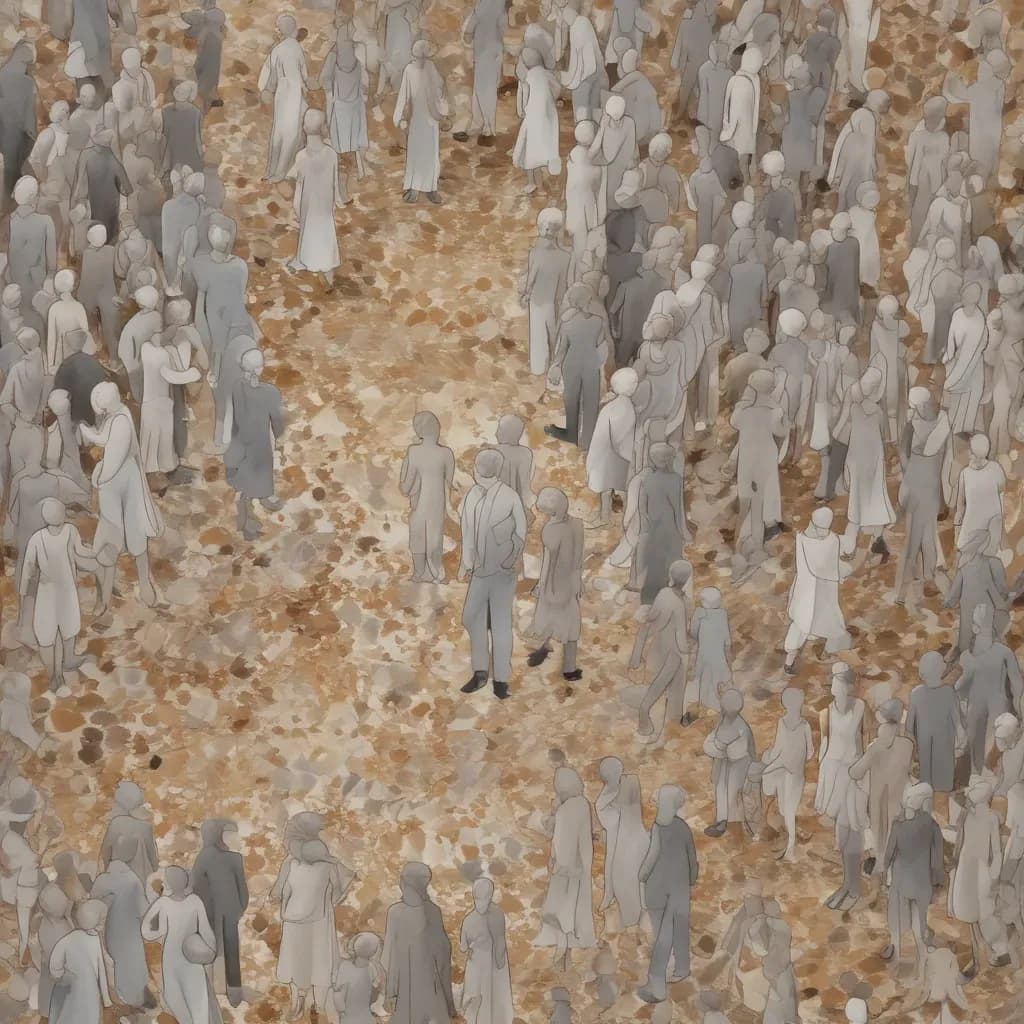
The image at the center of the song is instantly legible: thumb-twiddling as the physical manifestation of going-nowhere thinking. It is what happens when someone has the capacity to act and chooses, consciously or unconsciously, not to. The song frames this passivity not as simple laziness but as a kind of contagious compliance, a cultural default mode that produces the same bad outcomes on a repeating loop.
One of the most discussed passages in the song involves a lineage image, a family tree stretched across generations carrying the same patterns forward[5]. Without naming any particular ideology or group, the lyric makes a pointed observation about how behaviors -- including harmful ones, including ones that keep injustice in place -- get passed down and normalized. It is specific enough to be arresting and general enough to apply across a wide range of listeners' experiences.
The song also carries a strand of epistemological caution: a warning against absorbing whatever circulates without letting it pass through one's own critical faculty first. This skepticism toward received wisdom, heard through the lens of a 2016 media environment saturated with noise and misinformation, lands with considerable force. Carpenter's vocal delivery adds a layer of nuance that keeps the song from becoming a lecture. She performs it with something close to affectionate exasperation, as if speaking to someone she genuinely cares about rather than condemning an adversary.
Love Spelled Backward
To understand "Thumbs" fully, it helps to hold the entire album in mind. The title EVOLution deliberately capitalizes its first four letters to spell "EVOL," which is "love" reversed, and Carpenter described the album's central concern as love in its broadest, most universal sense[4]. Not romantic love primarily, but the structural force that makes people show up for each other, question what harms each other, and refuse to let cycles of indifference continue.
Within that frame, "Thumbs" is not purely a protest song. It is a call toward something. The complacency the song decries is, at root, a failure of love -- love for one's community, for one's own principles, for the people harmed when nobody bothers to speak up. To snap out of passive acceptance is, in this reading, an act of care. The song does not only describe what to stop doing. Beneath the frustration, it implies something about what to do instead.
One Take on a Moving Train
The official music video for "Thumbs," released February 9-10, 2017 and directed by Hayley Young, made an immediate impression[6]. Shot in a single continuous take aboard a New York City subway car, the video follows Carpenter through a crowded public space while the city rushes past the windows outside. The formal choice -- no cuts, no edits, no second chances -- mapped perfectly onto the song's message about choosing intentionality over inertia.
Few settings better represent collective momentum that nobody actually controls. A subway car is full of people all moving in the same direction because the same machine is moving them, not because any individual chose that direction with particular conviction. As a visual metaphor for the thumb-twiddling the song describes, it was precise without becoming heavy-handed. Critics and fans responded warmly[7]. The video gave the song a second wave of attention and helped solidify its reputation as something more carefully considered than the average teen-pop promotional clip.
Breaking Through and Staying Heard
"Thumbs" reached number one on Billboard's Bubbling Under Hot 100 chart and was eventually certified Platinum by the RIAA, Carpenter's first single to achieve that certification[1]. She performed the song on The Late Late Show with James Corden in April 2017, as well as at the Radio Disney Music Awards and on the Today show. Each performance underlined the same point: this was not content produced for a branded context. It had a point of view that could stand on its own stage.
The timing of the song's run in the culture -- its October 2016 promotional release through early 2017 -- meant it was being heard against the backdrop of genuine political disruption in the United States and beyond. The song itself takes no partisan position. What it describes, the frustration of watching the same cycles repeat while people stand by, found a ready audience among listeners who felt, with some urgency, that exactly that was happening. AllMusic praised EVOLution for Carpenter's growing artistic maturity, describing the album as evidence that she was not just another Disney act moving through adolescence[8]. "Thumbs" was the clearest demonstration of that case.
Other Ways of Hearing It
Not every listener comes to "Thumbs" as a wide-angle cultural commentary. Some hear it as a more personal song, addressed to specific people in Carpenter's life rather than to an abstract collective. The family-tree passage invites a reading in which the lineage of complicity belongs to one particular household rather than to society at large. In that reading, the song becomes a kind of private reckoning, a young woman naming patterns she has observed up close.
There is also a case for reading it as subtle industry commentary. A seventeen-year-old signed to a major label, developed within the Disney ecosystem, releasing a song about the danger of marching to someone else's drum -- the irony is present and arguably intentional. The production is urgent and polished, a pop machine serving a lyric that questions pop machines. Whether that tension is the point or simply the texture of the song's context is something each listener gets to decide.
None of these readings cancel the others. The song's ambiguity is part of its staying power. The human tendency it describes -- defaulting to what is familiar and expected, going through motions, not questioning the currents that carry you -- shows up in bedrooms and boardrooms and ballot boxes alike. The song fits multiple contexts because the behavior it criticizes is genuinely universal.
What It Earned
For Sabrina Carpenter in 2016 and 2017, "Thumbs" was the sound of not fitting neatly anymore. She was a teenager still completing episodes of a Disney series while touring behind a pop record that wanted to say something about the state of the world. The tension in that biography gave the song a particular credibility: here was someone who could have stayed comfortably in her lane and chose not to.
The song's legacy has only grown with distance. As Carpenter achieved far larger commercial breakthroughs in the years that followed, fans revisiting her catalog most often cited "Thumbs" as the moment the ambition became audible. It was the track that suggested, long before the numbers confirmed it, that she was going somewhere specific.
In the end, a twiddle of the thumbs is a small thing. It costs nothing and accomplishes nothing. That is exactly what makes it the right metaphor for what the song is warning against. "Thumbs" asks its listeners to be more expensive than that -- to cost something, to take up intentional space, to refuse the easy comfort of going along. Coming from a seventeen-year-old navigating the machinery of the entertainment industry, that ask carried a particular kind of weight.
References
- Thumbs (song) - Wikipedia — Chart performance, certifications, release history, and songwriting credits
- Sabrina Carpenter - Wikipedia — Biographical context including birth date, Disney career, and discography
- EVOLution (Sabrina Carpenter album) - Wikipedia — Album context, recording details, release date, and thematic arc
- Sabrina Carpenter Interview - iHeartRadio — Carpenter discusses the song's meaning and the album's themes of universal love
- Thumbs by Sabrina Carpenter - Song Meanings and Facts — Analysis of lyrical themes including the family tree passage
- Sabrina Carpenter's 'Thumbs' Video: Watch - Billboard — Coverage of the one-take music video directed by Hayley Young
- Sabrina Carpenter Drops 'Thumbs' Music Video - Just Jared Jr. — Fan and press reception of the one-take music video
- EVOLution - AllMusic Review — Critical reception and artistic assessment of the album