Timeless
Some songs announce their subject with a thesis. "Timeless" does something quieter: it lingers in a single evening and lets the listener feel the clock lose its grip. In a record about a love that never got a proper beginning or ending, this is the track where the relationship is at its most unguarded and its least complicated.
Where the song sits
"Timeless" arrives ninth on Snoh Aalegra's fourth studio album, Legendary Love, released on November 13, 2026.[3] It follows "Warmest Shade of Blue" and precedes "Nothing Compares," so it lands in the stretch where the album's early attraction has settled into something that feels like permanence, even as the listener knows the record is heading toward loss.[3] That Love Podcast describes the album's second half as reaching for a larger sense of permanence, and "Timeless" is the track where that reach is most literal.[3]
The credits are only partly documented. The Line of Best Fit identifies the song as a co-write with Babyface and says its rhythm track comes from No I.D., which gives it what the reviewer calls a contemporary frame.[1] Both names carry weight in R&B: No I.D. has been Aalegra's close collaborator since her ARTium Recordings signing, and Babyface is a defining songwriter of the genre's romantic tradition. A song that pairs a modern rhythmic spine with a veteran romantic songwriter is a fair description of what the whole record is trying to do.
The story behind the record
To understand "Timeless," it helps to understand what the album is about. Legendary Love was written and recorded over roughly two and a half years and was inspired by a relationship that Aalegra has described as a dated karmic connection that never fully materialised.[4] In her NPR interview she called the man at its center a very beautiful muse, and she noted that she had never before written a complete album about one person.[2]
She also described the love itself in mythic terms. It had no true beginning and no true ending, she said, and felt like a saga.[2] That phrasing explains a great deal about how the songs behave. A relationship without clean edges cannot be told as a story with a first act and a last act. It can only be told as a series of moments, each one remembered with the intensity of something that happened outside ordinary time.
Aalegra summed up her philosophy of the project in a line given to the press: the greatest love stories are not measured by how long they last but by who they ask you to become.[4] She has also said that she fell in love with growing up, and that love brought her back to music.[4] Placed alongside "Timeless," these statements suggest that duration is the wrong yardstick. The title is not claiming that the relationship lasted forever. It is claiming that certain hours escape the arithmetic of lasting.
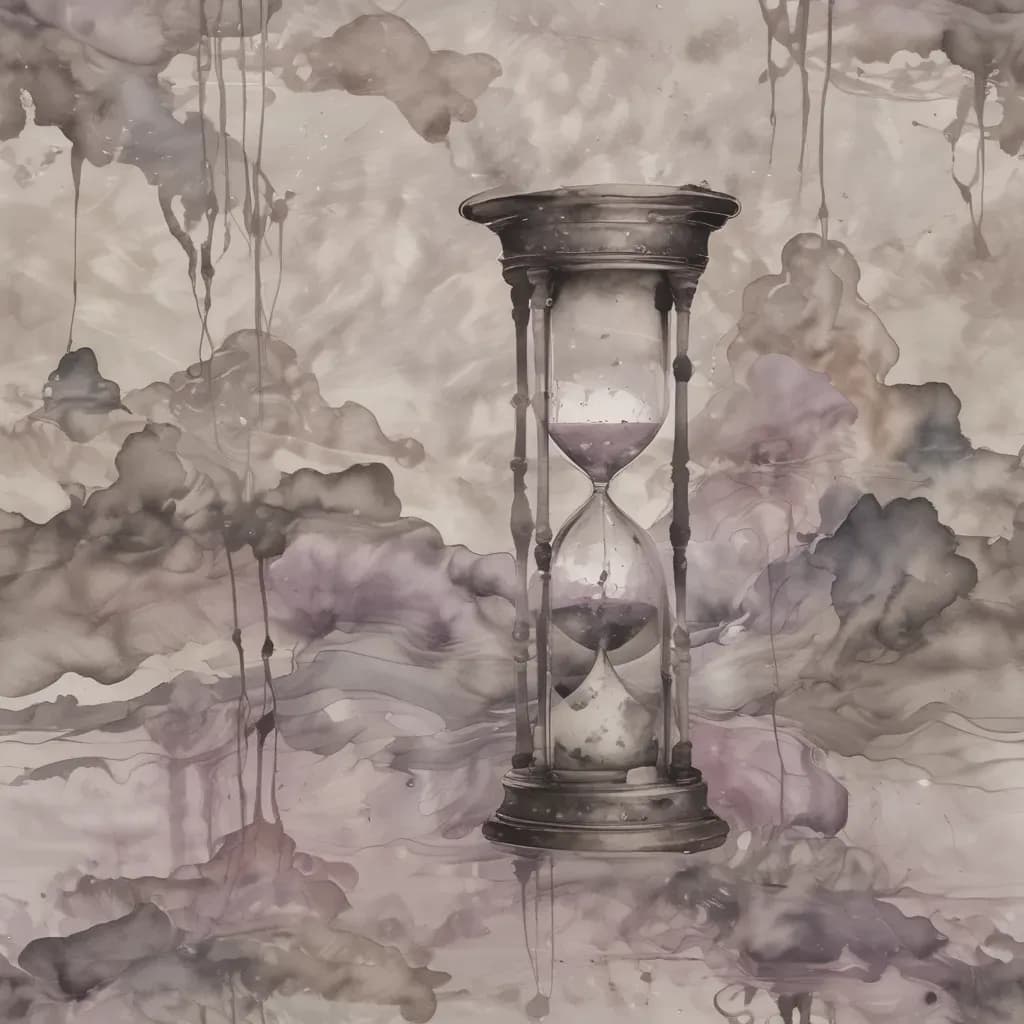
One evening that refuses to end
The most concrete account of the song's subject comes from NPR host Sacha Pfeiffer, who put it to Aalegra directly in their conversation. Pfeiffer read the song as a portrait of a connection with someone and of an evening spent together, and she pointed to its picture of conversation so absorbing that neither person wants it to stop.[2] The lyrics, in her telling, describe talking for hours without boredom, and they build the idea of time standing still, which supplies the song's title.[2]
This is a surprisingly specific and modest kind of romance. There is no grand gesture and no declaration staged for an audience. The intimacy is conversational. Anyone who has lost an entire night to talking with a person they were just getting to know will recognize the experience: the sense that the usual signals of lateness, tiredness and obligation have been switched off. Pfeiffer called it relatable, and that is the point. The song's power comes from how ordinary the miracle is.
It also helps to notice what the song leaves out. It does not dwell on the doubt, regret and self-blame that reviewers identify elsewhere on the album.[3] Those feelings are a few tracks away. Here, the attention stays on presence. By removing the shadow of what came afterward, the song lets the listener experience the relationship the way its memory insists on preserving it, at full brightness.
Memory as editor
Here is where "Timeless" becomes more than a pleasant love song. Because the album is retrospective, a track like this works on two levels at once. On the surface, it describes a night that feels endless. Underneath, it is a memory being polished by someone who knows how the story turns out.
That Love Podcast frames the record's emotional range as running between devotion and doubt, and describes the past love being remembered as larger than it was.[3] Read in that light, the title carries a double edge. Something called timeless can be an experience that transcends time while it happens. It can also be an experience that has been lifted out of time by memory, preserved and idealized because it can no longer change. The song does not need to choose between those readings, and the album placement invites both.
Aalegra's own comments reinforce the doubleness. She has said that every song on the album holds a piece of who she was and who she became.[4] A song about a perfect evening, written years later, is a piece of the former self seen through the latter one. The warmth comes from the evening. The hush that surrounds it comes from distance.
Sound as meaning
The sound of the album supports this reading. The Line of Best Fit notes that the synths, drum machines and guitars were all recorded on gear from the 1980s, and describes the record's move away from her earlier neo-soul feel toward a style it calls sophisti-pop.[1] In the NPR interview, Aalegra said she is very, very influenced by Prince on this album, and Pfeiffer heard echoes of Michael Jackson and Prince in the synths and vocals.[2] She also said the connection made her feel like her favorite songs growing up.[2]
That last remark is worth pausing on. A love that felt like her favorite childhood songs is a love already coded as nostalgia, even in the present tense. Choosing period instruments to score it is therefore not just a stylistic preference. It is a way of building the feeling of timelessness into the materials. Equipment from four decades ago cannot help but suggest that an older moment is being replayed, and the contemporary rhythm track that the review credits to No I.D. keeps the result from sounding like a museum piece.[1]
As for the performance, the same review says Aalegra's voice steals the show again on this track, and it singles out a lightness in her phrasing that it associates with younger R&B singers.[1] Lightness suits the subject. A song about an evening that passes without friction would sound wrong if it were sung with strain. The delivery behaves like the night it describes, easy and unhurried.
A less certain reading
It is fair to acknowledge how little has been said publicly about this particular song. At the time of writing, Aalegra does not appear to have discussed "Timeless" on its own in any interview, and the published commentary consists of a sentence of credits in one review, a passing description in another, and the NPR host's summary. Everything beyond that is interpretation, and interpretation can differ.
One alternative reading treats the song less as a memory and more as a wish. Placed late in a sequence that moves from attraction to loss, a song about unending time could be the moment where the narrator admits what she wanted the relationship to be, rather than what it was. In that version, the word timeless is aspirational, a request that the night be allowed to count for more than the relationship's modest duration.
A second reading is simpler and arguably truer to the NPR description: it is just a song about a good night. Not every track on a heartbreak record must carry the weight of the heartbreak. Some are there to establish what was lost, and "Timeless" does that job by being sincere about how good things were. Without a scene like this, the regret of the closing tracks would have nothing to measure itself against.
Why it resonates
The reason this song works for listeners who have never met the muse behind the album is that its central experience is nearly universal. Most people can name a conversation that ran past midnight and left them lightheaded, one in which hours passed like minutes. The song does not ask the audience to share Aalegra's biography. It asks them to remember their own version of that evening.
It also fits a broader appetite for R&B that looks backward without being trapped there. The Line of Best Fit places the album within an ongoing revival of the quiet storm style, and while that review has reservations about how far the second half moves beyond pastiche, it treats Aalegra's vocal performance as a consistent strength.[1] "Timeless" is where the record's nostalgic apparatus and its emotional subject line up most neatly: a modern track dressed in older sounds, about a moment that feels older than it is.
Conclusion
"Timeless" is a small song carrying a large idea. It suggests that the value of a relationship might be found in the hours that escaped the clock rather than in the years that did not. Set within an album about a love without a true beginning or ending, it works as a fixed point, a night held steady while everything around it drifts.
Whether you hear it as a snapshot of a good evening, a memory improved by distance, or a quiet wish, the song asks the same thing of the listener: to stay in the room a little longer. Aalegra has said that the greatest love stories are measured by who they ask you to become.[4] On this track, the answer is someone who, for one evening at least, stopped counting.
References
Keep reading
More by Snoh Aalegra
More R&B
- Purple Rain Prince
- 1999 Prince
- Little Red Corvette Prince
- When Doves Cry Prince
- Raindance Dave
- The Thrill Is Gone B.B. King