Trampoline
There are songs that make their meaning available instantly. "Trampoline," the 2016 single from London trio Kero Kero Bonito, does not trouble itself with ambiguity. It arrives with a production that sounds like morning sunlight rendered audible, and its narrator begins in a state of familiar complaint: nothing to do, the afternoon stretching out shapeless, the day offering very little in the way of invitation.
What happens next is the whole point.
The Band and the Moment
By the time "Trampoline" arrived as a single in September 2016, Kero Kero Bonito had spent several years building a devoted following out of an unlikely formula. Vocalist Sarah Midori Perry, of mixed Japanese and British heritage, met producers Gus Lobban and Jamie Bulled after responding to an advertisement the two Bromley-raised friends had posted on MixB, an online community for Japanese expatriates in the UK.[1] The three were looking for something specific: a sound that could blend English indie pop sensibility with the J-pop and video game music they had grown up loving.
"Trampoline" appeared as the third single from their debut studio album, Bonito Generation, released October 21, 2016, on Double Denim Records.[2] The album was the culmination of a creative period that the band described as an attempt to become a bit more songwriter-focused, moving away from the looser collage of their earlier material.[3]
Producer Gus Lobban later acknowledged an interesting musical coincidence inside the song: the production carries faint traces of "A Cruel Angel's Thesis," the iconic opening theme from the anime series Neon Genesis Evangelion. Lobban suggested this was unconscious, a memory surfaced from a childhood steeped in anime.[3] For a song about the power of discovered joy, that echo carries real weight. "A Cruel Angel's Thesis" is itself a piece about childish innocence colliding with an overwhelming world.
The Metaphor at the Center
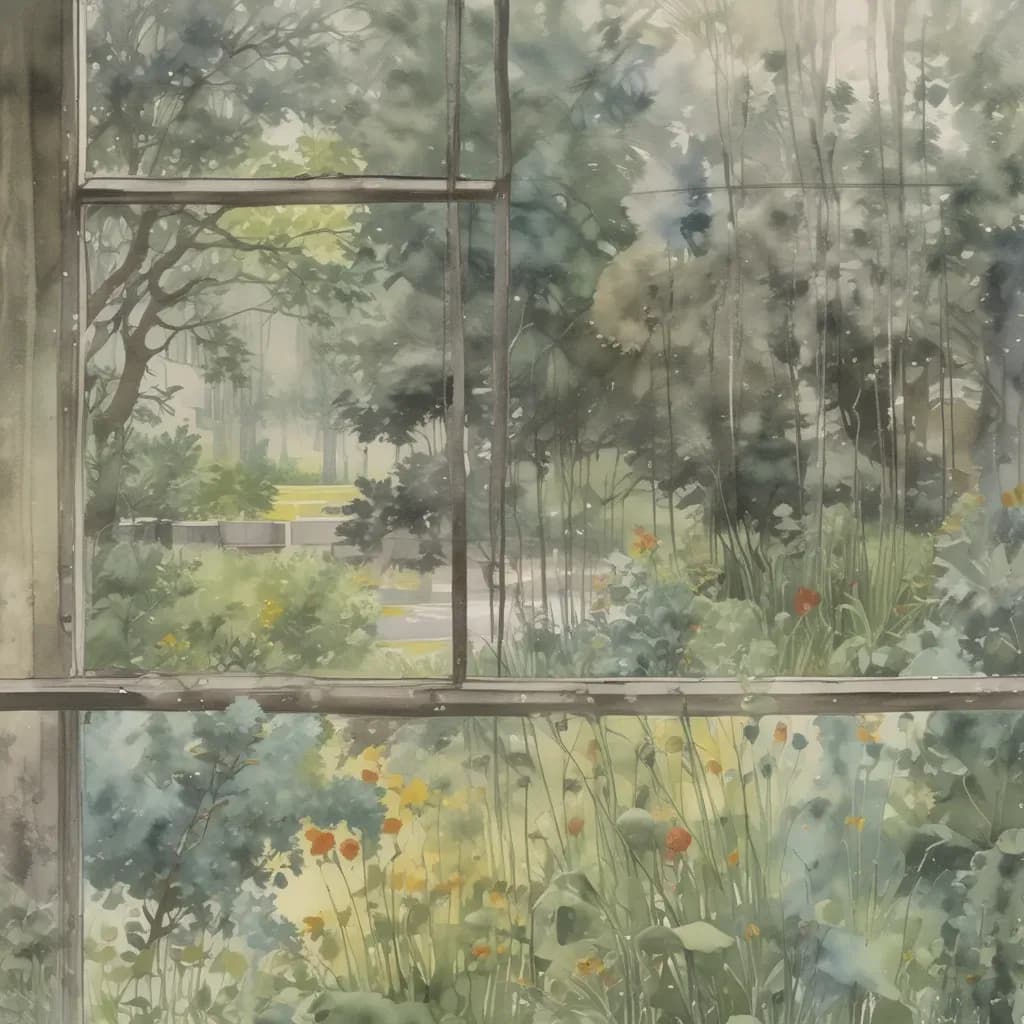
The song begins in ordinary stasis. The narrator describes a grey, rainy afternoon with nothing to occupy the time.[4] This is not dramatic suffering. It is contemporary boredom, the specific variety that belongs to having an internet connection and still finding the afternoon unbearably empty.
The discovery of the trampoline is the pivot, and it is handled with deliberate simplicity. The narrator finds it, gets on it, and bounces. The transformation from grey stasis to joyful motion is not gradual. It is immediate, physical, and absurdly available.
Bouncing turns out to be the whole argument. The song proposes that resilience is not a matter of strategy or stoicism. It is physical, immediate, and findable in a backyard. The central image, of bouncing back after falling down, is delivered with enough earnestness that any ironic reading feels uncharitable.[4]
The band has been consistent about this approach to the everyday. Lobban described the album's subjects as vehicles for what he called "childlike perspective upon day-to-day existential crises."[3] A trampoline is not a minor subject to them. It is the correct subject, because the feeling it produces is what the song is actually about.
Radical Positivity
This is Kero Kero Bonito operating at full commitment to what they called, without embarrassment, "radical positivity."[3] At a point in indie music when melancholy and ironic detachment were considered marks of seriousness, the band were making maximally cheerful pop and treating the choice as a genuine artistic and even political stance.
Lobban has noted that the music industry tends to treat positive-sounding work as lightweight, and that the band's response was to commit to cheerfulness precisely because it required more courage than performing sadness.[3] "The best pop music is self-evident," Jamie Bulled said during the album's promotional cycle, and "Trampoline" is a working definition of that claim.
Sarah Perry's vocal delivery is central to how the song lands. She brings a clarity and lightness to the material that refuses to wink. The delight is not performed. The song commits to it, and the commitment is what makes it work.
But the song is also honest about its particularity. The narrator is not in a general state of resilience. She is in a specific yard, with a specific piece of equipment, on a specific kind of afternoon. The scenario grounds the abstraction. Bouncing back is possible here, in these conditions. The song does not promise it is possible everywhere.
Reception and Cultural Legacy
When "Trampoline" arrived alongside its music video on October 25, 2016, NPR covered it the same day, framing it as an answer to a life that has become a total bore.[4] The coverage helped introduce the band to a broader American audience at the same moment Bonito Generation was landing in full.
The video, directed by Theo Davies, literalizes the song's transformation. A grey, muted world fills with confetti and color the instant Perry discovers the trampoline.[2] It is a concept that could easily feel precious. Instead it functions as both sincere illustration and modest pop-visual craft.
Bonito Generation collected strong notices, earning a Metacritic aggregate of 81.[5] Clash Magazine awarded it nine out of ten, singling out "Trampoline" specifically for capturing "the giddy, child-like feeling of, yes, jumping up and down on a trampoline."[6] DIY Magazine praised the album's density of would-be singles, calling the band's formula of breezy hooks and emotional wit something close to perfected.[7]
The album's longer cultural shadow belongs to hyperpop, a genre that crystallized in the late 2010s. Kero Kero Bonito are frequently cited alongside the PC Music collective as foundational figures in this aesthetic.[1] "Trampoline" is one of the clearest early examples of what hyperpop could offer at its most appealing: earnest maximalism, childlike energy, and a refusal to choose between art and fun.
Reading Between the Lines
Not every listener receives "Trampoline" as straightforward uplift. A strand of critical reading treats the relentless brightness of Bonito Generation as inherently unstable, a pop surface that acknowledges the anxiety it is trying to outrun. In this reading, the song is less a simple celebration of resilience than an account of how thoroughly one must sometimes throw oneself into physical, almost frantic joy in order to escape the grey static of an empty afternoon.
There is also a generational argument embedded in the scenario. Bonito Generation is an album that speaks explicitly to young adults in the mid-2010s, a cohort navigating shrinking job markets, political disenchantment, and a cultural atmosphere of contraction.[8] Jumping on a trampoline during an afternoon with nothing to do is not separate from that context. It is what you do when the usual options have run out. The optimism is genuine, but so is the afternoon that made it necessary.
Some critics also note a quiet specificity in the premise. Not every grey afternoon includes a trampoline. The song cannot resolve that tension, but it does not pretend the tension does not exist. The concrete details of the setting keep it from becoming a universalizing slogan.[7]
Why It Lasts
"Trampoline" does something genuinely difficult. It makes a case for joy without making the listener feel condescended to for being moved. The production is bright enough to feel like a physical sensation. The melody carries unconscious echoes of anime childhoods. The central metaphor is available in the best way: obvious once you encounter it, impossible to unsee.
Kero Kero Bonito built their early reputation on exactly this kind of work. The refusal to disguise earnestness as something cooler, the insistence that a trampoline on a grey afternoon is a legitimate subject for pop, the commitment to documenting what it feels like to be young and bored and then, briefly, airborne.[3]
That combination is rarer than it looks. The song knows it, and the reason it has lasted is that listeners do too.
References
- Kero Kero Bonito - Wikipedia — Band biography, formation story, discography, and hyperpop context
- Trampoline (Kero Kero Bonito song) - Wikipedia — Song history, release dates, chart performance, and music video details
- Kero Kero Bonito's Radical Positivity Pop - Stereogum — 2016 interview covering production philosophy, the NGE theme echo, and the band's radical positivity ethos
- Is Life A Total Bore? Jump On Kero Kero Bonito's 'Trampoline' - NPR — NPR coverage of the music video release on October 25, 2016
- Bonito Generation - Wikipedia — Album history, critical reception, and Metacritic aggregate score
- Kero Kero Bonito - Bonito Generation Review - Clash Magazine — 9/10 review singling out Trampoline for its giddy childlike energy
- Kero Kero Bonito - Bonito Generation Review - DIY Magazine — Album review praising the density of would-be singles and the band's quick-fix formula
- My Generation: Kero Kero Bonito - DIY Magazine — 2016 interview on the album's generational themes and political context