Turned Off
"Turned Off" arrives early on Jenny Death, the second disc of Death Grips' double album The Powers That B, and it does something precise: it names the disc's operative state. Two tracks in, the listener has already been hit with ferocious drumming, distorted guitars, and the particular aggressive energy that distinguishes Jenny Death from nearly everything else in the Death Grips catalog. "Turned Off" consolidates all of that into a philosophical statement. The title is the thesis. The music is the argument.
A Band at Its Own Funeral
Understanding "Turned Off" requires understanding the strange circumstances that produced it.
Death Grips released the first disc of The Powers That B, titled Niggas on the Moon, as a surprise free download in June 2014.[1] Two weeks later, they announced their breakup via a message written on a paper napkin and posted to Facebook. The communication was terse and final-sounding: they were done. A planned co-headlining tour with Nine Inch Nails and Soundgarden was cancelled. The internet treated it as an ending.[1]
Jenny Death, the second disc, had already been recorded. Rather than release it quietly, the band spent the intervening months staging a slow-burn trolling operation. In January 2015, they released Fashion Week, a thirteen-track instrumental album whose track titles, each beginning with "Runway," spelled out the phrase "JENNY DEATH WHEN" when read in sequence. It was a taunt addressed to the fans who had been waiting for disc two.[1] In February 2015, the band uploaded a rehearsal video featuring "Turned Off" and several other Jenny Death tracks being performed live in a practice space. Jenny Death leaked online in March, and the complete double album arrived officially on March 31, 2015.
The record was framed as a farewell. Death Grips have continued making music since, but that framing matters for how "Turned Off" sounds. This is a song made by a band that had declared itself finished, that was completing and releasing a body of work under the formal conditions of an ending. The nihilism in the music is not incidental. It was the operating environment.[2]
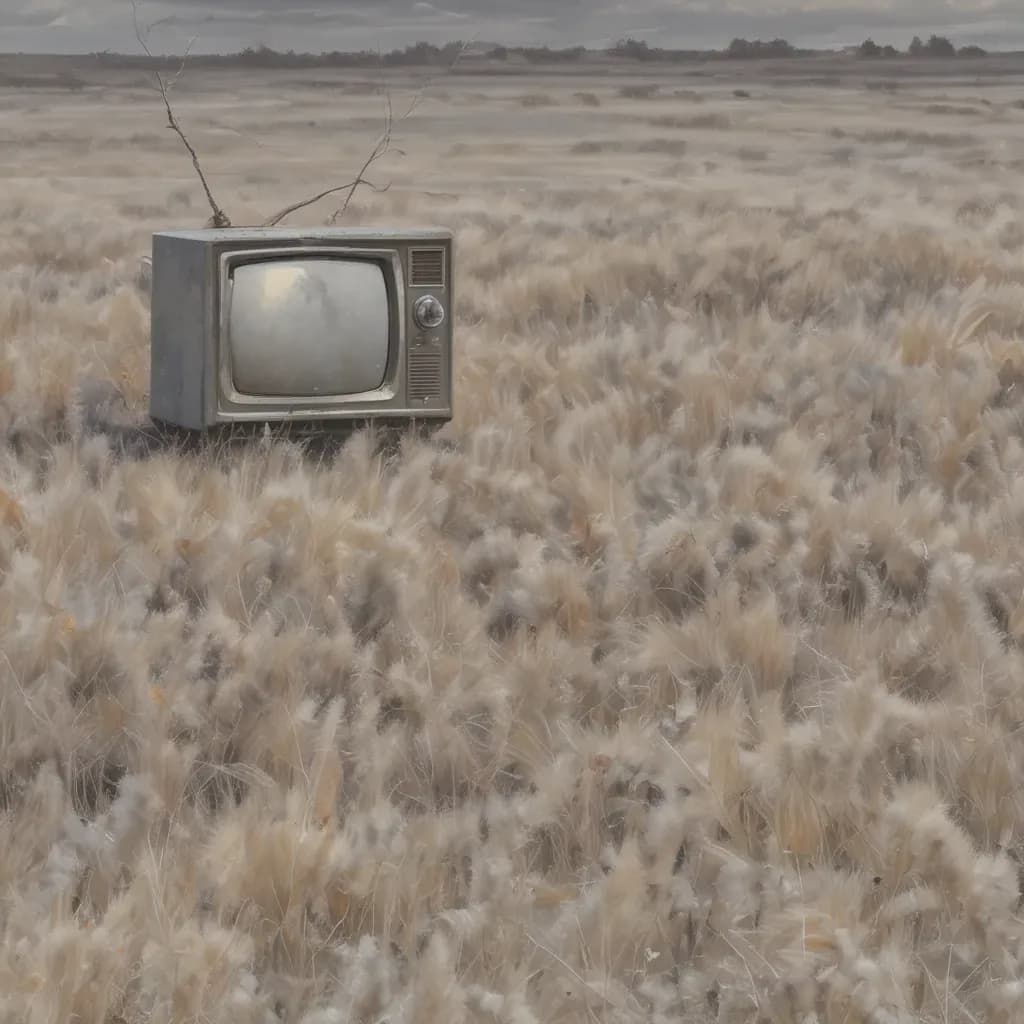
The Sound of Shutdown
One of the most significant things about Jenny Death as a record, and "Turned Off" within it, is what it actually sounds like compared to the rest of the Death Grips catalog.
The first disc, Niggas on the Moon, was largely constructed from processed drum patterns -- all played by Zach Hill on a Roland V-Drum kit -- layered over extensively chopped vocal samples taken from Bjork's catalog.[1] The result was introspective, psychedelic, and deliberately airless. Jenny Death moves in the opposite direction. The disc was recorded at Sunset Sound Studios in Los Angeles with live instruments and featured guitarist Nick Reinhart of experimental indie rock group Tera Melos and keyboardist Julian Imsdahl.
On "Turned Off," Reinhart's contribution is especially legible. The track opens with an ambient, washed-out guitar introduction that lingers -- drifting, almost dissolving -- before the full band crashes in.[3] One critic described it as a "washed-out noisy, almost post-rock guitar lead-in" that "breaks into a fuzzy, cymbal-heavy groove."[4] The contrast between the ambient opening and the aggressive body of the song does a lot of work. It is the sonic equivalent of the conceptual territory the lyrics will cover: a moment of floating emptiness, then the crash.
The Boar's review identified "Turned Off" as one of the standout demonstrations of Jenny Death's approach, specifically praising the way the droning guitar slowly builds into the song's more chaotic center.[5] The track also contains a notable self-referential element: it incorporates a sample from an earlier Death Grips track, treating the band's own catalog as raw material.[6] For a band recording under the formal circumstances of an ending, this is a telling gesture -- cannibalizing the past on the way out.
What "Turned Off" Means
The title announces the song's preoccupation without ambiguity. The narrator inhabits a state of radical disconnection: a refusal, or an achieved incapacity, to engage with the normal operations of conscience, empathy, and human connection. Whatever pleasure exists in this state comes not from conventional experience but from negating it.
Critics noted that the lyrical content implies a worldview in which ordinary markers of moral or emotional engagement are treated as liabilities rather than features.[7] The narrator sounds, as one reviewer put it, as nihilistic and frightening as MC Ride has ever allowed himself to sound on record, presenting what functions as an anti-manifesto for living in a permanently shut-down state.
The track's physical imagery extends this logic all the way to the body. References to mortality and to specific preferences regarding how and whether the body fails create an atmosphere in which the narrator's disengagement is not abstract but total.[7] The voice is not horrified by this. It is not anything. That flatness -- the absence of affect where affect should be -- is the point.
This connects to one of the organizing ideas of Jenny Death as a whole. Across the disc, several critics have identified a pattern of what might be called ritualized self-destruction: not literal annihilation, but an enacted, almost ceremonial dissolution of the self, treated as a form of ascent rather than defeat.[8] "Turned Off" articulates where that process terminates. Once the self has undergone sufficient erosion, what remains is not peace and not chaos but a kind of operational blankness. The machinery is still running. The person running it has left.
Position in the Arc
Where a song sits on a record matters. Jenny Death opens with "I Break Mirrors with My Face in the United States" (named after a literal technique MC Ride used to generate sounds during recording) and then moves into "Inanimate Sensation," which pushes further into the territory of dissociation and detachment. "Turned Off" arrives third, consolidating the disc's emotional register before the album moves into its more varied middle section and toward the elegiac final tracks.
The Exclaim! review of the full double album praised Jenny Death's "volatile time signatures" and "unrelenting lyrical and musical aggression," framing it as a record that worked across both extremes of intensity.[9] "Turned Off" represents the disc's aggression turned inward. The energy is outward in form -- loud, dense, driving -- but the subject matter is implosion. The song operates as a kind of premise for everything that follows: this is the state of the narrator, this is the emotional coordinates from which the rest of the journey will proceed.
Other songs from the album explore related territory. The title track "The Powers That B" deals in power, control, and the rhetoric of total dominance, but "Turned Off" is where that posture collapses into its obverse: not power, but the absolute absence of motivation that can look like power from the outside. The two songs are in conversation.
Reception and Cultural Weight
Pitchfork awarded The Powers That B an 8.4/10, calling Jenny Death "the strongest in a while" and describing it as a record that would remind listeners why they had been following Death Grips in the first place.[1] The album debuted at No. 72 on the Billboard 200, No. 8 on Rap Albums, and No. 15 on Top Rock Albums -- modest numbers for most artists, but significant for a band that had spent years operating in deliberate opposition to commercial legibility.
"Turned Off" specifically drew critical attention for its lyrical content and guitar work.[7][5] The Consequence of Sound review identified Jenny Death as a whole as "Death Grips' most accessible and punk-oriented album," framing its aggression not as an obstacle but as the actual content.[8] In this context, "Turned Off" reads as a kind of purity test: a track that strips the band's aesthetic to its essentials and asks whether you can follow it all the way down.
On its tenth anniversary, Stereogum's retrospective on The Powers That B described the album as the conclusion of Death Grips' first and most formally coherent creative arc.[2] Whether or not that framing holds, it captures something true about how the album feels. It has the gravity of a statement, of work made with finality in mind. "Turned Off" carries that gravity in concentrated form.
More Than One Reading
The most direct reading of "Turned Off" is as a psychological portrait: a narrator who has genuinely disengaged from empathy, from pain, from the motivational structure that gives ordinary life its shape. This yields the most coherent thematic analysis, and it fits the rest of Jenny Death's concerns.
But a second reading is available. MC Ride's public persona is a construction: deliberately extreme, designed to embody a version of disengagement from social norms and expectations that functions as performance as much as confession. "Turned Off" can be heard as that persona taken to its logical endpoint, the mask worn so completely it becomes indistinguishable from the face.
A third reading maps the song onto the band's institutional history. Death Grips had declared itself over. Jenny Death was the work of a group that had publicly announced its own ending and then kept going anyway. "Turned Off" might be the sound of that specific condition: the state of a creative entity that has switched off whatever it is that makes continuation feel necessary, and continues nonetheless.
These readings are not in competition. Death Grips have always operated in the space between persona and autobiography, between performance and sincerity. The band has never clarified which layer is the real one, and that refusal is itself part of the work.
The Nothing Inside the Everything
"Turned Off" is not the most celebrated track on Jenny Death. "On GP" gets more attention; "I Break Mirrors with My Face in the United States" gets remembered for its name. But in terms of what the disc is actually about, "Turned Off" may be the most philosophically central piece of the record.
It names the condition that makes everything else on the disc possible. Not rage, not despair, not even violence, but the prior state from which all of those emerge: a consciousness that has undergone some kind of fundamental shutdown and continues to operate in that diminished, clarified mode. In a career defined by extremity, this represents a specific kind of extreme -- not noise, not volume, not speed, but the stillness hidden inside all three.
Nick Reinhart's guitar drifts out of the silence before the band arrives. Then the band arrives. Then it is over. The cycle takes less than five minutes and leaves no instructions for what to do next. That ambiguity -- the turned-off state that produces intense output before returning to nothing -- is what gives the song its particular staying power.
References
- The Powers That B - Wikipedia — Release timeline, recording details, album structure, and critical reception
- The Powers That B Turns 10 - Stereogum — Tenth anniversary retrospective on the album's legacy and cultural position
- The Powers That B Review - The Early Registration — Described the guitar intro on 'Turned Off' and the track's sonic atmosphere
- The Powers That B Review - Spectrum Pulse — Described the 'washed-out noisy, almost post-rock guitar lead-in' on 'Turned Off'
- The Powers That B Review - The Boar — Directly praised 'Turned Off' for its guitar work and structural build
- Turned Off - WhoSampled — Documents the self-sample from an earlier Death Grips track used in the song
- Jenny Death Review - Scene Point Blank — Noted specific lyrical content on 'Turned Off' including imagery around mortality
- Jenny Death Review - Consequence of Sound — Called Jenny Death Death Grips' most accessible and punk-oriented album
- The Powers That B Review - Exclaim! — 9/10 review praising the album's volatile time signatures and unrelenting aggression