Wasteland, Baby!
Most love songs promise to last forever. This one makes a more modest and more believable offer: it will last until the end of the world, and it intends to enjoy the view while that happens. Hozier closes his second album with a tender, half-joking serenade set against total collapse, and the strangeness of that pairing is the whole point.
The song, Wasteland, Baby!, gave the record its name, and it is the quietest track on a loud album. It trades the blues stomp and gospel swell of its neighbours for a gentle, folksy mood, and it asks a question that sounds simple: if everything is ending anyway, what is left worth holding onto?
Written in a worried decade
Hozier's debut made him a household name, and its breakout single carried the album to the top of the charts and sold over a million copies.[2] The follow-up took more than four years to appear, and the album was released on March 1, 2019 through Rubyworks and Island.[3][5] In the gap came a long stretch of touring and a four-song EP the previous September.[3]
When he finally came off the road, he has said, the world he returned to felt different. He described coming home from two years on a tour bus and becoming something of a news junkie.[1] He pointed to the moment the Doomsday Clock moved to two minutes to midnight, with talk of nuclear war in the air, and said the album carries a lot of those worries.[1]
He was not short of material. Hozier has said he wrote somewhere between fifteen and twenty songs for the record, and that they all shared an undercurrent of approaching doom, of taking stock of something or saying farewell to it.[4] The title track, he explained, seemed to sum up that general vibe, which is why the album took its name from it.[4]
A love song for the worst case
The song's central move is to treat the end of the world as a romantic setting. Hozier has described it as dealing with the worst-case scenario to a comical point, an absurd love song about the world literally ending that should at least be a tune you can whistle.[4] That self-aware humour is essential. A sincere hymn to extinction would be unbearable, and a pure joke would be empty. The song lives in the space between.
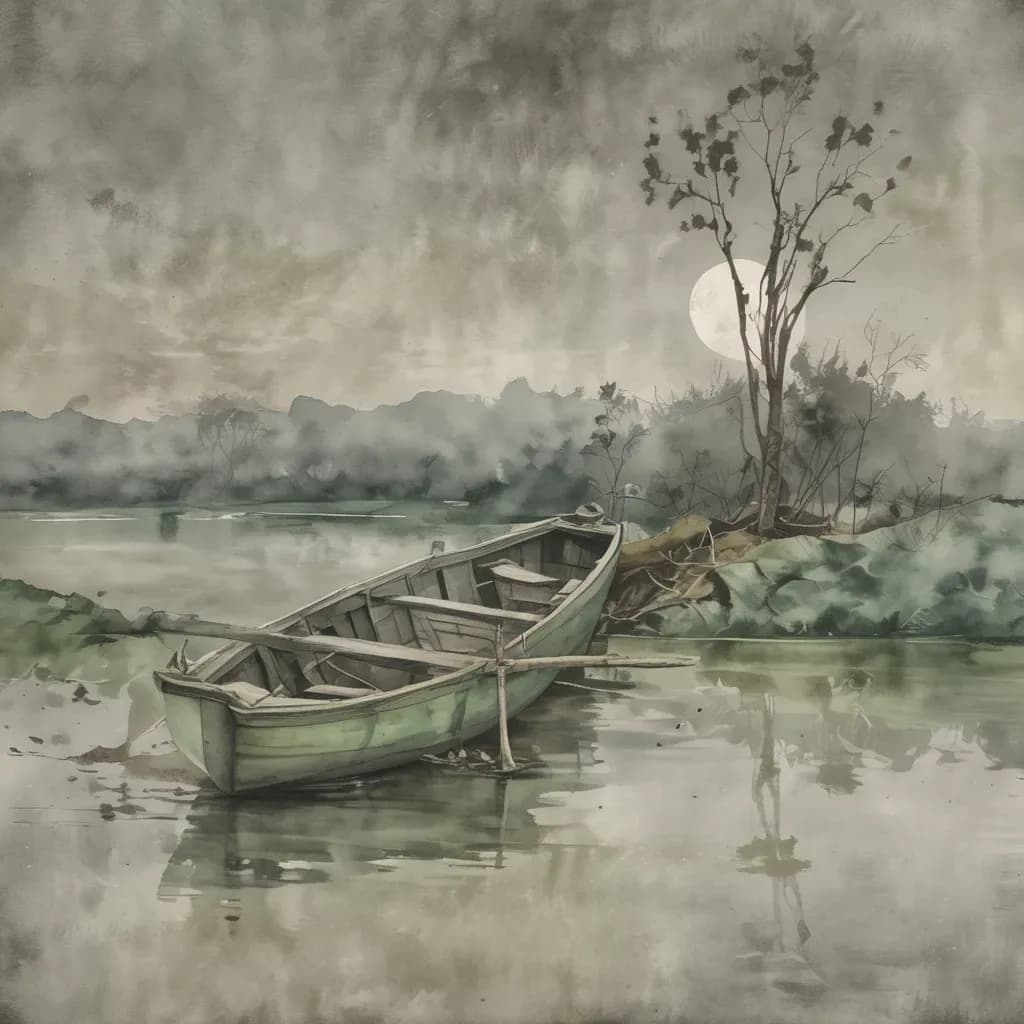
The imagery is elemental and ecological. The verses sketch a ruined landscape, with oceans damaged and the natural order unravelling, and then set two people inside it, still reaching for each other.[4] The tone is not panic. It is closer to the calm of someone who has finished arguing with the news and decided to spend the evening with the person beside them.
The Irish Times places the song alongside other tracks on the album that share an elemental vocabulary and that join the problems of the wider world to the intimacy of love, and calls it a splendid song to end the album on.[3] That placement matters. After thirteen tracks of protest, desire, anger and doubt, the record finishes by lowering its voice.
Kindness as the last resource
For all the doom, Hozier insists the song is not bleak at its core. He told NME it was an attempt to look at the warm centre of human kindness, and that of all the songs on the album it goes furthest into the gloom precisely so it can find that warmth.[1]
His reasoning is almost mathematical. He suggested that the worst outcome one can imagine, the end of the world in a very real sense, still leaves two people, a you and an I, and wherever there are people there remains the potential for kindness to be hopeful about.[1] The apocalypse removes everything except the one thing that was always doing the real work.
This is a quietly radical idea for a pop song in a period full of cynicism. The speaker does not offer a solution, a cause or an enemy. There is no plan to save anything. What he offers is company, and the argument that company is not a small thing.
It also reframes what a love song is for. Most of the genre is about possession or longing, wanting someone or mourning someone. Here the beloved is simply the person who remains, and love becomes a form of witness. To be loved in a wasteland is to have someone notice that you are still there.
That is a different emotional promise from the usual one. It asks for no grand gesture and no sacrifice, only the willingness to stay in the room while things get worse, and to keep being gentle while they do.
Gallows humour as emotional honesty
It would be easy to hear the song's lightness as a dodge. A more generous reading is that humour is how people actually cope with scale. Climate change, nuclear threat and political drift are too large to feel directly, so we reach for jokes and small domestic gestures instead.
Hozier leans into that instinct. Asked whether writing the album had helped him work through his anxiety, he answered that there is no cure for planet Earth.[2] It is a funny line and a grim one, and the song works in exactly the same register. It admits the situation is hopeless in the large and then declines to let that cancel the small things.
The same idea gives the song its odd tenderness. The tune is soft, the delivery is unhurried, and the arrangement never pushes toward catharsis. There is no grand climax where the world ends, only a slow dimming in which the two people stay put.
There is a long tradition behind this posture. Folk and blues singers have always sung cheerfully about hard times, from work songs to funeral marches, because a tune makes a burden easier to carry together. Hozier, whose influences run through the blues, inherits that habit and points it at a very modern fear.[3]
Where the song sits in the album
Wasteland, Baby! opens with a collaboration with a gospel legend and moves through songs about movement, protest, desire, nature and loss before arriving at this finale.[3] Critics were generally warm, with the Irish Times calling the collection very nearly a five-star record, though not without a few weaker tracks.[3]
Hozier has said the hardest part of making the album was not the writing but the selection. He had many ideas ready and left a good number of songs off, with a suggestion that some might surface later on an EP.[2] Closing with this song suggests that he saw it as the thesis of everything else, the place where the record's anxieties finally turn into something like acceptance.
He has also said the songs were written with live performance in mind.[2] Heard that way, the title track becomes a communal moment, a closing number in which a crowd sings gently about the end of everything and leaves feeling oddly better.
Other ways to hear it
The most direct reading is environmental. The imagery of damaged seas and failing ecosystems points at real harm, and the song can be taken as a quiet protest dressed up as a lullaby.[4] On this view the romance is a way of making a political fear bearable enough to sing about.
A second reading treats the apocalypse as a metaphor for love itself. Falling in love can feel like the end of an old world, a total rearrangement of what used to matter, and the wasteland becomes the clean ground on which something new begins. Several reviewers have heard the song this way, and the two readings are not in conflict. The best apocalypse songs usually mean both things at once.
A third reading is more personal and less topical. A person who spent years on the road, whose life changed overnight with a hit song, might hear in the wreckage a picture of exhaustion and the wish to retreat to one trusted person. Nothing in the interviews confirms this, but the album's themes of taking stock and saying farewell leave room for it.[4]
Why it keeps resonating
Songs about the end of the world tend to fall into two camps, the furious and the numb. This one found a third option, which is tenderness without denial. It does not pretend the danger is imaginary, and it does not let the danger have the last word.
That balance has made it a favourite among listeners who feel the weight of the news cycle and still want to love the people in front of them. The song gives permission to hold both feelings, the dread and the affection, without ranking them.
There is also a plain musical comfort in it. Because it closes the album, it feels like the lights coming up slowly at the end of a long night, not a door slamming shut.
The last word
The title track of Wasteland, Baby! argues that catastrophe, however large, still has to be lived through by individuals, and that individuals are capable of gentleness. Hozier takes the loudest subject imaginable and answers it in a near whisper.
If the world does end, the song suggests, the ending will be witnessed by two people who chose to be kind to each other. It is an absurd hope, and he knows it, which is exactly why it works.
References
Keep reading
More Folk Rock
- The Rain Song Led Zeppelin
- California Joni Mitchell
- Going to California Led Zeppelin
- American Pie Don McLean
- Ohio Crosby Stills Nash and Young
- Free Man in Paris Joni Mitchell