We Go Way Back
An album about emotional distance needs a song that crosses it. "We Go Way Back" occupies that precise position on The Great Divide, the fourteenth track on a record built around the widening chasm between who you were and who you became, between the people you love and the life that keeps pulling you further from them. Where most of the album asks how distance forms, this song asks what survives it.
The Album and Its Emotional Landscape
The Great Divide, released April 24, 2026, is Kahan's fourth studio album, and it arrives at a curious juncture in his career: the post-breakthrough reckoning.[1] After the staggering commercial success of Stick Season (2022) turned a Vermont folksinger into a Grammy-nominated global phenomenon,[2] Kahan spent years climbing a ladder he wasn't certain he wanted to reach the top of. By his own description, the album imagines him staring across a vast expanse at the people he left behind: old friends, his parents, his siblings, his younger self, the great state of Vermont. The songs are the words he could not say out loud.[3]
The record was co-produced with Aaron Dessner (known for his work with Taylor Swift on folklore and evermore) and recorded across multiple locations including Nashville, a legendary studio in upstate New York, and a pond-side setting in Guilford, Vermont.[1] Critics praised the album for its emotional depth, its textural intimacy, and its willingness to sit with discomfort rather than resolve it neatly. The title single debuted at number one on the United States Spotify Charts, and one reviewer called it "a fiery, feverish eruption of electric guitars and unguarded feeling."[4]
"We Go Way Back" is the exception embedded inside the album's argument. It does not grapple with estrangement. It celebrates the one relationship the divide could not claim.
A Love Rooted Before the Climb
The song derives its power from context. Noah Kahan married Brenna Nolan on August 23, 2025, in a private ceremony at the historic Strafford Town House in Vermont.[5] The two had been together since high school, long before Stick Season turned Kahan's name into a streaming statistic, long before festival headlining slots and Grammy nominations, long before Vermont pride became a cultural talking point.[6]
This history saturates the song. The narrator addresses someone who has known him through every version of himself: the anxious teenager, the struggling artist, the suddenly famous person wrestling to reconcile a public identity with a private reality. What he asks for is not grand romantic affirmation but something more essential and fragile. He wants confirmation that he has substance, that he matters beyond his output. The fact that the person on the receiving end goes way back with him is not incidental. It is the entire point. You can only make that request of someone who knew you before you had anything to show for yourself.
The song was first performed publicly at the Montreux Jazz Festival on July 7, 2025,[7] months before the album's official release, suggesting that it held a personal significance to Kahan that made him unwilling to withhold it from audiences for long.
The Ordinary as Sacred
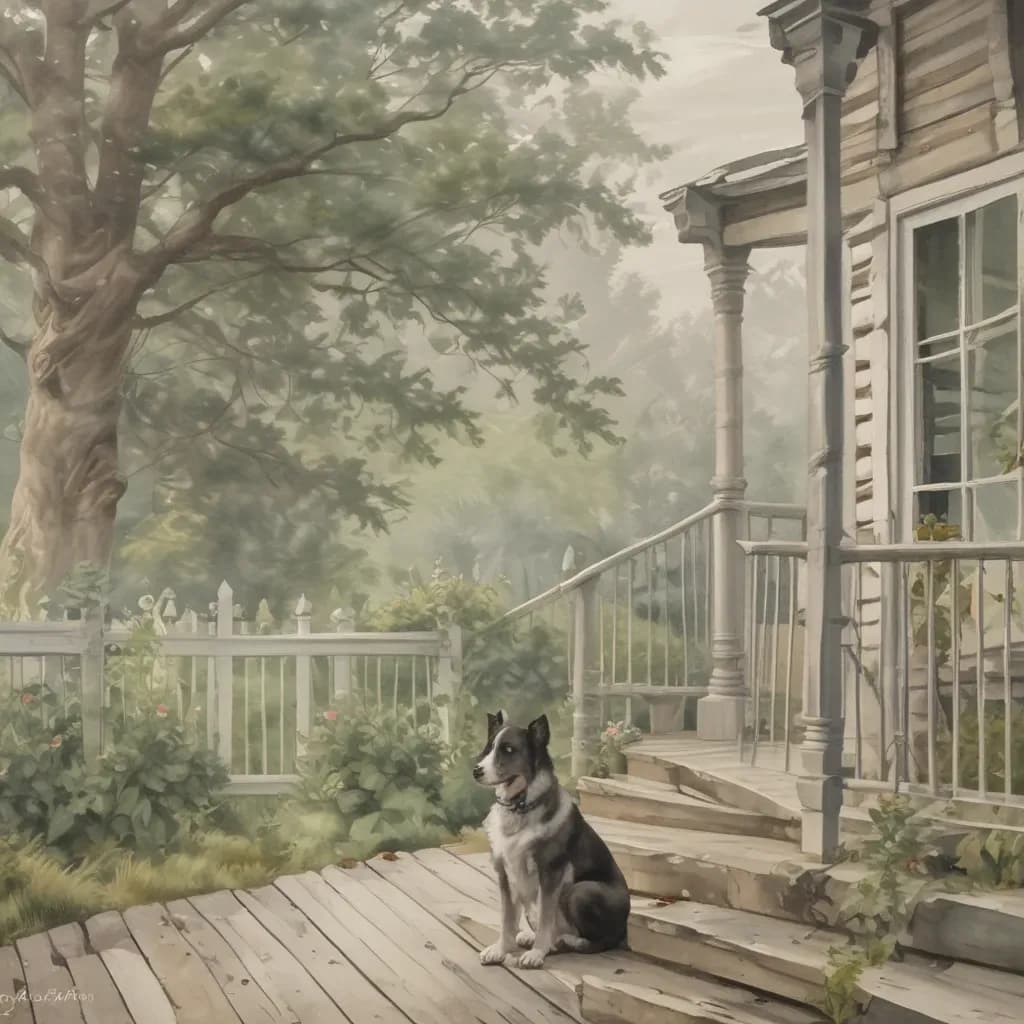
One of the song's most striking choices is its insistence on the mundane. Rather than reaching for transcendence or grand romantic imagery, the narrator grounds his declaration of love in the smallest possible acts of domestic life. Taking care of the dogs. Attending to the porch. These are not dramatic gestures. They are the unremarkable rhythms of sharing a life with someone, and the song presents them as enough.
This is a deliberate philosophical stance. In a music landscape that often conflates love with intensity and novelty, "We Go Way Back" argues that the deepest love is the one that shows up for the forgettable Tuesday, the one that finds you worthy of care precisely in the moments when you are doing nothing memorable. The song's emotional logic is almost anti-heroic: it celebrates not the peaks but the flatlands of a relationship, the stretches of time that don't make for good stories but are, in the end, what a life is made of.
Kahan has been extraordinarily candid throughout his career about struggling with OCD, body dysmorphia, and disordered eating.[2] The anxiety that these conditions produce, the constant interrogation of one's own worth, shapes the song's central yearning. When the narrator asks to be told he matters, it doesn't sound like a rhetorical device. It sounds like the particular ache of someone who genuinely cannot always believe it on his own. And the person who can counter that ache is not a therapist or a crowd of fans but the one person who has been watching since before there was anything to perform.
Why This Song Resonates
Noah Kahan occupies an unusual cultural position. Critics have compared his alt-folk authenticity to the kind of rupture Billie Eilish caused in 2019, a moment where one artist's willingness to be vulnerably specific about their inner life changes what the surrounding culture thinks pop music is allowed to be.[8] His Vermont rootedness, his geographical specificity, and his refusal to sand the edges off his emotional reality turned what could have been regional folk niche work into something that resonated globally.
"We Go Way Back" extends that logic into romantic love. At a cultural moment when relationships are discussed with unprecedented detachment, when commitment is theorized and sometimes treated as naivete, a song celebrating the quiet glory of staying, of being deeply known by one person across a long stretch of time, carries real weight. It doesn't moralize. It testifies. The narrator describes not an idealized union but a specific one, rooted in a shared history that cannot be manufactured or approximated.
There is also something quietly radical about a song that frames ordinariness as its own form of meaning. Success culture, which Kahan has navigated with visible ambivalence, tends to measure a life by its peaks. "We Go Way Back" measures it by its texture: by who shows up, by what accumulates, by what endures.
Alternative Readings
While the autobiographical reading is hard to set aside given Kahan's very public marriage and his history of confessional songwriting, the song is porous enough to hold other interpretations. It can be heard as a meditation on any relationship that predates a major life upheaval: a childhood friendship tested by diverging paths, a sibling bond strained by geography and time, a connection with a place or community that fame made harder to inhabit honestly.
The album is explicitly concerned with all of these relationships, not just romantic ones. Kahan has spoken of looking across the great divide at his parents, his friends, his younger self.[3] "We Go Way Back" can be received as a message sent across any of those distances. The recipient changes; the emotional core does not. Someone knew you when, and that knowledge is, itself, a form of love.
A Quiet Center
The Great Divide is, at its core, an album about what separates us from the people we love. "We Go Way Back" is the answer embedded inside that question. It is the relationship that the divide could not claim, the one that formed before the climb began and that persists in spite of everything the climb cost.
Kahan's marriage to Brenna Nolan gives the song an autobiographical weight that listeners can feel even without knowing the details, because the feeling the song describes is not the feeling of falling in love. It is the feeling of having stayed in love, across years and changes and fame and anxiety and ordinary Tuesdays, and of knowing that the person beside you through all of it deserves to hear that you understand what they gave you.
The song doesn't resolve the album's tension. It holds it with a different kind of steadiness, the steadiness of something that has already survived long enough to stop proving itself. And in doing so, it earns its place as the record's quiet, indispensable center.
References
- The Great Divide (Noah Kahan album) - Wikipedia — Album release details, recording locations, tracklist, and critical context
- Noah Kahan - Wikipedia — Biography, career timeline, Grammy nomination, and mental health disclosures
- Noah Kahan Shares the Inspiration Behind 'The Great Divide' — Kahan's own words describing the album's emotional concept and the metaphor of staring across a divide at loved ones
- Noah Kahan Bridges 'The Great Divide' With a Raw Reckoning - Atwood Magazine — Critical review of the title single describing it as a fiery eruption of electric guitars and unguarded feeling
- Noah Kahan Married Longtime Girlfriend in Vermont Ceremony - Billboard — Details of Kahan's August 2025 wedding to Brenna Nolan in Strafford, Vermont
- Meet Brenna Nolan, Noah Kahan's Wife - The Knot — Background on Kahan and Nolan's high-school relationship and long history together
- Noah Kahan Nation on X: 'We Go Way Back' Debut at Montreux Jazz Festival — Documentation of the song's first public performance on July 7, 2025 at Montreux Jazz Festival
- 'Like Billie Eilish in 2019': How Noah Kahan's Alt-Folk Success Is Changing 2024 Pop - Billboard — Analysis of Kahan's cultural impact and comparison to Billie Eilish's 2019 influence on pop
- We Go Way Back by Noah Kahan - setlist.fm — Performance history and festival setlist appearances for the song