There is something quietly devastating about the act implied in the title of Ladytron's track 13 on their 2026 album Paradises. Names written in dust are meant to disappear. Whoever wrote them knew this. That is not an accident but the whole point: a declaration made in a medium guaranteed to erase it, a statement of presence that carries its own expiration. The beauty lies not in permanence but in the gesture itself.
Background: Paradises and a Band Reinventing Itself
Paradises, released March 20, 2026, is the band's eighth studio album and their first as a trio. Founding member and synthesizer player Reuben Wu departed in March 2023 after 24 years, to pursue his visual art and photography career in the United States. Helen Marnie, Mira Aroyo, and Daniel Hunt wrote and recorded the album over a concentrated five-month period, working across Liverpool, Sao Paulo, Montrose, and London, with final sessions at Dean Street Studios in Soho.[1][2]
The album's stated ethos was recapturing joy. Following Time's Arrow (2023), an introspective record recorded during the COVID-19 pandemic and suffused with themes of loss and the reversal of time, the band deliberately pivoted. Hunt described entering the studio repeatedly and emerging after an hour with a new track. Aroyo spoke of channeling the fun feeling of first working together back in the late 1990s when they had nothing to lose.[3]
Within this context, "We Wrote Our Names in the Dust" sits at track 13 of 16, deep in the album's contemplative final movement. By this point, the singles, the anthems, and the dance-floor peaks have done their work. The listener is in territory that is more atmospheric, more introspective. This is where Hunt, who wrote this piece alone, placed his meditation on presence and impermanence.[2]
The Gesture Against Oblivion
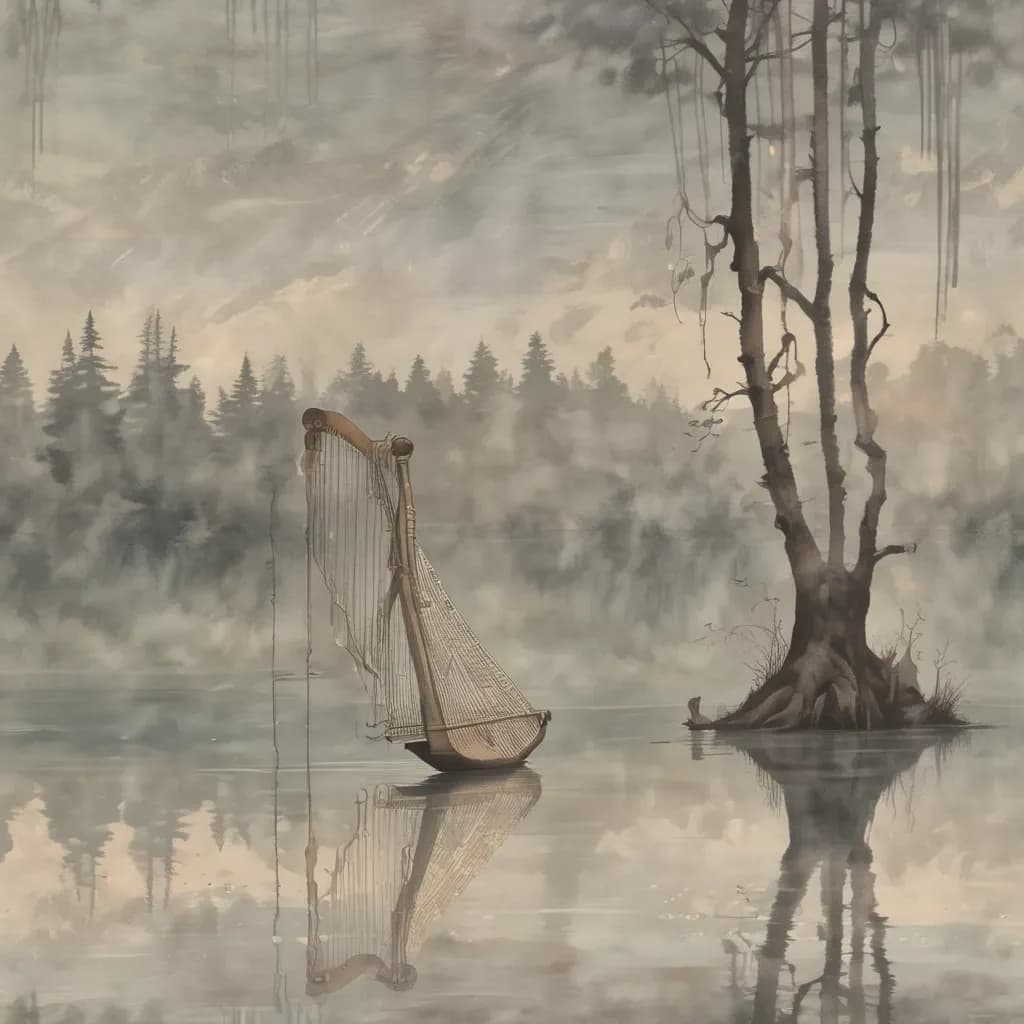
The title is the essay, compressed to a single image. Writing names in dust is not stupidity or carelessness but defiance dressed as futility. It is the insistence on existing, on leaving a trace, even in a medium that guarantees erasure. The "we" matters enormously: this is not a solitary act of ego but a collective one, a shared declaration by people who understood its limits and made it anyway.
For a band in their third decade, with a catalog spanning from the post-electroclash excitement of Light and Magic (2002) through the psychedelic fracture of Witching Hour (2005) to the pandemic reckoning of Time's Arrow (2023), the image of names written in dust carries autobiographical weight. What does a band leave behind? What traces persist? The album title Paradises, deliberately plural and provisional, suggests that paradise is never singular or stable. Each version overwrites the last, the way wind disturbs dust.[1][3]
Sound as the Argument
Hunt wrote this piece alone, and the sonic vocabulary he chose does the thematic work directly. Critics noted the unusual presence of a harp, sending what one described as striped shafts of light into the track's surrounding darkness.[4] Harp is not a Ladytron instrument in any conventional sense; its appearance reads as an incursion of the archaic into the electronic, the ancient lyre-derivative floating above prowling rave drums and Vox Humana-register synthesizers. The track begins with a real voice before transforming into an instrumental loop, the harp threading through the rhythmic framework like light through smoke.[5]
This movement from voiced declaration to wordless texture is significant. The voice inscribes the names; the music is the dust they return to. The near-instrumental quality that defines the track's body means that the emotional argument is made in sound rather than language, which is itself a kind of humility, or an acknowledgment that some things cannot be said, only felt.
The track has been tagged with shoegaze alongside more expected synthpop markers, connecting it to a tradition in which texture is the primary carrier of meaning. Shoegaze is music about immersion: the listener does not observe the sound but is surrounded by it. One critic captured the resulting paradox precisely, describing the track as utilizing club rhythms while its sonic romance is almost ambient.[4] That phrase describes a music that seduces without urgency, that creates intimacy through atmosphere rather than direct address.
The Album Arc and Where This Song Belongs
Paradises received warm critical reception, with comparisons to Saint Etienne, the Pet Shop Boys, Cocteau Twins, and New Order situating it in a lineage of British dance-adjacent music that never surrendered melody or emotional intelligence to pure kinesis.[6] Within the album's arc, "We Wrote Our Names in the Dust" functions as a decompression chamber. The album's singles occupy its earlier, more outward-facing sections; by track 13, the record has turned inward.
One reviewer called the track a majestic five minutes worthy of Saint Etienne in their prime, a comparison that locates it precisely: Saint Etienne at their best made dance music that was also literary and romantic in the old sense, concerned with mood and memory as much as movement.[7] Another reviewer described the experience as like unlocking a hidden level, with 8-bit energy and gusto suggesting discovery, the sense of finding something the album's surface had not telegraphed.[8] Both descriptions hold simultaneously. The track is majestic and playful, melancholic and energized, a miniature paradox that mirrors the album that contains it.
Cultural Significance: Marks That Outlast Their Makers
The impulse to leave a mark in sand, in stone, in dust is one of the oldest human gestures. Cave paintings are a version of it. Graffiti is a version of it. The names carved into park benches, the initials scratched into wet cement. The tragedy is built in: the mark asserts "I was here" while knowing that "here" will not hold it forever.
For Ladytron, this theme carries particular resonance. The band's song "Seventeen" went viral on TikTok in 2021, introducing the group to an audience not yet born when the song was released in 2002, with daily streams jumping from around 3,000 to 160,000 at the peak. A new generation encountered the band through an algorithm, through a platform that remixes and redistributes cultural artifacts in ways their creators could not have anticipated.[3] Names written in dust, it turns out, can catch the light unexpectedly decades later.
Reuben Wu's departure in March 2023 dissolved the four-person formation that had persisted for 24 years. Paradises is the first album where the names are three rather than four. The dust absorbs one name; the others continue writing. Daniel Hunt, now based in Sao Paulo, brought rhythmic sensibilities from that city to the sessions.[1] The geographic dispersal of the band's members mirrors the theme: presence is diffuse, scattered across time zones and life changes, and yet the collective act of making music together reasserts a "we" that could easily have dissolved.
Alternative Interpretations
Not every listener will hear an autobiographical meditation. "We Wrote Our Names in the Dust" could equally be read as a love song: two people together in a moment they know is temporary, leaving their mark on something that will not hold it, understanding that the gesture matters more than the permanence. The title's "we" could be intimate rather than collective, two rather than three or four or an entire band's career.
It could also be read through a generational lens: the sense that a cohort who came of age in a particular cultural moment are watching the traces of that moment being slowly absorbed back into the dust. The early 2000s electronic music scene that produced Ladytron has itself become historical. Reviewers have noted that electroclash, the genre label that followed the band despite their resistance, has now been absorbed into the nostalgia category of indie sleaze.[3] They are, perhaps, writing their names in dust that has already shifted once.
The largely instrumental quality of the track allows it to hold multiple meanings without resolving any of them. Lyrics fix meaning; texture permits ambiguity. Hunt's choice to let the track become wordless after its opening declaration is a choice to remain open, to offer the listener the image and the feeling without the explanation.
Conclusion
"We Wrote Our Names in the Dust" is a small, extraordinary thing: a near-instrumental meditation tucked deep in a 16-track album that had announced itself as a celebration. Its harp and rave drums create a sound that is simultaneously forward and backward, dancing and grieving, present and already historical.[4]
The title asks something of the listener, not just to appreciate the beauty of the gesture but to sit with the knowledge of its limits. We write our names. We know they will be erased. We write them anyway, because the writing is what we have, and because the "we", the collective, the band, the friendship, the audience, is the only thing that makes the dust worth touching.
In this sense, the track is also an argument for music itself: the most elaborate name-writing in dust that human beings have devised, and possibly the most beautiful.
References
- Ladytron – Wikipedia — Band history, member biographies, discography, TikTok viral moment, and Reuben Wu departure
- Paradises (album) – Wikipedia — Album tracklist, personnel, recording details, and critical reception overview
- Ladytron: From Electroclash Pioneers to TikTok Survivors (BritBrief) — Covers band quotes about making Paradises, Aroyo and Hunt on recapturing youthful energy, electroclash to indie sleaze cultural arc
- Ladytron – Paradises review — Detailed track-by-track review noting the harp, rave drums, Vox Humana tones, and describing the track's sonic romance as almost ambient
- Ladytron – Paradises (The Live Wire AU) — Notes the track commences with a real voice before transforming into an instrumental loop with added harp and rave drums
- Album Review: Ladytron – Paradises (Joyzine) — Praises the album's soaring imagination and childlike joy; warm critical reception context
- Ladytron – Paradises (musicOMH) — Review by John Murphy comparing the track to Saint Etienne at their prime
- Ladytron – Paradises (RANGE / readrange.com) — Review describing the track as like unlocking a hidden level with 8-bit energy and gusto