What Child Is This?
Most Christmas songs announce. This one asks. The question in its title is put to a sleeping baby by people who cannot quite believe where they have found him, and the rest of the carol is an attempt to answer it.[3]
When Alanis Morissette sang it, she kept the question open. Her recording has been described as gorgeously spare,[5] and the sparseness is the point. There is room in it for doubt, for tenderness, and for the long winter darkness that she has said colors her feelings about the season.[5]
A carol born from an illness
The words were written in 1865 by William Chatterton Dix, who worked managing an insurance company.[3] A severe illness left him bedridden and depressed, and a spiritual renewal followed. He began reading the Bible intensely and went on to write hymns.[3] Sources disagree on whether this poem came after reading the Epiphany passage or at Christmas that year, and it was first titled for a throne made of a manger.[3]
The tune is the old English melody known as Greensleeves, and the two were paired in 1871 in a published collection of carols.[3] It is not certain who put them together. The minor-key melody, so associated with longing, gives the verses a shadow that most cheerful carols lack.[3]
That shadow matters. The carol is built as a sequence of questions and answers, imagining what the shepherds might have wondered on meeting an infant lying in a feeding trough.[3] The first verse asks and answers. The second asks again. The third turns outward and urges everyone to respond.[3] It is a song about the gap between how things look and what they are.
A holiday EP, then an album
Morissette's version first appeared on a four-song EP called Last Christmas in late 2023, where it sat third, credited with guitarist Julian Coryell.[4][6] The set also held her takes on the Lennon and Ono peace song and the Wham! pop standard.[4][7] Music Daily framed the EP as a contrast between the classic carol and the pop cover.[4]
Now the track has a new home. It is third on Good Weather for Immaculate Conception, her first full holiday album, due November 6, 2026 on Epiphany Music and Virgin Music.[1][2] The fourteen tracks gather previously released holiday songs alongside new material, including two originals.[1] Guests include Brandi Carlile, Steve Martin, Joy Oladokun, Amythyst Kiah, Martin Short and the choir Trans Voices, though this carol lists none.[1][2]
I could not find any statement from Morissette about why she chose this carol or how she approached it. What follows is interpretation, built from the recording's reputation and what she has said about the season more broadly.
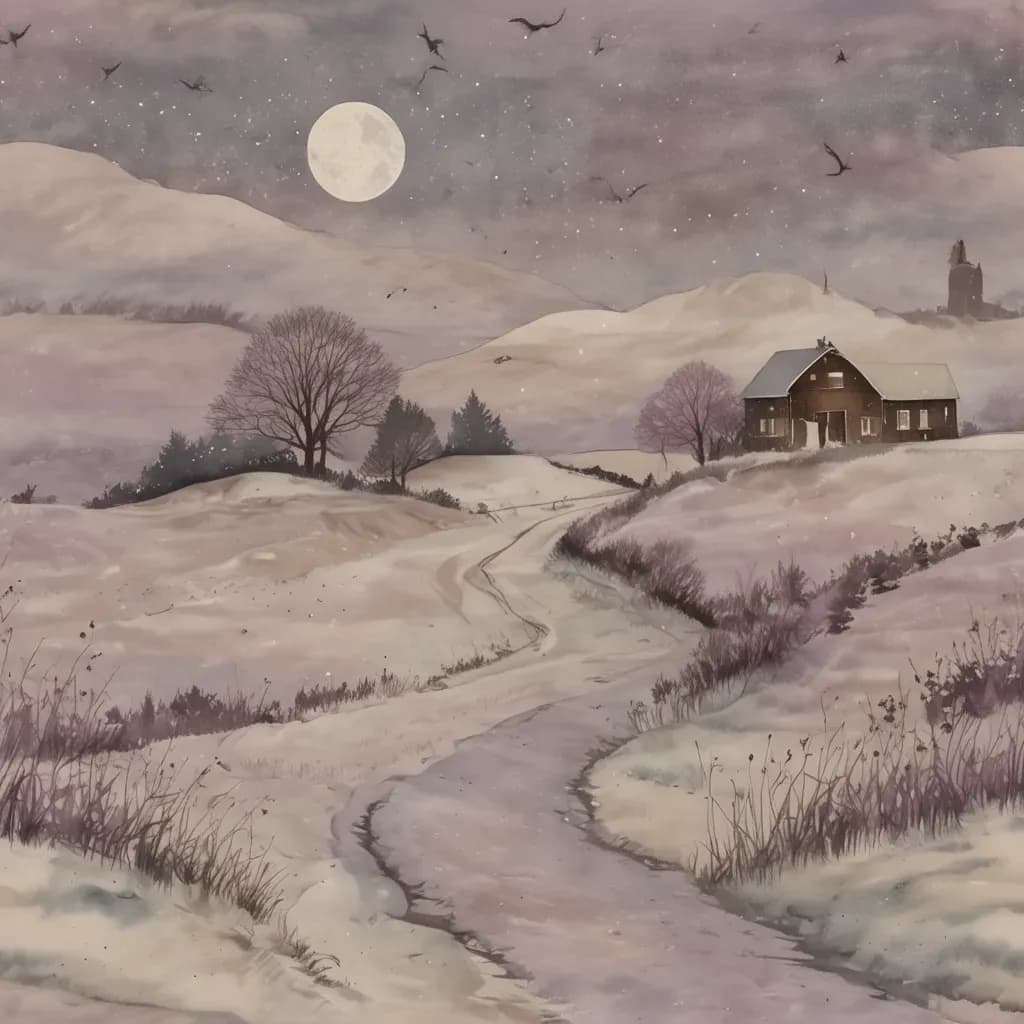
The theme of unrecognized holiness
The central idea of the carol is that something extraordinary is hidden inside something ordinary. A baby in a stable does not look like a king. The questions in the song are the questions of people trying to square what they see with what they are being told.
For a songwriter, that is familiar territory. Morissette first became famous for work that insisted on looking past surfaces to what was underneath. A carol that turns on the same move, from appearance to meaning, suits her better than it might suit a singer known for polish.
There is also humility in the premise. The people asking the question are not experts. They are shepherds, ordinary workers pulled from the night shift. The song gives its sense of wonder to people with no standing, and the sparse arrangement leaves them room to be small.
Darkness, joy and the same season
In a 2023 interview, Morissette described Christmas in her childhood as fun but also dark, and said the early sunset of a Canadian December and a tendency toward seasonal low mood shaped how the month felt.[5] She also described the holiday season now as a mix of ritual and gathering, folding Hanukkah into the family's traditions after learning of her Jewish ancestry.[5]
She named togetherness as her favorite part of any holiday.[5] The reporter observed that the songs she chose carry both melancholy and joy, with a love that overrides both.[5]
That description fits this carol almost exactly. Its melody leans minor and sorrowful, while its message is arrival and welcome. A singer who feels the dark and the light of December together is well placed to deliver a song that holds both, and not to flatten it into either simple cheer or simple gloom.
Her son was born on Christmas Day in 2010, a fact she has spoken about as turning a once-dark date into a double celebration.[5] Hearing a lullaby-like carol about a newborn in that light adds a personal layer, though I stress that this is a reading, not something she has said about this recording.
Why the spare arrangement matters
The recording is credited to voice and guitar, with Coryell on acoustic guitar.[6] That limited palette does real interpretive work.
Big arrangements of this carol tend to treat the question as rhetorical, a setup for a triumphant answer. A bare voice and one guitar treat it as a real question. The listener is placed beside the shepherds, close to the cradle, hushed, rather than in a cathedral listening to a choir.
It also makes the vocal itself the event. Morissette's voice has been associated for decades with intensity and release. Here it is held back, and the restraint changes the register of her whole catalog. The same instrument that once carried fury is asked to carry reverence, and it does so without strain.
The effect is intimate, almost conspiratorial, as though the song were being sung so as not to wake someone.
How the carol sits in the album
The album's title is a playful phrase, and Stereogum noted it was unclear whether it was meant ironically.[2] The record places earnest hymns beside a dance-floor original and a closing duet with a comedian.[1][2] It is a mixture of reverence and play.
Within that mixture, this carol functions as an anchor. It sits near the front, after an opening hymn and a new original, and sets a serious emotional tone before the record loosens up.[1] Without it, the album could drift toward novelty. With it, the humor around it reads as the relaxed warmth of someone who also takes the season seriously.
The tracklist also includes a Joni Mitchell song about a winter river and a Wham! pop cover.[1] Placing a centuries-old melody in the same company as those says something about how Morissette thinks of Christmas music: as a living repertoire for sadness, longing and joy, not a museum.
Other ways to hear it
A devotional listener will hear exactly what the carol has always said, an act of worship, and nothing in a restrained recording gets in the way of that.
A secular listener can hear the song as being about attention. The questions are about what it means to really look at someone, particularly someone small and unprotected, and to decide that they matter more than their circumstances suggest. That reading needs no belief at all.
A third reading is seasonal and psychological. The minor-key melody carries the winter blues, and the verses of questions carry the uncertainty of anyone who approaches the holidays without feeling the expected cheer. The song then becomes a permission slip: you can arrive at this season unsure, and still be welcome.
That last reading connects most directly to what Morissette has said about December being both dark and a time of gathering.[5] It is speculative, but it explains why the song might feel natural coming from her.
Why it resonates
The carol has survived more than 150 years because its structure is generous. Anyone can stand where the shepherds stand, asking who this is and what they are looking at, whether the answer is religious, personal or simply a feeling of awe.[3]
Morissette's version trims away everything that is not that question. What is left is a voice, a guitar, and the old tune with its sorrowful shadow.[5][6] It is a quiet recording from a loud career, and its quietness is what makes it memorable.
For an artist whose reputation was built on saying things plainly, there is something fitting about a song that spends its length asking one question and trusting the listener to feel the answer.
References
Keep reading
More by Alanis Morissette
More Christmas
- Happy Xmas (War Is Over) Alanis Morissette
- Birthdays & Christmas Lauren Spencer Smith
- This Christmas Sekou
- Step Into Christmas Elton John & CMAT
- Christmas on the Dancefloor Alanis Morissette
- Little Drummer Boy Alanis Morissette