What If I Say It?
There is a particular terror in knowing exactly what you want to say, and standing at the edge of saying it. Not the terror of uncertainty, but the worse kind: the terror of clarity. You know the words. You know what they mean. You know what they will do once you release them. And so you stand at that invisible threshold, wondering whether the act of speaking will permanently change everything.
That threshold is where Arlo Parks builds “What If I Say It?,” the penultimate track on her third album, “Ambiguous Desire.” After ten tracks of pulse, rhythm, and the choreography of escape, Parks arrives here: still, intimate, asking a question she may not be ready to answer.
A Third Album Born of Movement
By the time Parks assembled “Ambiguous Desire,” released April 3, 2026 via Transgressive Records, her life had undergone a significant geographic and spiritual shift. After her acclaimed debut “Collapsed in Sunbeams” won the Mercury Prize in 2021, and after the more confessional “My Soft Machine” in 2023, Parks found herself drawn away from the bedroom introspection that had defined her early work.[1] A 2024 tour stop in Brooklyn proved decisive: she fell in love with New York and began spending extended time there, absorbing its nocturnal culture.[2] She frequented clubs like Nowadays, Bossa Nova Civic, Basement, and Coloring Lessons nights,[1] studying not just the music but the social architecture of shared dancing, communal release, and the particular emotional grammar of being a body among bodies in the dark.
The album that emerged from this immersion was built largely in producer Baird’s downtown Manhattan loft using modular synths, Ableton plugins, and samplers,[1] with Parks spending her evenings in NYC clubs and her days in the studio experimenting and freestyling.[3] It is genuinely unlike anything Parks had made before. Guitars gave way to breakbeat rhythms and UK garage textures. She drew on LCD Soundsystem, Burial, Goldie, Jamie xx, and the deep heritage of Paradise Garage,[4] a club that was, from its opening in 1977, a sanctuary specifically for Black and queer dancers. Yet Parks never abandoned what made her distinctive: the confessional precision, the camera-eye for a specific charged moment, the drive to name feelings that resist being named.[2] “Ambiguous Desire” is a nightlife album that is also, inescapably, an album about the interior self.
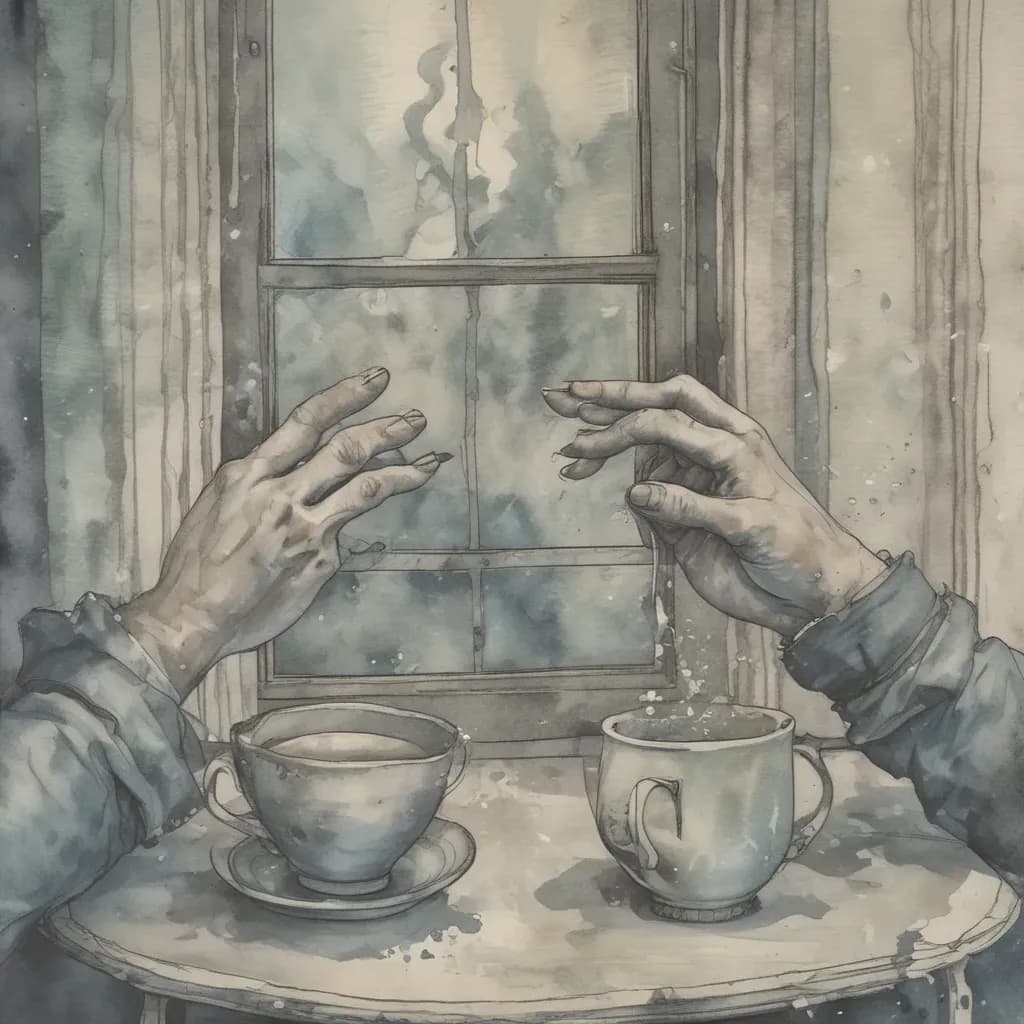
A Quiet Center in a Kinetic Album
Track 11 arrives as a deliberate deceleration. After the stomping urgency of “2SIDED,” the yearning of “Luck of Life,” and the driving energy that characterizes much of the album’s middle section, “What If I Say It?” drops to something closer to a murmur.[5] Reviewers noted that the track functions as a down-tempo counterweight to the album’s more propulsive material,[6] and Parks has spoken about a consistent rhythmic thread connecting this track with other moments of emotional weight across the record.[7] But here, that pulse is stripped of its urgency. What remains is a close-up.
The song functions as the album’s confessional chamber. Where earlier tracks use the dancefloor as a kind of theater of feeling, a place where emotion can be expressed through movement without being spoken, “What If I Say It?” removes that buffer entirely. The narrator voices the exhaustion that comes from performing emotional stability: the exhaustion of anger as shield, of bravery as performance.[5][8] These are not triumphant emotions. They are the stances a person adopts when they cannot afford to be vulnerable, and Parks treats them with clear-eyed recognition. The song does not celebrate the decision to lower the armor. It asks, plainly, what comes next if you do.
The Act of Naming
The song’s central question is almost philosophical in its simplicity, but devastating in its implications. Parks has spoken extensively about her drive to apply language to things that feel ephemeral and difficult to articulate: chemistry, déjà vu, kismet, serendipity.[2] She has built an entire artistic career on the belief that precise language is a form of care. “What If I Say It?” arrives as a kind of crisis in that belief. What does it mean to speak the thing out loud? What if the words, once released, reshape the world in ways that cannot be undone?
The narrator’s anxiety is not abstract. It is grounded in a scene of extraordinary intimacy: two people in close proximity, a partner whose eyes carry something that looks like guilt, a moment set in the borrowed domesticity of someone else’s parents’ house.[8][5] Parks frames these images with characteristic specificity, the kind that makes an emotional situation feel physically inhabited rather than merely described. The effect is to anchor the philosophical question in something utterly concrete: the experience of being in a room with someone you love and realizing that your next words could alter the coordinates of your entire life.
Desire Named and Unnamed
“What If I Say It?” carries particular resonance when heard through the lens of Parks’ queerness, which runs through “Ambiguous Desire” as an organizing principle rather than a theme to be announced.[8] The album’s desire is explicitly desire directed toward women, with named characters populating specific moments across the tracklist.[8] Parks has always been open about her identity, but “Ambiguous Desire” is her most fully inhabited queer record, in the sense that queerness is simply the water these songs swim in.
In that context, “What If I Say It?” reverberates beyond its immediate romantic situation. The history of queer experience is, in significant part, a history of the consequences of naming: who gets to name themselves, when, to whom, and under what conditions of safety. The song’s central question, whether saying something makes it real, understands that reality is partly social. Identity and love and belonging are partly constructed through language, and the person you tell is also, in a sense, a co-creator of what you are naming.
There is also the dancefloor tradition to consider. The clubs Parks absorbed, from the Paradise Garage to the Brooklyn venues that shaped “Ambiguous Desire,”[4][1] have always been spaces where queerness could exist without full verbal articulation, where the body communicated what words might have made dangerous. The album’s first ten tracks operate in that tradition: desire expressed through rhythm and motion. “What If I Say It?” is the moment when that protection becomes insufficient. The music slows. The body stills. The question rises.
Sound and Atmosphere
Produced by Paul Epworth,[9] the track settles into a laidback, post-trip-hop groove[10] that recalls the more introspective edges of 1990s UK electronic music, the kind of late-night slow-build that Portishead made definitive.[5] It is a deliberate contrast to the sharper club textures elsewhere on the album: where those tracks seek to move you physically, this one asks you to be still. Parks’ voice, long one of her most distinctive instruments in its capacity for conveying quiet devastation, is at its most exposed here. There are no walls of sound to hide behind.
Questions Without Answers
One of the song’s most significant formal choices is its refusal to resolve. The questions it raises, about naming, about shame, about what a partner sees when they look at you honestly, go unanswered.[8] This is not an evasion. It is a structural argument: some feelings resist the tidy arc of pop resolution, and the act of asking matters regardless of whether an answer arrives. Parks has described wanting the album to function as a companion to people who are at the moment before they take a risk, or try to make something come true, or come into themselves.[2] “What If I Say It?” serves that purpose precisely through its openness. It does not tell you what happens when you speak. It sits with you before you do.
There is also room to hear “What If I Say It?” as something beyond a conventional love song. The act of naming could be about grief, about loss, about admitting to yourself that something is over or that something you hoped for will not arrive. The guilt visible in the scene could belong to someone already leaving. The shame the narrator names might not be romantic shame alone but something older: the shame that comes from having wanted something large and visible in a world that often asked you to want less. Parks does not foreclose any of these readings. That openness is another form of generosity.
“What If I Say It?” earns its place as the album’s emotional pivot precisely because it does not arrive as a dramatic statement. It arrives as a quiet crisis, the moment when the music drops away and the room fills with the sound of a person deciding whether to change their life with words. For an artist who has built her practice on the belief that language can hold what seems unlanguageable, this song is a genuine confrontation with the limits of that faith, and a genuine acknowledgment of its necessity. The question hangs in the air. The closing track “Floette” will bring something like resolution. But for three minutes and fifteen seconds,[1] Parks stays on the threshold. That turns out to be exactly where the most important music lives.
References
- Ambiguous Desire — Arlo Parks (Bandcamp) — Official album page with track listing, release date, formats, and Parks' own description of the project
- Arlo Parks wants to soundtrack your walk home from the club — Xtra Magazine — Parks speaks about applying language to ephemeral things, desire as engine, queer club history, and wanting the album to companion risk-takers
- On 'Ambiguous Desire', Arlo Parks turns fleeting nocturnal moments into lasting songs — NME — Details on recording process: Parks freestyling in Baird's downtown loft during the day and club-going by night
- Arlo Parks: Nocturnal Awakening — Rolling Stone UK — Interview covering Parks' immersion in NYC club culture, Paradise Garage influence, and electronic music touchstones (LCD Soundsystem, Burial, Goldie, Jamie xx)
- Album Review: Arlo Parks — Ambiguous Desire — When The Horn Blows — Review noting the penultimate track's emotional vulnerability, its slowing of pace, and Portishead-adjacent production weight
- Arlo Parks' 'Ambiguous Desire' is a melancholic-soaked masterpiece — The Indie Scene — Review identifying 'What If I Say It?' as a down-tempo closing pair within the album; notes the song's openness and vulnerability
- Arlo Parks Finds Her Afterglow — Wonderland Magazine — Parks discusses the album's rhythmic connections between tracks, desire and collective love on the dancefloor, and letting music describe feelings beyond language
- Album Review: Ambiguous Desire by Arlo Parks — Shatter the Standards — Track-by-track analysis including queer themes, production details (Paul Epworth, Buddy Ross), and the emotional arc of 'What If I Say It?'
- Review: Arlo Parks — Ambiguous Desire — WECB — Confirms Paul Epworth as producer of 'What If I Say It?'; highlights the track among the album's strongest material
- Arlo Parks Transforms Sound with Third Album 'Ambiguous Desire' — Fakta.co — Describes 'What If I Say It?' as laidback post-trip-hop; notes Parks' reimagining of track sequence at Leeds launch performance