When the Fires Come
Beauty at the End of the World
There is a particular kind of dread that arrives not with sirens and smoke but with something gentle and beautiful. "When the Fires Come," the lead single from Kero Kero Bonito's Civilisation I EP, achieves precisely this: it sounds like a hymn you might hum while watching the horizon glow orange, a melody that makes serenity out of catastrophe. The pan flute drifts and turns. Sarah Perry's voice is clear and steady. And the world, in this song, is ending.[1]
This is not an oversight. The beauty is the argument.
A Band, a Highway, and a Cloud of Smoke
In November 2018, Kero Kero Bonito were driving through Northern California on their North American tour in support of Time 'n' Place. On the highway, they noticed something wrong: a massive black cloud had swallowed the sky, and birds were fleeing en masse. Their phones lit up with news of the Camp Fire, later confirmed as the deadliest and most destructive wildfire in California history, a disaster that killed 85 people and erased the town of Paradise.[2]
For a band from Bromley in south London, where dramatic weather is a rare inconvenience, the encounter was formative. Gus Lobban later reflected that Britain is mild when it comes to natural disasters, and that seeing the Camp Fire's smoke cloud up close was genuinely frightening.[3] That fear became the seed of the Civilisation project, a multi-year series of EPs that shifted the band's attention from the personal scale of Time 'n' Place toward questions of civilizational scope.
"When the Fires Come" was released on September 9, 2019 as the lead single for Civilisation I, with the full EP following on September 30 via Polyvinyl Record Co.[2] The timing was charged. In autumn 2019, climate anxiety was at a cultural zenith: Greta Thunberg had just sailed across the Atlantic to address the United Nations. The Amazon was burning. Australian bushfires were building toward the catastrophic "Black Summer" that would arrive within weeks of the single's release.[4] The song entered a world already watching the sky.
Against the Call to Action
One of the most striking choices in "When the Fires Come" is what it refuses to do. The song does not urge the listener to act, vote, reduce, march, or resist. It offers no roadmap and no hope. The band was explicit about this in promotional materials for the EP, describing the song's "uncanny acceptance" of environmental destruction as deliberately more disturbing than a conventional call to action.[5] Most protest music assumes the listener can still do something. This song seems to have arrived at a different assumption.
The song frames climate collapse in the language of myth and natural cycle. The sun, in its cosmology, is not malfunctioning or being corrupted by human error. It is returning. There is a sense of the earth reclaiming what it had temporarily lent to civilization, a perspective that renders the catastrophe inevitable rather than accidental. The narrator regards this with a composure that is harder to shake than outrage, because it suggests the matter has already been decided.
This fatalist tone is amplified by the production. The central melodic figure, a sliding synthesized texture that evokes a pan flute, carries an archaic and ceremonial quality. Critics at Consequence of Sound described the effect as producing "dysphoric nostalgia,"[6] while Everything Is Noise noted how the shimmering sound made the earth feel like "an awakened, newly animated being" exacting a kind of reckoning.[7] There is something pre-industrial about the timbre, as if the song marks the moment civilization recedes and something older reasserts itself.
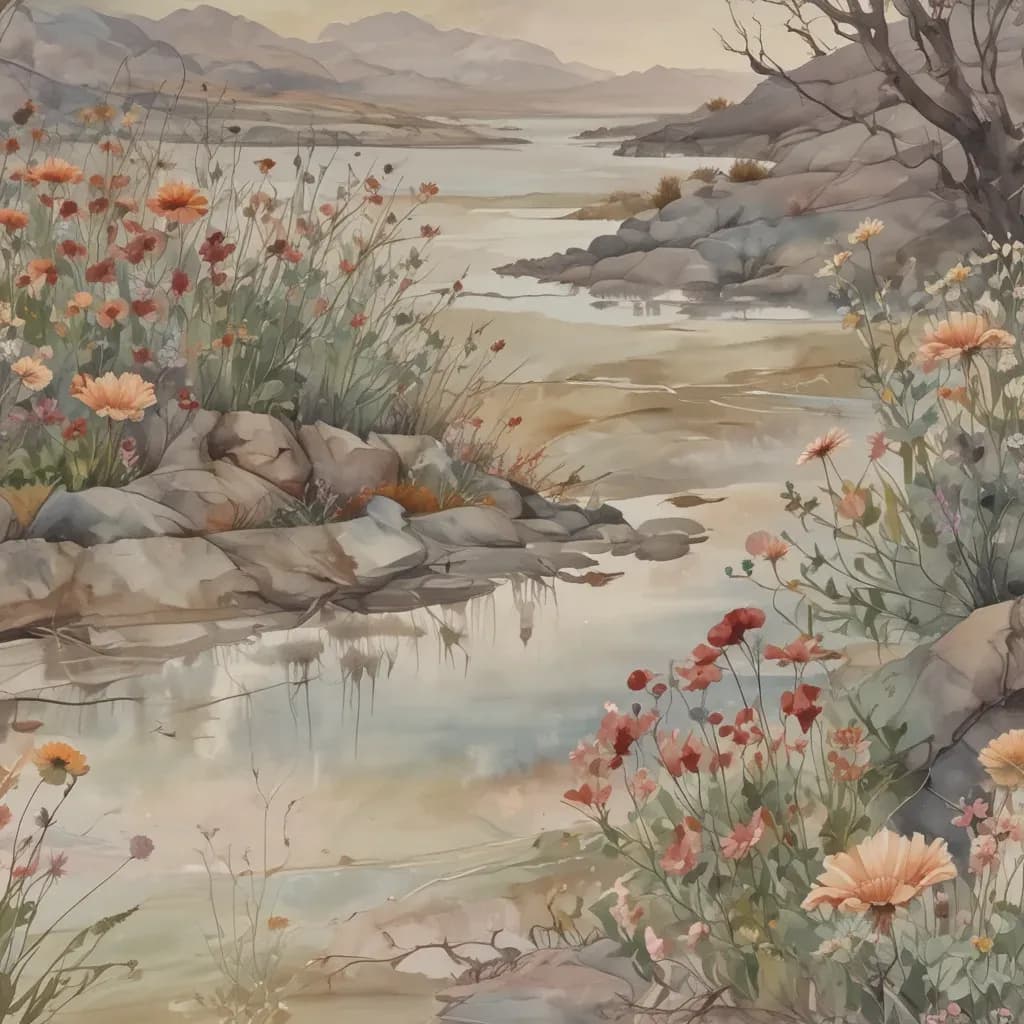
Perry's vocal performance reinforces this quality. She sings without panic, with a composure closer to acceptance or wonder, something you might hear in a funeral hymn or in a lullaby that does not quite conceal its grief. The music video, directed by James Hankins and filmed on Britain's hottest recorded day of 2019, extends the same logic.[6] Shot across lush forests and parched landscapes, it presents a world of almost excessive natural beauty in barely visible distress. Lobban reflected that the aim was to communicate the reality of the threat by placing a beautiful song in a disturbing context, letting the contradiction carry the argument.[3]
An Elegy for a World Still Here
When KEXP named "When the Fires Come" their Song of the Day in February 2020, they placed it within their "Clash for Climate" initiative, explicitly connecting the track to a tradition of music as social witness.[8] The comparison is illuminating precisely because of where it strains. The Clash wrote songs designed to mobilize. "When the Fires Come" does something stranger: it asks you to sit with despair, to feel the weight of something that is already in motion, and to make no particular promise about what comes next.
By 2019, environmental music faced a hard problem. The genre had produced urgent and righteous anthems for decades. The situation had continued to deteriorate. What "When the Fires Come" understood was that conventional eco-protest music was no longer matching the emotional register of a generation that had grown up surrounded by warnings without witnessing corresponding action. Sometimes the most accurate response to ongoing catastrophe is not anger or defiance but a kind of grief-struck wonder that the world is as beautiful as it is, even now.[9]
The song also sits at the structural center of Civilisation I, between "Battle Lines" (which concerns ancient and cyclical warfare) and "The River" (which extends the flood and collapse imagery forward in time). Across this triptych, KKB assembled something like a secular end-times narrative told in art pop.[7] The pan flute melody anchoring the song would resurface in the opening track of Civilisation II, creating a sonic thread across both EPs and suggesting the band understood its elegiac register as something worth preserving.[10]
Readings and Resonances
The "uncanny acceptance" at the song's core opens it to several readings. The most sympathetic sees in it a posture of clear-eyed grief: not resignation to inaction, but the acknowledgment that follows recognizing something already in motion. In this reading, the song performs the function of elegiac music across cultures, giving loss a shape the mind can hold without being destroyed by it.
A more unsettling reading hears something about complicity. The inhabitants of the song's world are not passive victims. They are going about their lives, filling their days with work and routine, as the horizon burns. The acceptance might be an observation about collective human behavior rather than a philosophical stance. We know. We continue. The song does not flinch from that, and does not offer absolution.
A third reading situates it in the long tradition of apocalyptic art, from medieval depictions of the Last Judgment to folk songs about floods and fires. These works rarely aimed to prevent the disaster. They aimed to give catastrophe a human scale, transforming raw destruction into narrative and, in doing so, making it survivable as an idea. The song's mythological framing, the returning sun, the earth as agent, the sense of civilizational time, places it squarely in this lineage.
The Pan Flute Persists
Kero Kero Bonito began their career committed to what they described as "radical positivity," making music that was relentlessly upbeat at a time when the indie landscape favored melancholy. They treated cheerfulness as a creative and political choice, not a commercial concession.[9] By 2019, that commitment had matured into something more complex: the ability to hold beauty and horror in the same frame without resolving the tension. "When the Fires Come" is its fullest expression.
The song endures because it names something true about the emotional texture of living through climate crisis. Not the adrenaline of emergency, but the quiet, disorienting normalcy of a world that is clearly changing and yet continues, for now, to look almost exactly as it always has. The pan flute still sounds wonderful. The sky is still blue, sometimes. And somewhere, in the distance, the fires are coming.[1]
References
- Kero Kero Bonito - 'When the Fires Come' (The FADER premiere) — Original single premiere with band statement and release context
- Wikipedia - Civilisation I — Release details, track listing, and Camp Fire context for Civilisation I
- Submerge Magazine - Kero Kero Bonito Interview — Gus Lobban on witnessing the Camp Fire and translating experience into the song's visual strategy
- Flood Magazine - 'When the Fires Come' Premiere — Premiere coverage contextualizing the song within the 2019 climate anxiety moment
- Kero Kero Bonito - Civilisation I (Bandcamp) — Official Bandcamp page with band statement about the song's 'uncanny acceptance' strategy
- Consequence of Sound - 'When the Fires Come' Video Premiere — Video premiere noting 'dysphoric nostalgia' and filming on Britain's hottest recorded day
- Everything Is Noise - Civilisation I Review — Review describing the EP's structure and the song's portrayal of Earth as an awakened being
- KEXP - Song of the Day: 'When the Fires Come' — KEXP selection as Clash for Climate Song of the Day
- The FADER - Kero Kero Bonito on Magic Pop and Poptimism (2021) — Band discussing radical positivity and the emotional register of the Civilisation era
- Still Listening Magazine - Civilisation II EP Review — Notes the pan flute continuity between 'When the Fires Come' and Civilisation II's opening track