Willing and Able
There is something quietly haunting about the phrase "willing and able." Taken together, the two words form the most basic declaration of readiness, an insistence that desire and capacity have aligned. But pull them apart and the seams begin to show. Willing speaks to the heart. Able speaks to the circumstances. And the history of human relationships is largely a record of the space that opens between them.
Noah Kahan has built his career on the precise mapping of that space. From the frost-bitten longing of "Stick Season" to the communal grief of "Northern Attitude," his songs return again and again to the distance between what we want to give the people we love and what we actually manage to provide. "Willing and Able," the eighth track on his fourth studio album The Great Divide, brings this tension to its most concentrated expression.
The Album That Arrived as a Reckoning
Released April 24, 2026, The Great Divide is the work of a songwriter grappling openly with what success costs in terms of closeness to the people who shaped him. It arrived alongside the Netflix documentary Noah Kahan: Out of Body, which premiered at SXSW in March 2026 and documented his ascent from small Vermont venues to headlining Fenway Park.[1] The two works formed a matched pair: one sonic, one visual, both reaching toward the same questions about fame, distance, and the durability of love.
Kahan described the album as an exploration of nostalgia, guilt, and the feelings people try desperately to hide. In his own framing, the album's central image is an expanse across which he can see his father, his mother, his siblings, and his younger self, all the people and versions of himself that the momentum of a career had put at a remove.[2] The album was produced by Aaron Dessner, whose work with The National and on Taylor Swift's folklore helped establish a template for albums that are simultaneously intimate and panoramic, and by longtime collaborator Gabe Simon.[1]
The recording sessions took place across several locations: Long Pond Studio in upstate New York, Gold Pacific Studios in Nashville, and a farm with a firetower in Only, Tennessee. The geographical spread mirrors the album's themes, a songwriter moving through the physical landscape of American rootedness while grappling with his emotional displacement from the Vermont ground that originally formed him.[1]
Between Desire and Capacity
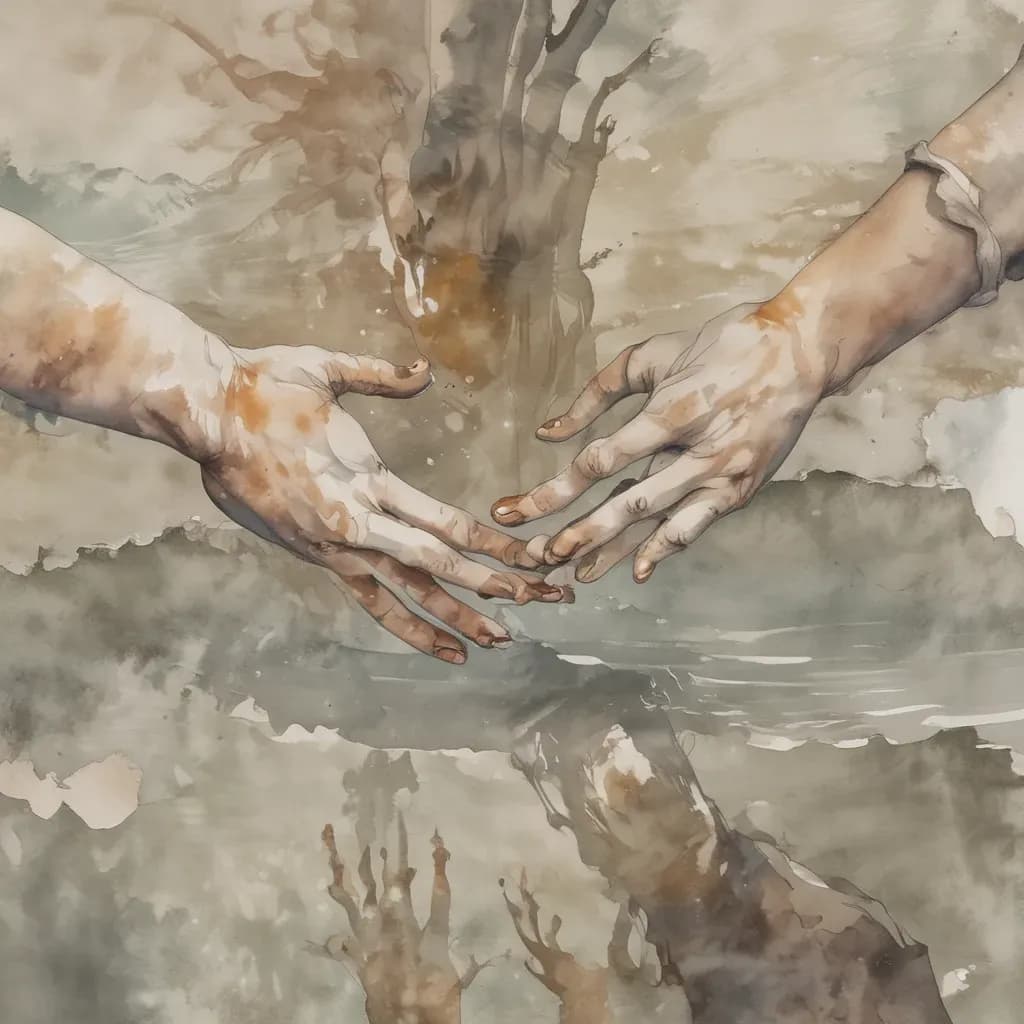
The phrase "willing and able" comes from the vernacular of readiness. You use it when you want to make clear that both your motivation and your means are in place. But Kahan's songs have always been interested in the places where motivation and means diverge, where people want desperately to show up for each other and find themselves thwarted by geography, anxiety, or the strange paralysis of being watched by an enormous audience.
In this song, the narrator appears to be making a case for his own availability, presenting his credentials as a person capable of genuine care and presence. The emotional texture of the music, however, carries the fragility of someone who understands that such claims are not straightforward to honor. The gap between the declaration and the underlying uncertainty is precisely where the song lives.
This is familiar territory for Kahan. Across his catalog, he has built a vocabulary for the particular ache of falling short of one's own intentions toward the people one loves. His characters know what they should do, want badly to do it, and find themselves caught by forces larger than their goodwill: fame, physical distance, the sheer volume of a public life. These are the forces that complicate being truly able even when the willingness is beyond question.
On The Great Divide, this dynamic takes on additional charge because the album is so explicitly about the costs of Kahan's own success. He has spoken publicly about his anxiety, depression, and disordered eating, and about the ways these struggles have at times made it difficult to be fully present even for the people he loves most.[3] The word "able" in the song's title therefore carries a psychological dimension as well as a logistical one. It asks not only whether the narrator has time and proximity but whether he has the inner resources to be genuinely available.
The Architecture of Midpoints
Positioned as the eighth of seventeen tracks, "Willing and Able" occupies the structural center of The Great Divide. On an album conceived as a sustained arc rather than a collection of loosely connected singles, this placement carries deliberate weight.[1]
The first half of the album accumulates evidence. It builds the case for distance, laying out the texture of separation, the ways success has reshuffled relationships and redrawn the familiar map of home. By the time the listener arrives at track eight, the terms of the problem have been fully established.
This is where "Willing and Able" functions as a pivot. It is a statement of intent, a declaration that the accumulated distance does not have to be permanent. It stands at the album's center as a kind of promise, one that the second half of the record will then need to test. This structural logic is characteristic of Kahan's approach, which tends to build toward revelation rather than beginning from it.
A Voice for the Disconnected
What has made Kahan such a significant voice for listeners in their twenties and thirties is his ability to name feelings that exist at the intersection of individual experience and broader cultural patterns. The question of being willing and able to be truly present for the people one loves is not merely personal. It lands squarely in the middle of a generational anxiety about availability and connection.[4]
The generation that grew up alongside smartphones and social media has developed a complicated relationship with the concept of presence. It is possible to follow someone's life in real time and still feel emotionally distant from them. Presence and connection have been disaggregated. You can be available and absent simultaneously, online and unreachable at the same time. Kahan's song gives language to the guilt and longing that emerge from this condition.
His path to this kind of resonance has been built on specificity. The details of Vermont winters, the naming of local geography, the candor about mental health struggles: these particulars paradoxically generate the universal.[3] When Kahan writes from the precise coordinates of his own experience, he regularly arrives somewhere that listeners across very different lives recognize as true.
The song also participates in the album's broader cultural positioning. The Great Divide arrived at a moment when Kahan had moved firmly from indie darling to mainstream presence, a transition that brings its own complicated feelings about authenticity and audience.[5] "Willing and Able" reads as a declaration not only to the people in his personal life but to the listeners who have invested in his work: an insistence that the person who wrote these songs is still genuinely present in them.
The Song Turned Inward
A second reading of "Willing and Able" places the emphasis on self-relation rather than connection to others. The capacity to be genuinely present for the people we love often depends on being at least partially at peace with ourselves. For someone who has been as publicly candid about his psychological struggles as Kahan, this reading feels equally valid.
In this interpretation, the song is a threshold declaration, one made at the moment when inner work has finally produced outer readiness. "Willing" has long been present: the desire to show up, to be available, to be the person his loved ones need. "Able" is the harder word, the one that arrives only after the internal conditions have been met.
Kahan has described the creation of this album as a process of confronting things he had previously tried to avoid examining. The therapy, the documentary, the stage-spanning confessions all point toward a person engaged in the deliberate work of becoming more available to himself as a condition of becoming more available to others.[2] "Willing and Able" may be the moment on the record where that process reaches its most direct articulation, a song that marks the arrival of someone who has done enough inner work to make the outer promise.
In the landscape of The Great Divide, "Willing and Able" functions as both promise and plea. It captures the particular ache of someone who has spent years in the process of becoming, arriving at a moment of recognition that the becoming must now be in service of returning. The album asks whether the great divide can be crossed. This song answers, with all the urgent sincerity that defines Kahan at his best, that the crossing is not only possible but necessary. Whether it arrives as declaration, aspiration, or prayer may depend on where the listener stands in relation to their own great divide.
References
- The Great Divide (Noah Kahan album) - Wikipedia — Album overview including track listing, recording locations, production credits, and release timeline
- Noah Kahan on The Great Divide - Hollywood Reporter — Artist interview discussing album themes, emotional process, and creative evolution
- Noah Kahan - Wikipedia — Biographical overview including mental health disclosures, career milestones, and Vermont background
- Noah Kahan Bridges The Great Divide - Atwood Magazine — Critical review examining the cultural resonance and thematic depth of the album's lead single
- Noah Kahan Explores Youthful Ignorance, Guilt and Trauma - Off the Record Press — Analysis of The Great Divide single and its position in Kahan's artistic evolution