Winter Woman
There is something quietly radical about choosing coldness as a coping strategy. Most songs about heartbreak reach toward warmth, toward the hope that tenderness will eventually return. "Winter Woman" goes the other direction. RAYE wrote the song in July 2025, during what she described publicly as a chapter of swimming through personal aches and pains, noting the incongruity of writing a winter song in the height of summer. Heartbreak, she understood, does not follow the calendar.[1] Sad feelings, she added, make great songs. The result is one of the most emotionally precise tracks on her second studio album.
"This Music May Contain Hope" arrived on March 27, 2026, released on RAYE's own label Human Re Sources.[2] It is an ambitious seventeen-track work built around the four seasons, tracing an emotional arc from the grief and dissolution of Autumn through the intimate, cold-dark stillness of Winter, then gradually warming toward Spring and the communal joy of Summer. "Winter Woman" sits in Act II, the album's most unsparing section, where the wreckage of things gone wrong is examined without the comfort of imminent spring.[2]
The Architecture of Cold
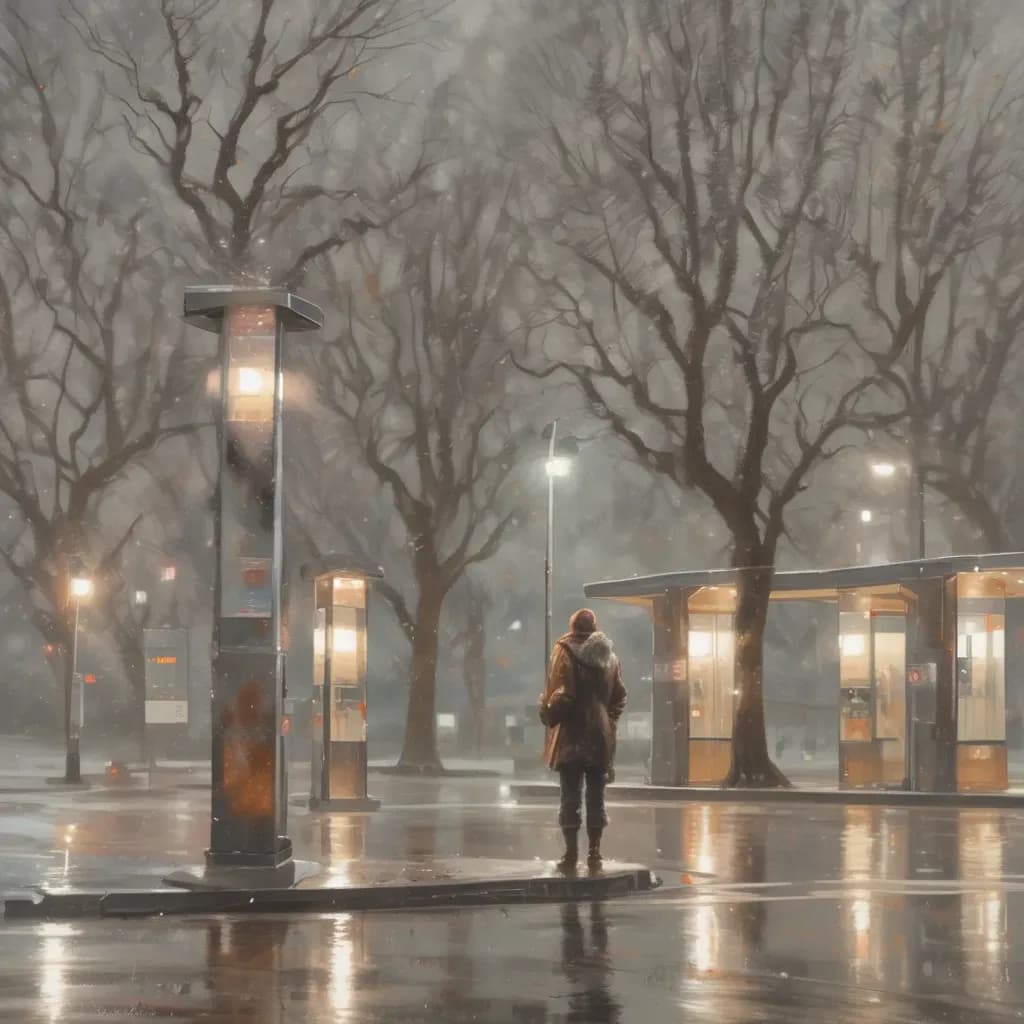
The winter woman at the song's center is a figure who has made a decision. She will become cold. Not because coldness is natural to her, but because it is protective. The song describes her in terms of spectacle and armor: elaborate outerwear worn in the middle of summer, silk dresses, crimson, glamour deployed so completely that no one can see the fracture lines beneath.[3] She hides her damage under finery. The cold is not visible on the surface; only the shine is.
RAYE frames the central refrain as something between a declaration and a rehearsal. The logic of it is stated plainly: if you become cold enough, pain cannot reach you. Cold girls get by. Cold girls do not cry. The exchange is presented as rational, even appealing. And yet the very act of articulating it in a song, of singing it repeatedly into a microphone, carries the ambiguity of someone still deciding whether to commit.
That tension, between the armor and the wound it is covering, is where the song lives. The winter woman is not someone who has successfully become numb. She is someone in the process of trying, which is an entirely different and more human condition. The bravado is present alongside the vulnerability, and RAYE makes no effort to resolve that contradiction. She holds both at once.
Part of adopting the winter woman persona, as the song frames it, involves self-naming and reinvention: making one's identity unforgettable precisely because the interior has gone cold. The determination to leave a mark persists even as emotional access is revoked. This is the armor working at full effect: dazzling on the outside, sealed shut within.
Three Centuries of Winter
What distinguishes "Winter Woman" structurally is its incorporation of Vivaldi. At the 2:33 mark, a violin passage from Antonio Vivaldi's "L'inverno," the fourth concerto of The Four Seasons (RV 297), enters the track.[4] Composed around 1720, this is music three centuries old, and it remains the most performed section of the most performed classical work in the Western repertoire.[5] Its presence here is not incidental.
The album's entire architecture mirrors Vivaldi's compositional approach: both the 18th-century concerto cycle and RAYE's 2026 pop album organize emotional experience around the seasons as metaphor and structure. To bring the actual Vivaldi into the Winter section is to make the conceptual parallel explicit. The pop song about emotional cold summons the baroque original, and the result is a kind of temporal collapse: the most recognizable musical portrait of winter in the Western tradition arriving exactly where the song most needs it.[4]
RAYE previewed the track live at London's O2 Arena before the album's release, bringing violinist Kirsty Mangan onstage to perform the Vivaldi excerpt. Accounts from those shows suggest most of the audience did not recognize the classical source, hearing it instead as an original arrangement composed for the moment. That reception carries its own resonance: the three-hundred-year-old sound had been so thoroughly absorbed into the contemporary production that it registered as native to it.[4]
Some critics found the reference almost too on-the-nose. Others heard RAYE making a structural claim about her work: that she is operating in the same tradition as Vivaldi, processing the same fundamental human experience of seasonal darkness and longing, with different tools.[6] Both readings are available, and neither exhausts what the sample is doing.
The Petrol Station
The most memorable scene in "Winter Woman" is its least glamorous. The narrator, heading home alone after a night that has not delivered what she hoped for, directs her driver to stop at a petrol station. She goes inside. She buys a large bottle of gin and cigarettes. She gets back in the car.[3]
The winter woman in silk and floor-length fur has disappeared entirely from this image. What is left is someone in a fluorescent-lit convenience store at an unspecified hour, making an unglamorous purchase, holding together by whatever thread is available. The scene does not fit the armor. It does not belong in the picture of the cold, impeccable woman constructed earlier in the song. That is precisely why it is there.
RAYE has always been drawn to this kind of specific, unheroic honesty. "My 21st Century Blues," her debut, mapped grief, assault, and recovery in granular domestic detail, refusing to aestheticize pain into something easier to receive. The petrol station in "Winter Woman" belongs to the same school. It is a technique of rupture: establish the persona, then show the moment it slips.[7] The gap between the silk presses and the petrol station is the emotional interior of the song, the space where its real meaning lives.
Within the song's narrative, the narrator also acknowledges herself as someone with a sob story: the winter woman, for all her armor, knows what she is carrying. That self-awareness is not self-pity. It is more like a kind of clear-eyed accounting. She knows the cost of the night. She is paying it.
The Logic of the Armor
The winter woman is a recognizable figure. She appears across literature and film as the woman who has been hurt enough times that she has decided to stop being reachable. Usually she is framed as a cautionary tale, someone in need of thawing, a problem for someone warmer to solve. What RAYE does differently is refuse to pathologize her.
The song does not stage an intervention. It does not suggest the winter woman is wrong about her strategy. It takes the logic of emotional shutdown on its own terms, acknowledges the intelligence in it, and then, with the petrol station, acknowledges the cost. These two things coexist in the song without either canceling the other.
This reflects the album's larger intent. RAYE has described "This Music May Contain Hope" as medicine she made for herself and then decided to share, something a listener could press play on and receive as a bath of sound when they needed to feel less alone.[6] The winter woman is allowed to be cold for a while. The album continues past her, toward spring and summer. But it does not dismiss her or rush her out of her season. It gives her time.
Anyone who has ever chosen temporary hardness as a way of surviving something difficult recognizes the calculation the song describes. The cold is not the destination; it is the mode of transit. That understanding is what makes the song resonate beyond its autobiographical context.
A Seasonal Reading
The Vivaldi sample opens the song to a slightly different interpretation. "L'inverno" is not simply bleak. Its three movements move through freezing cold, then firelight indoors with snow beating at the windows, then the uncertain tread of footsteps on ice that may give way underfoot. Progression is built into the classical reference: cold gives way to warmth gives way to cautious thaw. If RAYE is borrowing the full arc rather than just the frozen opening, the winter woman may be understood as explicitly temporary.[5]
The album's structure supports this. Winter leads into Spring. The emotional temperature climbs. The Winter section's most devastating track, "Nightingale Lane," is followed eventually by the Spring section's tentative openings and then by the Summer section's communal joy.[2] On this reading, "Winter Woman" is not a statement of permanent identity but of seasonal position. The refrain declares its cold with apparent finality. But the album knows winter ends.
The song also carries a quieter current of persistence alongside the armor imagery. Prayers appear in the narrative. The assertion that life continues returns, repeated like a mantra. The narrator may be rehearsing emotional shutdown as her strategy, but she is still praying for better days, still reaching for something. The winter woman is not a figure of pure defeat. She is someone who keeps moving. That insistence on continuance is what places the track, quietly, within the album's larger argument about hope.[8]
The Trace Element of Hope
"Winter Woman" arrived as part of an album shaped by years of aftermath: the professional betrayal of RAYE's label years, the public vindication of her six BRIT Awards in a single ceremony, the Grammy nominations in categories no artist had occupied simultaneously, and the sold-out arena tours that followed.[2] None of that success made the July 2025 aches and pains obsolete. Professional triumph does not cancel personal pain, and RAYE has never pretended otherwise.
The album's title is careful about what it promises. "This Music May Contain Hope" is not a guarantee; it is a disclosure on a label, the way a product is marked to indicate it may contain traces of a substance. Hope is a possible ingredient. Present in the Winter section as a trace element: not fully formed, not warm yet, but detectable if you are looking.
What "Winter Woman" offers is not a cure. It is a witness statement. The winter woman is real. The fluorescent-lit petrol station is real. The logic of becoming cold when cold is the only thing that works right now is real and recognizable, even when it is not healthy. The album eventually moves past winter into spring, and the music does its work of suggesting that warmth returns. But it does not pretend the winter was not necessary. It gives the winter woman her Vivaldi, her silk dresses, her bottle of gin, and the dignity of being taken seriously.
References
- RAYE Facebook post on writing Winter Woman - Facebook — RAYE's own statement about writing the song in July 2025 during a period of personal difficulty
- This Music May Contain Hope - Wikipedia — Album details, tracklist, seasonal structure, and release information
- Winter Woman (song) - RAYE Wiki Fandom — Song details including writing credits, production, and thematic notes
- RAYE used a 300-year-old Baroque music sample on her new album - Classic FM — Details on RAYE sampling Vivaldi's L'inverno, the O2 Arena live performance with violinist Kirsty Mangan
- RAYE - Winter Woman sample of Vivaldi's Winter - WhoSampled — Confirmation and details of the Vivaldi Concerto No. 4 in F Minor RV 297 sample
- RAYE talks about her artistic journey and new album - NPR — RAYE's statements on creating the album as medicine, her maximalist approach, and intent to offer listeners a healing space
- Raye Goes for Broke on the Wildly Ambitious 'This Music May Contain Hope' - Rolling Stone — Critical reception of the album including discussion of its emotional scope and specificity
- Does RAYE's 'This Music May Contain Hope' hold true? - The Daily Campus — Album review noting how Winter Woman echoes themes from RAYE's debut and its place in the seasonal arc