Wish You Were Here
The Space Between
There is a moment near the beginning of "Wish You Were Here" when the sound shifts. What seems at first like a distant radio signal resolves into something warm and present, as though a listener has set down whatever they were holding, picked up a guitar, and simply joined in. It is a subtle trick, but it tells you everything: this is a song about the difference between being near something and truly being there. About the gap between proximity and presence. About absence so total it shapes the air around it.
Pink Floyd recorded this album in early 1975, a peculiar, deflated period for a band that had every external reason to feel triumphant. The Dark Side of the Moon had become one of the best-selling albums in history, and yet the sessions for its follow-up were marked by what drummer Nick Mason described as a feeling of "relaxed desperation."[1] Band members filled time with darts and drink, struggling to find direction. Roger Waters later said that none of them really wanted to be there, that the creative engine had begun running on fumes.
The Ghost in the Studio
The album's emotional core had been established before the sessions even began: it would grapple with the fate of Syd Barrett, the band's founding genius. Barrett had been the creative center of Pink Floyd's early psychedelic period, the primary songwriter, the charismatic frontman who seemed to conjure music from somewhere beyond ordinary reach. But by 1968, a severe deterioration in his mental health, widely attributed to schizophrenia amplified by heavy LSD use, had made it impossible for him to function.[2] He was quietly replaced by guitarist David Gilmour and drifted out of public life, making two erratic solo albums before retreating almost entirely.
Then came June 5, 1975. The band was at Abbey Road finishing the mix of "Shine On You Crazy Diamond," the album's sprawling instrumental suite written explicitly as a tribute to Barrett. An overweight, unfamiliar man wandered in carrying a white plastic bag. His head and eyebrows were shaved. The band did not recognize him. When David Gilmour finally realized who it was, the room went still.[3] Richard Wright broke down in tears. Roger Waters was shaken. The date happened to be Gilmour's wedding day; Barrett later appeared at the reception before slipping away again.
This convergence, the subject of a tribute arriving to hear his own tribute being completed, one last time, unrecognized, deepened the emotional stakes of everything the band was recording. Barrett said nothing that suggested he understood the connection. He was already gone, even while standing in the room.
What the Song Is About (and What It Is Not)
It would be easy and not entirely wrong to call "Wish You Were Here" a tribute to Syd Barrett. But Waters has consistently resisted that reduction, and the song itself pushes back against any single reading.[4] Waters has said the lyrics were directed at himself as much as anyone else. The song is about being absent from your own life, about performing presence while the real thing has quietly evacuated.
The song opens with a series of questions that seem deceptively simple: can you tell the real thing from the imitation? Can you tell authentic feeling from its performed version? The imagery moves between natural openness and industrial enclosure, between what looks like freedom and what turns out to be a cage.[2] The tension is not resolved. The questions are not rhetorical. They are genuine interrogations of whether any of us can trust our own perceptions, whether success and comfort can hollow a person out so gradually that they never notice.
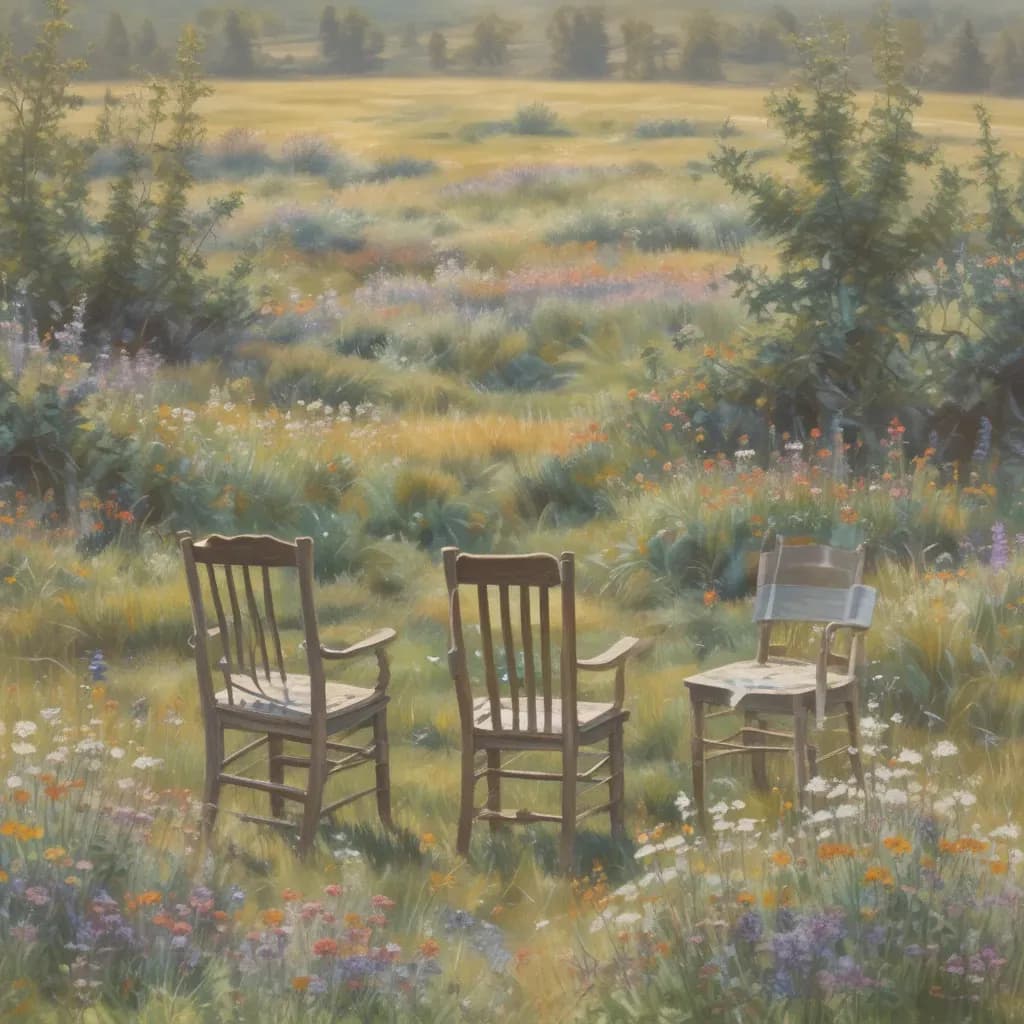
The song's central image of two souls circling in a confined space year after year, covering the same ground, finding the same fears, is not painted as a tragedy from the outside. It is confessional.[5] Waters saw this pattern in his own relationship to the band, to the industry, to the comfortable machinery of continued success that required nothing genuine of anyone involved.
The Accidental Song
The song itself came together with a kind of accidental grace that seems almost ironic given its themes of drift and stagnation. Gilmour had just bought a new twelve-string acoustic guitar and was playing in the studio control room when the opening riff emerged from his hands without particular intention.[6] Waters heard it, asked what came next, and when Gilmour said nothing, Waters asked if he could take it further. The song grew from that question.
The recording technique reinforced the song's emotional concept. The opening acoustic passage is processed to sound like it is being heard through a transistor radio, small and distant. A second, warmer guitar then joins, simulating a listener picking up an instrument and playing along.[2] The effect is of someone bridging a gap, reaching across a frequency. It is one of rock music's most quietly ingenious production moments, and it prepares the ear for a song entirely about the effort of connection and the way it so often falls short.
A Critique Disguised as a Lament
The album surrounding this song is explicitly hostile to the music business. "Welcome to the Machine" and "Have a Cigar" are almost satirical in their contempt for the industry's appetite to package and sell the very authenticity it destroys. "Wish You Were Here" carries that critique too, but more quietly, and more personally.
What does it mean to trade creative freedom for commercial safety? The song suggests you may not notice until you look up one day and realize the heroic roles you were supposed to inhabit have gone to someone else. The characters invoked in the song's middle section are not villains. They are people who made the compromises that seemed reasonable at the time and found themselves playing parts in someone else's story.[5]
Barrett was the ultimate symbol of this, not because the industry consumed him, but because it could not even hold him. His absence was not a sellout. It was a disappearance, a mind that simply could not be contained or commodified, leaving behind something that no amount of success could fill.
Alternative Readings
Music scholar Ethan Hein has proposed that the song is better understood as a document of the slowly fracturing relationship between Roger Waters and David Gilmour, rather than primarily a Barrett elegy.[7] By this reading, the two souls circling endlessly, covering the same ground, finding the same frustrations, describe the two men themselves: collaborators who no longer communicated, who performed unity while growing steadily more estranged. The band split acrimoniously in the mid-1980s with Waters departing, and in retrospect, the song's language of missed connection, of longing for a version of something now lost, maps onto that story too.
The song resists neither reading because Waters built the ambiguity in deliberately. He has said he followed a kind of stream of consciousness when writing lyrics, trusting what fit emotionally rather than imposing a specific narrative. The result is a text that can hold multiple meanings simultaneously: a tribute, a confession, a critique, an elegy.
Why It Endures
Initial critical reception of the album was cool. A 1975 Rolling Stone review found the band lacking sincere passion. Melody Maker was harsher, calling the record ponderous and the band somnambulant.[1] Time and repeated listening reversed these verdicts completely. Rolling Stone later ranked the album among the 500 greatest of all time, and both Richard Wright and David Gilmour have named it the Pink Floyd record they are most proud of.
Part of the song's endurance comes from its guitar accessibility. The opening riff is among the first things many players learn, which means generations of listeners have had the physical experience of playing it, not just hearing it. That intimacy changes the relationship. A song you have played with your own hands lives differently in the body than one you have only heard.
But the deeper reason is that the song describes something almost universal: the awareness that life can be lived at a remove from itself. That you can be in a room, in a relationship, in a career, and be genuinely absent. That the people and possibilities you mourn are sometimes the parts of yourself that slipped away while you were busy with other things.
The song also found new resonance as mental health conversations broadened culturally. Barrett's story, once a sad footnote to Pink Floyd's history, became a touchstone for understanding how genius and psychological fragility can coexist, how the same mind that produces extraordinary art can be overwhelmed by the very sensitivity that made that art possible.[8]
The song has been covered across languages, genres, and decades. In 2025, Canadian Inuk artist Elisapie translated it into Inuktitut, demonstrating that the emotional content survives even the most radical cultural translation. The wish at the center of the song needs no specific referent. The "you" is whoever the listener needs it to be.
A Farewell to Something Already Gone
By the time Syd Barrett died in 2006, living quietly in Cambridge under his birth name Roger Keith Barrett, most of the world had long since transformed him into a legend. Pink Floyd had gone on to massive success. Waters and Gilmour had split and reconciled for a single performance at Live 8 in 2005. The band's complicated history was well documented.
But "Wish You Were Here" remained, as it had always been, a song addressed to someone who could not quite be reached. Not because they were hostile or indifferent, but because the distance was built into things. Because some presences are most felt through their absence. Because the best you can do, sometimes, is play the riff and hope the signal carries.
Roger Waters was right not to over-explain it. The song knows things that analysis can only approach. Put a needle in a groove or pull up a streaming service and press play: those opening guitar tones, distant then close, will do the rest.
References
- Wish You Were Here (Pink Floyd album) - Wikipedia — Album history, sessions, and critical reception overview
- Wish You Were Here (Pink Floyd song) - Wikipedia — Comprehensive overview of the song's background, recording context, and critical reception
- When Syd Barrett Visited a Pink Floyd Recording Session - Ultimate Classic Rock — Details of the June 5, 1975 studio visit and its emotional impact on the band
- Behind the Song: Pink Floyd, "Wish You Were Here" - American Songwriter — Roger Waters' statements and creative process behind the song
- The Story Behind Pink Floyd's Wish You Were Here - Louder Sound — In-depth look at the song's origins, themes, and lasting legacy
- The Making of Wish You Were Here - Riffology — Recording details and contextual analysis of the album's creation
- Music Professor Breaks Down Wish You Were Here - MusicRadar — Alternative academic reading of the song as describing the Waters-Gilmour relationship rather than Barrett alone
- Pink Floyd's Most Human Album: Wish You Were Here at 50 - Medium — Critical reassessment of the album at its 50th anniversary