without music the world dies
Some song titles read like a mission statement, and this one reads like a verdict. Morrissey has spent more than four decades singing about the lonely, the overlooked and the people who found their whole inner life in a record bought with pocket money. A title that declares the world finished without music is not a surprise coming from him. It is closer to a thesis he has been circling since the beginning.
What makes the song interesting is how plainly it states that thesis, and how much the circumstances around its release add to it. It began life as the working title of an entire album, was shelved when that album was reshaped, and finally surfaced in autumn 2026 on the flip side of a 7-inch single. A song about music's indispensability spent years waiting for someone to let it be heard.
A title that outlived its album
The phrase first appeared publicly on 8 December 2022, when Morrissey announced a new album under that name.[1] It was recorded in January and February 2023 at La Fabrique Studios in St-Remy, France, with Joe Chiccarelli producing, their fifth collaboration.[1] The sessions took place outside any record contract, because Morrissey had parted ways with Capitol Records that same December.[1]
By 20 February 2023 he announced the record was finished and offered it to any label or private investor willing to put it out.[1] For an artist who has long cast himself as an outsider to the music business, the situation had a certain symmetry. He had made an album titled around the idea that music is essential, and the industry's machinery had no immediate place for it.
Plans then shifted repeatedly. In late 2024 Morrissey described two separate albums, explaining that the second had been re-recorded in France later in 2023, that half of the tracks were scrapped, and that six new ones were cut.[1] In mid-2025 the project carried a new title, You're Right, It's Time. In January 2026 came news that he had returned to Sire Records, and the album that finally arrived on 6 March 2026 was called Make-Up Is a Lie.[1]
The title track of the original idea is not on that album's listing.[1] Instead it turned up in October 2026 as a previously unreleased song from those sessions, issued on a 7-inch single and paired with a different song, Zoom Zoom the Little Boy.[2] It was co-written by Morrissey and Gustavo Manzur, and streaming and vinyl links were promoted through his official channels.[2][3]
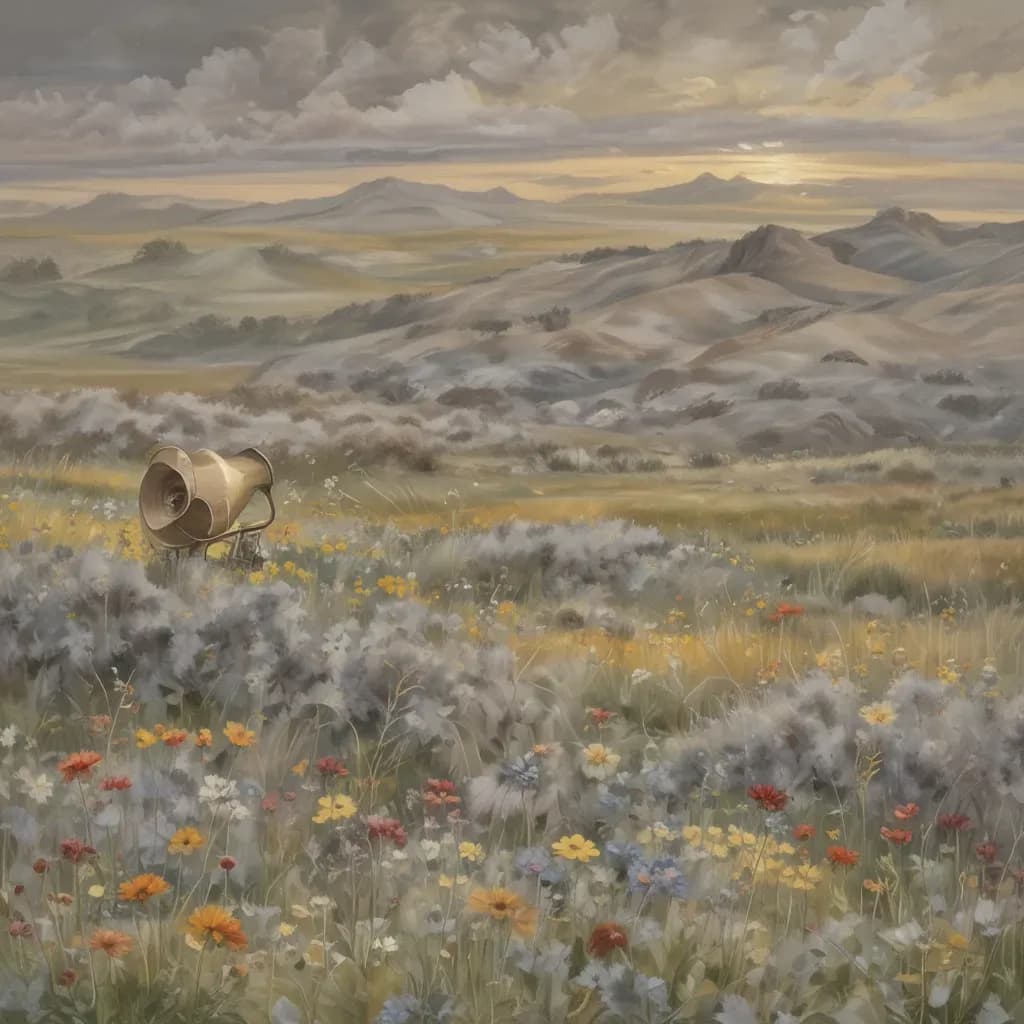
The argument the song makes
The song works by subtraction. Rather than telling a story about one person or one heartbreak, it moves through a series of things that people are told to value, the daily news, formal education, public honours and similar markers of a successful life, and sets each of them aside as something a person could live without. Against that list it places a single non-negotiable item. Music is the one thing whose removal would leave nothing worth saving.
This is a recognisable Morrissey manoeuvre, and it is worth noticing how little the song bothers to soften it. There is no sly counterargument and no wry retreat. The refusal of institutions is the point, and the claim for music is made with the confidence of someone who does not expect to be talked out of it.
The effect is closer to a credo than a conventional pop narrative. Listeners are not invited into a scene. They are asked to agree or disagree with a position, which gives the song a slightly confrontational warmth, like a friend insisting you hear something in the middle of a crowded room.
The outsider's creed
To understand why the argument sounds the way it does, it helps to remember where Morrissey's own mythology began. The Smiths made their name in the 1980s by speaking for teenagers and adults who felt shut out of the standard routes to a good life. School, work and polite society appear in that catalogue mostly as places to be endured. Pop music, by contrast, appears as shelter, a place where a person who does not fit can feel briefly accompanied.
Seen against that background, the new song reads as a late restatement of an old loyalty. The institutions have changed shape, and the media environment is louder and more fragmented than it was in the 1980s, but the instinct is the same. The things society certifies as important are treated with suspicion, while the unofficial education a listener gets from records is treated as the real one.
There is also a more personal layer. A performer who has just lost a major label and spent months seeking someone to release his work has reason to feel that the formal structures around music are fragile and sometimes indifferent. Declaring that the art itself is what matters can be read as a way of standing on the only ground that cannot be taken away.
Music as a life support system
The title's wording is blunt in a way that deserves attention. It does not say that life is better with music, or that music makes things easier. It says that without it the world dies. That is a statement about necessity, and it moves music out of the category of entertainment and into the category of infrastructure, like water or light.
For many fans that is not exaggeration. Anyone who has gotten through a bad year with the same few albums on repeat knows how literal the claim can feel. The song gives voice to that experience without dressing it up, and it does so in a plain declarative register that suits its subject. Music's value is not argued through complex metaphor. It is simply asserted, and the listener is left to test the assertion against their own life.
There is a gentle paradox in this. A song that dismisses so many accepted goods could easily sound bitter, and Morrissey is often assumed to be bitter by default. But the emotional centre here is gratitude rather than grievance. The sneer is aimed outward at the lesser priorities, while the affection is saved for the one thing that earns it.
A song held back, then released quietly
The release strategy adds its own commentary. The song did not arrive as a lead single with a big campaign. It came out as a B-side on a vinyl single, a format that fits the theme neatly, since the 7-inch is one of the oldest symbols of obsessive record-collecting.[2] The format invites the kind of devotion the lyrics celebrate. A B-side is a place where fans go digging, and for decades it has been where artists hide the songs they love most.
The accompanying promotion focused on the other tracks. A video was released for Kerching Kerching, and a video for Zoom Zoom the Little Boy was planned for later in November.[2] That leaves this song to be found rather than announced, which has its own appeal. A statement about the necessity of music reaches listeners most honestly when they stumble onto it while turning a record over.
Other ways to hear it
Not everyone will take the song at face value. A sceptical listener might hear a jab at the news, at schooling and at prizes as a familiar contrarian posture, the kind of broad dismissal that is easy to say and hard to live by. On that reading the song is less a philosophy than a mood, a temporary rejection of everything that is not a favourite record.
Others might hear it as a pointed comment on the music industry itself. Given the timeline, with a departed label, a rejected album and a title that was dropped, the claim that music is essential can function as a counterpoint to the idea that what matters is contracts, chart positions and executive approval. In that sense the song protests not against the world but against the people who control access to the thing the world needs.
A third reading is more tender. It treats the song as a thank-you note to the art form, written by someone who has been supported by it for his whole adult life. Read this way, the dismissals are not really the content. They are the contrast that lets the gratitude register.
It is worth admitting that the surviving public record offers little direct commentary from Morrissey about what the song means to him, so each of these readings rests on the song's own stance and the circumstances around it. They are not mutually exclusive, and the song holds up under all three.
Why it resonates
Songs about music tend to be either nostalgic or self-congratulatory. This one avoids both by being blunt and brief about its claim. It trusts that its audience already believes it, and that trust is a form of respect. The listeners most likely to find it are the same people who have always found Morrissey, the ones who have used records as a way to understand their own lives.
The song also arrives at a moment when attention is scattered across endless streams of content, and when the idea of music as a single, devoted relationship can seem old-fashioned. A plain restatement of its importance feels almost countercultural. It makes no case for a platform or a trend. It argues only for the thing itself.
Its history deepens that effect. A title that was meant to name a whole album, that survived a label split, a rewrite and a retitling, and that finally reached listeners on a small vinyl disc, has already acted out its message. The song needed to exist, and eventually it did.
Conclusion
Without Music the World Dies is a small song with a large claim. It sets aside the usual measures of a good life and names the one thing it refuses to give up. Whether you hear it as a creed, a complaint about the industry or a love letter, it fits neatly into the long argument Morrissey has been making since the 1980s. The world is full of institutions that insist they matter, and the song's reply is that a person could do without nearly all of them. The part worth keeping is the sound.
References
Keep reading
More Alternative Rock
- Famous Last Words My Chemical Romance
- Under the Bridge Red Hot Chili Peppers
- For the Love of Gold Gloom is Okay
- Here You Come, There You Go Gracie Abrams
- Bobby Phoebe Bridgers
- Wheel Narrow Head