Young Shields
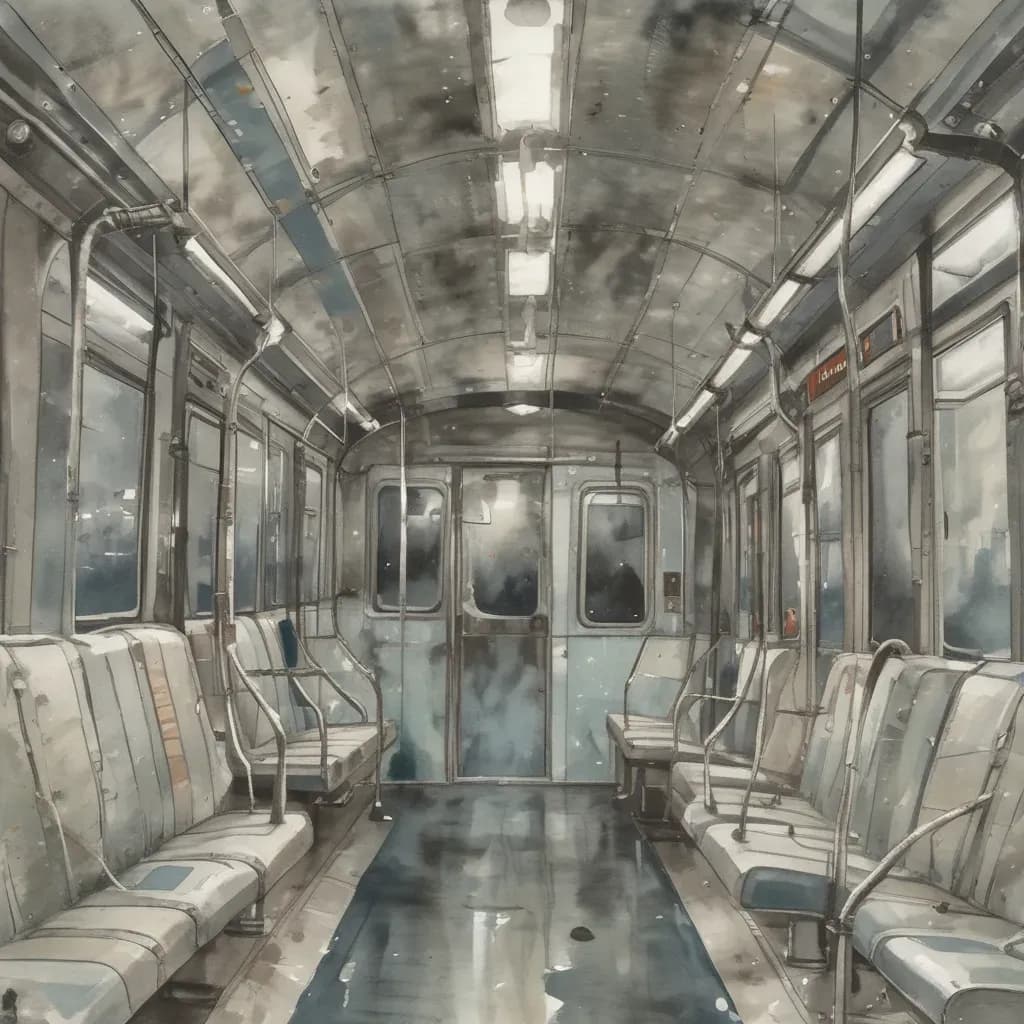
Some songs about being broke and directionless are mournful. This one is closer to a shrug with a clenched jaw. "Young Shields" moves at the steady pace of a subway car, with a drum machine ticking underneath and a cheap synthesizer marking the gaps, while a flat, tired voice describes a way of living that its narrator can neither defend nor quite abandon.[7]
It is the third track on Casiotone for the Painfully Alone's fourth album, Etiquette, and it was the record's lead single.[1][3][4] It is also, by common agreement, one of the best things Owen Ashworth ever wrote. Ashworth himself, asked where a newcomer should start, named Etiquette and the Young Shields EP as the releases most people seem to love.[6]
A film-school dropout with a toy keyboard
Ashworth was born in Redwood City, California, in 1977, and started Casiotone for the Painfully Alone in 1997 after dropping out of film school.[2] The origin story he tells is modest. He took a university piano class, borrowed a small keyboard from his younger brother to practice on, and began building songs around its built-in accompaniment and drum-machine functions. The results sounded finished to him, and making music that felt new, entirely on his own, was thrilling.[6]
The Village Voice later put the logic of the project neatly: songs were a cheaper way of telling stories than movies.[5] That instinct runs through everything he made. Reviewers kept reaching for the language of fiction. One called the songs brilliant short stories with a recurring cast of invented characters.[8] Another admired him as a superb ventriloquist for sad tales, and noted that Ashworth has reportedly insisted the pain is not simply his own.[3]
The early rules were strict. The Wikipedia entry describes a Dogme 95 style of limits: short songs, played in the key of C, on the white notes of Casio keyboards.[2] The name itself came from a favor for a friend. She was going through a breakup and asked for his saddest songs, so he made her a tape and wrote the name on the spine. She then booked him a show and printed posters with the name before he could object.[6]
Where the song sits in the story
"Young Shields" arrived in the world twice. It first appeared on an EP of the same name, which Ashworth sold at shows toward the end of 2005, and a music blogger posted the track that November.[7] It then opened up to a wider audience as the lead single from Etiquette, released on 7 March 2006 by the German label Tomlab.[1]
Etiquette was a shift. The earliest records had a homemade quality, and from this album onward the project added more analog and organic instruments, including piano, strings and steel guitar, alongside the drum machines and keyboards.[2][9] It was recorded at a San Francisco studio with Jherek Bischoff and Jason Quever producing.[1] It was also the first Casiotone record with significant guest vocalists, with four of its songs sung by other people.[9]
Critics noticed the change in feel. Chris Smith in ALARM heard the sound moving from lo-fi and methodical toward dance and hip-hop beats with live band color, and compared "Young Shields" to a darker take on the new-wave hit "Metro" by Berlin.[8] The comparison makes sense: it is a pop song at heart, dressed in dance-floor clothes it has no energy to wear.
A portrait of drift
What the song is about is easier to feel than to summarize. Critics describe a young person's life of casual drinking, quitting jobs and drifting without a plan. The Village Voice called it a secret anthem for empty wallets, late risers and second-hand shirts.[5] The scene is one of low funds, low ambition and few witnesses.
What makes the portrait interesting is its angle. The narrator does not describe this life with the romance of a road song or the shame of a confession. Instead the song seems to dare the listener to judge it. A blogger who posted the track in 2005 heard it as an accusation aimed at everyone, built on the old idea that those who live in fragile houses should not throw stones.[7] The anger is real, he wrote, but it is delivered in a calm, almost clerical voice, like a message left on an answering machine, over a beat as regular as a train.[7]
That contrast between heat and flatness is the song's central trick. The words are the sort a person might want to scream, and they are spoken instead. The effect is not restraint so much as exhaustion, the sound of someone who has made the same argument too many times.
Hopelessness, but not despair
Two contemporary reviews supply the vocabulary for the mood. Mike Diver described the track as entirely wrapped in encroaching failure, and placed it in an album whose first half has little optimism.[4] Amir Nezar heard the same thing in the arrangement: the techno synths seem to compound the song's soul-battery, and the sparse, deliberately placed electronic pangs complement its lyrical hopelessness by the spaces they leave.[3]
There is something unusual in how those spaces work. In most pop, the gaps between hooks are filler. Here the quiet is where the meaning sits. The synth hits land like a door closing in another room, and what follows is a pause long enough to feel the cost of the last line.
Yet hopelessness is not the whole picture. The Village Voice's reviewer made a sharper observation about Ashworth's writing in general, which is that his songs can make existential malaise seem purposeful, even noble.[5] That helps explain why a song about having very little can feel like a banner. Its narrator may be stuck, but he is not pretending, and in a culture that constantly asks young people to perform ambition, that refusal can feel like a small act of integrity.
The sound of a small machine telling a big truth
Part of the song's force comes from its tools. A plastic Casio and a drum machine cannot produce grandeur, and Ashworth never asks them to. Dodero wrote that his appeal on record is more emotional than musical and more scenic than sonic, with longing and frustration turned into short soliloquies of drum-machine and keyboard sound.[5]
This limited palette suits the subject. A song about living cheaply sounds cheap in the best way, with no gloss to hide behind. The brightness of the keyboard tones even adds a faint irony, like cheerful lights over an empty bar. Etiquette as a whole runs to only about thirty minutes, with short breakdowns and simple, immediate melodies, and the compression helps each song hit without ceremony.[1][3]
Why it became an anthem
Ashworth was reluctant to play it, at least on one occasion. At a surprise show in Brooklyn in April 2007, audience members kept shouting requests for the song, and he did not play it, instead taking requests from elsewhere in his catalog and working through a pile of keyboards pulled from suitcases.[5] The anecdote is small, but it says something about the song's place in the audience's heart. People wanted this one, specifically, more than the others.
The reasons are not hard to find. It is catchy, short and tuneful. It describes a stage of life many people recognize, the years after school or an early career falls apart and before anything has taken its place. It is honest about the lack of a plan without wallowing, and it is danceable in a way that makes the sadness easier to carry.
There is also the matter of timing. The song appeared in the middle of the 2000s indie era, when bedroom recordings and handmade bands were reaching listeners through blogs. A track about poverty and drift, built on thrift-store equipment, fit that world perfectly, and it turned a private feeling into a shared one.
Other ways to hear it
One reading is political in a small way. If the song is an accusation, as one early listener heard it, then its target may be anyone who looks down on people without money or direction.[7] Under that reading it is a defense of the unambitious, a song asking the comfortable to check their own windows.
A second reading is more rueful. The narrator may know exactly how the life looks from outside, and the flat delivery may be a way of hiding embarrassment. That fits the character types in Etiquette, whose figures drift and discover that reality does not match their dreams.[9] Heard this way, the song is less a manifesto than a rationalization, and the sadness is in how little it persuades.
A third reading is tonal rather than narrative. Diver noted that Casiotone songs often leave open whether anyone ever reached a resolution, which separates Ashworth from other confessional writers.[4] "Young Shields" may simply refuse to say whether the life it describes is a phase or a fate. The ambiguity is the point.
Conclusion
"Young Shields" works because it declines to flatter anyone. It does not sell failure as glamour or ask for pity. It gives a dry, honest account of a life lived on very little, over a beat that keeps moving even when the narrator does not.
In 2010 Ashworth retired the Casiotone name, and the songs written under it, and went on to make music as Advance Base.[2] But this song keeps its place. For a certain kind of listener, it remains the soundtrack to the stretch of life when the bank balance is low, the plans are vague and the only honest response is to keep walking.
References
Keep reading
More Lo-Fi
- Last Song I Sing pollyfromthedirt
- Miss Misery Elliott Smith
- Nothing Left to Say sombr
- Willow sombr
- F.E.A.R. MIKE
- Kirkland MIKE