TOTEP
About this Album
TOTEP arrived in February 2018[1], self-released digitally before a physical edition arrived via Polyvinyl Records[1], and it announced the end of one version of Kero Kero Bonito with a wall of guitar noise and a vocalist singing about the costs of pretending.
The shift it represented was genuinely startling. The group's 2016 debut album Bonito Generation had established them as one of the most distinctive voices adjacent to the PC Music scene: bright, immaculate electropop borrowing from J-pop, dancehall, and video game music, committed to what the band called "radical positivity"[2] at a time when indie rock treated melancholy as a default artistic register. They had made cheerfulness feel like a creative and political choice rather than a commercial concession.
TOTEP sounded like it was made by a different band. The bass is muddied, the guitars are real, the edges are unsmoothed. Gus Lobban deliberately left guitar feedback and stray notes in the recordings rather than removing them, believing the residual chaos was part of what made these sounds feel present and alive. It was the first time an actual electric guitar appeared on a KKB record[3], and the texture it created -- warm, damaged, live -- was unlike anything in the band's catalog.
Grief as Raw Material
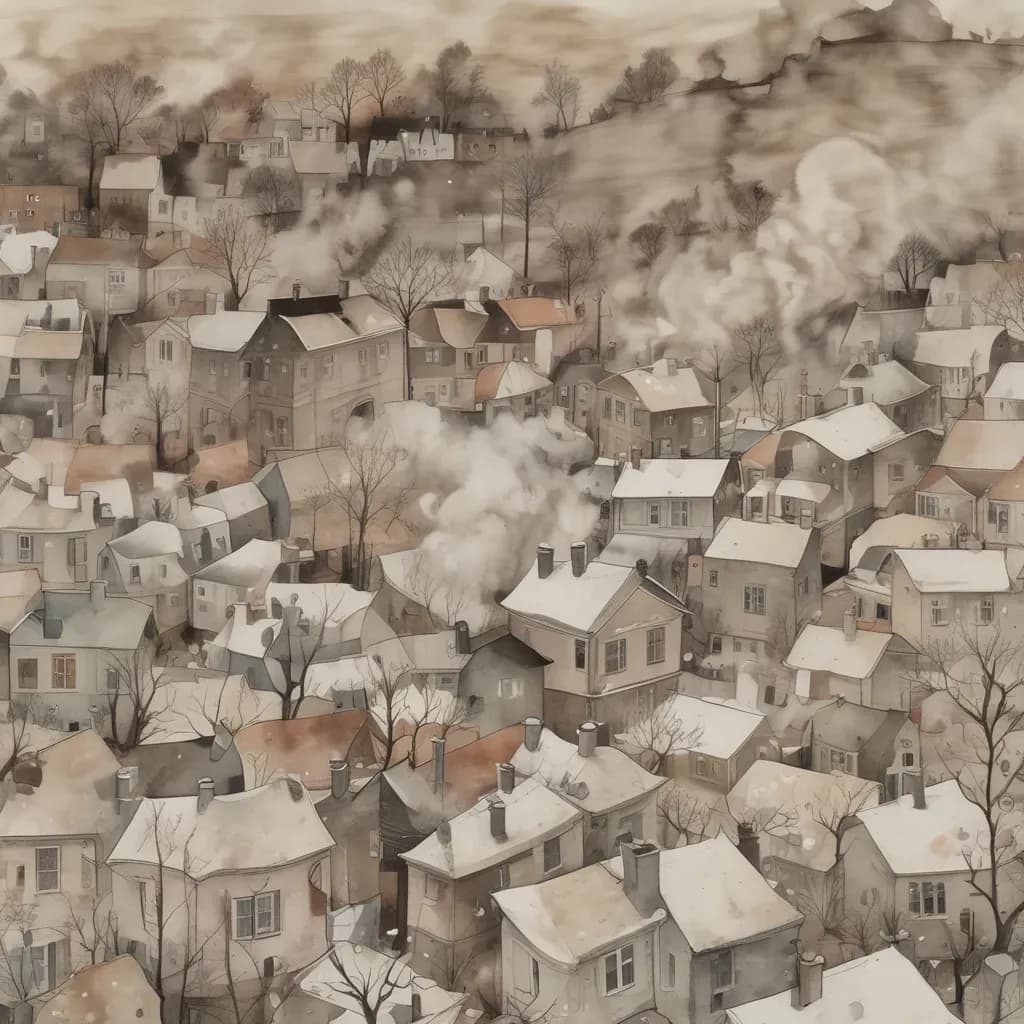
The reasons behind this shift were personal before they were aesthetic. Sarah Perry has spoken about a cluster of disorienting losses that accumulated in the period leading up to TOTEP: her childhood home was demolished, and the primary school she attended was closed[4]. Neither event qualified as catastrophic in the dramatic sense, but both functioned as quiet, irreversible reminders that the places shaping a person get reabsorbed into the world without ceremony. The permanence of impermanence, as a feeling rather than a philosophy, became central to the group's new work.
Gus Lobban was navigating parallel difficulty: his father was hospitalized during this period, and the experience of sitting with someone in decline threads through the group's recordings from this era[5]. He described the emotional logic underlying TOTEP and the album that would follow it as something he called "pessimistic optimism"[6] -- an acknowledgment of hardship coupled with a stubborn refusal to be destroyed by it. The phrase captures something precise about the EP's mood: these songs are heavy without being hopeless.
The Sound of Something Breaking
The production choices on TOTEP do not merely reflect these themes; they enact them. Where Bonito Generation achieved its effects through meticulous layering and digital polish, TOTEP introduces noise as a compositional element: distorted bass tones, abrasive guitar bursts, and textures that feel intentionally unfinished. The imperfections are not accidents. They are the argument.
Lobban cited Mount Eerie's grief-saturated A Crow Looked at Me and the noise-forward work of My Bloody Valentine as guideposts for this period[5]. The willingness to let dissonance coexist with melody, to treat emotional honesty as something that sometimes requires refusing to clean up the mess, is audible throughout the EP. Critics heard additional lineages in the mix -- garage rock, twee pop, and Japanese city-pop traditions that have long been part of KKB's DNA through Perry's bicultural background[6] -- and together these sounds represented a clean departure from the PC Music-adjacent production model that had defined the group's early work[7].
Lobban was explicit about his disenchantment with formula-driven pop craftsmanship during this period, describing hook-centered songwriting as an aesthetic dead end and articulating a desire to pursue something more disruptive and alive[8]. For a band whose previous identity had been built on the pleasures of a perfectly constructed pop song, this amounted to a genuine provocation. Anna Gaca, writing for Spin, observed that the tracks felt somewhat sketched-in[9] but noted they pointed convincingly toward a future where KKB would not be defined solely by the bubblegum they had mastered. That future turned out to be closer than anyone realized.
The Performance Question
The EP's most discussed track tackles a question that runs beneath the group's entire project: what is the relationship between a performer's public persona and the person underneath it? The lead single works through this dilemma directly, its narrator caught in the seductive danger of committing so fully to a role that the original self begins to recede. The track has been connected to Satoshi Kon's 1997 anime Perfect Blue, which follows an idol's psychological unraveling as she attempts to leave pop stardom behind[3]. The thematic resonance is precise: both are preoccupied with what happens when a public-facing identity becomes a trap.
The song does not offer easy comfort. Its structure is interrupted by a burst of abrasive noise that severs the final chorus -- an act of deliberate self-destruction that one critic, writing for The Alternative, called "destructionist pop"[10]. The term is apt: this is a pop song that dismantles its own architecture to make a point about the limits of pop's conventional gestures.
This question of authenticity and performance resonates beyond any single track. KKB had always operated at the intersection of genuine feeling and ironic genre play. The bubblegum of Bonito Generation was simultaneously sincere and knowing. TOTEP pushes that tension into more uncomfortable territory, dropping some of the protective irony and asking what the music is for when the cheerful armor comes off. The Quietus argued that the result had topped the group's previous output entirely, cementing them as one of the most genuinely interesting pop groups working[11].
A Bridge to Something Larger
TOTEP was not conceived as a standalone document. It was drawn from the same body of material as Time 'n' Place[1], the full-length album KKB released in October 2018 as a deliberate surprise drop[12]. That album expanded the sonic vocabulary opened by TOTEP into its fullest realization and went on to receive the most significant critical attention of the group's career. Having the EP as context helped listeners and critics understand that the change was intentional, not a misstep.
The Line of Best Fit described TOTEP as "their revolution"[7]. For a band whose public image had been defined by cheerful bubblegum pop, releasing four tracks of noise-inflected guitar music without ceremony was a real departure. It also demonstrated that the melodic intelligence underpinning Bonito Generation could survive translation into rawer sonic territory[2]. The continuity between two very different-sounding bodies of work is what makes the evolution feel earned rather than calculated.
Commercially, the EP's performance reinforced the point. Following the Polyvinyl physical release in January 2019, it charted at number six on Billboard Top Heatseekers Albums, number twenty-two on Billboard Independent Albums, and number twenty on Billboard Vinyl Albums[1]. A four-track, eleven-minute release about the difficulty of remaining yourself had found a real audience.
The cover art -- Sarah Perry alone in a darkened kitchen, light barely reaching her -- communicates the EP's emotional register without a single word[3]. TOTEP remains one of the more honest documents of an artist working through genuine change. The noise is the point. The impermanence is the point. The willingness to make something that would bewilder the audience that came for the bubblegum is exactly what gives it its lasting weight.
Songs
References
- TOTEP - Wikipedia — Release history, tracklist, personnel, chart positions, and physical edition details
- Kero Kero Bonito - Wikipedia — Band biography, radical positivity philosophy, PC Music context, and discography overview
- Only Acting (Kero Kero Bonito Wiki, Fandom) — Song details including first use of electric guitar, Perfect Blue thematic connections, and cover art description
- Kero Kero Bonito Talks Traversing Time 'n' Place (KEXP, 2019) — Sarah Perry on the demolition of her childhood home and school closure as catalysts for the artistic shift
- Kero Kero Bonito Are Smiling Through It All (The Fader, 2018) — Interview covering Mount Eerie and My Bloody Valentine as influences, Lobban's father's hospitalization
- Review: Kero Kero Bonito - TOTEP EP (KZSC Santa Cruz) — Review noting pessimistic optimism tone, genre mixing of garage rock, twee pop, shoegaze, and city-pop
- Kero Kero Bonito continue their revolution on curveball EP TOTEP (The Line of Best Fit) — Coverage describing TOTEP as a revolution away from PC Music-adjacent production
- Kero Kero Bonito talks pop, boring pop and Linkin Park (Daily Californian, 2018) — Gus Lobban on his disenchantment with hook-centered songwriting and conventional pop formula
- Stream Kero Kero Bonito's New TOTEP EP (Spin) — Anna Gaca's critical observation that the tracks feel sketched-in but point toward future direction
- Track Attack: Kero Kero Bonito's "Only Acting" Is Destructionist Pop (The Alternative) — Coinage of 'destructionist pop' to describe Only Acting's self-dismantling structure
- Kero Kero Bonito - TOTEP review (The Quietus) — Critical review arguing TOTEP topped all of KKB's previous output
- Time 'n' Place - Wikipedia — Album details including its surprise release strategy and inclusion of Only Acting