The One True Path
Most opening tracks announce intentions. "The One True Path" does something more peculiar: it poses a question as a statement, wraps hopefulness in sonic unease, and dares the listener to decide whether the song is a celebration or a warning. As the first track on TOTEP, Kero Kero Bonito's surprise 2018 EP, it functions as a declaration of artistic rebirth and, simultaneously, an acknowledgment that the road ahead was genuinely unclear.
A Band at a Crossroads
By early 2018, Kero Kero Bonito had spent two years riding the commercial and critical goodwill generated by Bonito Generation. That 2016 debut album arrived steeped in J-pop brightness, video game textures, and an almost aggressively sunny disposition. It made the London trio's name, gathered fans across multiple continents, and positioned them as one of indie pop's most warmly idiosyncratic acts. Then, almost without warning, they abandoned it.
TOTEP landed on February 20, 2018, as a surprise digital release, just eight days after lead single "Only Acting." There was no album cycle, no promotional buildup. The EP simply appeared, and its opening track told listeners immediately that something had shifted.[1]
Producer and drummer Gus Lobban had grown openly bored with what he called "poptimism," that strain of music criticism and pop production that elevated brightness and accessibility as virtues in themselves. In a 2018 interview with the Daily Californian, he described the dominant pop sound as "so f---ing gauche" and added: "We've heard this sound. It's not cool."[2] He also pointed to a broader cultural mood: "There's a certain kind of anxiety in 2018, which is pervasive."[2] This was not a band retreating into irony or spectacle. It was a group absorbing the emotional temperature of its moment and deciding that the bubblegum approach no longer fit.
The Slow Burn and the Menacing Bass
Musically, "The One True Path" arrives like something crawling out of the dark. The production centers on deep, menacing bass synths that reviewers compared to Depeche Mode: synthetic, cold, and insistently rhythmic.[3] High-pitched string samples and bright synth accents scatter across the track like sudden intrusions of light. The overall sonic impression has been described as "dark disco funk,"[3] a label that captures the tension between a dance-floor impulse and a deeply unsettling atmosphere. One reviewer described the bass line as sounding as though it was "straight out of a cave level from Pokemon,"[3] which is both comic and genuinely apt.
The track runs nearly three minutes and earns its reputation as a slow burner.[3] Sarah Perry's voice sits in the mix with unusual quietness, not pushed forward in the joyful, declarative mode of earlier KKB recordings. Here she sounds contemplative, almost solemn. The song takes its time reaching a real payoff, and when it finally arrives, it comes in the form of an electronic organ that closes the track. That organ is not incidental. In a song about spiritual discovery and collective purpose, ending on the sound most associated with ecclesiastical ritual carries unmistakable weight.
Walking the Path: Landscape and Longing
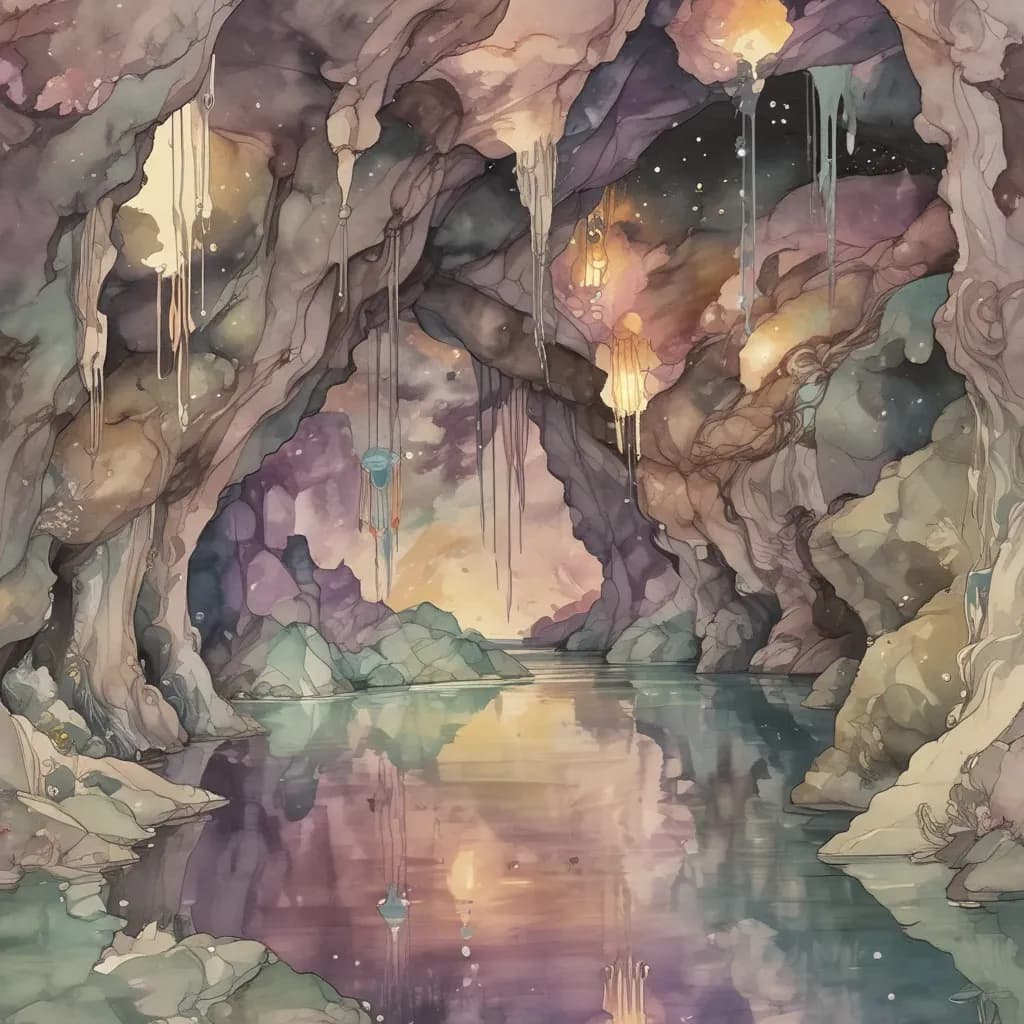
Thematically, "The One True Path" takes the shape of a journey narrative. The lyrics move through a sequence of natural settings: dense woodland filled with the sound of cicadas, a glistening stream, and eventually the open sea.[3] These are not incidental backdrops. The landscapes function as stages in an interior journey. The forest suggests compression and disorientation. The stream brings movement and clarity. The sea opens into something vast and uncontrolled. The movement through these settings traces the arc of someone trying to find where they belong.
A recurring motif involves the traces left behind by those who have walked the same terrain before. The narrator's recognition of these marks offers a specific kind of solace: you are not the first to feel lost in this particular forest. Others have made it through, found their stream, reached the sea. The song's central emotional gesture is a turn from loneliness toward belonging, expressed not through relationships or community but through the physical impressions left on a landscape.
The final emotional position is acceptance rather than triumph. The song suggests that everyone has their own path and that the work of living is to find and embrace it rather than resist or resent it. Expressed bluntly, this could sound like a motivational poster. Within the production's cold, buzzing atmosphere, it sounds considerably more complicated.
The Cult at the End of the Trail
The phrase "the one true path" carries cultural baggage the song never quite sheds. It is standard language of religious absolutism, the kind of declaration made by groups claiming exclusive possession of spiritual truth. By deploying it as the title of a song about self-acceptance and individual direction, KKB introduces an ambiguity that is never fully resolved.[3]
The optimistic reading is personal: your path is yours alone, unique and valid, and your journey through difficult terrain will lead somewhere meaningful. The more unsettling reading asks whether the song's affirmations carry a faint echo of the fanatic. The organ that closes the track amplifies this unease. Reviewers noted an air of "cult-like and quasi-religious imagery" around the song,[3] and the instrument's church associations reinforce it. Is this a homecoming, or an initiation?
Sputnikmusic's review of TOTEP coined the phrase "pessimistic optimism" for the mood the EP cultivates, noting that Perry delivers KKB's characteristic hopefulness in a "more low-energy, somewhat depressed fashion."[4] "The One True Path" is the clearest illustration of this dynamic on the record. The message is encouraging; the delivery and production suggest that getting there required passing through something dark.
2018 and the Limits of Good Vibes
The song lands more precisely when placed in its cultural moment. In February 2018, much of the Western world existed in a state of sustained, ambient unease. Political upheaval, the consolidation of social media as an emotional feedback loop, and the growing sense that the optimism of the previous decade had been, at minimum, incomplete: these were the textures of public life that Lobban had in mind when he described "pervasive anxiety" as a driving force behind the new material.[2]
Within indie pop, the poptimist consensus that had shaped the early 2010s was beginning to fracture. The idea that accessibility was its own virtue, that brightness and pleasure were sufficient artistic goals, was starting to feel like a kind of denial. KKB were not the only artists rethinking their relationship to affirmative pop at this moment, but they were among the most self-aware about it.
"The One True Path" positions itself in this crack. It wants to offer comfort, and it does, but it insists on earning that comfort by first acknowledging the darkness of the woods. The lo-fi production, the cave-bass, the dragging tempo: these are not laziness or stylistic eccentricity. They are the cost of honest reassurance. The song refuses to skip the difficult middle section of the journey.
Critics acknowledged the shift but assessed it differently. SPIN's Anna Gaca described the TOTEP tracks as feeling "a bit sketched-in" while suggesting the band was "exploring directions beyond bubblegum dance-pop."[5] The Line of Best Fit framed the EP as KKB "continuing their revolution,"[6] positioning TOTEP not as a finished statement but as a stage in an ongoing transformation. That reading proved correct. TOTEP served as the announcement; Time 'n' Place, released eight months later, was the follow-through.[7]
Finding Your Path
"The One True Path" is, in the end, a small and precise piece of music that asks a large question: what do you do when the place you came from no longer fits?
For Kero Kero Bonito, the answer in early 2018 was to walk into the woods, find the stream, and follow it toward the sea. The organ that closes the track does not resolve its harmonic tension so much as announce that a church has been found, or built, or both. What the congregation believed was still being worked out.
That uncertainty is exactly what makes the song worth revisiting. It is a document of a creative pivot caught in real time: before the artistic direction crystallized, before Time 'n' Place made the new vision fully legible. In its slow, buzzing two minutes and fifty-five seconds, "The One True Path" is honest about not knowing the way while insisting, with just enough conviction to be moving, that the way does exist.
References
- TOTEP - Wikipedia — Release details, personnel, chart performance, and critical reception for the EP
- Kero Kero Bonito talks pop, boring pop and Linkin Park - Daily Californian — Gus Lobban on poptimism fatigue and the pervasive anxiety of 2018
- The One True Path - Kero Kero Bonito Wiki — Song-specific details: thematic breakdown, sonic description, cult/religious imagery
- Kero Kero Bonito - TOTEP Review - Sputnikmusic — Critical review coining the phrase 'pessimistic optimism' for TOTEP's mood
- Stream Kero Kero Bonito's New TOTEP EP - SPIN — SPIN review noting the EP feels sketched-in while exploring new directions
- Kero Kero Bonito continue their revolution on curveball EP TOTEP - Line of Best Fit — Critical framing of TOTEP as a stage in an ongoing artistic transformation
- Kero Kero Bonito Are Smiling Through It All - The Fader — 2018 interview on personal upheaval and the path from TOTEP to Time n Place