At the midpoint of Jean, Yebba's second album, the mood shifts without warning. The record's opening stretch operates in a mode of sustained restraint: folky arrangements, wide open spaces, a voice that trusts silence as much as sound. Then comes "Aggressive", a burst of industrial-tinged energy that arrives like an admission someone had been sitting on for a very long time.[1]
It is one of three songs on Jean that circle the territory of desire. Alongside "Of Course" and "Waterfall", it forms an informal trilogy about wanting a person in different ways. None of the three apologize for it, and none explain themselves.[2] But "Aggressive" is the one where the feeling is most nakedly named.
A Record About Coming Back to Life
Jean was released on March 6, 2026, five years after Yebba's debut album Dawn. Dawn was named for her mother, who died by suicide in 2016, and it processed grief in real time. Jean takes its name from her late grandmother, a figure Yebba has described as steady and grounding, someone whose long life and faith gave Yebba a kind of spiritual permission to be fully herself.[3]
The album was born out of what Yebba has called her "adulting years": a period when healing had progressed enough to become disorienting. Without the clarifying urgency of fresh grief as a compass, ambition itself had to be redefined. She moved from New York back to West Memphis, Arkansas, and built the record slowly alongside collaborators John Rooney and composer James Francies, recording across Arkansas, Dallas, and Electric Lady Studios in New York.[4] The result is an album that sounds like a person asking what she actually wants, now that wanting has stopped being desperate.
Just the Want
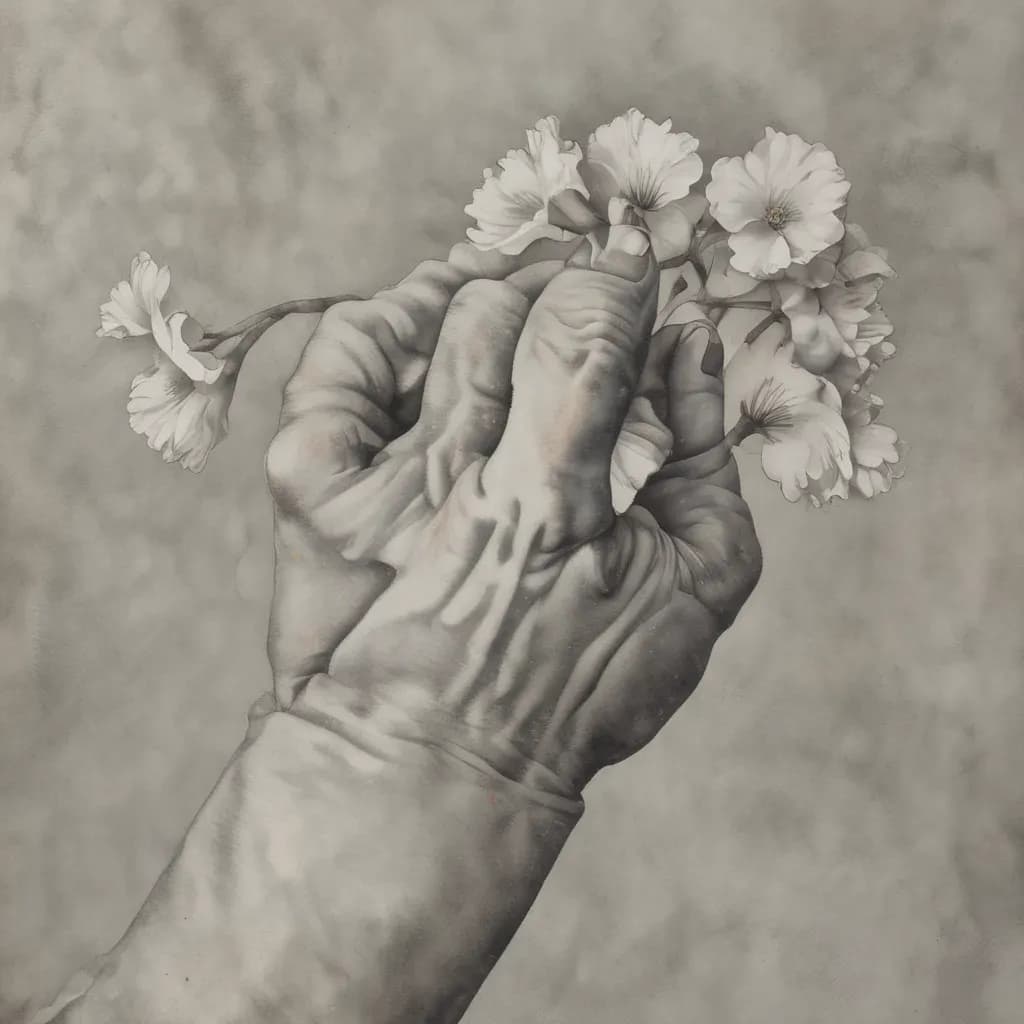
One reviewer described "Aggressive" as stripping away everything else and leaving "just the want."[2] That description captures something essential. The narrator is in the middle of an overwhelming pull toward another person, and the song's word for that pull is not romantic or circumspect. It is aggressive. The term is offered as honest self-description, not confession or apology.
This matters. Women's desire has historically been asked to be patient, demure, spiritually justified, or at least softened before it's expressed publicly. To use the word "aggressive" as a neutral, even proud self-label is a small act of refusal. The song doesn't dramatize this or moralize about it. It simply declares the feeling at full volume and moves on.
The feeling is not without complication. "Aggressive" has been noted for tangling desire with self-doubt[2], which gives it more texture than a straightforward confidence anthem. The narrator knows this intensity might be a lot. She names that too. The self-awareness doesn't dilute the feeling; it makes it more believable.
Genre Refusal as Artistic Statement
The production is unlike anything else on the album. Grungy guitar and punchy drums collide over warbling synths in a way that one critic compared to LCD Soundsystem's "Someone Great": a psychedelic, almost-rock sound that has no obvious place in the soul or R&B categories Yebba is typically filed under.[1] Other reviewers reached for "industrial electro-pop" as a frame[5], though the track defies any single label.
Yebba's vocal performance here reaches heights she doesn't visit elsewhere on the album. She claws into the upper register of her voice, delivering what one critic called the widest-ranging performance of her career so far.[1] Then the song crashes to an end, abruptly and deliberately. After two minutes and fifty-eight seconds, it's over.[5]
This sonic departure reads as intentional defiance. Yebba grew up in gospel and came up through soul and R&B, and she has spent her career negotiating the expectations that come with those categories. "Aggressive" is, among other things, a refusal to stay in the lane she's been assigned.[1] The song's emotional content and its production reinforce the same point: this is not a space for restraint.
After Grief, Ordinary Desire
For listeners who followed Yebba from the beginning, "Aggressive" carries a particular resonance. Her early career was defined by a very specific kind of feeling: the grief of losing her mother to suicide in 2016, and the music that poured out of that loss.[3] "My Mind", the song she released free of charge as a mental health statement, and Dawn, the album named for her mother, established her as an artist whose emotional terrain was grief, faith, and the slow work of surviving.
"Aggressive" is something different. The desire it describes is not complicated by trauma or spiritually mediated. It is immediate, physical, and ordinary in the best sense of that word. The song is evidence that Yebba has arrived, at least in part, at a different kind of life, one with room for feelings that don't carry the weight of grief.[6]
Another Way to Hear It
The most compelling alternative reading of "Aggressive" is as a song about creative hunger. Yebba has spoken about the strange disorientation of feeling more healed but less driven: without desperation as a motor, she had to find new reasons to make things. The "want" the song describes could be aimed at another person, or it could be aimed at music itself, at the act of making, at the feeling of having something to reach for.
On that reading, the song's genre-busting production is part of the same statement: this is what Yebba wants to make, regardless of where it fits or who expected it. The aggression is directed inward and outward simultaneously, at the forces that would contain her and at the parts of herself that once accepted containment.[2]
The Crash at the End
"Aggressive" is one of the shortest tracks on Jean. It does not overstay. The feeling it describes is not the kind that lingers and elaborates; it announces itself and then, with the song's sudden ending, moves on.[5]
On an album otherwise defined by patience and the long arc of healing, that brevity is striking. Jean is full of songs that know how to wait. "Aggressive" is the one that doesn't. And for all the quiet beauty elsewhere in the record, this impulsive, crashing track may be the one that stays with you longest: a reminder that even in a life rebuilt around grace and acceptance, there is still room for something that just wants what it wants.[1][2]
References
- Jean by Yebba: Album Review - Josh Herring (Substack) — Calls 'Aggressive' the de facto best track on Jean; describes it as a psychedelic almost-rock song with punchy grungy guitar and drums over warbling synths reminiscent of LCD Soundsystem
- Album Review: Jean by Yebba - Shatter the Standards — Notes that 'Aggressive', 'Of Course', and 'Waterfall' form a trilogy of desire songs that refuse to apologize; 'Aggressive' tangles desire with self-doubt while stripping away everything but the want
- Yebba - Wikipedia — Biographical overview of Yebba, including her upbringing in West Memphis, Arkansas, her mother's death, and early career milestones
- Yebba 'Jean' Review - Rolling Stone — 4-star album review praising Jean as an enthralling account of an artist learning to be less precious about linear healing
- Yebba Enters a New Era of Grace and Clarity on Jean - AudioFuzz — Describes 'Aggressive' as industrial electro-pop with Yebba's voice soaring before the song crashes to an end; part of the album's experimental middle section
- Yebba and Pimmie: New Music Review - NPR — NPR review of Jean covering the album's sound and Yebba's artistic evolution