Always Everywhere
The Sound of Being Haunted
Some songs do not describe an emotion so much as recreate it in the body. "Always Everywhere," the centrepiece ballad from Charli XCX's 2026 companion album to Emerald Fennell's film Wuthering Heights, belongs to that rare category. In under four minutes, it accomplishes something genuinely difficult: it makes the listener feel what it is to be saturated by another person, to find someone's presence bleeding into every room, every landscape, every quiet moment. Not just memory, but something more invasive. Something closer to possession.
The song does not need to describe longing in abstract terms. Its imagery does the work viscerally, through the sheer accumulation of insistence at its centre. The narrator finds the absent or lost person not just in obvious places (familiar locations, shared objects) but everywhere, in all directions, at all times. The phrase at its heart becomes, through repetition, less a declaration of love than a diagnosis of a particular kind of internal weather: the state of being fully inhabited by another consciousness.
An Invitation That Became an Album
The road to this song began in December 2024, when Emerald Fennell, deep in post-production on her film adaptation of Emily Bronte's 1847 gothic novel, reached out to Charli XCX and asked for a single song.[1] After reading Fennell's screenplay, Charli proposed something far more ambitious: a full companion album rooted in the film's world. Fennell later described having been obsessed with Charli since she was a teenager making music in her bedroom.[2]
The timing was extraordinary. Charli had just emerged from the brat era, one of the most sustained periods of critical and commercial success in her career. "Brat summer" had spread across social media as a defining cultural concept, the word "brat" was named Collins English Dictionary's word of the year, and the album earned three Grammy Awards.[3] In mid-2025, she married George Daniel, drummer of The 1975, and completed a major international arena tour.[3]
She was, by any measure, at the peak of her cultural influence. And she chose to pivot entirely. The Wuthering Heights album was written and recorded with producer Finn Keane largely during the Brat Tour, in rented studios across multiple cities.[1] In interviews, Charli cited her 2013 debut True Romance as the appropriate tonal touchstone: gothic, introspective, orchestrally influenced.[4] The words she returned to most consistently in describing the album's intended sound were "elegant" and "brutal," always together.[4]
"Always Everywhere" was released as part of the album on February 13, 2026, the same day the film opened in theatres. It was the fourth single from the record, arriving after "House" (featuring John Cale), "Chains of Love," and "Wall of Sound." Of all the tracks, it is the one that most completely realises the album's stated intentions.[1]
Bronte's World, Charli's Lens
"Always Everywhere" occupies a specific emotional register within Bronte's source material. It inhabits the perspective of someone for whom love has ceased to be a feeling and become a condition of perception itself. In Bronte's novel, Catherine Earnshaw's articulation of her bond with Heathcliff is not romantic in any conventional sense: she describes him as more herself than she is, an extension of her own soul rather than a separate person. The novel understands love, at its most extreme, as a dissolution of the boundary between self and other.
The song extends this insight rather than simply restating it. Its central emotional movement tracks the shift from presence to absence to the persistence of presence even in absence. The person who was once physically everywhere is now only internally everywhere, which turns out to be worse: geography cannot cure it. Distance provides no relief. The presence has moved inside, beyond the reach of any ordinary remedy.
This is the song's most faithful act of literary adaptation. Bronte's novel is not a love story in the sense of a narrative about two people who love each other. It is a story about what extreme emotional attachment does to the self, about what happens when the boundary between persons is too thoroughly crossed to be reinstated. Charli is working within that tradition, not decorating around it.[5]
Orchestral Architecture
The production of "Always Everywhere" mirrors its emotional content with deliberate precision. Full strings (violins, violas, cellos) build beneath the vocal line, creating an atmosphere that is spacious in the early minutes and progressively pressured as the track develops. There is almost nothing else: no drum machine, no hyperpop arpeggiator, no club-ready bass pattern.
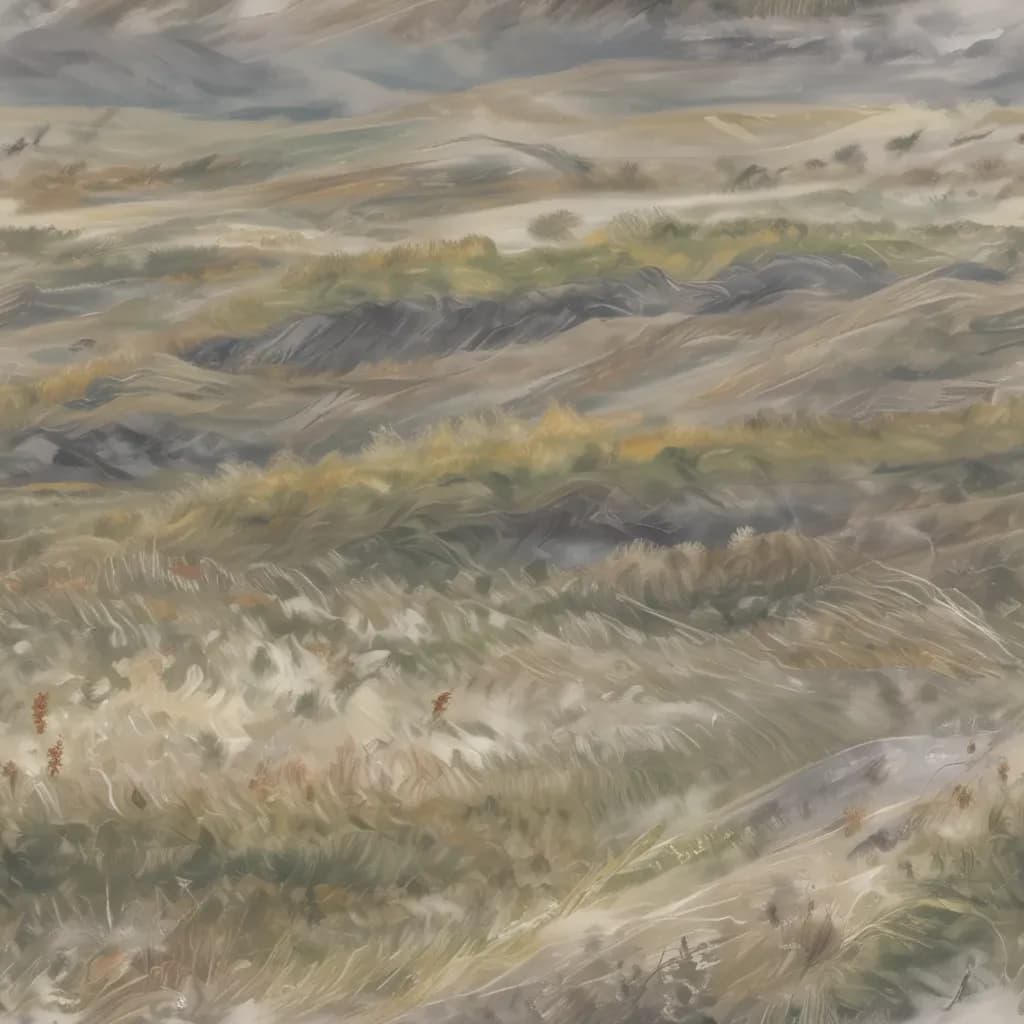
This is not the Charli XCX of her more maximalist work. The sonic landscape here has the quality of the Yorkshire moors she described wanting to evoke: cold, indeterminate, with a horizon that promises no easy resolution.[4] String orchestration by Gareth Murphy gives the track a formal gravity that sits unusually within contemporary pop, closer to a cinematic score than a chart-minded single.
Beats Per Minute named "Always Everywhere" one of the two string-based compositions on the album that most successfully realised the record's ambitions, placing it alongside the closing track "Funny Mouth" as one of the most fully achieved moments.[6] At just over three minutes, it does not overstay its welcome. It accomplishes what great ballads have always accomplished: it makes the listener feel the weight of the thing described rather than simply observe it from a comfortable distance.
The Music Video's Visual Logic
The music video for "Always Everywhere," directed by Mitch Ryan, extends the song's thematic vocabulary through imagery that resists simple decoding.[7] Charli appears in three distinct colored dresses moving through natural landscapes: a black dress among grass, a white dress through a forest, a red dress standing in water. A fully set dinner table appears submerged beneath the surface, undisturbed but entirely inaccessible. Birds circle and conflict in slow motion. Objects descend beneath the water without returning.
The three colors suggest a triptych of emotional states. Black for grief and finality. White for the liminal territory between presence and absence. Red for desire or vitality that refuses to subside. Moving between them, the figure in the video is neither arriving nor departing but endlessly inhabiting the space between these conditions, which is exactly the affective state the song maps.
The slow-motion cinematography gives everything the quality of a recurring dream, the kind where logic does not quite hold but emotional intensity does. The submerged dinner table is particularly resonant: domestic order preserved intact but made completely unreachable, transformed from a site of connection into a site of loss that cannot be cleared away or forgotten.
The Pivot and Its Cultural Stakes
The cultural moment around this song is inseparable from the creative risk it represents. Charli XCX, arriving at the height of her commercial and critical powers, choosing to make something quieter and more demanding is not a move that commercial success requires. It is a move that artistic restlessness requires.
There is an obvious point of comparison in Kate Bush, whose 1978 single "Wuthering Heights" (written by Bush as a teenager, before she had fully read the novel) remains one of pop music's most celebrated acts of literary adaptation. Bush's song shaped how generations of listeners imagined Bronte's characters and the emotional world of the novel. In the wake of Fennell's film and Charli's album, Bush's work experienced a marked renewal of cultural attention across social media.[5]
What Charli offers is a different mode of engagement with the source material. Bush's song works from outside the novel, channelling the ghost of Catherine calling from beyond the window. Charli works from the inside of the emotional experience, from within the possession itself. The music is not descriptive but enactive: it does not tell you what it feels like to be haunted by someone; it creates the condition of being haunted.
The Conversation described the album as a "productive, imaginative, beautiful haunting" of Bronte's work, arguing it functions as genuine creative expansion rather than supplementary material built around a film.[5] Rolling Stone placed the album in a gothic-feminine pop lineage connecting Siouxsie Sioux, Bat for Lashes, and Patrick Wolf, recognising "Always Everywhere" as one of the record's purest realisations of that aesthetic.[8]
The album debuted at number one on the UK Albums Chart in its first week, making it Charli's third UK number-one album.[1] The commercial success confirmed that the pivot was not a miscalculation. Audiences were prepared to follow her somewhere far from where they had initially found her.
Alternative Interpretations
There is a productive ambiguity in the song's perspective. It can be heard as Catherine speaking about Heathcliff, as the novel's emotional logic demands. It can also be heard as Charli XCX speaking in her own voice, about a personal experience of obsessive attachment, or about the more abstract experience of creative obsession: the way an artistic project, a collaborator, or a particular era of your life can occupy the imagination so thoroughly that it becomes impossible to find a space where it is not present.
In interviews, Charli described the album's world as something she "escaped into" rather than something she translated from outside.[4] That formulation is telling. An escape is a movement toward something, not just away from something. The emotional territory of Bronte's novel offered her access to a register she needed, even if she has not specified exactly what that was. The songwriter and the character have been allowed to overlap, and the song is richer for the ambiguity.
This is one of the reasons "Always Everywhere" works for listeners who have not seen the film and have no particular investment in Bronte. The emotional content is portable. Anyone who has experienced the particular quality of missing someone whose presence has been so thoroughly absorbed into their inner life that it cannot be separated from ordinary perception will recognise what the song is doing. The literary scaffolding supports the emotional weight without being required to access it.
A Return and a Reckoning
"Always Everywhere" is evidence that Charli XCX has always been a more architecturally ambitious songwriter than any single era of her career can fully contain. The brat era demonstrated her ability to weaponise irony and self-awareness into something genuinely affecting. Wuthering Heights demonstrates something equally demanding: the ability to set aside everything that made a previous work successful and construct something that asks considerably more from the listener.
The song does not resolve. Its central phrase does not lead anywhere except back to itself. The repetition at the song's core is not the triumphant repetition of a pop chorus working toward catharsis. It is the repetition of an idea that will not stop returning regardless of whether the narrator wills it to. The presence is always everywhere, and by the song's end that declaration has transformed from a statement about someone else into a description of the narrator's own condition.
This is precisely what Bronte's novel understands about love at its most extreme. And it is, in the hands of one of contemporary pop's most restless and formally curious artists, what great songwriting about that condition sounds like.
References
- Wuthering Heights (album) - Wikipedia — Album background, tracklist, chart performance, and singles timeline
- How Did Emerald Fennell Land Charli XCX For Wuthering Heights - CinemaBlend — Emerald Fennell account of inviting Charli to contribute to the film
- Charli XCX - Wikipedia — Biographical context including Grammys, marriage, and Brat era
- Bittersweet Symphonies: Charli xcx on Wuthering Heights - Letterboxd Journal — Charli XCX interview discussing the album sound, True Romance connection, creative process
- Charli XCX turned Wuthering Heights into a sonic gothic masterpiece - The Conversation — Academic analysis of the album as literary adaptation, Kate Bush context
- Album Review: Charli xcx - Wuthering Heights - Beats Per Minute — Detailed track-by-track analysis naming Always Everywhere a highlight
- Charli XCX returns with new video for Always Everywhere - Northern Transmissions — Music video details and visual description
- Charli XCX Wuthering Heights Review - Rolling Stone — Critical reception and gothic pop lineage