Beware of the Dogs
Most songs that take on a nation's history do so with a fist raised. "Beware of the Dogs" does something stranger and more unsettling. It arrives as a quiet, almost domestic piece of music, and it asks a white Australian to look at the country she was raised in and the stories it tells about itself. The calm is the point. The listener has nowhere to hide.
It is the tenth track on Stella Donnelly's debut album of the same name, and it sits in a record otherwise known for sharp humor and sharper character studies.[2] Here the jokes fall away.
A song with a stated purpose
Donnelly has been unusually direct about what the song is for. In her own track-by-track guide she describes it as being about racism in Australia, both its long history and its continuation, and she locates that racism in the Australian media and government.[1]
She also places herself inside the picture. She calls herself a white Australian and says she is extremely privileged to have the platform she has, adding that spaces like hers are too often occupied by white people, which is why she intends to use hers to speak up.[1] That framing shapes everything about how the song works. It is not a report from the outside. It is a person with an inherited advantage examining the story that advantage rests on.
The album's Wikipedia entry, drawing on that same track-by-track piece, summarizes the song as concerned with historic and continuing racism that runs through Australian media and government.[2] There is no hidden code to crack here. What deserves attention is the manner of the delivery.
Where it came from
Donnelly was born in 1992 in Western Australia to a Welsh mother, spent part of her childhood in Wales, and grew up in Perth, where she played in a school rock band and later studied contemporary and jazz music at the Western Australian Academy of Performing Arts.[4] She worked in hospitality while playing in local bands, and her 2017 EP Thrush Metal, which included the much-discussed "Boys Will Be Boys", brought her to wider attention before she signed to Secretly Canadian in 2018.[2][4]
The album was recorded across 2017 and 2018 in Fremantle, Western Australia, and in Athens, Georgia, and it came out on 8 March 2019.[2] Donnelly has said she recorded it between two world tours, and that she wrote some new songs partway through the sessions.[3] The title track is credited to her alone, with her singing and playing guitar and piano, alongside a small band on bass, guitar and drums.[2]
Coming from a songwriter who had already faced trolls and abuse over her feminist writing, the choice to address race and national history was not a retreat to safer ground.[3] It extended a pattern. Her songs keep returning to the question of who gets protected by the stories a society tells, and who pays for them.
The quiet that takes over a room
The most revealing thing Donnelly has said about the song is not about its meaning at all. It is about what happens when she plays it. She told The Line of Best Fit that she is always shocked when crowds go quiet during it, even at festivals, and she described a loud, drunk Sydney audience on a long weekend falling completely silent.[3] She also said she no longer feels as if she wrote the song, that it has become something else and no longer belongs to her.[3]
That detail says a lot about how the song is built. Donnelly has explained that she tends to pair gentle, appealing music with heavy subject matter, so that the music cushions the message.[5] On most of the album that cushion makes difficult ideas easier to carry. Here the cushion has the opposite effect. Because the arrangement is spare and the tone is level, the audience hears each idea without any distraction, and a room that came to dance finds itself listening.
There is a political lesson inside that. Outrage is easy for a crowd to cheer and just as easy to forget. Stillness asks for something harder, which is attention that does not resolve into applause until it is over.
Privilege as a subject, not a pose
One of the song's most interesting qualities is its refusal to cast the singer as a hero. Donnelly rejects the label "political" for her work, arguing that the issues she writes about are personal and lived rather than abstract, and noting that the label tends to come from older men.[6] In this song the personal is the inherited. Her ancestry, her comfort and her ease in the country are the material under examination.
That makes the track different from protest songs that address an unnamed "them." The pronouns in play here include the singer herself. Writing as a white Australian of Anglo descent, she treats complicity as a family trait that cannot be shed by disapproving of it, and the song accepts that discomfort instead of resolving it.
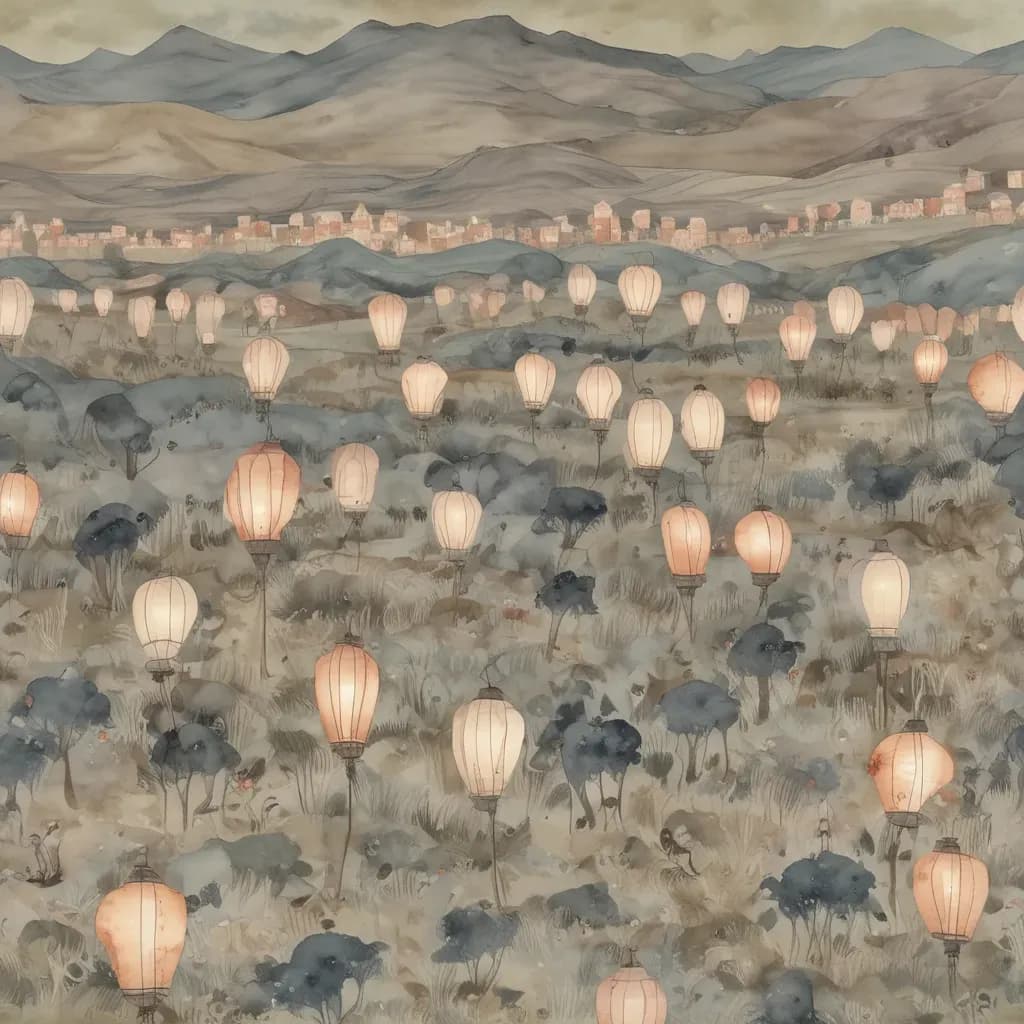
The title does some of this work too. A warning sign on a gate is a message from the people inside to anyone approaching, and it is a message about who belongs and who is a threat. Used as the name of an album and a song about national belonging, it invites the listener to ask who is being warned, who is being protected, and who decided where the fence goes. Donnelly has not publicly spelled out the image, so this is a reading rather than a statement from her, but it fits the song's concerns closely.
Its place on the album
Beware of the Dogs is a record that mixes the intimate and the public. Its themes range from toxic masculinity and rape culture, through the awkwardness of a summer Christmas party, to a skeptical look at Australian nationalism.[2] "Tricks," one of its singles, pokes at the symbols of flag-waving identity, while "Old Man" grew out of the start of the #MeToo movement.[2]
Within that run, the title track is the moment the album stops being funny. It would be easy to hear the surrounding songs as sharp social comedy and miss that they all circle one idea: that everyday ease for some people is built on the unease of others. The title track states that idea plainly, and it recasts the lighter songs around it.
Critics noticed the combination. Pitchfork's Olivia Horn called the music empathetic to the core, and Metacritic gave the album an aggregate of 81 out of 100, with most major outlets awarding it four stars or a comparable mark.[2] The record went on to win Independent Album of the Year at the 2020 AIR Awards.[2]
Other ways to hear it
A first reading takes the song as direct national critique, which is how Donnelly herself describes it.[1] A second hears it as a study of silence, since so much of the song's power seems to come from the hush it creates in a room.[3] On that view, the subject is not only racism but the habit of not talking about it.
A third reading concerns the artist's own role. Donnelly's remark that she holds a platform that white people too often occupy suggests the song is partly a statement about who gets to speak, and a promise to spend that access on something other than herself.[1] Hearing it as a self-audit makes it less a lecture and more a vow.
There is also the matter of what the song does not do. It offers no villain to boo and no easy absolution at the end, and it does not turn a national failing into a personal triumph for the singer. That restraint keeps the piece from becoming a statement of good intentions, and leaves the weight of the subject with the listener, where it belongs.
None of these readings cancel one another. The song is open enough to hold all three, and that openness may be why audiences keep responding to it without prompting.
Why it matters
The national mythology of a country is often most comfortable in the voices of people who benefit from it. When one of those people turns around and describes the arrangement honestly, the effect can be disarming. Donnelly's reputation was built on funny, furious songs about individual offenders. This one aims at something larger, and it declines to make the target feel distant.
It also demonstrates what a small piece of music can do in a large room. A song that asks for nothing except quiet can still change the mood of a festival crowd, and in Donnelly's telling it has done so repeatedly.[3] That is a modest kind of power, and a durable one.
In the end, "Beware of the Dogs" is less an answer than an instruction on how to listen. It asks the audience to stop, to hear a country described by someone who has benefited from it, and to consider what the warning on the gate was really guarding.
References
Keep reading
More Indie Pop
- Lucky (Hymn) Shygirl
- Sidelines Phoebe Bridgers
- Fun Alessi Rose
- I Have Always Loved You Freya Ridings
- Follow Me Alec Benjamin
- Lost In It Gracie Abrams