Sidelines
Most songs about love try to sound enormous. "Sidelines" does the opposite. It is a song about a person who has spent a long time watching life from a safe distance and who discovers, almost with embarrassment, that small domestic pleasures are enough. A conversation at a party. A houseplant that needs water. A quiet kitchen. For a songwriter known for apocalypses and ghosts, that is a radical choice.
The tenderness is the point, and it is also what makes the song slightly disarming. Phoebe Bridgers has built a career on dark subject matter delivered with a deadpan voice. Here she sounds like someone who has stopped bracing for impact.
Where the song came from
"Sidelines" arrived in April 2022 as Bridgers' first original music since her 2020 album Punisher.[2] It was written for the Hulu adaptation of Sally Rooney's novel Conversations with Friends, a story about a young writer and her best friend drawn into a tangled affair with an older married couple.[1][4]
The song did not start with Bridgers. Her drummer, Marshall Vore, and his partner Ruby Henley began it, and Bridgers fell for an early version that had different words and a slightly different feel.[1] When the show came calling, Vore pushed her to take it on, arguing that the idea would otherwise never see daylight.[1]
She has said it was the hardest song she has ever written. Everything she added sounded corny to her, and she was afraid of wrecking what Vore and Henley had made.[1] The final lyrics came together in a single day at the piano with Vore, at the last minute, with help from her partner Paul Mescal, who worked through the words with her.[1] The credits list Bridgers, Vore and Henley as writers, and Bridgers and Vore produced the track with Tony Berg and Ethan Gruska, the team behind Punisher.[4]
The sound reflects the collaboration. Bridgers loved the cheap-sounding drum machine on Vore's first demo and insisted on keeping it, and the finished recording sets that thrift-store pulse against atmospheric synths and strings.[1][4] Mike Mogis mixed it, reportedly making around thirty versions while chasing a sound that was at once cinematic and lo-fi.[1]
A flipped perspective
The most revealing detail is how Bridgers changed the song's central idea. Vore's original angle was about watching the world from the sidelines because you are not invested in your own life, a posture of numbness and disengagement. Bridgers turned that around. In her version, the narrator stays on the sidelines because she is content to be out of the spotlight.[1]
That inversion explains why the song feels so unlike the rest of her catalog. The sidelines in question are no longer a place of exile. They are a place of rest. The narrator is happy to let the world carry on without her, because she has found someone who makes the quiet moments feel full.
Bridgers has framed this as a rejection of a certain kind of modern appetite. You do not have to be addicted to chaos and overstimulation, she suggested, to feel alive.[1] Small pleasures can be a complete life.
Love as an act of courage
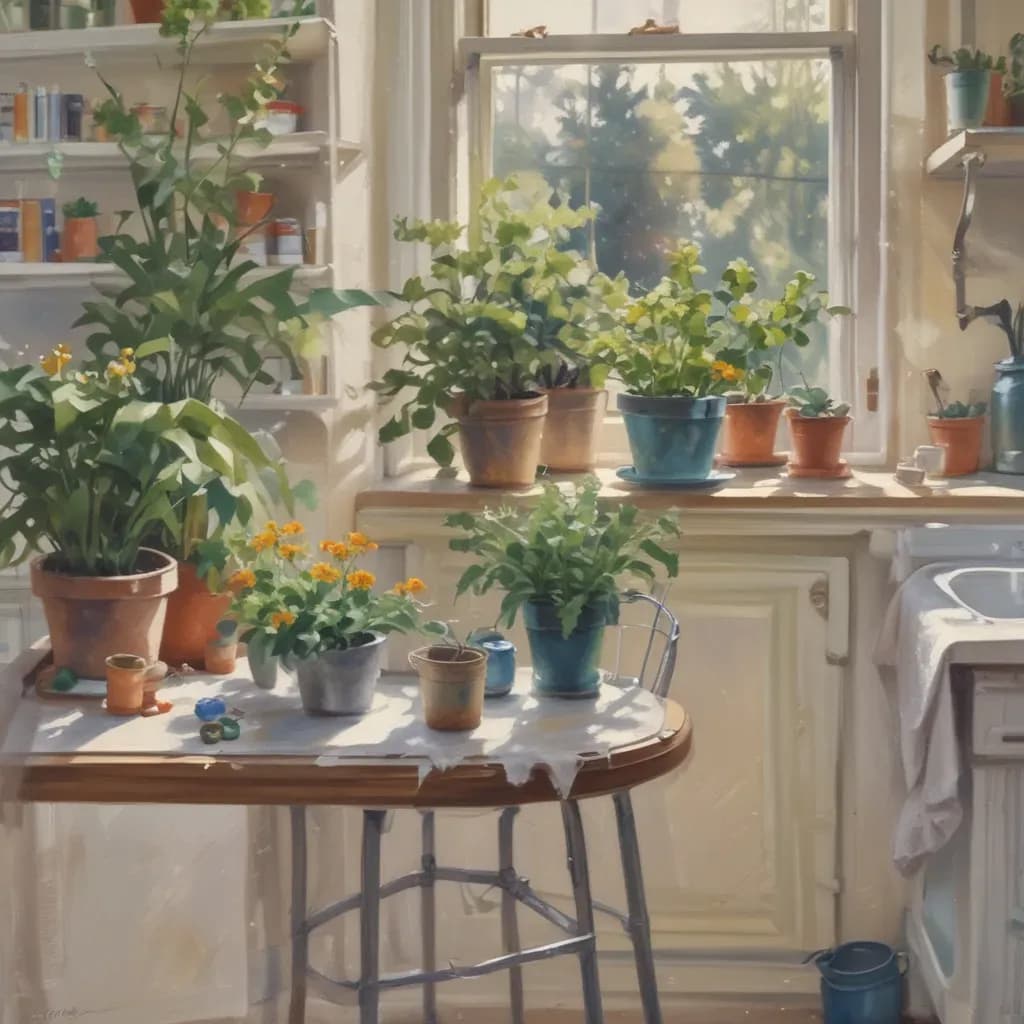
The song is built around a list of small fears and small joys. The narrator mentions mundane things she might once have found embarrassing or frightening: going back to school, getting older, talking to her plants. With a partner beside her, none of them seem threatening anymore.[3]
Far Out Magazine called it perhaps the most tender and straightforward love song Bridgers has written, noting that it surrenders to love rather than picking it apart.[3] That is a fair contrast with earlier songs such as "Moon Song" and "I Know the End," which wrap their feelings in cinematic and cryptic imagery.[3] Here the imagery is deliberately plain.
There is also a quiet argument about bravery. The narrator grows more engaged and more willing to participate precisely because she feels secure.[4] Safety does not shrink her world. It lets her step into it. That is a hopeful claim, and Bridgers seems to know how unusual it is for her to make it.
Writing about happiness is harder
In her Variety interview, Bridgers said she is trying to write more optimistic songs, and that writing well about happiness is harder than writing about sadness.[1][2] She admitted she tends to lean dark partly to avoid sounding trite.
That anxiety hangs over the whole song. Happiness can sound like a greeting card, and her fear of corniness is exactly what made the writing so slow. The result works because it keeps its modesty. The narrator does not claim to be cured of anything. She just reports, with relief, that something has changed.
Listeners who know her catalog will hear echoes. The Variety interviewer noticed that images of drowning and fire in the first verse recall her earlier song "Would You Rather," and that the narrator's wish to go outside plays against the homebody comfort of her older work. Bridgers said she does not notice such echoes until later.[1] Whether intended or not, they give the song the feel of a reply to her own darker material.
That conversation with her own back catalog is part of the pleasure. Earlier Bridgers narrators often stay inside, hide, or rehearse disasters in their heads. This one opens a door, and the song is careful not to make a big speech about it. The change is felt in tiny decisions, which is how real change usually arrives.
It also helps that the arrangement refuses to swell into a grand climax. Many love songs build toward a release. This one keeps its feet on the ground, and its restraint makes the feeling more believable. The warmth comes from repetition and gentle momentum rather than from fireworks.
The Frances connection
The song's relationship to the show deepens its meaning. Bridgers read Rooney's novel in 2019 while making Punisher, and said she is more similar to its protagonist, Frances, than to any other character in pop culture.[1] She described Frances as a person who is very confident in her art and also deeply self-conscious.[1]
She did no character research and did not write toward the series finale. The producers sent her only the first couple of episodes at first, and later the last ones so she could fit the song to picture.[1] Even so, the song suits a character who observes more than she participates. Frances watches, narrates and withholds. A song about stepping off the sidelines, or learning that the sidelines can be a comfortable place, maps neatly onto her.
The official video leans into that connection. It intercuts footage of Bridgers recording in the studio with clips from the show's twelve episodes, released in mid-May 2022.[4][5] A second video followed in early June, assembled from tour footage shot by her brother, Jackson Bridgers.[1][6] The second one is arguably closer to the song's spirit: ordinary days on the road, small moments between larger ones.
Alternative readings
One striking feature of the lyrics is that they never say who the narrator is addressing. Some commentators read the song as a straightforward romance. Others hear room for friendship, family or even a general feeling of being cared for. Because the song is about the effect of a connection rather than the identity of the person, it stays open.
A more cynical listener might hear something else. A song about being content on the sidelines can sound like retreat, a withdrawal from ambition or risk. Bridgers' own framing resists that reading, but it is worth noting that the song lives in the same emotional neighborhood as isolation. The difference is that this isolation is chosen and shared, which is the whole distinction between loneliness and solitude.
Others hear the song as a quiet answer to the culture of constant performance. For a musician who spends much of her life in front of crowds, a song about not needing the spotlight carries extra weight.
Taken together, these details make the song an unusually honest portrait of recovery. It does not pretend that the narrator's old worries have vanished. It simply shows them losing their grip, one ordinary evening at a time, and trusts the listener to notice.
Why it resonates
"Sidelines" matters because it lets a famously guarded songwriter be plain. It does not require a story, a villain or a catastrophe. It asks whether ordinary contentment can be as interesting as ordinary despair, and it answers yes.
For many listeners, particularly those who found comfort in Bridgers' sadness, there is something moving about watching her allow herself relief. It suggests that a person can write beautifully about pain and still be open to peace. The two are not enemies.
Conclusion
The sidelines are usually where people go when they have given up on the game. Bridgers and her collaborators rewrote the meaning of that place. In this song it becomes a spot where you can breathe, tend your plants and hold the hand of someone you trust.
It is a small song with a large claim: that being loved can make a quiet life feel complete. After so many songs about the end of the world, it is a gentle surprise to hear her make peace with the present.
References
Keep reading
More by Phoebe Bridgers
More Indie Pop
- Crazy Girl Gracie Abrams
- Look at My Life Gracie Abrams
- Out of Nowhere Gracie Abrams
- Daughter From Hell Gracie Abrams
- Lucky (Hymn) Shygirl
- Fun Alessi Rose