Cherry-Coloured Funk
The first thing you hear is not a voice. It is a bass line that arrives like a decision, followed by guitar chords that smear across the stereo field like wet paint. Only then does Elizabeth Fraser enter, low and unhurried, before her voice climbs into a falsetto that seems to leave the room.
"Cherry-Coloured Funk" opens Heaven or Las Vegas, and it has the job of telling you what kind of record you are about to hear. Pitchfork later described the album as beginning with an explosion of colour, and singled out the song's first melting guitar chords as the thing that sets up the listener for everything bright that follows.[1]
What the song is actually about is harder to say, and that is the point. This is a track where meaning lives in sound first, and in language only second.
A record made between a birth and a death
Cocteau Twins recorded Heaven or Las Vegas at September Sound in Twickenham, part of a studio complex owned by Pete Townshend.[2] The band were Fraser, guitarist and producer Robin Guthrie, and bassist Simon Raymonde, and the song is credited to all three.[1]
The circumstances around them were heavy. Fraser and Guthrie, who were a couple, had a daughter, Lucy Belle, born in September 1989, and the album would be released on her first birthday.[2] Raymonde's father died shortly after the birth, in the middle of the sessions, and Raymonde has described it as a dark cloud over the work.[2] Gary Walker, quoted on the album's history, characterised the studio atmosphere as overshadowed by the transience of death, birth and heartbreak.[2]
There was also a quieter crisis. Guthrie's drug use had escalated during the previous record, and Fraser and Raymonde hoped the baby might give him a reason to step back. It did not work out that way, and his dependence deepened as the new album took shape, bringing paranoia, mood swings and growing strain with Fraser.[2]
This is the soil the song grew from. It is a piece of music written while a family was forming and a relationship was fraying, and while the people making it were, in Raymonde's words, partly trying to mask what they did not want to stop and think about for too long.[2]
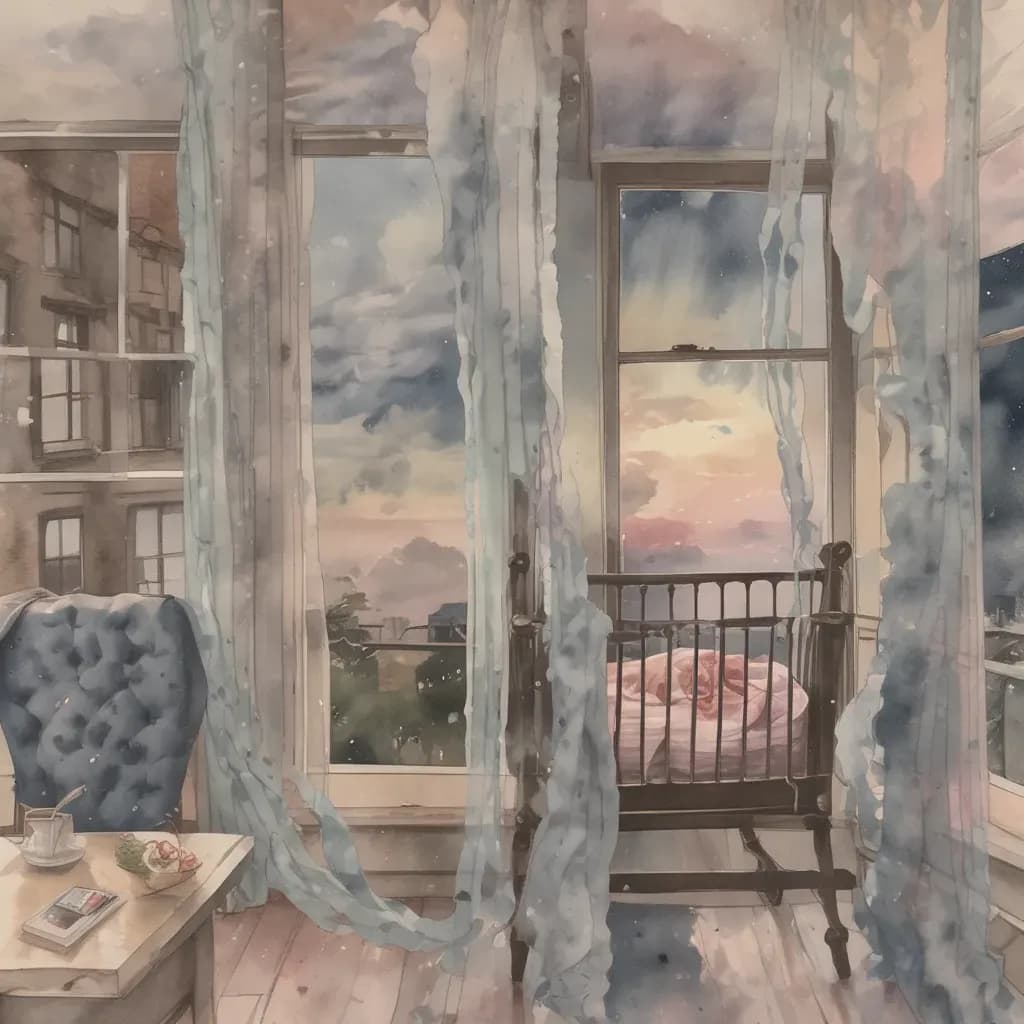
Brightness with a bruise
The sound of the track reflects that doubleness. The song is built on a dominant bass line and a minimalist three-chord hook, with a melody critics have described as melting in the ear.[2] It is warmer and more inviting than much of the band's earlier work, and the album as a whole leans on the mixing of major and minor chords to produce emotional depth.[2]
The music journalist Martin Aston, writing about the label 4AD, heard a darker side in this song and in another album track, tied to the fact that the record was writing about birth and also about death.[2] Pitchfork's retrospective, when it ranked the song number 188 among the best of the 1990s in 2022, read it as an expression of hope, heartbreak and emotional uncertainty held in the same breath, and pointed to Fraser's movement from a lower register into an expressive falsetto.[1]
That movement is the song's emotional shape. It starts grounded and a little weary, then lifts. You can hear it as someone rising out of a low mood, or as someone reaching for a joy they are not sure they can hold. Both readings fit the sound, and the music never settles the question.
It helps to remember how the band worked. Production began with Guthrie's drum programming, Guthrie and Raymonde composed the music, and only then did Fraser record her vocals.[2] Raymonde has said the rhythms sat close to hip-hop beats in spirit, a danceable pulse under the haze, and that with Guthrie spending less time in the studio, his own bass playing came further forward.[2] That is why the bass line on this song feels so much like the spine of the thing.
What the title is doing
The title is a small puzzle. The phrase pairs a colour with a genre and a feeling, and it describes nothing you can point to. The Quietus has noted that the band's titles often read like half-formed sentences, and this one is a good example.[4]
But a title like this is not nonsense. It works the way a synaesthete's note might, merging taste, hue and groove into one impression. Cherry suggests sweetness, ripeness and red, with a hint of something that stains. Funk suggests a groove, a mood, and in older slang a kind of earthy murk. The result is a phrase that is simultaneously delicious and a little sour.
The album's own name works similarly. According to Aston, Fraser chose Heaven or Las Vegas as a suggestion of truth versus artifice, of music versus commerce, or perhaps a gamble, one last throw of the dice.[2] An opening track whose title is a sensory smear sets that tone: pleasure and unease, sincerity and surface, all within a single phrase.
Words as another instrument
Any honest essay on this song has to deal with the fact that most listeners cannot make out what Fraser is singing. This was true of the band from the start. Writers have noted that she all but introduced glossolalia to pop, and that you would struggle to catch more than passing phrases.[2]
Fraser has been blunt about it. She has put the lyrics' obscurity down to laziness and bad diction, rather than to a grand theory.[2] Far Out makes a related point: she has said the words carry no fixed meaning until she sings them, and that their sense comes from her delivery rather than from the text.[3]
So what does the song convey, if you cannot parse the sentences? Quite a lot. Fraser's voice moves through anxiety, tenderness, appetite and release, and each of those states is legible even without a dictionary. A listener who hears a lover's plea and a listener who hears a lullaby are both responding to something real in the phrasing.
There is also a notable difference on this record. Fraser has attributed the album's more identifiable words to the influence of her daughter, and she has said that pregnancy gave her a confidence she had never had, which she then lost again after the birth, because the experience is so frightening that you have to start over.[2] That is a useful key to the voice here: it has the poise of someone who has just found her footing, and the wobble of someone who is not sure it will last.
Three ways to hear it
Because the text is so open, the song supports several readings, and none of them is authorised by the band.
The first is the domestic reading. The album is full of songs touched by Lucy Belle's arrival, and a track this bright can be heard as a kind of sunrise, the sound of a house learning to hold a new person.[2] On this view the cherry colour is the flush of new life, and the funk is the beautiful mess of it.
The second is the reading of anxiety under brightness. Given what was happening in the studio, it is hard not to hear the song as music made while looking away from something. Raymonde's own admission that the record's energy was partly a way of not stopping to think gives this interpretation real support.[2] The shimmer is protective, and the low opening vocal is where the worry shows.
The third is the one that refuses interpretation altogether. Far Out frames the band's catalogue as a question of whether the music lacks meaning or is simply brimming with ambiguity, and argues for the second.[3] On that view, the right way to hear this song is as a mood you inhabit, not a message you decode. The listener is invited to finish the sentence the title only begins.
Afterlife
The song has travelled well. The band's own 1995 EP Otherness included a reworking of it by Mark Clifford of Seefeel, credited as having been recycled, which pushed the melody into an electronic setting.[1] It has also turned up in the 2008 romantic comedy 27 Dresses, the television thriller Rellik and the 2019 film Endings, Beginnings.[1]
The album it opens has become a landmark of dream pop. It reached number seven in the UK and was the band's most commercially successful release, and Rolling Stone placed it at number 245 on its 2020 list of the 500 greatest albums.[2] Few records so devoted to blur have been so widely loved.
Why it still lands
The song keeps working because it trusts feeling over explanation. You do not need to know what Fraser is singing to know she is singing about something that matters, and the guitars behave as if they know too.
It also catches a particular emotional weather: the sense of being very happy and a little afraid in the same moment, which is how a lot of people experience the arrival of something new. A baby, a love, a break in the clouds. The song does not tell you which. It simply opens the door and lets the colour in.
That may be the best answer to the question of what it means. It means the thing you bring to the first bass note, and the thing you have left when the last chord fades.
References
Keep reading
More Dream Pop
- Expect To Believe Miki Berenyi Trio
- Come Back Home Blondie
- Largate Kali Uchis
- I Get Weak Cannons
- Photographs Cannons
- Carousel Cannons