The Circus Circus Hotel and Casino has towered over the northern end of the Las Vegas Strip since 1968. It is not the most glamorous casino in the city, but it might be the most honest. Above the blackjack tables and slot machines, acrobats swing from trapezes. Clowns weave between families who cannot afford the Bellagio. The whole operation runs on spectacle, noise, and the particular desperation that arrives when you cannot tell the entertainment from the escape. For a child who grew up in Las Vegas watching his mother gamble away the rent money, a place like this is not a tourist attraction. It is just Tuesday.
This is the emotional territory Baby Keem stakes out on "Circus Circus Free$tyle," one of the most explosive and structurally daring tracks on his second studio album Ca$ino. Released in February 2026, the album represents Keem's most vulnerable and deliberate work to date, a project rooted in the specific geography of Las Vegas and the damage that city's economy did to his family. "Circus Circus Free$tyle" is the album in miniature: chaotic in structure, unsparing in emotional content, and named after a real place that carries meaning too dense for a single song to fully hold.
Five Years and the Weight of What Happened
Ca$ino arrived on February 20, 2026, nearly five years after Baby Keem's debut The Melodic Blue established him as one of hip-hop's most genuinely singular voices[1]. Born Hykeem Jamaal Carter Jr. on October 22, 2000, in Carson, California, Keem spent much of his childhood in Las Vegas[2], and those years form the substrate of Ca$ino's emotional architecture. In the years between records, he lived through the death of his grandmother in 2025, who had been something close to a second mother throughout his upbringing, a period of health struggles that pulled him away from the public eye, and a sustained reckoning with the circumstances that shaped him.
When Ca$ino finally arrived, Keem described it in an Apple Music interview as "my first album that has a real proper meaning to it," a statement that implicitly acknowledged that The Melodic Blue, for all its brilliance, was in some ways about withholding. Ca$ino is about releasing[3].
The album's title takes its name directly from his experience growing up in a city where his mother's gambling addiction cost the family money they could not afford to lose. Evictions, food insecurity, a childhood shaped by the logic of the casino, the gamble, the ever-present hope that this hand might turn things around. He has said he named the album Ca$ino because "that's where I went through the things I went through"[4]. In the Booman documentary series accompanying the album, Kendrick Lamar, Keem's older cousin, described the family's environment as "Section 8, welfare, general relief," framing the album as an act of breaking generational cycles[5].
Circus Circus is a specific casino in that city. Not a metaphor but a landmark, one of the oldest and most recognizable on the Strip, known for its big-top aesthetic and the acrobatic performances that run above the gambling floor. Keem choosing it as a title is part biography, part geography. Las Vegas is not an abstraction for him. It is a place with specific buildings, specific memories, specific costs.
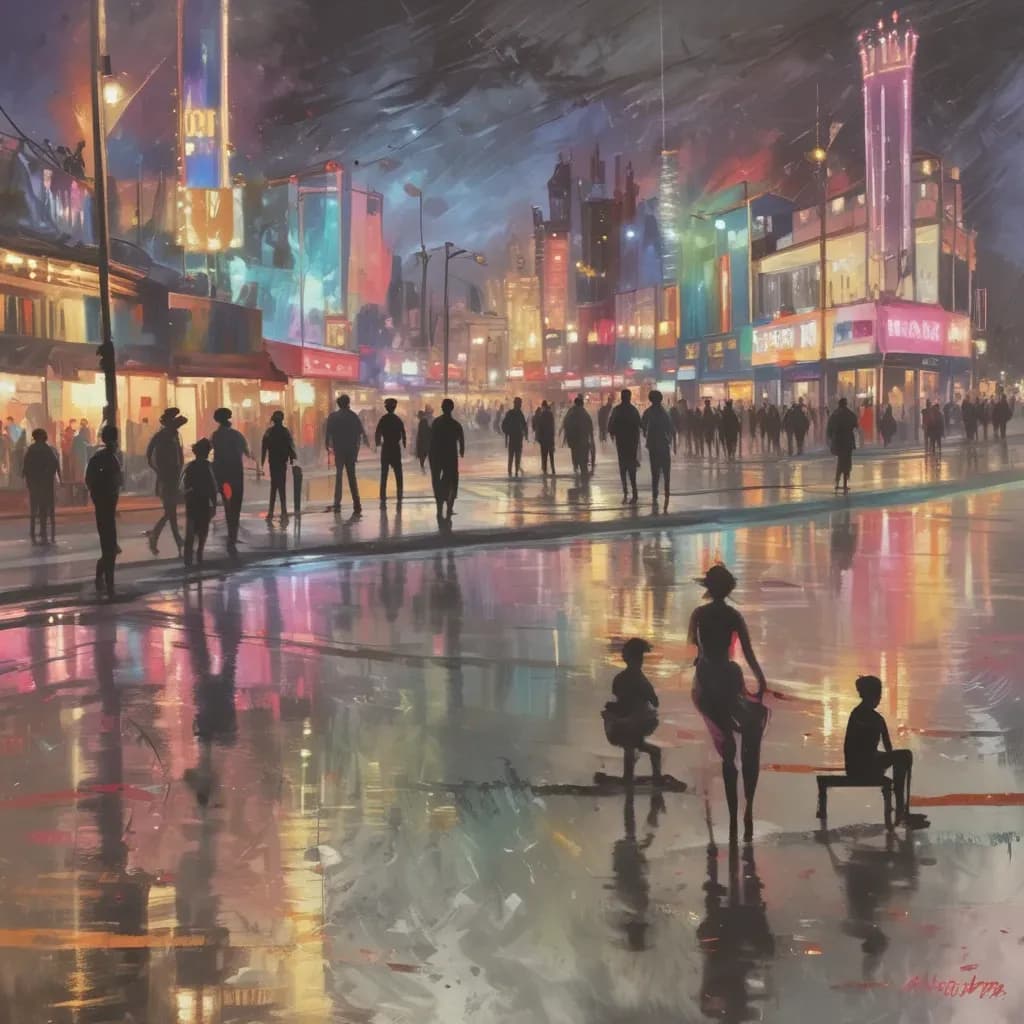
Three Beats and the Shape of Chaos
What makes "Circus Circus Free$tyle" structurally distinctive is the way its production refuses to settle. The track moves through three distinct sonic environments, each with its own texture and emotional register. It opens with a beat carrying echoes of Kanye West's orchestral maximalism before shifting into a more triumphant trap arrangement built around strings and horns, then collapsing into something sparse and menacing, a final section where the production strips back to let the unease sit close to the surface[4].
These beat switches are not arbitrary. They mirror the structure of Keem's experience in Las Vegas: the spectacle, the swell, the drop. The casino promises grandeur and ends in silence. The acrobat flies and then has to land. The production maps a psychological journey as much as a sonic one, and that is where the track's real weight lives.
Accompanying those production shifts are radical changes in Keem's delivery. He moves between voices, cadences, and emotional registers in ways that would feel gimmicky if they did not feel so purposeful. Each switch is a different angle on the same subject: who is this person, and what has his life made him? The formal restlessness reads not as showmanship but as inquiry[6].
The "freestyle" designation is itself meaningful. In hip-hop tradition, a freestyle carries connotations of spontaneity, rawness, and a kind of truth-telling that operates outside the constraints of a finished product. Naming a track a freestyle when it sits on a major label album is a deliberate move, a way of insisting on a particular quality of honesty. However polished Ca$ino is elsewhere, this song signals that this track is something different. This one is not filtered.
The Caveman and the Casino
Among the personas Baby Keem inhabits on Ca$ino, critics have pointed to a recurring figure, something close to a primitive, instinct-driven archetype, a character defined by immediacy over polish and survival over performance. On "Circus Circus Free$tyle," that energy runs at its highest intensity[6]. Keem is not performing hip-hop's expected version of success. He is performing the thing that exists before success: the raw adaptive intelligence that allows someone to survive an environment that did not want them to.
This is one of the ways the album's title functions beyond biography. A casino is a place designed to absorb you. Its architecture is deliberate, engineered to disorient so that you lose track of time, money, and better judgment. Growing up inside that logic, Keem seems to say, either destroys you or makes you impossible to fool. The music of "Circus Circus Free$tyle" suggests someone who knows the tricks because they were performed on his family[7].
When Keem shifts flows, it is not only technical flexibility on display. It is a portrait of someone who has learned to adapt, to code-switch and recalibrate, to survive in environments that kept changing the rules. The freestyle format amplifies this reading: no fixed structure, no predetermined path, just the ability to navigate whatever emerges.
Las Vegas as American Truth
There is a reason the Las Vegas casino has appeared as a symbol in American culture for decades. It represents something essential about the country's relationship with risk, aspiration, and the vast machinery of disappointment that processes both. For Baby Keem, who grew up not as a tourist in that machinery but as someone whose family was ground through it, the casino is not a literary metaphor. It is lived experience rendered as music.
"Circus Circus Free$tyle" contributes to an album that is, at its core, about claiming those experiences rather than being claimed by them. Ca$ino received strong critical reception across outlets including Complex, NME, and Beats Per Minute, with reviewers noting its emotional depth and the sense that Keem had grown from an exciting talent into an impassioned, unmistakably individual storyteller[6][8]. The album debuted at number four on the Billboard 200 and reached number one on the Top R&B/Hip-Hop Albums chart[1]. The track itself was frequently cited by reviewers as one of the album's most thrilling and emotionally dense moments.
In a broader context, the song is part of a generational movement in hip-hop toward biographical rawness. Artists like Keem, operating in the wake of Kendrick Lamar's sustained career of generational-trauma storytelling, have inherited a formal permission to be specific, messy, and painful on record. Ca$ino does not perform invulnerability. It renders a childhood accurately enough that it can finally be set down.
What the Freestyle Leaves Behind
Baby Keem has spoken about a period in which he was largely absent from public life, dealing with personal and health challenges that kept him away from the spotlight for an extended stretch. When he returned, it was with an album that refuses evasion. "Circus Circus Free$tyle" sits in that context not as a comeback statement or a display of commercial ambition, but as documentation. This is what it was like. This is where I came from. This is how many ways I had to move just to stay in one place.
The Circus Circus casino still stands on the Las Vegas Strip. It still runs its acrobats above the gambling floor. For a child who grew up in that city, organized around that kind of spectacle, the name carries weight that no amount of explanation can fully convey. Baby Keem does not try to explain it. He puts it in a song title and lets the music do the rest: three beat switches, a cascade of flow changes, and the accumulated gravity of everything the words "Las Vegas" mean to someone who had to grow up there.
Ca$ino as an album asks a question that this track answers obliquely. What do you do when the casino is your whole world? You learn to perform within it. You develop the ability to shift on command, to read a room, to know when the beat is about to drop and to be ready when it does. You become someone who cannot be held in one register because your life never stayed in one register long enough to let you.
That is what "Circus Circus Free$tyle" is about. Not a place, exactly. The cost of having come from one.
References
- Casino (Baby Keem album) – Wikipedia — Album release date, chart performance, and production credits
- Baby Keem - Wikipedia — Biographical overview including birthdate, hometown, and early career
- Baby Keem Says Ca$ino Is His First Album With Real Meaning (HotNewHipHop) — Covers Keem's Apple Music interview where he calls Ca$ino his first album with a 'real proper meaning'
- Baby Keem 'Ca$ino' Review: Was It Worth the Five-Year Wait? (Complex) — Detailed track-by-track review noting the beat switches and production arc of Circus Circus Free$tyle; quotes Keem on naming the album Ca$ino
- Kendrick Lamar Reflects on Baby Keem's Upbringing in Booman Documentary (Ratings Game Music) — Kendrick Lamar's quotes about the family's environment from the Booman documentary
- Album Review: Baby Keem – Ca$ino (Beats Per Minute) — Critical review describing Keem as an 'impassioned storyteller' and analyzing the album's emotional register
- Baby Keem on the Making of Ca$ino (Vice) — Keem discusses the personal and real-life origins of Ca$ino's themes
- Baby Keem – 'CA$INO' review (NME) — NME review calling the album a 'confident, focused return' about family, fame, and survival