By the time "Different Light" arrives on Yebba's second album Jean, the listener has already traveled a long way. They have heard forgiveness and anger, folk serenity and psychedelic grit, a woman processing not just loss but the disorienting experience of surviving it. Track 12 of 14 arrives like a held breath: stripped back, still, and asking the kind of question that keeps you awake at 2 in the morning. What happens to the grief you carry for someone who simply walked away?
Jean and Its Origins
Jean was released on March 6, 2026, via RCA Records, five years after Yebba's debut album Dawn. The title honors her late grandmother Jean, a woman Yebba describes as a "tank" who lived a long and healthy life before dying approximately three years before the album's release. That distinction mattered to Yebba deeply. Her mother, Dawn Smith, died by suicide in 2016, one week after Yebba performed her first original song. The grief that inspired her debut was acute and catastrophic. Her grandmother's death, by contrast, left what she describes as "a peace."
Jean as an album lives in the aftermath of loss rather than its epicenter. Recorded partly at Electric Lady Studios in New York and partly in West Memphis, Arkansas (Yebba's hometown), the record was shaped in part by a deliberate return to rootedness. New York's ambient pressures had accumulated; returning to West Memphis allowed her to write from a place of stillness rather than urgency.
Rolling Stone's Larisha Paul praised the album as "an enthralling account of an artist learning to be less precious about linear healing," noting that its songs "hold the weight of the past while clearing a path forward."[1]
Where the Song Sits
On an album that ranges from atmospheric folk to grungy psychedelic rock to experimental textures, "Different Light" is what the Rolling Stone review calls Yebba "in her most classic mode": a stripped-back ballad, "haunted and haunting, and entirely arresting."[1] This placement matters. After the album's wilder experiments, the song offers stillness. It is the emotional core of the album's final movement, inhabiting grief quietly rather than performing it.
The song has drawn comparison to the minimalist neo-soul of artists like Cleo Sol, ambient and introspective in texture, built as much around space as around sound.[2] It asks nothing of the listener except attention.
The Imagery of Departure
The song's central images are small and domestic. A figure departs abruptly, leaving something behind on the floor, a physical remnant of absence that remains when the person does not. That discarded object is among the song's most affecting details, something abandoned without care, something that stays when everything else has gone.[2]
From this image, the song asks a deceptively simple question: does the person who left even feel the cold they should feel? The "cold" here operates on two levels simultaneously. There is literal cold, the chill that comes when warmth is taken away. And there is emotional cold: the numbness that may have accompanied the departure, the question of whether the person who left registers any of what they left behind.[2]
NPR positioned the song within modern R&B's "confessional streak," a lineage that prizes emotional honesty over melodic ornament.[3] What sets this particular moment apart is its refusal to dramatize that honesty. The question is asked softly. The wondering is the whole song.
Light as Perspective
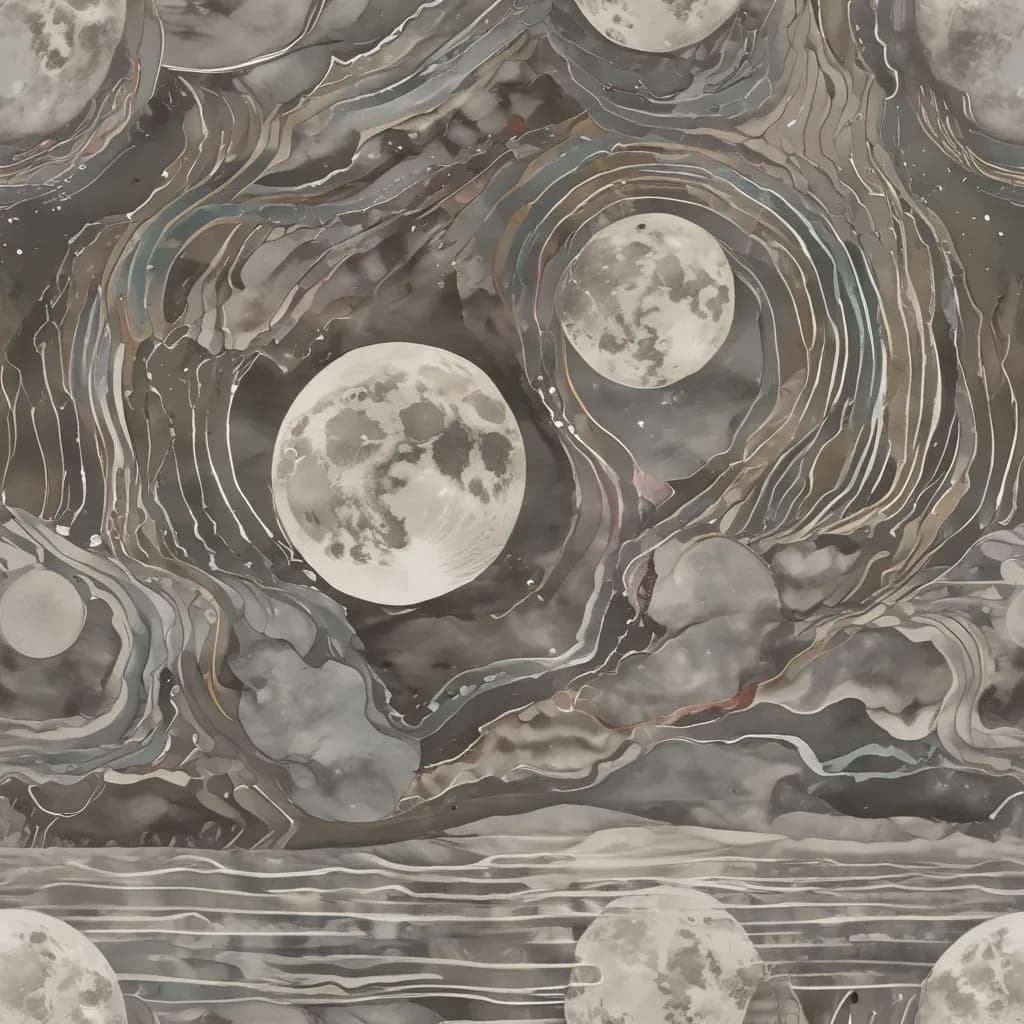
The title does its most interesting work thematically. Light in the song is tied to lunar cycles and shifting shadows, to the idea that two people who once shared a common view of the world now perceive it from entirely different angles. The moonlight that falls on one person does not reach the other. They are in different lights, experiencing different realities, separated not by distance alone but by something more fundamental: changed perspective.[2]
This is a gentle way of expressing something devastating. The intimacy of shared perspective is gone. The song does not rage against this. It holds the image of diverged lights and simply observes them.
The title is also a quiet pivot from the album's broader concerns. Where Dawn was about grief's darkest hours, Jean explores what it means to see that grief under altered light: retrospectively, with some distance, with a kind of understanding that can, paradoxically, feel like a betrayal of the original feeling.
Healing as Ambivalence
One of Jean's most striking recurring ideas is what Yebba describes as being "jealous about movin' on." She has made an album about grief's aftermath in which the healing itself is suspect, in which forward motion feels like abandoning something precious.[4]
"Different Light" embodies this ambivalence. The song does not announce resolution or arrive at acceptance. It asks questions. It holds an image of departure and wonders, without bitterness, whether the departed person is even cold. The wondering is itself a form of caring. The song is an act of sustained attention paid to someone who may no longer pay attention back.
Shatter the Standards described the album as "brave, hard-to-define," noting its central tension between moving on and the guilt that accompanies any forward motion.[4]
Yebba's Voice as Instrument
Part of what makes "Different Light" function is the restraint of its arrangement. Yebba's voice is capable of extraordinary power, a capability well documented across her Grammy-winning work and her widely celebrated live performances. But here she does not reach for that power.[1] The song does not ask for it.
Yebba has described her recording ethos in spiritual terms, saying of the album that "all of it is worship." This framing helps explain the reverence in the song's quietness. The stripped-back arrangement is not an absence of ambition. It is a form of devotion, a way of holding a difficult feeling with care rather than forcing it into something larger.
Alternative Readings
The song's emotional coordinates allow it to be read in at least two directions simultaneously. Within the album's explicit frame, named for a grandmother and preoccupied with grief's long aftermath, "Different Light" could address the loss of Jean herself: a woman who simply did not come back, who left her warmth behind. The question of whether she is cold becomes theological as much as emotional.
But the song's imagery is also the vocabulary of romantic loss. The abandoned object, the cold, the shifted light: these are the coordinates of a relationship's ending. Yebba does not resolve the ambiguity, and the song is richer for it. The question it asks about departed presence does not require specification to land.
There is also a quieter third reading. The "different light" may refer not to another person at all, but to a changed version of the one left behind. Grief reshapes the person who carries it. The speaker perceiving the world under different light might be Yebba herself, no longer the woman she was before the losses that define Jean.
The Album's Closing Arc
By Track 12, the listener has moved through the album's full emotional landscape. Two brief interlude tracks and one final song follow, and the sequence gives the impression of a long exhale. "Different Light" does not close anything. It opens a space for the quiet that follows.
Yebba's grandmother died in a way that, in her words, left her with peace. "Different Light" does not have that peace. But it reaches toward something adjacent to it: the capacity to hold an image of departure, to ask a question about coldness and moonlight and changed perspectives, and to release it gently into the air.
That release is the song's gift. Not resolution. Not closure. Just the honest holding of a moment and then, very quietly, letting it go.
References
- Yebba Finds Her Way Through Devastation and Liberation on 'Jean' - Rolling Stone — Rolling Stone review of Jean (4/5 stars) with critical assessment of individual tracks including Different Light
- Yebba: Jean - Album Review - Song Bar — Detailed track-by-track analysis including lyrical imagery in Different Light
- Yebba and Pimmie widen modern R&B's confessional streak - NPR — NPR review positioning Jean within the confessional R&B tradition
- Album Review: Jean by Yebba - Shatter the Standards — Full album review discussing Yebba's themes of grief, healing ambivalence, and creative range