Dinner Party
A Table Set for Something More
There are nights that look like nothing from the outside: a handful of people around a table, warm light, the sound of cutlery against plates, conversation moving from topic to topic with no particular purpose. And then something shifts. A glance, a laugh, the arrival of one particular person in the room, and everything that follows becomes, in retrospect, inevitable. "Dinner Party" is Niall Horan's attempt to hold that exact kind of evening still long enough to describe it. The setting is modest. The stakes, it turns out, were enormous.
The Night That Became a Song
Released on March 20, 2026, as the lead single from his fourth studio album of the same name, "Dinner Party" is one of the most nakedly autobiographical songs Horan has released in a decade of solo work.[1] The song tells the story of the evening in 2020 when he first met Amelia Woolley, the woman who would become his long-term partner. What might have been one evening among many turned out to be a pivot point. Writing about it years later, Horan posted on social media that the song captured "a really happy and big moment" in his life, describing that dinner party as an evening that changed the course of everything.[2]
The song's origin reveals something important about how the entire album took shape. Horan has said that after he wrote the track, the phrase "dinner party" became the conceptual nucleus around which the rest of the record was built.[2] A single night of personal history gave a 12-track album its title, its organizing metaphor, and its emotional starting point. That kind of backward momentum, a life event that only reveals its full significance after the fact, is also part of what the song itself is about.
Horan's biography matters here. He was sixteen when One Direction formed on The X Factor in 2010, and the years that followed were defined by a kind of velocity that left little room for ordinary life. By the time the band went on indefinite hiatus in 2016, he had spent the better part of his teens and twenties living out of a suitcase, performing to arenas, and building a solo career under the weight of enormous public expectation. Meeting Woolley in 2020 represented something different. He told E! Online that since he was a teenager, he had never really had the chance to settle down, and that this person was the first who made him feel genuinely ready to do so.[3]
The Ordinary as the Extraordinary
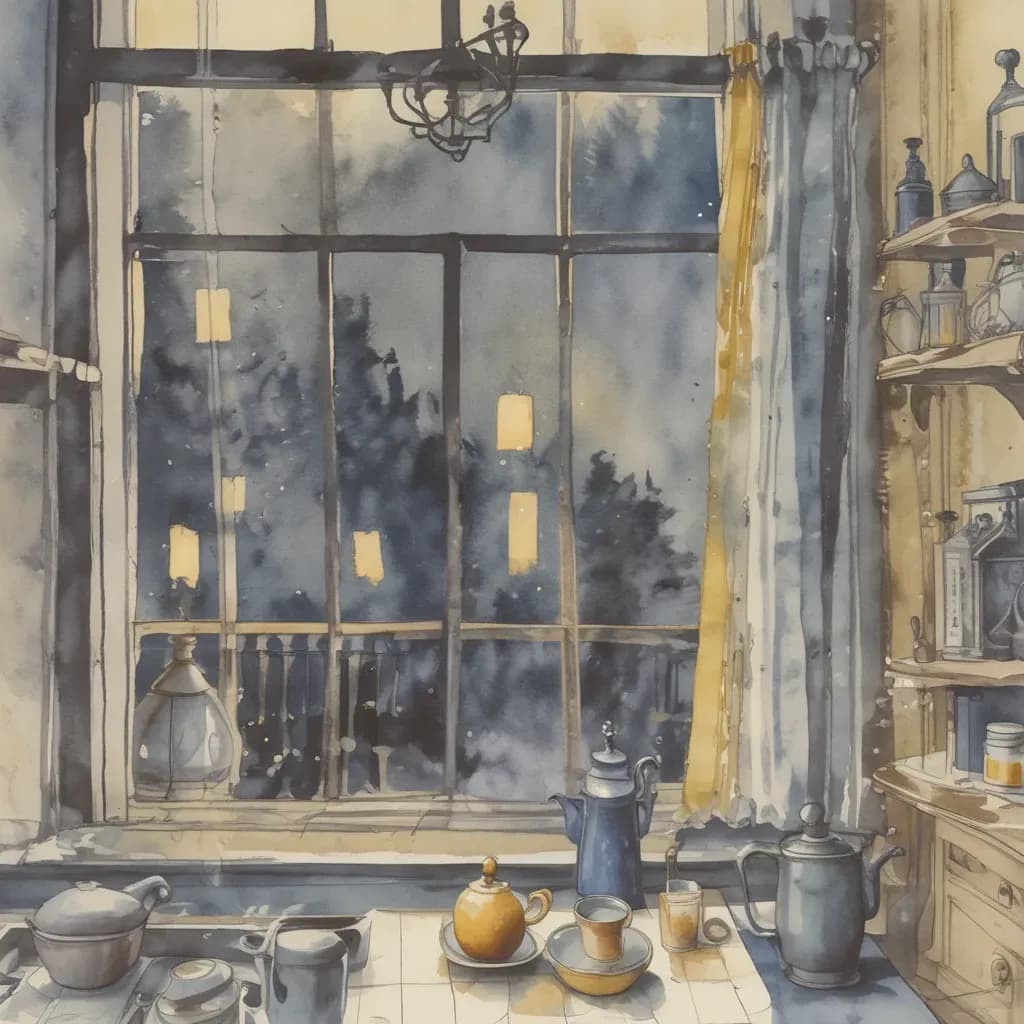
What separates "Dinner Party" from generic love-song territory is its insistence on keeping things concrete. The imagery in the song stays close to the ground: tableware, the particular hour of the evening when a gathering tips into something more intimate, the small rituals of domestic life. These are not the materials of romantic fantasy. They are the materials of an actual night, remembered with real specificity, and that specificity is exactly what gives the song its warmth.
The song is also doing something structurally interesting with time. The narrator isn't describing events as they happen. He's describing them from a future vantage point, one where he already knows how the story ends. This retrospective angle charges even the smallest details with a significance they couldn't have had in the moment. The chandeliers, the table, the hour, all of it is now evidence of something the narrator can name clearly in hindsight: that this was the night his life changed direction.
Horan has been direct in interviews about the personal transformation that followed. He told E! Online that having someone to listen and be listened to was "huge," and that he was glad he found it.[3] For a man who had spent his entire adult public life in constant motion, that kind of rootedness represents a genuine shift, not just in lifestyle but in identity. The song is the document of the moment it began.
The Sound of Settling In
Musically, the song matches its subject matter. The production is warm and mid-tempo, built around acoustic guitar and a gentle rhythmic pulse that never rushes or overwhelms the story being told. Clash Magazine described it as having a "lush guitar effervescence" and a production sensibility that calls to mind a lost Crowded House track, with a 90s-tinged texture that feels both familiar and fresh.[4] Others have noted the influence of artists like Noah Kahan in its directness and acoustic warmth.[5] The arrangement is unhurried in a way that feels intentional: this is music that has somewhere to be, but it isn't in a hurry to get there.
The song was written by Horan alongside a collaborative team that includes Julian Bunetta, John Ryan, Jamie Scott, and Afterhrs.[6] Bunetta and Ryan also serve as executive producers on the full album, and their fingerprints are evident in the polished but intimate sound that makes the single feel simultaneously like a confession and a radio single. It's a difficult balance to strike. Here, they manage it.
Reception and Resonance
The single arrived to strong notices. Clash Magazine called it "heart-on-sleeve and tender, but without becoming gushy," awarding it a 7 out of 10.[4] At The Barrier described it as "a sweet and light-hearted track, inviting listeners in to a personal moment," singling out the chorus for its "giddy, exciting feeling."[7] Showbiz by PS identified a "subtle country flair" in the song's DNA while calling it "a genuinely pleasant track, one that will easily find its place on the radio."[5]
Fans responded with equal enthusiasm. In Music Blog's weekly poll awarded the single 82 percent of the vote for best new release, beating out tracks from BTS, RAYE, and FLO.[8] That kind of landslide suggests the song connected quickly and broadly, not just with Horan's existing audience but with the wider listenership that rewards sincerity in pop music.
The reason it resonates isn't mysterious. Horan isn't singing about a feeling in the abstract. He's singing about a specific table, a specific night, a specific person, and the accumulated specificity is what makes the song feel true rather than merely pretty. Pop music has a long history of blurring the particular into the universal, smoothing out the details until anyone can project themselves onto the song. "Dinner Party" does something slightly different: it stays rigorously particular, and in doing so, it paradoxically becomes more universal. Because almost everyone has had a night they didn't know was pivotal until years later, and almost everyone recognizes the bittersweet clarity that comes with finally knowing.
More Than a Love Song
At face value, "Dinner Party" is a romantic song about meeting a partner. But taken in context, it's also a song about the mechanics of memory, specifically about how the mind re-illuminates ordinary moments once their significance is understood. We don't experience life as narrative. We experience it as a sequence of present moments with no particular meaning attached. The meaning arrives later, in retrospect, once we can see the shape of what followed. "Dinner Party" dramatizes exactly that process of retrospective revelation.
There is also a broader metaphorical logic at work. A dinner party, in cultural terms, is a gathering designed to bring people together. You invite people you want to connect. You arrange the table. You create conditions for something to happen, without ever knowing quite what it will be. In choosing that ritual as the album's central image, Horan is also commenting on the way we try to engineer connection and the way connection so often outflanks our plans. The album it anchors, set for release in June 2026, reportedly covers love, loss, fear, and hope. A dinner party seems like the right place to start all of that.
A Quiet Opening Statement
Niall Horan has spent a decade building a solo identity after years of being one-fifth of one of the most scrutinized pop acts in recent history. "Dinner Party" is the clearest statement yet of who he has become: someone who found a reason to stop moving, who found something worth writing a whole album about, and who has the craft and the courage to write about it without prettifying it into abstraction.
The song doesn't announce itself. It doesn't reach for grandeur. It simply sits down at the table and starts talking, the way people do at dinner parties when the night is going well and nobody wants to leave. As opening arguments go, it's quiet, warm, and surprisingly hard to shake.
References
- Niall Horan Recalls Electric Connection on New Single 'Dinner Party' — Rolling Stone report on the release and story behind the song
- Niall Horan on X (Twitter): Statement about Dinner Party — Horan's own words describing the song as about a moment that changed the course of his life, and the nucleus of the album
- Niall Horan on Dinner Party Album and Amelia Woolley Romance — E! Online interview where Horan discusses settling down and meeting Woolley
- Niall Horan's 'Dinner Party' Taps Into The Effervescence Of Connection — Clash Magazine review comparing the song to Crowded House and rating it 7/10
- Single Review: Niall Horan 'Dinner Party' — Showbiz by PS review noting the subtle country flair and Noah Kahan influences
- Niall Horan Dinner Party Album: Release Date, Tracklist, and More — Capital FM comprehensive guide to the album, including songwriter credits and tracklist details
- Niall Horan 'Dinner Party' Single Review — At The Barrier review praising the giddy chorus and intimate feel
- Fans Crown Niall Horan's 'Dinner Party' Best New Release of the Week — In Music Blog fan poll where the song received 82% of votes