Dry Spell
There is a particular kind of honesty that comedy makes possible. When a feeling is too raw or too ridiculous to address straight on, the best songwriters have always known to come at it sideways, to let the laugh carry the confession. Kacey Musgraves has built a career doing exactly this, and with "Dry Spell," the lead single from her sixth album Middle of Nowhere, she delivers perhaps her most precisely aimed joke yet.
The song is about an extended period of celibacy. Not heartbreak, not longing for a specific person, but the blunter, funnier, more embarrassing condition of simply not having been with anyone for a very long time. Musgraves leans into the premise with the commitment of a performer who has decided that the most truthful path is also the funniest one.
A Long Road Back to Laughing
To understand why "Dry Spell" lands the way it does, it helps to know what preceded it.
Musgraves split from singer-songwriter Ruston Kelly in September 2020, after roughly three years of marriage. That dissolution became the raw material for Star-Crossed (2021), an album-length elegy structured like a Greek tragedy. The breakup from her subsequent relationship with poet Cole Schafer in late 2023 fed the more inward, contemplative Deeper Well (2024), which peaked at No. 2 on the Billboard 200 and produced the Grammy-winning "The Architect."[1]
Two major heartbreaks in four years, both processed in public through album-length confessionals. By the time "Dry Spell" arrived on March 11, 2026, the cumulative emotional weight of that output was itself part of the joke's context.
The song was written during what Musgraves described as "the longest single period of my adult life."[2] She had, by her own account, feared being alone before she actually experienced it. The solitude became productive, even freeing. But one aspect of singlehood did not resolve itself into peace and wisdom, and "Dry Spell" is precisely about that aspect.
Reuniting with her original writing collaborators -- Shane McAnally, Luke Laird, and Josh Osborne -- unlocked something that recent albums had moved away from.[2] Musgraves has cited John Prine as a key touchstone for this approach: the belief that comedy and country craft can tell harder truths than straight earnestness.[3] "Nobody does humor better than those guys," she told NPR. With these writers around her again, she gave herself permission to be funny, and the result was the most radio-adjacent single she had released in years.
The Architecture of the Joke
What separates a great comic country song from a novelty track is that it works on multiple levels simultaneously, and "Dry Spell" does exactly that.
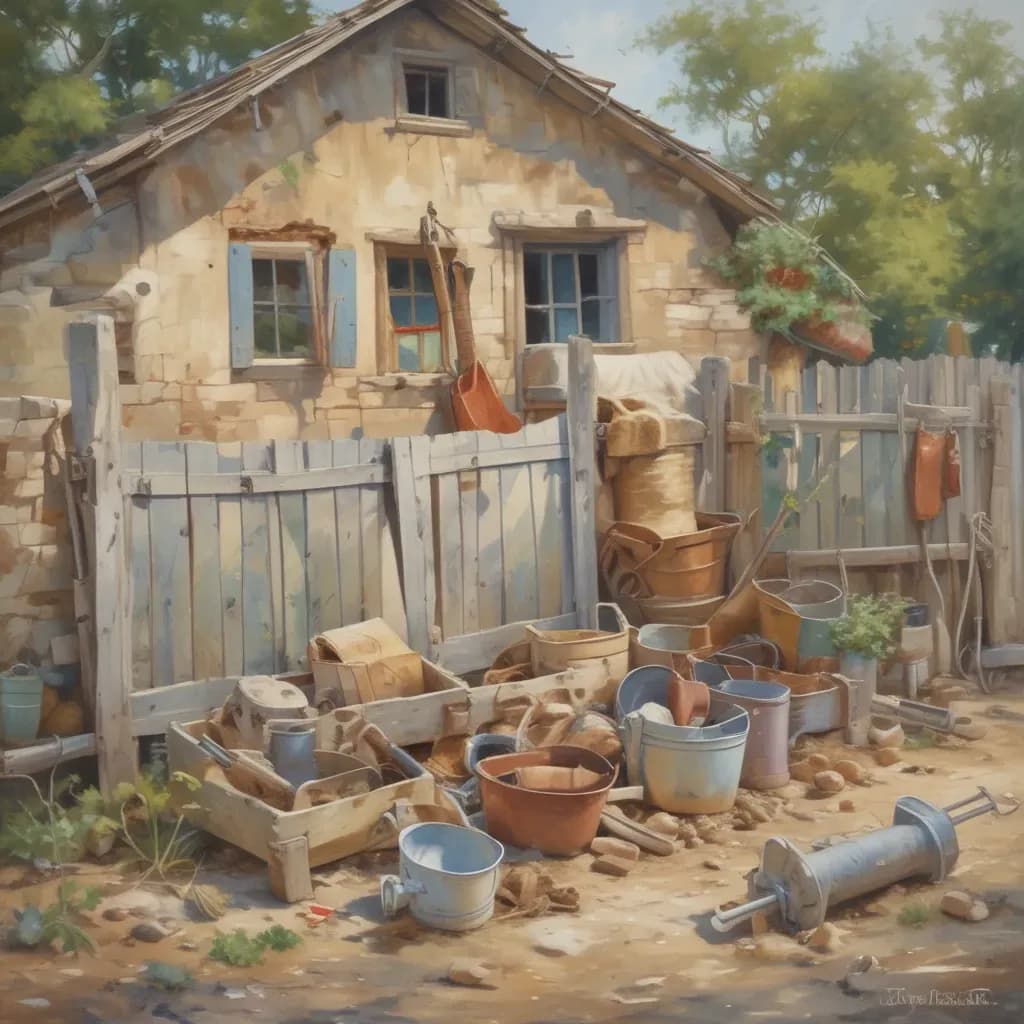
On the surface, the song is a sequence of extended double entendres drawn from rural and agricultural life. Musgraves and her co-writers raid the full inventory of country imagery (tools in disuse, parched earth, idle machinery, dusty corners) and let the listener do the connecting. The metaphors are not subtle. They are not meant to be. But they are assembled with such genuine craft that the result feels like it belongs in the Loretta Lynn tradition, updated for an era with fewer radio gatekeepers.
What elevates the song is the precision of its details. The narrator does not simply describe an absence in general terms. She counts it. The specific number of days cited transforms the song from a general complaint into a personal confession, and that specificity is where the humor deepens into something real. Then comes the kicker: the song's final turn establishes that even the last encounter before the current drought was not particularly satisfying. That editorial note takes "Dry Spell" somewhere other comic treatments of the subject would not dare go.
It is simultaneously more honest and funnier than the setup alone. It reframes everything that came before it as the punchline to a joke that is, underneath the laughing, also a genuine lament.
Critics picked up on this immediately. Country Universe awarded the single an A rating, calling it "a flat out filthy record" with a direct line to the tradition of clever female country songwriting, and a contender for Single of the Year.[4] When the Horn Blows described it as "one of the most hilariously self-aware entries in her catalogue yet."[5]
A Lineage of Frank Women
"Dry Spell" arrives inside a long tradition that country music has both celebrated and tried to contain.
Loretta Lynn made a career out of saying what women were not supposed to say on radio -- about infidelity, birth control, divorce, and desire. Dolly Parton navigated the same territory through the careful architecture of double meaning. Both operated within a system that required coded language, a permission structure built into the form itself.
Musgraves inherits that tradition but plays it under different conditions. Her career has been defined by a fundamental disinterest in catering to country radio formats, a posture that has cost her mainstream chart position and earned her a different kind of cultural authority.[1] That independence is the precondition for a song like "Dry Spell": it would have been blunted by the usual negotiation with gatekeepers.
The song also plants itself squarely in the broader conversation about female desire and autonomy in popular music. It treats a woman's frustration with sexual absence as subject matter that is entirely worthy of country craft, not as shock value or transgression, but simply as a true and relatable thing worth writing a good song about. That matter-of-factness is its own kind of statement.
The Hype Magazine framed it as an inversion of the traditional male conquest narrative in country music, noting how Musgraves claims female desire and frustration as equally worthy subjects.[6] American Songwriter observed how the song uses humor to do what country has always done: make the personal universal by being brave enough to be specific.[7]
Independence Beside the Absence
One thread in "Dry Spell" that critics noted and Musgraves herself alluded to is the modern paradox it captures: a woman who has achieved the financial and professional self-sufficiency that earlier generations of country heroines could only dream of, and who still finds herself with this particular need unmet.
The song does not frame this as tragedy. It frames it as absurd, which is both funnier and more honest than tragedy would be. The gap between external accomplishment and intimate absence gets played for laughs, but the gap is real. For listeners who have navigated the same contradiction, the recognition lands as something more than comedy.
Musgraves has said she had "always feared" being alone, and discovered that the fear was unfounded.[7] "Dry Spell" does not contradict that liberation. It simply notes, with a deadpan wink, that some wants are distinct from needs, and that keeping a precise count of their absence is funny precisely because it is also, a little bit, not funny at all.
The Music Video and the Commitment to the Bit
Co-directed by Musgraves and Hannah Lux Davis, the accompanying music video takes place in a supermarket where every product the narrator encounters becomes a visual embodiment of the song's extended metaphors.[8] The premise is maximally committed, playing the joke straight-faced through the full running time. Critics and fans described it as inspired, noting that it complements rather than simply illustrates the song.
The video also matters commercially. Released alongside the song as the announcement vehicle for the album, it traveled precisely the way a well-constructed visual joke travels: arriving in feeds attached to commentary, shared with the implicit message "you have to see this." For a song about absence, it generated considerable presence.
Another Way to Read It
The humor here is so well-executed that it would be easy to receive "Dry Spell" as purely comedic and miss the emotional texture underneath.
But placed in the context of an album called Middle of Nowhere, a record Musgraves has described as being about the freedom and disorientation of liminal space, geographic and emotional,[3] the song might function as a kind of inventory. Not a complaint, not a celebration, but a frank accounting of what this period of life has actually consisted of. The laughs are genuine. So is the loneliness, underneath them.
Country music has always used humor as an alibi for the things that hurt. The joke gets you through the door. Once you are inside, you notice the furnishings.
The Wink That Earns Its Keep
Country music at its best has always made a virtue of saying the plainly true thing with style and wit. "Dry Spell" is a song about not having had sex for a very long time, and it is one of the best country songs Kacey Musgraves has made in a decade.
What holds the song together is not just the craft of its construction (the way the double entendres stack, the timing of the final reveal) but the particular emotional intelligence behind it. Musgraves is not performing embarrassment for an audience. She is sharing a real experience through a form that has always been built for exactly this kind of sharing.
The song announces the arrival of an album made by someone who has been alone long enough to know the difference between loneliness and freedom, and who can laugh at both.[2] It is funny. It is also, in the way the best country songs manage to be, something more than that.
References
- Kacey Musgraves Previews New Album 'Middle of Nowhere' With 'Dry Spell' — Rolling Stone coverage of the single and album announcement including biographical context
- Kacey Musgraves explains her new album and what inspired 'Dry Spell' — NPR interview in which Musgraves discusses the 'longest single period of her adult life' and reuniting with co-writers McAnally, Laird, and Osborne
- Interview: Kacey Musgraves on her new album, 'Middle of Nowhere' — NPR feature on John Prine as an influence and the album's exploration of liminal space
- Single Reviews: Kacey Musgraves, 'Dry Spell' — Country Universe A-rated review positioning the song within female country songwriting tradition
- Kacey Musgraves, 'Dry Spell' (review) — When the Horn Blows review calling it one of the most self-aware entries in her catalogue
- Kacey Musgraves 'Dry Spell' Breaks the Silence With Bold, Playful Honesty — The Hype Magazine on how the song inverts the traditional male conquest narrative in country music
- Kacey Musgraves Says 'Dry Spell' Was Inspired By The Longest Period Of Her Adult Life Being Single — Whiskey Riff on Musgraves' fear of solitude and the discovery that it was liberating
- Kacey Musgraves Announces 'Middle of Nowhere' Album, 'Dry Spell' Video — Variety on the music video co-directed by Musgraves and Hannah Lux Davis