Dump
The Weight of What We Leave Behind
There is a strange, unglamorous truth lurking at the edge of every modern city: the dump. Not the metaphorical kind that appears in pop lyrics and cliched breakup songs, but the actual place where the accumulated evidence of daily life is sorted, compressed, and sent to rot. It is a place most of us visit occasionally, reluctantly, then quickly forget. "Dump" by Kero Kero Bonito does not let you forget it.
Released as the fifth track on the band's second album Time 'n' Place in October 2018, "Dump" is, on its surface, a portrait of an ordinary municipal waste facility. It is also one of the album's most emotionally loaded pieces: quiet where other tracks are noisy, steady where others shift, ordinary where the rest of the album reaches for the extraordinary. That contradiction is exactly the point.
Everything Changes, and Then There Is the Dump
Kero Kero Bonito were not the same band who had made Bonito Generation in 2016. The intervening years had not been kind. Gus Lobban, the group's producer and drummer, watched his father spend time in hospital with a serious brain injury. Sarah Midori Perry, the vocalist, received a photograph from her brother of bare land where her childhood home in Hokkaido, Japan had stood: the house had been demolished. She had recurring dreams of places that no longer existed, people from the present wandering through settings from the past.[1]
The band channeled these losses into Time 'n' Place, an album that is, beneath its varied surfaces, a sustained meditation on irreversibility. Things end. Places vanish. People leave. Objects remain, for a while, and then you have to do something with them.[2]
It is within that last question that "Dump" lives.
A Real Place, a Real Smell
The song is grounded in a specific, real location: the Waldo Depot Waste Disposal Site in Bromley, south London, close enough to where Lobban grew up that it was, on warm days, a presence you could sense rather than see.[3]
That geographic specificity matters. This is not a dump as an abstraction or a symbol imported from some literary tradition. It is the dump at the end of the road, the one locals know by proximity, the one you carry a car boot full of broken furniture to on a Saturday morning. The band was interested in how this thoroughly ordinary, often-avoided place holds a particular psychological weight: it is one of the few spaces where the comfortable distance between the way we live and the physical consequences of that living collapses entirely.[3]
Sarah Perry described the dump's atmosphere as one of the few places where we confront the freakish reality behind our comfortable, largely virtual lifestyles.[3] The word "freakish" is telling. The dump does not feel strange because it is grotesque; it feels strange because it is honest.
Objects at Rest
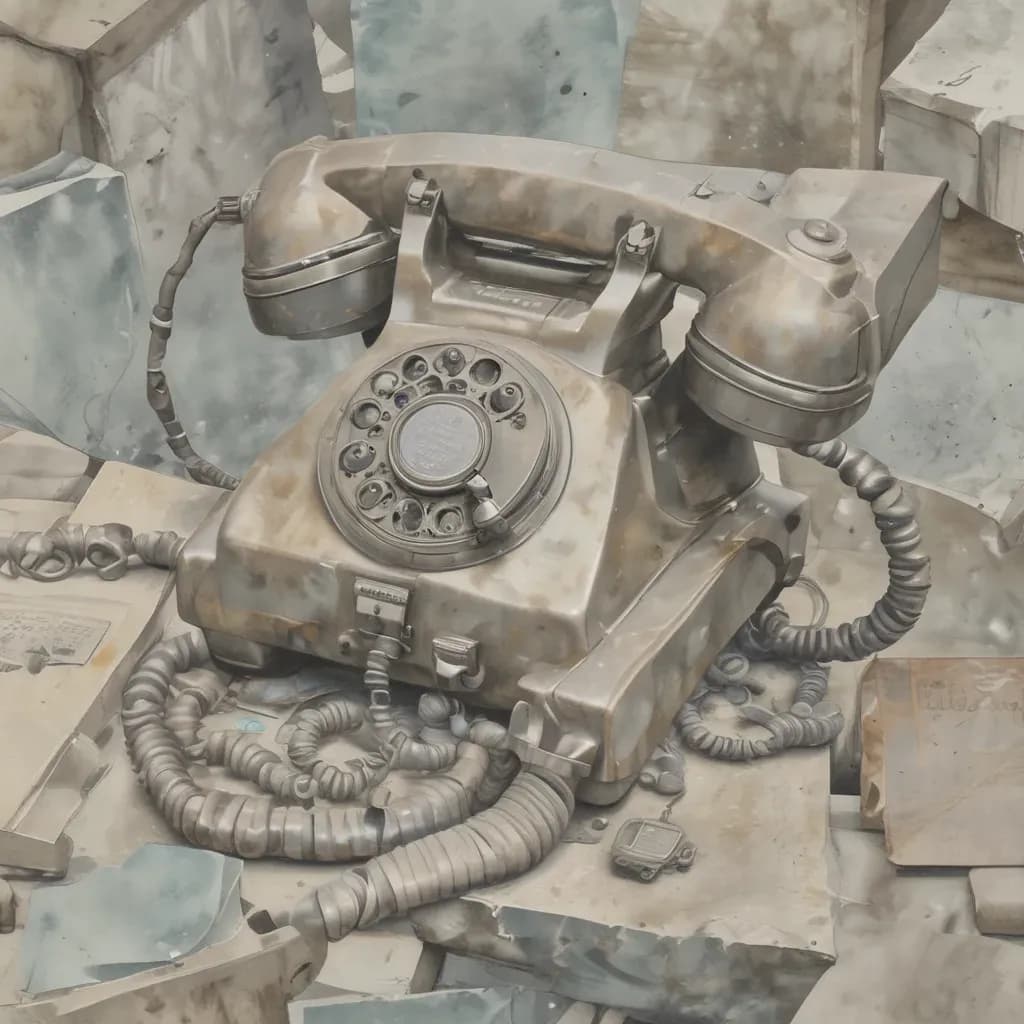
The song moves through a catalogue of discarded things: old parrot cages, dial telephones, the accumulated household material of lives once lived. None of these objects are presented with obvious sentimentality, and yet their specificity creates its own kind of ache.[3] The Exclaim! review called the track a low-key highlight, noting its lyrical tangents without quite capturing the melancholy working underneath them.[4]
What gives this catalogue its power is what it implies. When you discard the possessions of someone who is gone, the objects remain exactly as they were, indifferent to the fact that the person who owned them is absent. The parrot cage is simply a cage. But the reason it is at the dump is the reason it hurts to look at.
Many listeners have heard in this song a portrait of what you do with a loved one's things after they die: the enormous, banal labor of sorting, keeping some, and letting go of most. The album surrounds this interpretation with supporting evidence. The track immediately before "Dump" in the sequence is "Flyway," a song about birds departing as cold weather arrives.[2] The parrot cage appearing in the very next song reads as the album's most quietly devastating image: the bird has flown. What is left is the thing that used to hold it.
The Drum Loop as Conceptual Statement
One of the song's defining musical choices operates almost below the level of conscious listening. For the entirety of "Dump," Lobban plays the same single one-bar drum pattern, repeated without variation from beginning to end.[5]
This is not laziness. In the context of the album's composition, it was a deliberate exploration of something the band found philosophically interesting: an arbitrary human process, a task that a computer could perform perfectly, but that a human being does ever so slightly differently each time they repeat it.[5] There is something in those tiny fluctuations, the imperceptible inconsistencies of a repeated mechanical action performed by a body rather than a machine, that carries a meaning the song does not state directly.
Sorting through the wreckage of a life is its own version of this loop. You pick up an item. You make a decision. You move to the next one. The pattern repeats. There is no drama in it. There is no resolution. You just keep going, and each time your hands reach for something, they do it fractionally differently, because you are human and you cannot help it.
Ordinary Places, Extraordinary Attention
Time 'n' Place makes an argument for the serious emotional weight of suburban ordinariness. This is south London as an artistic subject: not the postcode of cool, not the iconic skyline, but Bromley, outer London, the dump at the end of the road.[6][7]
This is part of what makes "Dump" culturally interesting beyond its immediate context. It belongs to a broader tendency in indie music of the late 2010s to engage with the actual material and physical reality of daily life, resisting the default pull toward abstraction or escapism. It sits in conversation with the work of Phil Elverum, whose albums recording grief through accumulated domestic detail were cited by Kero Kero Bonito as an influence on the Time 'n' Place era.[6] It also reflects an ecological consciousness: the dump is where consumer society sends its evidence, and looking directly at it is an act of attention that modern life actively discourages.
The band was, in that sense, doing something genuinely countercultural: choosing a rubbish tip as a subject worthy of care. Not ironically, not as a provocation, but because they had been there, smelled it, and understood that it meant something.
Between Two Readings
"Dump" sustains at least two interpretations, and they do not cancel each other out.
In one reading, it is a song about personal grief: the physical labor of handling objects that belonged to someone who is gone. The sadness is all in what the things imply about the absence of the person who owned them.
In another, it is a song about collective denial: the comfortable illusion that modern life is clean and virtual and consequence-free, and the dump as the place where that illusion is briefly, inescapably shattered. Our phones, our appliances, our cages, our machines, they go somewhere. They were something before they were waste.
Both readings share a common observation. We arrange our lives to avoid looking directly at loss and consequence. Sometimes, though, you have to load everything into the car and drive it down the road, and then you see it all at once.
A Quiet Devastation
"Dump" is not the most immediately striking track on Time 'n' Place. It does not have the shapeshifting drama of "Only Acting" or the emotional intensity of "Visiting Hours." What it has is patience: a willingness to sit with ordinary objects and let them carry what they carry, without comment, without uplift, without resolution.
That is a harder thing to do than it looks. Most songs about loss reach for consolation or catharsis. "Dump" reaches for the dump. It keeps its attention on the parrot cage, the dial phone, the sorted piles of things that used to matter to someone. It trusts that looking is enough.
In the band's own words, the dump confronts us with a freakish reality we prefer to avoid.[3] "Dump," in its own quiet and patient way, does the same thing. It invites you to look. It does not tell you how to feel about what you see.
References
- The Fader: Kero Kero Bonito Interview, Time 'n' Place — Sarah Perry on the demolition of her childhood home, recurring dreams, and the emotional origins of the album
- Wikipedia: Time 'n' Place — Album tracklisting, context on 'Flyway' and the album's thematic sequencing
- Kero Kero Bonito Fandom Wiki: Dump — Song background, Sarah Perry's quote about the dump's atmosphere, and details about the Waldo Depot location
- Exclaim!: Kero Kero Bonito - Time 'n' Place Review — 8/10 review calling 'Dump' a low-key highlight with amusing lyrical tangents
- Kero Kero Bonito Twitter Listening Party (February 2021) — Band annotations of the album track by track, including details about the drum loop and the song's earlier title 'Pericoronitis'
- FLOOD Magazine: Kero Kero Bonito Are Doing Whatever They Want — Interview discussing Bromley geography, Phil Elverum's influence, and the shift toward suburban themes
- KEXP: Kero Kero Bonito Talks Traversing Time 'n' Place — Discussion of the album's themes of suburban texture, inertia, and the emotional geography of south London