Every Flower
Near the end of a breakup record, there is a moment when the noise has to stop and something else has to begin. On The Holy Cross Tigers, that moment is "Every Flower," the twelfth of thirteen tracks. It does not resolve the album so much as bend it toward the strange, trading the band's usual quick, scrappy songwriting for a hazy, unsettled mood and a surprising amount of open space.
Be warned that this is a thinly documented song. It has drawn only brief mentions in reviews, and no interview we could find addresses it directly. What follows is an interpretation built from those mentions, from what the band has said about the album as a whole, and from the song's position in the running order.
Where the song sits
The Holy Cross Tigers is the third Twisted Teens album of 2026 and the first on Sub Pop, arriving after Blame the Clown and Florida Water Blues.[1][2] The band is led by songwriter Caspian Hollywell, with RJ Santos on steel guitar.[1] They are known for working fast. Hollywell has been quoted saying they just make things really quickly, and the band has also said the album was finished before the Sub Pop signing.[6][3]
The tracklist runs from "Stalks" and "When We First Met" through "Blue Rose," "I Bring" and "Lock and Key," then into "Armed With a Vision," "Every Flower" and a closing track called "Darker The Night Is the Brighter I See."[1] That puts "Every Flower" in the last stretch of the record, in the zone where an album usually either resolves its argument or admits it cannot.
A record made out of a breakup
The album was written and recorded in the wake of Hollywell's split with a girlfriend. In the band's press material, as relayed by one reviewer, he describes sitting heartbroken on a trip to Albania and deciding that a record made right then could be worth something.[1] It is a darkly funny origin story, and the humor matters. Bassist Sonya Badigian has said that everything about the band is deeply funny without being exactly a joke.[3]
Hollywell has also resisted the idea that the record is only about heartbreak. In a New York Times profile he said the albums are more like what was happening that week, and he pointed to "Lock and Key," a song inspired by a neighbor, as proof that the material ranges wider than romance.[4] Both claims can be true at once. A breakup supplied the weather, and the songs wander through everything else that happened under it.
Flowers as the album's recurring language
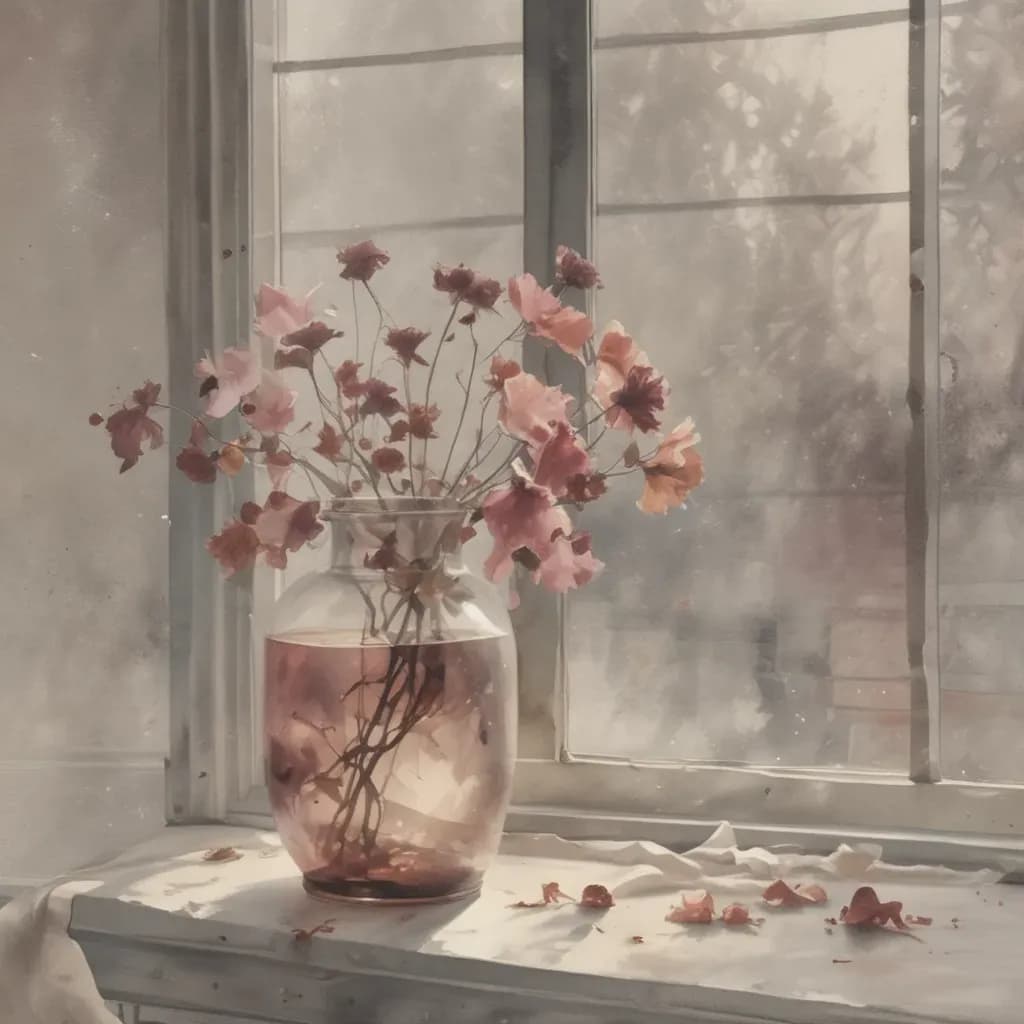
Floral imagery runs through the record. One reviewer noted that flowers, rebirth and references to split-ups abound, and singled out "Blue Rose" and "Every Flower" as examples.[5] There is also a short instrumental called "Blue Flower" earlier in the sequence.[1] Taken together, the titles form a small garden, and it is hard to hear any of them without hearing the others.
Flowers are one of pop music's oldest shorthand symbols, and they carry a double meaning that suits a breakup. They are gifts and they are funerals. They mark a courtship and they mark a loss. They bloom, wilt and come back the next year. A song called "Every Flower" can therefore be about a particular relationship, about the cycle of ending and beginning, or about the stubborn habit of the world to keep producing beauty whether or not anyone is in a state to receive it.
The title's sweeping word, every, is worth pausing on. Where "Blue Rose" and "Blue Flower" name a single, specific bloom, this title widens the frame to the whole field. After a record largely concerned with one relationship, the focus moves outward. The grief is no longer only about one person. It starts to look like a way of seeing everything.
What the sound is doing
Because the song's meaning is not spelled out in interviews, its sound is the best evidence we have. Reviewers describe an opening that arrives with a flutter of electronic blips, which one called a short-lived fakeout, before the track settles into something hazy and sinister, a dirge.[6] Another review says it follows an ambient outro and leans into the band's surreal, apocalyptic side, circling back to the floral metaphor and including a spoken-word passage.[1]
That description is striking for a band that mostly trades in compact punk, country and garage songs. Electronic blips and a spoken passage suggest a deliberate loosening of the form. The song seems to be reaching for atmosphere rather than argument. Where earlier tracks hit their points quickly, this one lingers, and the lingering is the point.
Santos's steel guitar plays its part too. One reviewer credits him with a sound that writhes and wilts around the melody of this song, and says the band would be far less interesting without him.[3] The verbs are telling. Writhing and wilting are the movements of a plant in distress, which means the instrument itself seems to act out the floral metaphor. The steel guitar has long been country music's sound of lament, and here it bends and sags like a stem in the heat.
The apocalyptic turn
The word apocalyptic is worth taking seriously. A breakup can feel like the end of the world, and songwriters have always borrowed that scale to describe it. When a song about flowers goes surreal and ominous, one natural reading is that the narrator's private loss has begun to color the whole landscape. Every bloom looks like a reminder, and every reminder looks like an omen.
Yet the same review that notes the apocalyptic mood also says the song does not neatly resolve Hollywell's interest in the cycle of life and death.[1] That refusal feels honest. A song that tidily turned grief into renewal would sit oddly on an album this wry and uneasy. Instead it leaves the question hanging, suggesting that there is more going on in the band's music and heartbreak than a quick listen reveals.
Rebirth, or the lack of it
Here the interpretations begin to split. One critic reads the album's closing stretch as a statement of belief in life after love, with flowers standing for what grows back.[5] On that reading, "Every Flower" is a hinge, the point at which the record turns from mourning toward something gentler.
A darker reading is available too. Another reviewer hears the closing material as a comedown that drops any pretense that Hollywell is over the relationship.[3] If that is right, the floral imagery works less as a promise of spring than as an admission that the cycle keeps turning and the grief returns with it. Every flower will wilt, and the song may be sitting with that fact rather than escaping it.
The sound supports both views. A hazy dirge is not an optimistic form, but a spoken-word passage and ambient space can also read as a clearing of the air. It is easy to imagine a listener hearing the track as the saddest thing on the album and another hearing it as the first exhale.
Other ways in
A third reading treats the song as a statement about attention. Flowers are small things that people notice most when they are in mourning or in love, and a record built from a few weeks of fast work can feel like a bouquet gathered in a hurry. The band's method, with minimal effects, quick vocal takes and songs often learned after they are recorded, favors immediacy over polish.[7] A song that is about every flower may simply be about noticing everything, the way a person does in the raw days after a loss.
A fourth reading is formal. Late in an album, a band that has spent eleven tracks being direct can allow itself one that is oblique. The surreal and apocalyptic turn then acts as a pressure valve. Having delivered the breakup songs, the band uses "Every Flower" to step away from the story and let the images carry the feeling, before the final track warps the arrangement slightly and holds onto the same ominous mood.[1]
Why it resonates
Part of the appeal is that the song declines to explain itself. Listeners who come to the album through its catchy early singles may be surprised to find, near the end, a track that asks them to sit in an uneasy atmosphere. That contrast gives the record depth. It suggests that the humor and speed were never the whole story, and that beneath the quick songs is a patient, strange sensibility.
There is also comfort in the flower metaphor itself. Almost everyone has received flowers, thrown them away, or watched a bouquet dry out on a windowsill. The image requires no explanation, which lets the music do the work. It is a familiar emblem made unfamiliar by hazy production and a wilting steel guitar.
Closing thoughts
"Every Flower" is a song that rewards the listener who brings their own season to it. The sources available tell us how it sounds, where it sits, and what imagery surrounds it, but they stop short of telling us what it means. That gap is not a failure. It is the space in which the song operates, somewhere between mourning and renewal, between a private heartbreak and a world that keeps blooming regardless.
If The Holy Cross Tigers is a breakup record that insists it is also about the week it was made, then "Every Flower" is the track where the week and the breakup finally blur into one long, hazy evening. It is worth hearing at the end of the album, when the quick songs have said their piece and the garden is all that is left.
References
Keep reading
More by Twisted Teens
More Indie Rock
- Lost Weekend Phoebe Bridgers
- Horsepower Big Thief
- Muscle Memory Big Thief
- A More Perfect Union Titus Andronicus
- Space and Time Big Thief
- without music the world dies Morrissey