Favor
A song about grief rarely announces itself as one. More often it arrives dressed as something else: a love song, a farewell, a lullaby for someone who can no longer hear it. "Favor," Gigi Perez's contribution to the Hunger Games prequel soundtrack, works in exactly that disguise. On the surface it belongs to two teenagers in a doomed district. Underneath, it is a plea that anyone who has lost someone will recognize: let the connection survive the separation.
It is a quiet song in a franchise known for noise, and that is part of its appeal. Where the series usually reaches for spectacle, Perez offers a hushed ballad built around a single, stubborn idea, that love can outlast distance if the two people agree on something small and shared to hold onto.
Where the song comes from
"Favor" was released on October 30, 2026, as a new track from The Hunger Games: Sunrise on the Reaping (The Album), the soundtrack to the film that follows sixteen-year-old Haymitch Abernathy on the day of the 50th Games, the Second Quarter Quell.[1]
The record has 29 artists and previously unreleased music made for the film, with the Grammy-winning producer Dave Cobb as executive producer. It reached listeners on November 13, a week before the movie opened.[1] Perez wrote and produced "Favor" with Aidan Hobbs, whose credits include work with Alex Warren and Mumford & Sons.[1] One listing credits the writing and production to Perez and a collaborator under the handle prince55, which is presumably the same partnership under a different name, though no source says so outright.[2]
The album leans toward folk and country voices, and Perez fits that world comfortably. A writer at Holler argued that she helps preserve the folk-leaning feel the franchise has favored, and noted that the song followed two other pre-release singles, Noah Kahan's "Draw You Out" and the Smashing Pumpkins' "Black Stars."[2]
A franchise she grew up with
Perez has said it is an honor to make a song for a franchise that has mattered to her since she was twelve.[1] That detail is easy to skim past, but it explains the register of the song. This is not a hired hand matching a brief. It is a longtime fan writing into a story she already carries, and then deciding to fill it with something of her own.
She has been direct about what that something is. According to the announcement coverage, the song draws on her own grief and on her longing to reconnect with loved ones who have died, and she described it as a privilege to share something so personal inside a story that has meant so much to her.[1] That statement is the most useful key to the song, and it reframes everything else. Haymitch and Lenore Dove are the occasion. Perez's own losses are the material.
The sound of a held breath
The arrangement is spare and slow to unfold. According to Holler's description, the song opens with ethereal, haunting strings that carry a sense of foreboding, then yields to a gentle acoustic guitar strum before Perez's voice enters.[2] In the hook her vocals are layered and the instrumentation swells, and the strings return near the end of that section.[2]
Near the close, the same writer hears muffled background conversation and assumes it is the two lovers talking.[2] If that reading is right, it is a lovely production choice: the song ends not on a grand statement but on the ordinary murmur of people who are together, which is exactly what the narrator is trying to get back to.
The strings matter for another reason. They give the song a faintly funereal color from the first seconds, so that even in its warmest moments the listener hears an undertow. One reviewer called the track mournful and hopeful at the same time, and that pairing is the song's whole temperament, though that page was unavailable to read in full, so treat the phrase as a headline impression and not a detailed argument.
Love as a thread
The central image, as readers have described it, is a song the two lovers share. In this reading, one of them tells the other to listen for it whenever the missing becomes too much, and promises to find a way back, however long it takes. The title does the same work from another angle: a favor is a small request made between people who trust each other, and it implies there will be a later, a time when the debt can be repaid or the promise kept.
That is a clever way to write about separation. Rather than describing the pain directly, the song hands the listener an instrument for coping with it: a melody, a habit, a private signal. Music becomes a kind of telephone line between two people who cannot otherwise reach each other. For a story set in a world where the state controls how people are allowed to see one another, a shared song is also a quietly rebellious object. Nobody can confiscate it.
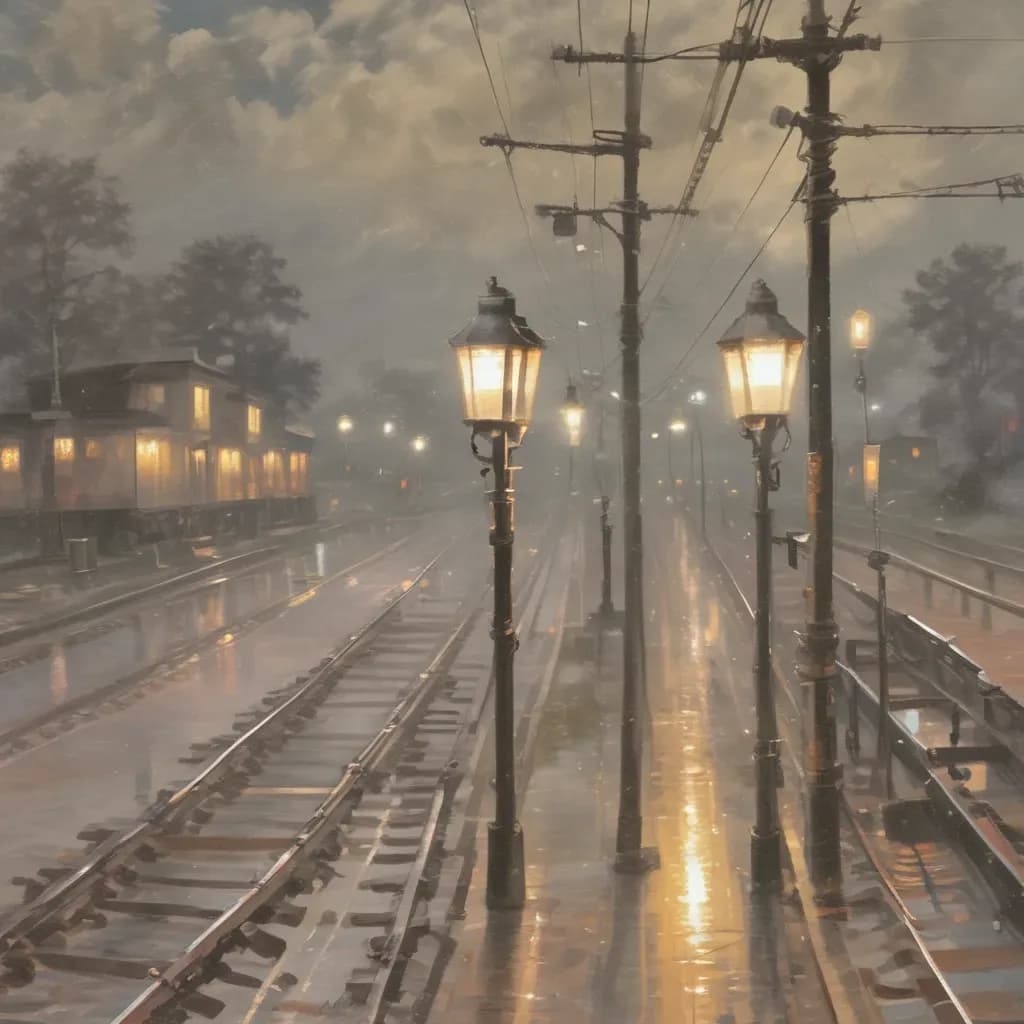
The Holler reading places the song at the moment the pair are parted, with one of them leaving by train, and sees stolen moments that now survive only in a framed picture, and a voice that breaks through a window pane as a sign of shared anguish.[2] It is worth saying that this is one writer's interpretation of the lyrics, and no official explanation of those images has appeared that I could find. Even so, the details fit the pattern of the whole piece: small domestic objects standing in for a large, unmanageable loss.
Haymitch, Lenore Dove and the long shadow of the story
To appreciate why this song has weight, it helps to remember what the film's central romance is. Haymitch and Lenore Dove are the tragic love story at the heart of the prequel, and a good deal of the soundtrack orbits her. The album includes a track called "Dove Song," among others, which suggests the film's music is working hard to give her presence outside the screen.[1]
Readers of the franchise already know how Haymitch's life goes, which gives every sweet moment in the story a bitter edge. That is the same tonal trick the song plays. A promise to reach someone across any distance is lovely in isolation and devastating once you know what the distance is going to become. Holler put it plainly: because the film centers on a tragic love, the songs that serve it are bittersweet by design.[2]
Grief that does not need a plot
The second layer is Perez herself. Her biography makes the grief reading hard to ignore. Her older sister Celene died in July 2020, a few months after Perez had decided to leave Berklee, and she began posting music online in the aftermath.[3][4] The first song that connected with an audience was "Celene," written as a letter to her sister, which spoke directly to other people who were grieving.[4] A deal with Interscope followed, then a split, then independence, then a much larger breakthrough with "Sailor Song," which reached number one in the United Kingdom, Ireland and Latvia.[3]
Seen against that history, "Favor" is less of a departure than a continuation. Her writing keeps returning to the question of how to stay connected to someone who is out of reach, whether by death, distance or circumstance. The film gave her a fictional pair of lovers to put at the center of that question, but the question was hers already.
This is why the song works for listeners who have never seen a Hunger Games film. A person mourning a parent, a friend or a partner can put their own face on the narrator. The story is a costume. The feeling underneath is entirely portable.
Alternative readings
There is more than one way to hear the song. The most direct is the romantic one: two people separated by force, trading a promise. A second is the elegiac one that Perez herself points toward, where the beloved is gone for good and the song is an attempt to keep the channel open. The two are not exclusive. Holler's writer concluded that the song is written with the two characters in mind but covers the pain of any lover leaving, whether temporarily or permanently.[2]
A third reading is more political, and is my own inference, not something any source states. In a franchise about a government that treats ordinary people as spectacle, a song that insists on private, unscripted intimacy is an act of resistance almost by accident. The Capitol can stage a reaping, but it cannot dictate what two people hum to each other in the dark.
A final caution. Because the song is new and Perez has said little beyond her brief statement, almost everything said about its lyrics so far comes from early listeners and fan-oriented sites. As more interviews appear, the picture may sharpen or shift, so it is best to hold these interpretations lightly.
Why it lands
Perez has built her reputation on songs that are unembarrassed about feeling. "Sailor Song" became a landmark for its open, unguarded queer love, and Song Exploder devoted an episode to tracing it from a first voice memo to a finished recording made in her childhood bedroom, with faith, grief and desire all in play.[5] "Favor" lives in the same emotional neighborhood, only quieter, and with the wattage turned down to a whisper.
That restraint is its strength. A soundtrack ballad could easily have swelled into melodrama. Instead, it keeps its voice low and trusts a handful of images, a few strings and a guitar to do the work. The result sounds like something sung to one person, which is how the best songs about loss tend to sound.
Conclusion
"Favor" asks for something modest: a thread, a signal, a song that two people can both find when they are apart. In the world of the film, that thread is all the lovers are allowed to keep. In Perez's hands it also becomes a way of talking to the people she has lost, and, by extension, a way for listeners to talk to theirs.
The song's quiet insistence is what stays. It does not claim that separation can be defeated. It only claims that a promise, a melody and a little stubbornness can make the distance feel less final, and that is often as much as anyone gets.
References
Keep reading
More Indie Folk
- Space and Time Big Thief
- There Must Be Love David Kushner
- The Governor's Waltz Phoebe Bridgers
- Haunted Phoebe Bridgers
- Crazy Girl Gracie Abrams
- Bobby Phoebe Bridgers