F.I.G.
A Life Lived Among Figs
The concept at the heart of Naomi Scott's debut album is one of the oldest and most quietly devastating questions a person can ask: who could I have been? Not in a self-pitying way, not in a mournful way exactly, but with the clear-eyed curiosity of someone who has built a life she is proud of and still wonders, sometimes, about the roads not taken.
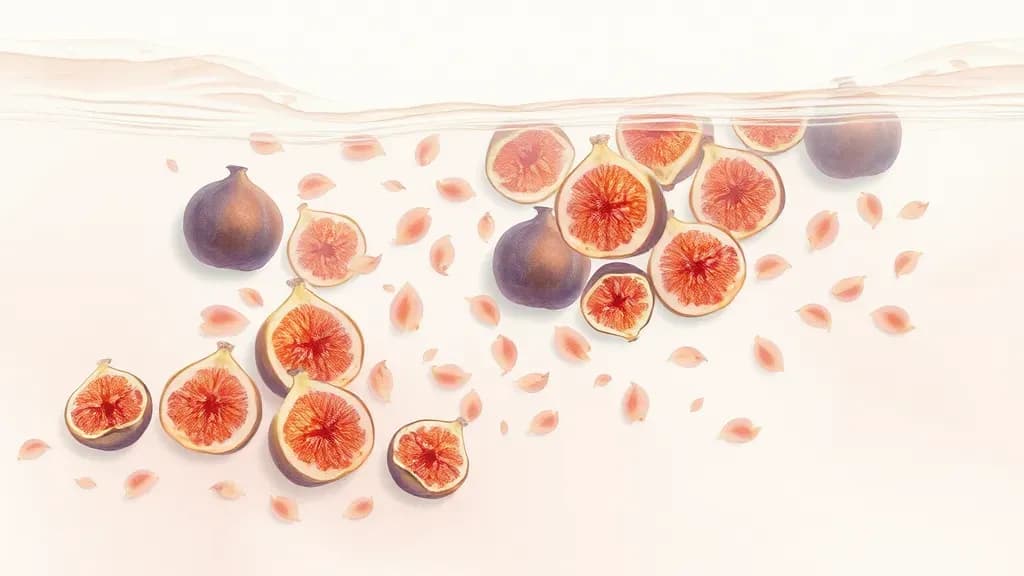
F.I.G. is a title that does at least three things at once. It is an acronym for "Fall Into Grace." It references the artist's own middle name, Grace. And it deliberately invokes one of the most enduring passages in twentieth-century literature: the fig tree scene in Sylvia Plath's The Bell Jar, where the narrator imagines each fig on a tree as a different possible life she might live. Plath's vision is one of paralysis: unable to choose, the narrator watches all the figs rot and fall. Scott's vision is something else entirely.[1]
From Hounslow to Everywhere
Naomi Grace Scott was born on May 6, 1993, in Hounslow, West London, to a British father and a mother of Gujarati Indian heritage originally from Uganda.[2] She holds a black belt in karate. She married professional footballer Jordan Spence at 21. By her mid-twenties, she had appeared in Disney Channel's Lemonade Mouth, played the Pink Ranger in the 2017 Power Rangers film, and delivered one of the most celebrated vocal performances in recent Disney memory as Princess Jasmine in the 2019 live-action Aladdin. She had also released two EPs, Invisible Division (2014) and Promises (2017), both quietly admired but not widely heard.
The album began taking shape in the period just before and during the pandemic, when Scott found herself navigating what she has called a "27-year-old life crisis."[1] She had made so many decisions already: married young, become famous through other people's stories (a Disney princess, a Power Ranger, a literary heroine in a prestige thriller), and built a career remarkable by any measure. But the music had stayed private, kept close, not yet ready. What the pandemic forced, or perhaps enabled, was a reckoning with all the versions of herself she had accumulated without releasing.
"I've been making music for 15 years, but I haven't been releasing music," she has said.[3] The distinction matters. F.I.G. is not a debut in the conventional sense of a first attempt. It is a debut in the sense of a first public arrival: a declaration that the private person and the public one have, at last, agreed on something.
Falling Into Grace
The Plath allusion is not decorative. It is structural. Scott has described the album's 11 tracks as 11 different "figs": 11 different versions of the self, 11 different emotional realities coexisting without canceling each other out.[1] Where Plath's narrator is frozen by the multiplicity of possible selves, Scott inhabits them, one by one, and in doing so discovers something about mourning: that you cannot grieve what you never acknowledged losing.
"What I came to realize was I hadn't properly mourned the other versions of my life," she has explained. "We're all mourning that we can only be one human being."[1] This is the emotional engine of the record. Each song is not just a love song or a breakup song or a meditation on desire, though it can be all of those things. It is also an exploration of a self that might have been, rendered with enough specificity that it feels entirely real.
The personal layer of the title adds weight that no literary reference alone could provide. "Grace" is Scott's own middle name. To fall into grace is, in part, to fall into herself: the self she was before the roles, before the franchise films and Disney songs and the public construction of a persona. The album is her attempt to work back toward that self, and to integrate it with everything she has since become.[4]
Desire, Loss, and Permission
Scott has acknowledged that she tends to write sad. "There's a lot of breakup songs," she has noted.[5] But the emotional range of F.I.G. is wider than that description suggests. What runs through the songs is not simply heartbreak but something more precise: the sensation of conflicted desire, of wanting and withholding, of the push and pull between intimacy and self-preservation.
The record opens with a slow-burning intensity that feels almost like obsession, establishing immediately the central tension between emotional restraint and interior intensity.[6] Other songs inhabit the quiet devastation of a relationship ending, the confident patience of someone learning to wait, and the bittersweet clarity of knowing exactly what you want before you have it. One of the album's most vivid moments, noted by multiple reviewers, finds Scott at her most personally candid, reframing what others might see as flaws into sources of strength.[7]
What makes these songs feel distinct from the standard pop account of romantic pain is not their subject matter but their emotional honesty. Scott has spoken about returning to what she calls a "childlike writing process": sitting at the piano as she did at 14, allowing whatever comes naturally to emerge, without filtering for commercial viability.[4] "At the core, there's always an emotional truth to my songwriting, but it's not diary entry, autobiographic type of writing," she has explained.[8] The distinction is useful: these are not confessions but constructions, shaped from emotional truth into something that reaches further than the purely personal.
The Sound of Restraint
The album was produced primarily by Lido, with contributions from Dev Hynes (Blood Orange), Daphne Gale, and Goldwash. Scott worked on it while simultaneously filming Smile 2 in 2024, flying between Los Angeles and Norway to record.[5] The production reflects the collaboration's unusual discipline: a philosophy of removal over addition. Most pop records pile on texture to signal emotional intensity. This one strips back, trusting Scott's voice and the weight of the songs to carry the room.
The sonic references are clearly 1980s soul and pop, with the DNA of Prince, Sade, Phil Collins, Janet Jackson, and Kate Bush audible throughout. But the record never slides into pastiche.[7] The influences have been absorbed and metabolized into something that sounds contemporary without chasing the present moment. It is, in this sense, deliberately outside of time.
"I funded and directed much of the project myself," Scott has noted, explaining that working outside the standard label infrastructure forced a creativity that brought freshness rather than limitation.[1] She reportedly re-cut vocals three times to reach the standard she had set for herself, an indication of both the perfectionism and the patience the album required.[5] "I knew the next time I released music, it's got to be incredibly intentional," she has said.[5]
Critical Reception and Cultural Resonance
The album arrived on March 20, 2026 to a warm critical welcome. The AU Review awarded it four out of five stars, calling it "one of the most assured pop-soul records in recent memory: an 80s-tinged, emotionally intelligent body of work that feels both reverent and distinctly her own."[7] The Upcoming gave it a perfect five stars, praising Scott's "sharp, witty lyricism" and the emotional precision of the arrangements.[6] RANGE called it "perfectly ripe," noting the unusual discipline of the production and Scott's confidence as both songwriter and arranger.[9]
The album's cultural resonance extends beyond its critical reception. Scott has spoken explicitly about the narrowness of what it meant to be a woman in pop when she was first navigating the industry, describing it as both "so narrow" and "so ageist."[5] A British-Indian woman in her early thirties releasing a debut album defined by emotional complexity rather than commercial calculation is, whether she frames it that way or not, a small act of resistance against those expectations. The fig tree metaphor resonates here too: the refusal to sit frozen before the choices, the decision to fall.
There is also something significant about the Plath connection itself. The Bell Jar has been a touchstone for generations of women navigating the tension between ambition and belonging, between multiplicity and the demand to be singular. To take one of its central images and reframe it as a source of grace rather than paralysis is not a modest gesture. It is, in its quiet way, a reinterpretation of an entire inheritance.
Grace as Surrender
Some listeners have heard the album's title and its central metaphor in a more specifically spiritual register. Scott has spoken publicly about her Christian faith throughout her career, and "grace" carries unmistakable theological weight in that context. In this reading, "falling into grace" is not simply about self-acceptance but about surrender: releasing control over who you are and trusting something larger than the self.
The two interpretations are not mutually exclusive. An album that holds both the human grief of unchosen lives and something that looks like peace is richer for the ambiguity. The Plath reading and the theological reading arrive at the same point: that falling, done with intention and courage, can be an act of grace.
"Falling into grace is kind of a play on falling into this other version of oneself," Scott has explained. "The idea of these different choices that we make, but it's also about just having grace for ourselves."[1] That last phrase is perhaps the most important. Having grace for ourselves: not perfection, not certainty, not the resolution of every tension, but a patient forgiveness extended to the self that is, for the figs left unpicked, for the lives not lived.
A Debut in the Deepest Sense
F.I.G. is not, in the end, just a title. It is the album's argument: that multiplicity is not a problem to be solved but a condition to be accepted, that the self is not singular, and that choosing one path does not erase the reality of all the others. The album does not resolve this tension. It lives in it, illuminates it, and then extends something that looks very much like grace.
For Scott, the release of the album represents the completion of a long private project, one built over 15 years of writing and recording and deciding not yet.[3] "I am very much a girl-in-progress right now," she has said, describing both herself and the album with the same phrase.[4] The title, then, is both an acronym and a state of becoming. To fall into grace is not to arrive but to release, to trust, to let the fig fall where it will. After all those years of holding on, Naomi Scott has let go.
References
- Naomi Scott Tells Jessie Ware Why She's Ready to Take the Stage — Interview Magazine conversation where Scott explains the F.I.G. title, its triple meaning, and the album's conceptual origins
- Naomi Scott – Wikipedia — Biographical details on Scott's background, heritage, acting career, and early music releases
- Forget Everything You Thought You Knew About Naomi Scott — AOL feature where Scott reflects on 15 years of making music before releasing it
- Naomi Scott Is Finding Herself Through Music: 'I Am Very Much a Girl-in-Progress Right Now' — The National Digest feature on Scott's return to basics writing process and the girl-in-progress ethos
- With F.I.G., Naomi Scott Is Finally Her Own Director — Stereogum in-depth interview about the making of the album, recording process with Lido, and artistic independence
- Naomi Scott – F.I.G. Album Review — The Upcoming 5/5 star review praising Scott's sharp lyricism and layered arrangements
- Album Review: Naomi Scott – F.I.G. — The AU Review 4/5 star review calling it one of the most assured pop-soul records in recent memory
- Naomi Scott Paves Her Own Lane in Debut Album F.I.G. – Q&A — One to Watch Q&A where Scott discusses emotional truth in songwriting and her approach to metrics
- Naomi Scott's F.I.G Is Perfectly Ripe — RANGE review praising the album's production philosophy of removal over addition