Flat Earth
A Used Bible, a Dry Amazon, and a Seat on the Subway
Most protest songs want to win an argument. "Flat Earth" is more tired than that, and more honest. It is the fourth track on Sheryl Crow's seven-song album Pick You Up, and it sounds like someone who has watched the news for too long and is quietly considering staying in bed.[1]
That mood makes it unusual. Crow could have written an angry broadside about denial, disinformation and the slow erosion of shared facts. Instead she wrote about exhaustion, and about the small human gesture that can interrupt it.
Where the Song Sits
Pick You Up arrived on October 9, 2026, and it is a compact record: seven songs, all co-written with her longtime collaborator Jeff Trott, running a bit under half an hour.[1][2] According to Ultimate Classic Rock, it started life as a six-song EP, and the closing duet "Freedom Bus" was added to bring it up to album length.[3] It follows 2024's Evolution, a record that, as Ultimate Classic Rock notes, became her first not to chart on the Billboard 200.[3]
That commercial context matters, because Crow has been unusually frank about what it did to her. In an interview with NPR's Fresh Air she said she has aged out of pop and finds great liberation in writing without worrying about radio or about matching her last hit.[4] A Marie Claire profile of the album carries a headline in the same spirit, framing her as someone who would rather make protest music than chase a hit.[7]
Crow is also a mother of teenage sons, and she has said that her feelings about the world they will inherit have nowhere to go "other than to write a song," a thought she shared with SPIN.[5] She describes the album as commentary on being human and wanting connection.[5] That is the frame to hold when listening to "Flat Earth." It is a political song, but its politics begin in worry about the people she loves.
The Sound of Weariness
Musically, the song is one of the grittier moments on the record. Riff Magazine hears heavier, bluesier guitars and a thicker pulse than the gentler songs that precede it, and calls it less soothing than its neighbors.[1] PopMatters, reviewing the album more skeptically, says the title track is the one that comes closest to the rollicking rock of her early records, while the first two songs are restrained.[2] Either way, Crow's voice on the album is slower and gentler than it was in her early years, and that softness is part of the point.[2]
A song about collapsing common ground could have been shouted. Crow lets the groove carry the weight instead, and her delivery sounds like someone who has run out of outrage and is left with something heavier and quieter.
A Catalogue of Things Falling Apart
The first half of the song works like a montage. According to Riff's description, the narrator moves through a series of scenes that each represent a different kind of unraveling: a secondhand Bible sitting beside flat-Earth thinking, drought gripping the Amazon, and evidence of violence disappearing behind police tape.[1]
These images are not connected by plot. They are connected by a feeling, which is that reality itself has become negotiable. Faith, science, environmental fact and public safety all appear in the same breath, and each is shown being hollowed out or explained away.
The title does a lot of that work. The idea of a flat Earth is the most extreme and almost comic example of denying something that can be measured, and Crow uses it as shorthand for a wider habit of mind. Marie Claire connects the song to climate change denial, and the Amazon drought certainly supports that reading.[7] But the details are broader than one issue. The song is less about a particular false belief than about living in a culture where nobody agrees on what counts as evidence.
That echoes something Crow told SPIN directly. She described a moment in which there is little sense of shared truth, with each side certain that its own truth is right and the other's is wrong, and she said she believes education and civility can help.[5] "Flat Earth" dramatizes that problem without lecturing about it.
The Pull Toward Retreat
What separates the song from a standard topical rocker is where its narrator ends up emotionally. Riff reads her as worn down by the accumulation of bad news, not exploding at it, and as tempted to pull the covers over her head and withdraw.[1] PopMatters makes a similar observation in a more critical register, saying the song treats retreating and hiding as a valid response to calamity.[2]
That is a notable choice for a veteran rock songwriter. Protest music traditionally asks the listener to march, vote or fight. Crow gives the listener permission to feel overwhelmed first. Anyone who has put down their phone in the middle of a news cycle because the weight of it became too much will recognize the impulse.
There is a generational note here too. Crow is in her sixties, has lived through decades of public crises, and has said that the songs on this album are what a person at her age, as a mother, asks of a moment like this one.[4] The exhaustion in "Flat Earth" sounds earned rather than performed.
The Stranger on the Train
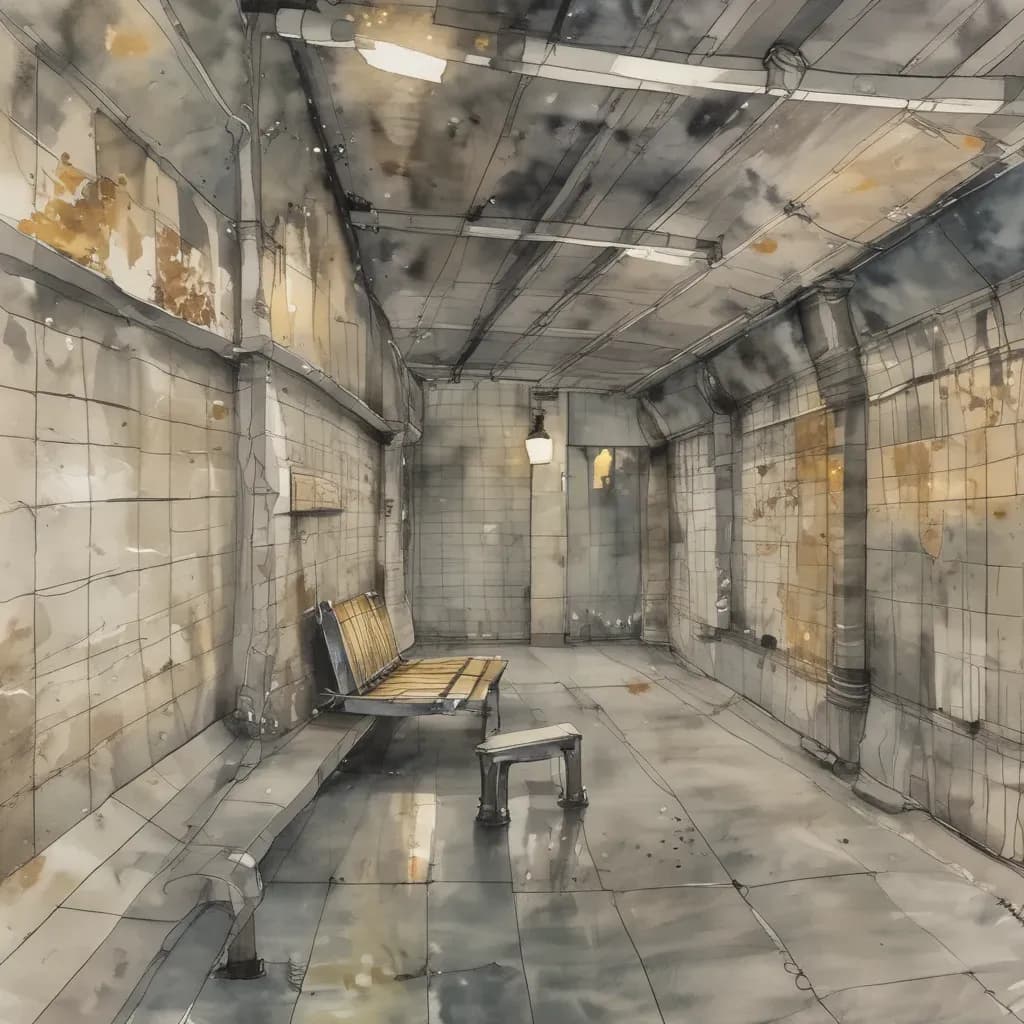
The turn comes from a very small event. Riff describes it as a stranger offering the narrator a seat on the subway, a modest act of courtesy set against enormous problems, and it argues that the contrast is what makes the song effective.[1]
The gesture solves nothing. Crow does not suggest that politeness will refill the Amazon, undo violence or restore a shared sense of reality, and Riff is explicit that the song makes no such claim.[1] What the moment offers is narrower and more believable. Another person noticed her, and that is enough of a reason to stay in the world a little longer.
This is the thesis of the whole record in miniature. Riff's overall reading of Pick You Up is that Crow's characters rarely have solutions for one another, and what they can give is company.[1] The title track is about offering someone a ride home, and the closing song is about coexistence.[1][6] "Flat Earth" is the hinge in the middle, where the case for despair is laid out most fully before the record answers it.
PopMatters notes that across the album the narrator's "I" gradually gives way to a "you," and the subway seat is a perfect example of that shift.[2] The song begins as a private tally of anxieties and ends with another person entering the frame.
Alternative Readings
Not every critic is convinced. PopMatters gave the album 6 out of 10 and found it brief enough to leave listeners wanting more, though it called that brevity part of the charm.[2] Ultimate Classic Rock was mildly positive but felt the record could seem quickly assembled and tentative.[3] On that view, a song like "Flat Earth" might sound more like a sketch of a mood than a full argument.
There is also a pointed political reading. PopMatters calls Pick You Up Crow's most political album to date, and places "Flat Earth" alongside "Freedom Bus" as the songs where the country's turmoil shows most directly.[2] On this reading the song is a rebuke aimed at denial in public life, with the weary tone serving as a form of moral seriousness.
A third reading is more personal. Ultimate Classic Rock describes the album as mostly about healing and connection, with a political thread driven by coping rather than finger-pointing.[3] Heard that way, the Bible, the drought and the police tape are less a charge sheet than a list of what a person carries around, and the song is about learning to carry it in company.
Finally, there is the question of whether retreat is a flaw or a feature. PopMatters contrasts the song with the more passive ending of "Freedom Bus," which settles for letting everyone be.[2] One could argue that "Flat Earth" is actually the braver of the two, because it admits that giving up is tempting before it explains why she does not.
Why It Resonates
The song lands because it describes a feeling that many listeners have and few songs admit. It is possible to care deeply about the planet, about public safety, about the truth, and still be too worn out to act on any of it on a given Tuesday. Crow names that condition without shame.
It also fits her long career. Since her early days, when she moved from jingle singing and backing vocals for Michael Jackson to a breakout solo career, Crow has been a songwriter of observation and warmth, more likely to notice a detail than to deliver a manifesto.[8] That instinct is on display in the way a stranger's courtesy carries the song's emotional climax.
Her recent work has leaned further into public concerns, including the 2025 protest song "The New Normal," and "Flat Earth" extends that line while keeping her human scale.[6] It does not ask to be a campaign anthem. It asks to be a companion for the bad day.
Conclusion
"Flat Earth" is a song about the moment after the argument has stopped working. Facts are disputed, institutions feel unreliable, and the planet itself looks like it is slipping away. Crow answers with something modest and stubborn: a small kindness from a stranger, and the reminder that being seen by another person is a reason to keep going.
That may not satisfy a listener who wants a rallying cry. For everyone else, it offers a quieter comfort, and a mature one. The song does not promise that things will be fixed. It only says that nobody has to carry them alone, and in the present moment, that may be the most hopeful thing a rock song can say.
References
Keep reading
More by Sheryl Crow
More Americana
- Freedom Bus Sheryl Crow
- I've Got Your Number Sheryl Crow
- Heaven Help Us Sheryl Crow
- Pick You Up Sheryl Crow
- The Governor's Waltz Phoebe Bridgers
- Haunted Phoebe Bridgers