Funeral
A song called “Funeral” should begin with grief. It should carry the weight of loss, move through sorrow, and arrive at something like acceptance. Dermot Kennedy does none of those things.
“Funeral” inverts its own title from the first moment. Released January 21, 2026 as the lead single from his third album The Weight of the Woods, it is not a song about mourning someone who has been lost. It is a song about staging a deliberate ceremony for pain that has outlasted its usefulness, about two people choosing to bury their accumulated hurt rather than carry it forward into everything that comes next. Kennedy described the song’s core impulse in his own words: it is about burying the past and moving forward into new light, about being tested but never broken.[1] That statement sounds deceptively simple. The song itself is considerably more layered.
A Turning Point in the Third Act
By the time Kennedy released “Funeral,” he had been building a career on emotional directness and a voice of unusual power for nearly a decade. Born in Rathcoole on the southwestern edge of County Dublin on December 13, 1991, he spent years busking across Dublin and Boston, studied classical music at Maynooth University, and eventually broke through commercially with the 2019 debut album Without Fear on Interscope Records.[2] A Brit Award nomination followed, then a feature on Meduza’s dance track “Paradise,” then a second album, Sonder, in 2022. The trajectory pointed steadily upward toward larger venues, bigger productions, and the particular pressures that come with arena-scale success.
The creation of The Weight of the Woods was not straightforward. During the album’s making, Kennedy faced a vocal health crisis serious enough to require two weeks of complete silence. He had been singing incorrectly for years, he revealed, and the accumulated damage demanded a full stop before he could move forward.[3] That experience of going wholly quiet before you can speak again is not incidental to the album’s themes. It functions almost as its narrative spine.
The album was built partly in Nashville and partly across six weeks in Ireland, with producer Gabe Simon embedded in Kennedy’s home environment on the Dublin-Kildare border.[4] The forest behind Kennedy’s house became the album’s central image. But “Funeral,” as the record’s opening statement, is less concerned with landscape than with what happens inside a relationship when both people look over the edge and choose, against everything, to step back.
The Ritual of Release
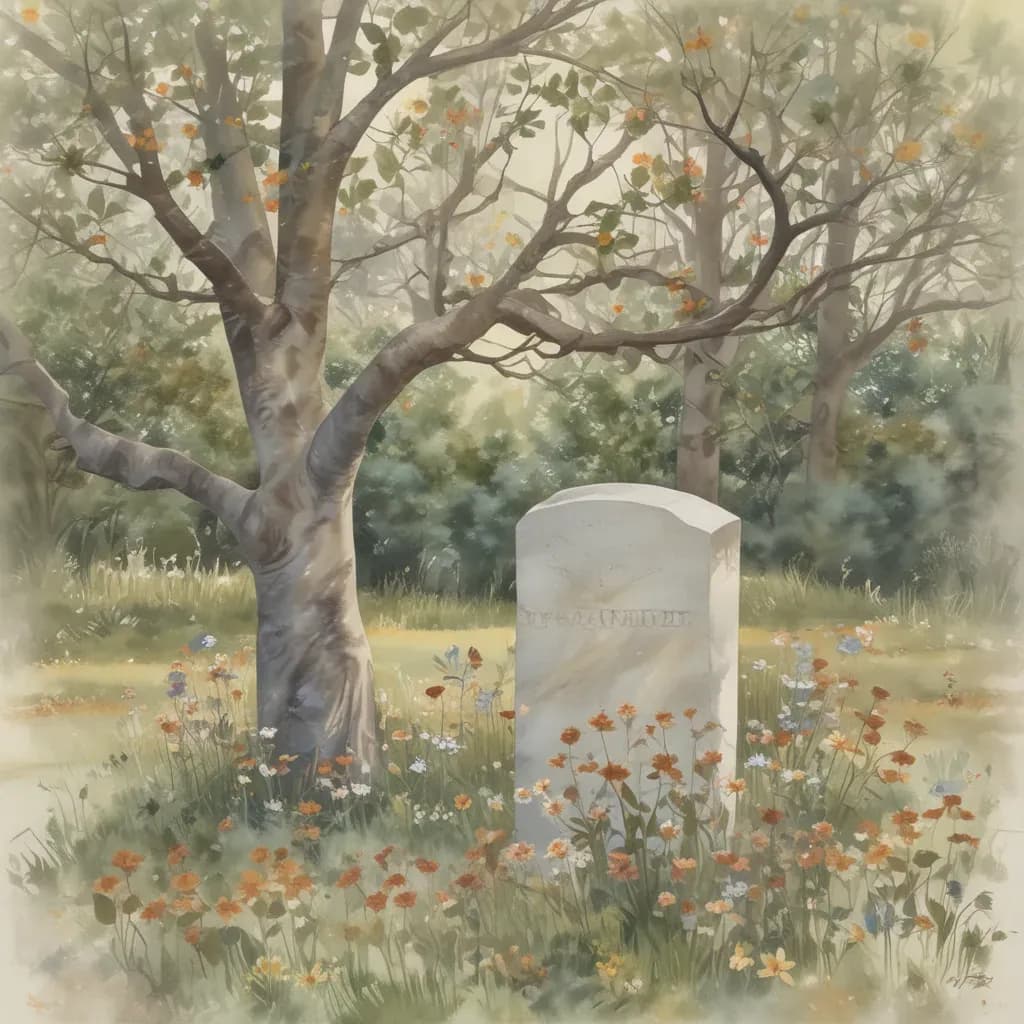
The song’s central conceit is genuinely inventive: it takes something associated with helplessness — the funeral, a ceremony the living endure rather than control — and transforms it into an act of total agency. In Kennedy’s version, the funeral is something the protagonists perform themselves, for their own accumulated sorrow. They choose to hold it. They choose what to bury. The ceremony is not imposed on them by death; they invent it out of necessity and will.
This reframing changes everything. A funeral staged for heartache is not a surrender but a declaration. It says: this pain was real, it deserves to be acknowledged properly, and we are now formally done with it. The formality matters. The solemnity matters. It distinguishes the act from simply deciding to feel better, which almost never works. The song’s implicit argument is that you cannot skip the ceremony. You have to hold the funeral before you are permitted to walk away from the grave.
The imagery of fire runs throughout the track, with the protagonists setting their sorrow alight and watching hurt go up in flames. This is purification rather than destruction. Fire in this context functions the way it does in ancient ritual: it transforms what cannot simply be discarded. You cannot throw grief away like an old coat. You cannot reason yourself out of pain accumulated over years of loving someone through difficulty. But you can burn it, and what remains after burning is lighter, changed, ready to be left behind.
Kennedy gives the fire imagery a specific relational texture that distinguishes it from solitary catharsis. These are two people burning their pain together, watching it go up as a shared act. That communal dimension transforms the ritual into something close to a vow.
Tested and Staying
The second major current running through “Funeral” concerns the experience of arriving at the edge of a relationship’s end and choosing, after everything, to remain. The song does not soften or elide the moment of crisis. It acknowledges directly that these two people came genuinely close to calling things off, that they looked at the accumulated weight of their difficulties and almost decided it was too much.[5]
Kennedy’s instinct as a songwriter has always been to lean into vulnerability rather than retreat from it. In “Funeral,” one of the song’s most arresting passages involves an admission of fear: the narrator confesses how frightened they are of who they would become without the other person, and that whatever outward strength they project is performance covering something much more fragile.[5] This is not weakness framed as a flaw. It is vulnerability offered as the most honest thing one person can say to another.
What makes the song work as a piece of writing is that this admission of fear arrives alongside genuine gratitude and tenderness. Kennedy holds both states at once, without forcing a resolution between them: terror and warmth together, near-failure and relief, the full knowledge of how close the edge was and the extraordinary luck of having stepped back. That simultaneity is what gives the song its emotional weight. It earns its sense of arrival because it does not pretend the danger was smaller than it was.
Cultural Resonance and Irish Tradition
Kennedy operates within a clearly defined tradition of Irish confessional songwriting: the lineage of Damien Rice and Glen Hansard, artists who built careers on treating vulnerability as a form of courage rather than a liability.[2] That tradition places emotional directness at the center of the work, with production and arrangement serving the feeling rather than obscuring it. “Funeral,” with its ceremonial imagery and unguarded declarations, sits squarely in this inheritance.
But the song also speaks to a wider contemporary moment. The years following the COVID-19 pandemic were, among other things, a period of collective reckoning with grief that had no proper outlet. Funerals were disrupted or denied. Losses went unacknowledged in the formal ways communities traditionally use to mark them. Many people found themselves carrying grief that had never been ceremonially processed. Into that context, a song about the necessity and power of holding a deliberate ceremony for what needs releasing arrives with additional resonance, even if the loss in question is personal rather than public.
Hot Press, reviewing The Weight of the Woods as a whole, called Kennedy a “magnificent balladeer, possessed of a golden melodic ability and mighty storytelling chops,”[6] and it is as a storyteller rather than simply a vocalist that “Funeral” most impresses. The song does not tell listeners what to feel or how to manage their pain. It enacts a process and invites the listener to carry out the same ceremony alongside the narrator.
The album’s reception was mixed but broadly engaged. The Irish Times offered a skeptical three-star reading, finding Kennedy’s earnestness at times “performatively” weighted,[7] while Darkus Magazine read the same qualities as “a triumphant return to form.”[8] This divide mirrors the broader critical conversation Kennedy’s music has always prompted: the question of whether emotional directness at this scale is a virtue or a limitation. “Funeral” positions itself firmly on the side that says sincerity, pursued with this kind of craft and control, is still a legitimate artistic choice.
Other Readings
The song is sufficiently explicit in its imagery to support a consistent reading, but it holds space for at least one significant alternative.
The “you” addressed throughout can be read as a romantic partner, which is the most natural interpretation given the relational language. But it can equally be read as the narrator’s former self: the person they were during the worst of it, the version of themselves weighed down by pain they had carried for too long. On this reading, the admission of fear about who they would be “without you” becomes something stranger and more unsettling — a fear of losing the suffering that has come to define them, a recognition that a person and their grief can become so entangled that separation feels like its own kind of death.
This secondary reading casts the funeral as a solitary internal act: the protagonist standing at a grave of their own making, burying the self who needed so badly to hurt. The person who walks away afterward is not quite the same person who arrived. To let go of pain fully is to become, in some small way, someone new. That transformation is both the song’s promise and its implicit cost.
Neither reading cancels the other. The most honest accounting of “Funeral” probably holds both in tension simultaneously, which is what Kennedy’s best songwriting tends to do: give language to an experience that people recognize from inside without being able to quite name it from outside.
A Victory March in Minor Key
“Funeral” succeeds because it earns its paradox. The title promises grief and delivers something much closer to relief, but the song does not cheat to arrive there. It looks at the crisis directly. It acknowledges the near-miss, the fear, the specific terror of almost losing something irreplaceable. Only after it has done all of that does it permit the ceremony to begin, the fire to be lit, the earth to close over what needed burying.
The song fits naturally alongside the other pieces on The Weight of the Woods. Where “The Weight of the Woods” (the title track) and its reprise explore the landscape and sense of rootedness that grounds Kennedy’s work, “Funeral” operates at the more intimate scale of two people negotiating how to carry their past without being crushed by it. The ceremony described in the song is local and personal; the forest that frames the album provides the context in which that ceremony can take place.
The release of this album as a whole marks a particular maturity in Kennedy’s work: having navigated vocal crisis, commercial expectation, and the particular temptations that come with arena success, he chose to make a record that returns to simpler ground.[4][3] “Funeral” is the key to that project. It establishes the terms on which the whole record operates: you hold the ceremony, you bury what needs burying, and then you walk away from the grave and into whatever comes next. Kennedy’s insistence, throughout the song, is that whatever comes next is worth walking toward. After everything the song has admitted and acknowledged, that insistence feels earned.
References
- Funeral - Dermot Kennedy (Official Release Page) — Official artist site describing Funeral as being about burying the past and moving forward into new light
- Dermot Kennedy - Wikipedia — Biographical overview including Kennedy's upbringing in Rathcoole, musical influences, and career milestones
- Dermot Kennedy: 'I was freaking out about my voice. I did two weeks where I didn't speak' — Kennedy discusses the vocal health crisis he faced during the album's creation, requiring complete silence
- Dermot Kennedy on New Album 'The Weight of the Woods' — Rolling Stone feature on the album's recording process, Kennedy's artistic liberation, and return to folk roots
- Bright Message Behind Dermot Kennedy's 'Funeral' — Thematic analysis of Funeral including Kennedy's statement about burying the past and moving forward
- Album Review: Dermot Kennedy, The Weight Of The Woods — Hot Press 8/10 review praising Kennedy's return to folk roots and his skills as a storyteller and balladeer
- Dermot Kennedy: The Weight of the Woods review — Irish Times three-star review noting the album's performative earnestness while acknowledging standout tracks
- Album Review: Dermot Kennedy Finds His Roots in the Wild with The Weight of the Woods — Darkus Magazine calling the album a triumphant return to form for Kennedy