Gerua
There is a moment in the opening of "Gerua" when the flute enters alone, a single plaintive cry over silence, and something shifts. Before the first word has been sung, before Iceland has unrolled its impossible greens and glacial blues across the screen, the music announces that this is not going to be an ordinary love song. It is going to be a prayer.
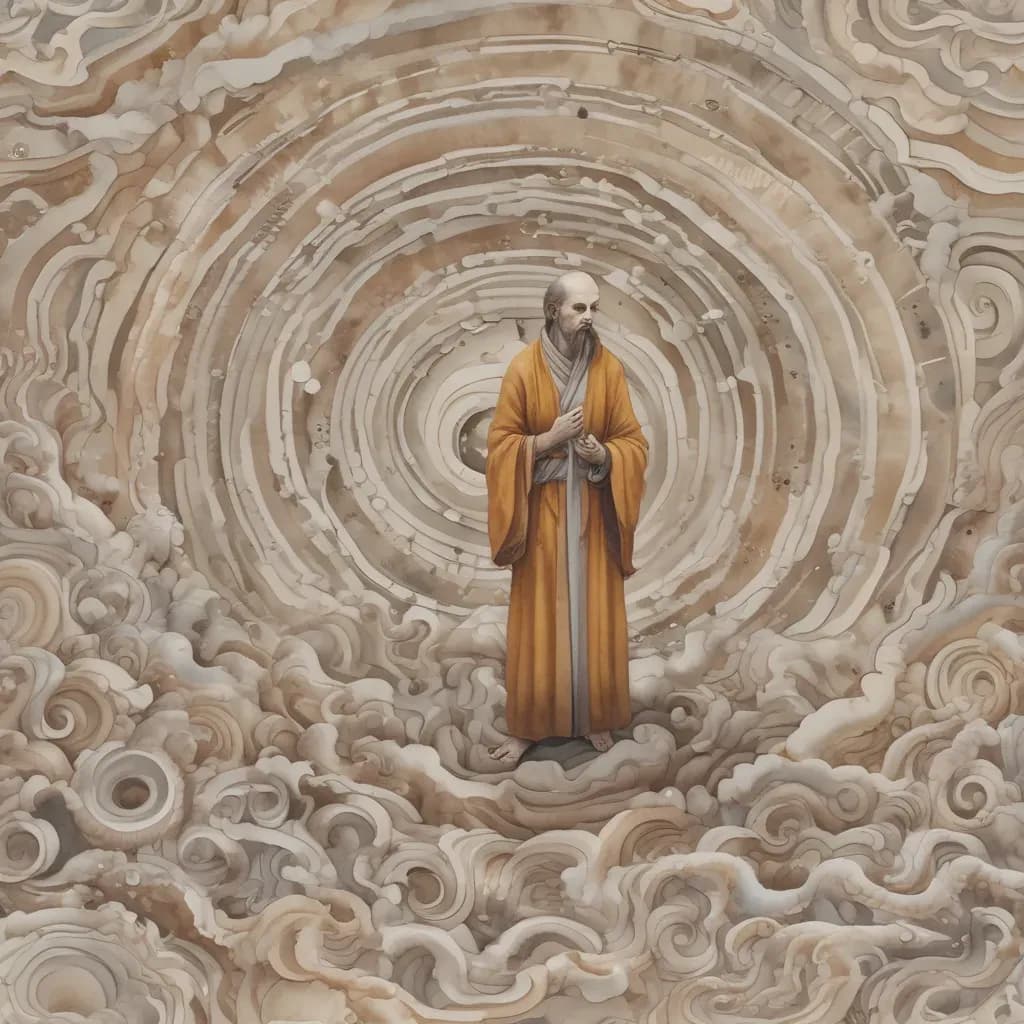
The song's title says everything, if you know where to look. Gerua is the red-ochre color of a monk's robe, the shade Hindu and Buddhist renunciates wear when they give up the world to pursue the divine.[1] In its most distilled meaning, gerua is the color of total surrender. Asking to be dyed in it, as the song's narrator does, is not a casual romantic gesture. It is an act of devotion.
A Reunion Weighted with Expectation
"Gerua" (released in full as "Rang De Tu Mohe Gerua," meaning roughly "Color me in your gerua") arrived on 18 November 2015 as the lead single from composer Pritam Chakraborty's soundtrack for the Rohit Shetty-directed film Dilwale.[2] The film starred Shah Rukh Khan and Kajol in their seventh on-screen pairing, a reunion that carried enormous cultural weight. The two actors had defined a generation of Bollywood romance in films like Dilwale Dulhania Le Jayenge (1995) and Kuch Kuch Hota Hai (1998), and audiences approached their return together with a mixture of nostalgia and high expectation.[3]
For Pritam, the assignment was daunting. In interviews around the film's release, he admitted to "sleepless nights" when he learned who would be headlining it. "To create a romantic song for SRK-Kajol, one of the greatest on-screen couples of our era, is not just a great honour but also a big challenge," he told BollySpice.[4] His solution was to reach back, past the era of digital production polish and the self-consciously contemporary Bollywood sound, toward the classic romantic idiom of an earlier era. "You needed little longer songs for them," he said. "More meaning."[4]
Lyricist Amitabh Bhattacharya, whose work critics frequently compared to the great Gulzar in its imagistic richness, wrote words that matched Pritam's ambition.[5] The result was a song that felt, on first listen, like something discovered rather than composed, as if it had been waiting in the tradition all along.
Iceland and the Visual World
The music video was shot entirely on the southern coast of Iceland, in landscapes that look less like real places than like paintings imagined by someone who had never seen the limits of the world. Glacial lagoons, waterfalls cascading down black volcanic rock, the wreck of a crashed aircraft on Solheimasandur beach. Farah Khan, who choreographed and directed the video sequences within the film, has since revealed that the shoot cost approximately Rs. 7 crore (around $840,000 USD), making it one of the most expensive song shoots in Bollywood history at the time.[6]
The conditions were brutal. The lead actors performed in light, breezy costumes in near-freezing temperatures. Behind one waterfall, Khan slipped, and Kajol caught his hand to prevent a fall.[6] The physical reality of that moment, two people holding each other up at the edge of an abyss, is a surprisingly literal enactment of what the song is actually about.
The choice of Iceland was practical and visionary at once. The Indian film industry was in a period of expanding budgets and global location ambition, and Iceland's landscapes were becoming sought-after by international productions. But the effect on screen was something more than scenic backdrop. Those extremes of terrain, those places where land and water and sky seem to dissolve into each other, became the visual argument for a love conceived at the same scale.
Love as Color, Color as Surrender
The song's deepest territory is the Sufi and devotional tradition of love poetry, in which the beloved functions simultaneously as a specific person and as a figure for the divine. In this tradition, which runs from the medieval Persian poets through Urdu and Hindi literary culture and into the popular Bollywood songwriting of the twentieth century, the lover does not simply fall in love. The lover is transformed by love, dyed a new color, unmade and remade entirely.
The song's narrator asks to be colored in the ochre shade of the beloved, using the Hindi verb "rang de" (to color, to dye). In classical Indian poetic thought, being dyed in another's color means losing your own boundaries and your own identity in the color of the one you love. It is an act of annihilation and renewal at the same time.[5]
The color itself carries this weight independently. Gerua is the color monks wear when they renounce the world, not because the world is bad, but because something more important has claimed their whole attention.[1] Shah Rukh Khan himself explained the word publicly: "Gerua means Ochre or Orange to keep it simple...even a bit saffrony. So colour me in the colour of love."[7] That gloss, 'the colour of love,' is exact. To ask a lover to dye you in gerua is to say: you have replaced everything. You are my world and my renunciation of the world at the same time.
Bhattacharya's lyrics carry the narrator through a landscape in which the world dissolves, rivers and mountains and sky falling away, until what remains is only the beloved.[5] This is a recognizable journey in the Sufi lyric tradition, in which the lover's identity is gradually absorbed into love until there is nothing left that is not love. The song's musical structure reinforces this movement: the verses build toward the refrain with a kind of inevitability, as if the narrator has been traveling toward this conclusion all along without knowing it.
What Arijit Singh Does with It
By 2015, Arijit Singh was already the dominant male voice in Hindi film music, a position he had claimed with remarkable speed after "Tum Hi Ho" from Aashiqui 2 became a cultural phenomenon in 2013. But "Gerua" asked something different from him than the yearning, melancholic register he had made his signature.
This is a song of surrender rather than longing, of arrival rather than search. Singh's performance responds to that distinction with unusual control. His voice in "Gerua" is warmer and more expansive, less focused on the specific ache of the upper register that defines much of his other work. He shares the song with singer Antara Mitra, and their voices together create a sense of two people speaking the same truth from different sides, a conversation held in music rather than words.
The arrangement around them is equally deliberate. Pritam and arranger Amar Mohile built the track on a bed of strings, flute, and mandolin, reaching consciously toward the orchestral romanticism of Hindi film's golden era.[8] The flute's entrance at the beginning is not decoration. It is the song's emotional keynote, a sound associated in Indian musical culture with longing, with the pastoral, and (in the context of devotional music) with the flute of Krishna, the supreme lover of the divine tradition. Placing that note at the threshold of a romantic song is a quiet but deliberate signal about the register the song intends to inhabit.
Reception and Cultural Impact
The song was immediately a critical and commercial success. Upon release it trended in 62 countries, and it ultimately became the first Hindi film song to cross 100 million views on YouTube (June 2016), later surpassing 625 million.[2] MusicAloud awarded the overall Dilwale soundtrack 8/10, calling it "Pritam's best from the year" and singling out "Gerua" for its "yesteryear-ish melody" and "lovely violins and mandolin."[8] The song won Song of the Year at the Mirchi Music Awards 2016 and the Best Film Song at the GiMA Awards.[2]
The reception tells a story about what "Gerua" was doing for its audience. Bollywood had spent much of the previous decade in a productive but sometimes exhausting conversation with global pop production values, electronic beats and international sounds and the aspirational cosmopolitanism of a rapidly growing middle class. "Gerua" was a step in a different direction. Its classicism felt like a choice, a statement that the older vocabulary of longing and devotion still had things to say that the newer one could not.
The film itself received mixed reviews. Rotten Tomatoes aggregates a 20% approval rating from critics, who praised the iconic on-screen chemistry but found the plot overlong and predictable.[9] But the songs, particularly "Gerua," were widely considered to transcend the film's shortcomings. There is a long tradition in Hindi cinema of the soundtrack outliving the movie, and "Gerua" belongs firmly to that tradition.
Alternative Interpretations
It is possible to hear "Gerua" as, at some level, a meditation on the specific kind of love that endures. The film Dilwale is a reunion story: two people separated by misunderstanding and time, finding each other again across a fifteen-year gap. In this context, the gerua color takes on another resonance. Ochre is one of the oldest pigments in the world, among the first colors human beings used to make marks that lasted. To ask to be dyed in gerua might be a request not just for total surrender but for a love that does not bleach out in sunlight or wash away in time.
There is also a reading that gently complicates the Sufi register. The traditional use of color-dyeing as a metaphor in devotional poetry involves the beloved as the active agent, the one doing the dyeing, and the lover as the passive material being transformed. The song's narrator explicitly embraces this passivity, asking to be made into something new by love. In contemporary culture, this might read as old-fashioned submission. The Sufi tradition frames it entirely differently: the ego's dissolution in love is itself a form of power, the power to give up the project of self-protection and be fundamentally changed. The gerua robe monks wear is not a symbol of defeat. It is a symbol of a choice made freely, and at great cost.
The Color That Stays
More than a decade after its release, "Gerua" has settled into the category of songs that feel inevitable, songs it is hard to imagine never existing. Its success is the result of a specific convergence: Pritam's decision to reach toward classical romanticism, Amitabh Bhattacharya's lyric intelligence, the alchemy of Arijit Singh's voice at precisely the right moment in his career, and the irreplaceable cultural charge of Shah Rukh Khan and Kajol sharing a frame again after years apart.
But the song's staying power comes from something deeper than any of those elements separately. It comes from the gerua color itself, from the fact that someone had the wit and the courage to plant a word that means renunciation, devotion, and complete surrender at the center of a mainstream Bollywood love song. The color asks a question that love has always asked: what are you willing to give up for this?[1] The song's answer, offered without hesitation in Arijit Singh's open and expansive voice, is everything.
References
- Why Sannyasis Wear Gerua/Ochre - Hindu Media Wiki — Cultural and spiritual significance of the gerua color in Hindu tradition
- Gerua - Wikipedia — Song background, YouTube milestones, awards, and cast information
- Dilwale (2015 film) - Wikipedia — Film context, cast, plot, and box office performance
- Pritam interview - BollySpice — Composer Pritam discusses the challenge and creative process behind the Dilwale soundtrack
- Gerua Lyrics and Translation - BollyMeaning — Lyric translation and analysis of the song's devotional imagery
- Farah Khan on the Gerua Iceland shoot - PinkVilla — Behind-the-scenes details on the Rs. 7 crore Iceland music video shoot
- Shah Rukh Khan on the meaning of Gerua - X (Twitter) — SRK defines gerua publicly as 'Ochre or Orange...the colour of love'
- Dilwale Music Review - MusicAloud — Critical review praising Gerua's orchestration and melody
- Dilwale (2015) - Rotten Tomatoes — Critical reception of the film