Hamari Adhuri Kahani
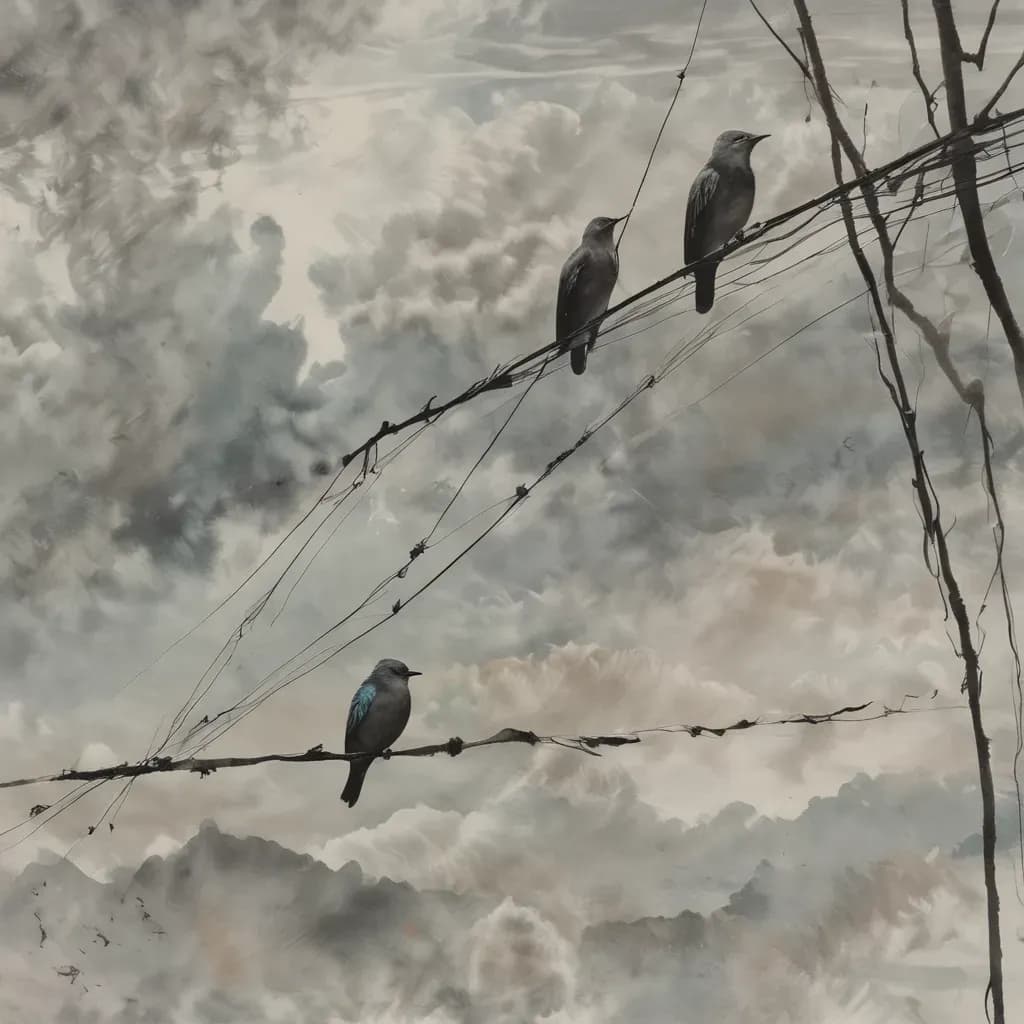
There is a particular kind of grief that has no funeral. It belongs to love that was real, and felt, and mutual, but that circumstances refused to allow to complete itself. No one died. No betrayal happened. And yet something ended, or rather, stopped before it could end properly. "Hamari Adhuri Kahani" names this feeling with quiet precision: our incomplete story. The Hindi word adhuri does not mean finished. It means unfinished. The story was interrupted, not concluded, and the difference is everything.
That distinction is the emotional core of one of the most enduring ballads in 21st-century Bollywood. A song can outlast a film when it touches something the film's story cannot fully contain, and that is precisely what happened here.
The Story Behind the Story
The title track is from the 2015 Bollywood film of the same name, directed by Mohit Suri and produced by Mahesh Bhatt under Vishesh Films. The music was composed by Jeet Gannguli, with lyrics written by Rashmi Virag. The album was released on May 25, 2015, and the film followed on June 12.[1]
To understand the song, you need to understand where the story comes from. Mahesh Bhatt drew the film's narrative directly from his own family history. His father, Nanabhai Bhatt, a prominent Gujarati film director, fell in love with and lived with Shirin Mohammad Ali, a Muslim woman, during the 1940s. Because of the social and religious pressures around an interfaith relationship, they could not marry formally. When Nanabhai eventually left Shirin for another woman, she was left to raise their five children largely on her own, including the young Mahesh.[2] The incomplete story of the film's title was, at its origin, the story of Bhatt's own parents.
On the film's tenth anniversary in 2025, Bhatt reflected at length on its making. He described writing the screenplay as recovering parts of himself he had not known were still alive, and he refused to apologize for the film's commercial shortfall, pointing out that stories about people who "loved in the shadows" were not built for blockbuster audiences.[2] The film's net domestic gross came in just below its reported budget of 35 crore INR.[1] The music, as it turned out, had a far longer life.
An Epic Tune and a Moment of Self-Doubt
By 2015, Arijit Singh had already reshaped the Bollywood soundscape. His breakthrough, "Tum Hi Ho" from Aashiqui 2 (2013), also composed by Jeet Gannguli, had made him a household name across India and earned him his first Filmfare Award for Best Male Playback Singer.[3] He was the genre's most in-demand voice, and on paper, he was the obvious choice for "Hamari Adhuri Kahani."
He did not feel that way about it himself. In a Times of India interview, Singh described the title track as "one of the toughest songs that I have ever sung," citing the opening melody as the specific source of difficulty.[4] He spent considerable time at the piano before the session, working through the contours of a tune he found genuinely daunting. Far from the assured interpreter Bollywood audiences knew, he was uncertain enough about his own capabilities that he suggested to the production team they find a more experienced, senior singer for the track.[4]
Mohit Suri and Mukesh Bhatt sat with Singh for several hours, working through the song in depth, reconstructing his confidence piece by piece.[4] Suri had spoken publicly about the centrality of music to his filmmaking process, describing the title track as "the best way to describe the film" and saying he could not imagine a better articulation of its emotional core.[5] That conviction apparently translated into the studio. The final recording took approximately two hours, and the result stands as one of Singh's most recognized performances.
Jeet Gannguli's composition rewards closer attention here. Trained in Indian classical music under his father and in Western classical, jazz, and rock traditions under guitarist Carlton Kitto, Gannguli built a melody that draws on the swelling emotional language of Bollywood ballads while incorporating the introspective restraint of raga-influenced phrasing.[6] The resulting combination sounds simultaneously ancient and contemporary, and places genuine demands on the singer. Singh's self-doubt, however temporary, was not merely nerves.
Love That Cannot Complete Itself
The song's central subject is not lost love in the conventional sense. It is love interrupted. The narrator is not angry. There is no recrimination. The emotional register is closer to a clear-eyed acknowledgment of something enormous that cannot be changed. The love existed. The love was real. The story simply could not finish.
One of the song's most resonant themes is closeness that does not resolve into wholeness. The narrator describes coming nearer and nearer to someone while the distance between them remains unchanged. Physical proximity, emotional honesty, and genuine care are all present, yet something structural holds the love just short of completion. The film makes this concrete: Vasudha and Aarav exist in mutual recognition of their feelings, but the return of Hari reimports an obligation that individual desire cannot override. The incompleteness is not failure. It is constraint.
Sacrifice is the second major current running through the song. Not sacrifice as nobility or as something that should bring comfort, but sacrifice as loss. Aarav's arc in the film ends in death, not estrangement; he dies in service of freeing Vasudha to live rather than in bitterness or retreat. The song does not frame this as heroic in a way that softens the grief. It frames it as a price. The love was real. Someone paid for circumstances neither of them created.
The third strand is memory as the only home available to impossible love. Because the love has no future, it exists entirely in reflection. The song's tone is contemplative rather than urgent. It is the sound of someone who has stopped reaching and started holding, keeping a feeling intact not because they expect it to change but because setting it down would be a different kind of loss. The song understands that you can accept something is over and still refuse to pretend it did not happen.
Why the Song Outlasted the Film
Critical reception of the film itself was divided. Reviewers who admired the music and the lead performances often took issue with a screenplay they found structurally uneven. Some argued that the film's handling of Vasudha reduced an actress of Vidya Balan's caliber to a passive, suffering archetype, a character acted upon rather than acting.[7] A retrospective assessment published a decade later pushed back on this, arguing that critics had conflated the characters' limitations with the film's own values, and that Suri was examining the structures that make certain loves impossible rather than endorsing them.[8]
The song escaped this debate by traveling without the film. By 2015, streaming in India was accelerating rapidly, and a ballad with this level of emotional accessibility moved through playlists, function halls, and public spaces in ways disconnected from box office fate. Bhatt, reflecting on the tenth anniversary, noted that while urban reviewers were often lukewarm, the film and its music had "resonated deeply with Bharat," his term for traditional and smaller-city India, as well as with diaspora communities scattered across the world.[2]
This makes a kind of sense. For audiences whose experience of love includes family obligation, religious boundaries, caste, or class as active constraints rather than abstract concerns, the song's emotional logic is immediate. The incompleteness it describes is not a poetic device. It is a familiar situation. The autobiographical roots of the narrative gave the song a specificity that generic romantic balladry rarely achieves, even for listeners who know nothing about the Bhatt family history.
Other Ways to Hear It
The simplest interpretation is the most common: two people loved each other, the story was not allowed to finish, and the song articulates the weight of that. This is not a thin reading. It is the reading the song has earned across hundreds of millions of plays.
The autobiographical lens opens something else. If the incomplete story is Mahesh Bhatt's parents' story, then the song also addresses inheritance, the experience of growing up in the aftermath of a love that could not complete itself and carrying that unfinished history forward as part of your own. The children of interrupted love affairs are not peripheral to their parents' stories. They live inside the echo of something that stopped before it could resolve.
A third reading is less sentimental. The song does not name class, religion, or gender explicitly. But the story surrounding it does. The love in "Hamari Adhuri Kahani" is not simply a matter of feeling. It is a matter of social arrangement, of who is permitted to complete which story and at what cost. The song does not argue this point. It simply describes what remains when the answer is no. That restraint may be precisely what makes it so repeatable.
Still Unfinished
A decade after its release, "Hamari Adhuri Kahani" continues to circulate in spaces that have nothing to do with the film it came from. Arijit Singh was right to approach it with hesitation. The opening melody carries everything the song is trying to do, and delivering it without flattening it into melodrama required exactly the kind of sustained emotional precision he spent hours working toward.[4] The result was worth the difficulty.
The song endures because its title is its thesis. An incomplete story is not a failed story. It is a story that was interrupted before it could end, and the interruption is the whole subject. Jeet Gannguli's composition, Rashmi Virag's lyrics, and Arijit Singh's performance hold that interruption in place together, not resolving it, not explaining it away, just giving it a form in which it can finally be heard.
References
- Hamari Adhuri Kahani - Wikipedia — Film background, release dates, box office data
- Mahesh Bhatt on 10 years of Hamari Adhuri Kahani - Bollywood Hungama — Bhatt's tenth-anniversary reflections on the film's autobiographical roots and cultural reception
- Arijit Singh - Wikipedia — Career biography and discography context
- Arijit Singh: Hamari Adhuri Kahani is one of the toughest songs I have ever sung - Times of India — Interview in which Singh discusses the difficulty of recording the title track
- Music is soul of Hamari Adhuri Kahani: Mohit Suri - Business Standard — Mohit Suri on the centrality of music to the film
- Jeet Gannguli - Wikipedia — Composer background, training, and filmography
- Hamari Adhuri Kahani review - The Aerogram — Critical review arguing the film reduces Vidya Balan to a passive archetype
- 10 Years of Mohit Suri's Hamari Adhuri Kahani - BollySpice — Retrospective critical reassessment of the film