The title of this song arrives as a provocation and a confession in the same breath. Before any beat drops, Baby Keem has done something unusual in hip-hop: staked out a position of deliberate ordinariness in a genre that prizes verbal acrobatics above almost everything else. It sounds like self-deprecation. By the end of the song, it turns out to be the most self-aware statement he has ever committed to tape.
A Statement Before the Music Starts
"I Am Not a Lyricist" appears as track six on Ca$ino, Baby Keem's second studio album, released February 20, 2026 via pgLang and Columbia Records. The album arrived nearly five years after his debut, The Melodic Blue (2021), which debuted at number five on the Billboard 200 and earned him a Grammy for Best Rap Performance alongside his older cousin Kendrick Lamar on "Family Ties."[1]
The gap between albums was not idle time. Keem spent those years co-executive producing tracks on Lamar's Mr. Morale & the Big Steppers, co-headlining the Big Steppers Tour, and processing the death of his grandmother, who had been a surrogate parent throughout his childhood.[1] Ca$ino arrived as a document of that reckoning. Its title refers not to the glamour of the gambling industry but to what Las Vegas, where Keem grew up, actually does to people: a city whose economy runs on addiction, and one that Keem watched operate up close in his own family.[2]
Naming What He Is Not
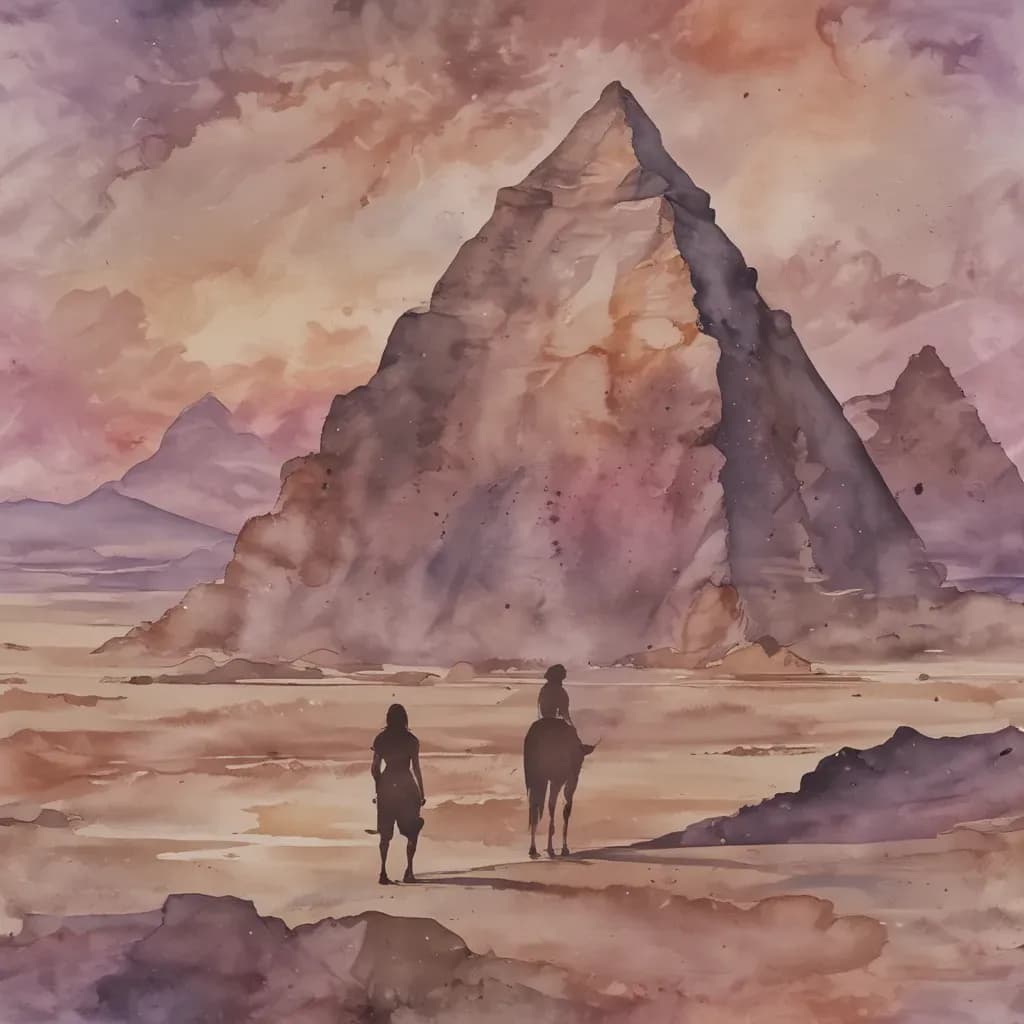
The title's logic is both simple and precise. Keem is not announcing incompetence. He is announcing a different set of values. In the song, he frames his identity in opposition to the idea of the master craftsman of words, drawing a contrast between technical impossibility and durable ambition. The image he reaches for is not of moving mountains but of aiming for the pyramids instead. It is the difference between the impossible and the enduring.[3][4]
This framing sits at an interesting angle to hip-hop tradition. The culture has always celebrated technical mastery as a sign of intelligence and dedication. Battle rap, the mixtape circuit, the critical ranking systems that pervade music journalism: all of them ultimately prize the ability to do more with language than a civilian could. Keem is stepping away from that contest entirely. He is here, as he puts it, not to play with words but to be heard.[4]
He delivers this message without irony. He positions himself explicitly as someone outside the established rules, working without a fixed inheritance, finding his way by trial rather than tradition.[4] This is not humility; it is a reorientation of purpose. The goal is not mastery. The goal is testimony.
The Ruins of a Las Vegas Childhood
The body of the song is autobiographical in the rawest possible sense. Keem traces a childhood shaped by deprivation: poverty, food insecurity, absent parental figures, and exposure to addiction from the earliest years. He addresses the experience of entering the foster care system, a subject he had not discussed in previous work with this level of directness.[5][6]
Las Vegas, as he describes it, is not the strip. It is the city that surrounds and enables the strip. The casino is a machine that extracts from people who can least afford to give, and Keem watched that extraction operate on his own family. His mother's struggles with alcohol and gambling are addressed not with bitterness but with grief and explanation.[2][7]
The album's title does double duty throughout the project, but "I Am Not a Lyricist" is where the metaphor becomes most personal. The city fed the addiction, the addiction fed the chaos, and the chaos produced the artist. He is not blaming Las Vegas to avoid accountability; he is naming the environmental conditions that shaped everything that followed.[8]
Critics noted the song's ability to render poverty and addiction not as spectacle but as the ambient texture of a childhood, a haunted picture assembled from specific, verifiable memories.[6] The Harvard Crimson described it as "his most well-crafted and introspective track to date," arguing that the personal details it contains are precisely the kind that cannot be and should not be dressed up with metaphors and polished penmanship.[5] The rawness, in other words, was the point.
Structure as Statement
The song's formal construction reinforces its meaning in ways that are easy to overlook. Keem and his co-producers built the track around samples drawn from three distinct sources: Dimitra Galani's Greek-language recording "Tha S' Agapo," Ralph Vargas and Carlos Bess's "CB#5," and The Joneses' "Please Let Me Stay."[9] These are not obvious choices for a hip-hop track. They suggest a palette assembled for emotional texture rather than brand recognition, voices and melodies from other traditions of longing and loss, stitched together beneath a personal confession.
Structurally, the track unfolds in an unusual sequence. Keem performs a portion of the song live, the recording then takes over, and the track closes with a spoken-word monologue that reviewers found striking for its deliberate, interior quality. Some compared it to the introspective cadences of OutKast's Andre 3000.[10] The Needle Drop heard a different lineage, placing the closing section closer to the reflective mode of Kendrick Lamar's Section.80 era.[11]
This layered construction, moving from sampled material to live delivery to recorded performance to spoken reflection, mirrors the song's central argument. "I Am Not a Lyricist" is not built the way a lyricist's showcase would be. It is organized the way a memory works: associatively, by feeling, with the logic of experience rather than the logic of craft.
The Lamar Question
No discussion of Baby Keem can completely sidestep his relationship with Kendrick Lamar, and that relationship casts a particular light on this song's title. Lamar is, by almost any measure, the preeminent lyricist of his generation. He is also Keem's older cousin and the co-founder of pgLang, the creative company that signed Keem and shaped his public debut.[1]
For Keem to declare on the sixth track of his sophomore album that he is not a lyricist is to name the obvious thing everyone has been thinking and to refuse to pretend it does not exist. He is not competing with Lamar. He never was. What he is doing is different, and this song is his most explicit articulation of what that difference actually means.
NME's review of Ca$ino argued that the album represented Keem finally stepping out of Lamar's shadow, becoming a "fully formed artist in his own right."[7] "I Am Not a Lyricist" is the track where that argument is most audible. The song does not aspire to the density of a Kendrick verse. It aspires to the openness of a personal testimony, and in doing so, it achieves something Keem had not previously managed: a voice that sounds entirely his own.
What Critics Heard
The critical response to "I Am Not a Lyricist" was, with notable consistency, enthusiastic. The Line of Best Fit called it the album's "centerpiece" and described it, with some irony, as the high point of Keem's lyrical evolution, noting that he weaves together childhood stories at such a relentless pace that there is an almost childlike bewilderment in his performance as he reconciles and reflects.[8] Rolling Stone included it among the project's strongest moments.[12] The Needle Drop, which gave the full album a seven out of ten, specifically highlighted this track as evidence of Keem maturing as a storyteller.[11]
What is significant about this consensus is that it emerged despite, and arguably because of, the song's insistence on simplicity. The usual tools of hip-hop critical praise, technical complexity, wordplay density, structural sophistication, are precisely what Keem disclaims. Yet critics heard something more valuable: honesty delivered with enough specificity to feel genuinely witnessed. At Metacritic, Ca$ino accumulated a score of 73 out of 100, suggesting that the album's emotional directness translated broadly across listeners with very different critical frameworks.[3]
The Paradox of the Title
There is a paradox buried in the song's title that becomes more visible the longer you sit with it. The very act of naming what you are not is a form of precision. It requires self-knowledge. It requires the ability to place yourself in relation to a tradition and to articulate your position within it. That is, in a meaningful sense, exactly what the best lyricists do.
Baby Keem is not a lyricist in the way Kendrick Lamar is a lyricist. He knows it, and he has written a song to say so. In that song, he describes foster care and addiction and poverty and loss with enough clarity that the details stay with you after the music ends. Whether or not that qualifies as lyricism depends less on the definition than on the listener. The pyramids, it turns out, are still standing.
References
- Baby Keem - Wikipedia — Biographical overview, career milestones, Grammy win, Billboard chart positions
- Baby Keem on the Making of Ca$ino (Vice) — Keem discusses Las Vegas, his mother's addiction, and the real-life origins of Ca$ino
- MTSU Sidelines - Ca$ino Album Review — Review noting Keem's artistic manifesto framing and 'aimed for the pyramids' concept
- Stay Free Radio - I Am Not a Lyricist Meaning and Review — Song-level analysis of the anti-lyricist stance and Keem's prioritization of voice over wordplay
- The Harvard Crimson - Ca$ino Review — Called 'I Am Not a Lyricist' Keem's most introspective track; analyzed the rawness as intentional artistic choice
- Modern Music Analysis - Ca$ino Review (Medium) — Praised the song's haunted portrait of poverty and addiction; noted Section.80-era Kendrick influences
- NME - Ca$ino Review — 4/5 stars; argued Keem had stepped out of Lamar's shadow and become a fully formed artist
- The Line of Best Fit - Ca$ino Review — Called 'I Am Not a Lyricist' the album's centerpiece and high point of Keem's lyrical evolution
- WhoSampled - I Am Not a Lyricist — Documents the three samples used: Dimitra Galani, Ralph Vargas/Carlos Bess, and The Joneses
- Rhody Cigar - Ca$ino Review — Noted the spoken-word monologue's Andre 3000-like introspective quality and unusual song structure
- The Needle Drop - Ca$ino Album Review — 7/10; highlighted the track as evidence of storytelling maturity; heard Section.80-era Kendrick influence
- Rolling Stone - Ca$ino Album Review — 3.5/5; included 'I Am Not a Lyricist' among the album's strongest moments