If I'd Known
The question embedded in the title "If I'd Known" is one that arrives for everyone, usually uninvited and usually too late: what would have been different if you had seen what was coming? It is the grammar of regret, the wistful subjunctive of a life examined in reverse. Songs have been exploring this territory since songs existed, which means the field is crowded with wallowing. What distinguishes Kero Kero Bonito's approach is not the question itself but what they do with it. Rather than settling into mourning, they open the frame wider, past the personal and into the cosmic, and find something that lands closer to release than to despair.
A Band Becoming Something Else
"If I'd Known" opens Time 'n' Place, the second studio album by Kero Kero Bonito, the London-based trio of vocalist Sarah Midori Perry and multi-instrumentalists Gus Lobban and Jamie Bulled. Released October 1, 2018, the album arrived as a genuine rupture, both in the band's creative arc and in each of their personal lives.[1]
Their 2016 debut, Bonito Generation, had been deliberately bright and frothy, built on J-pop aesthetics, hyperpop production values, and a sensibility that embraced cheerful absurdism as both a style and a defense. It found an audience that loved its playfulness, but it also established expectations the band would soon find constraining.[2] A transformative tour stop in Jakarta cracked things open. The band began talking about making music without worrying about what they were supposed to sound like.
What followed was a sweeping change in instrumentation and tone. Guitars, live drums, and bass took the center. The production traded digital brightness for distortion, noise, and shoegaze-adjacent textures. The band cited My Bloody Valentine, Mount Eerie, CSS, and Lush as touchstones.[1] An expanded live lineup brought guitarist James Rowland and drummer and sampler Jennifer Walton into the picture for touring.
The shift was not purely aesthetic. It was driven by loss. Perry received a photograph from her brother showing her childhood home in Japan completely demolished, a flat expanse where rooms and memories had once stood. Her primary school also closed. A beloved childhood pet died. She described these events in interviews as the physical traces of her past quietly disappearing one by one.[3] Lobban's father was hospitalized following a serious accident. These events concentrated the band's attention on something specific and uncomfortable: time runs in one direction, and the things you love can vanish without asking permission.[4]
Building the Song
"If I'd Known" was written primarily by Jamie Bulled, with co-writing from Gus Lobban.[1] In commentary shared during a 2021 Twitter Listening Party event for the album, the band disclosed two key creative decisions: the chord progressions were informed by Randy Newman, and the opening scream was modeled on Prince.[5]
Both choices repay attention. Newman's songwriting tends to operate through a studied simplicity, chord structures that sound warm and direct on first encounter but carry a quiet, bruised intelligence underneath. Prince's scream, by contrast, is pure physical release, the sound of someone giving over entirely to the body's response to something that overwhelms the mind. That these two reference points coexist in one song tells you something about what the song is trying to hold.
The track also marks a personal first: it contains Bulled's first rap verse on a Kero Kero Bonito recording. He described the composition process as difficult and ultimately impulsive. After working through multiple failed drafts, he recorded the verse in a single urgent pass, almost angrily, with a friend sitting quietly in the same room.[6] The finished verse carries that residual pressure. It sounds like someone who has been circling a problem for too long and finally just cuts through it.
The official account of the song's origin grounds it in something ordinary: it was inspired by the band members' frequent indecision.[1] That is the emotional seed, not a single dramatic choice made badly but the low-grade chronic anxiety of not knowing whether any given decision is the right one. The song grows something large from that small, recognizable feeling.
Regret Meets the Multiverse
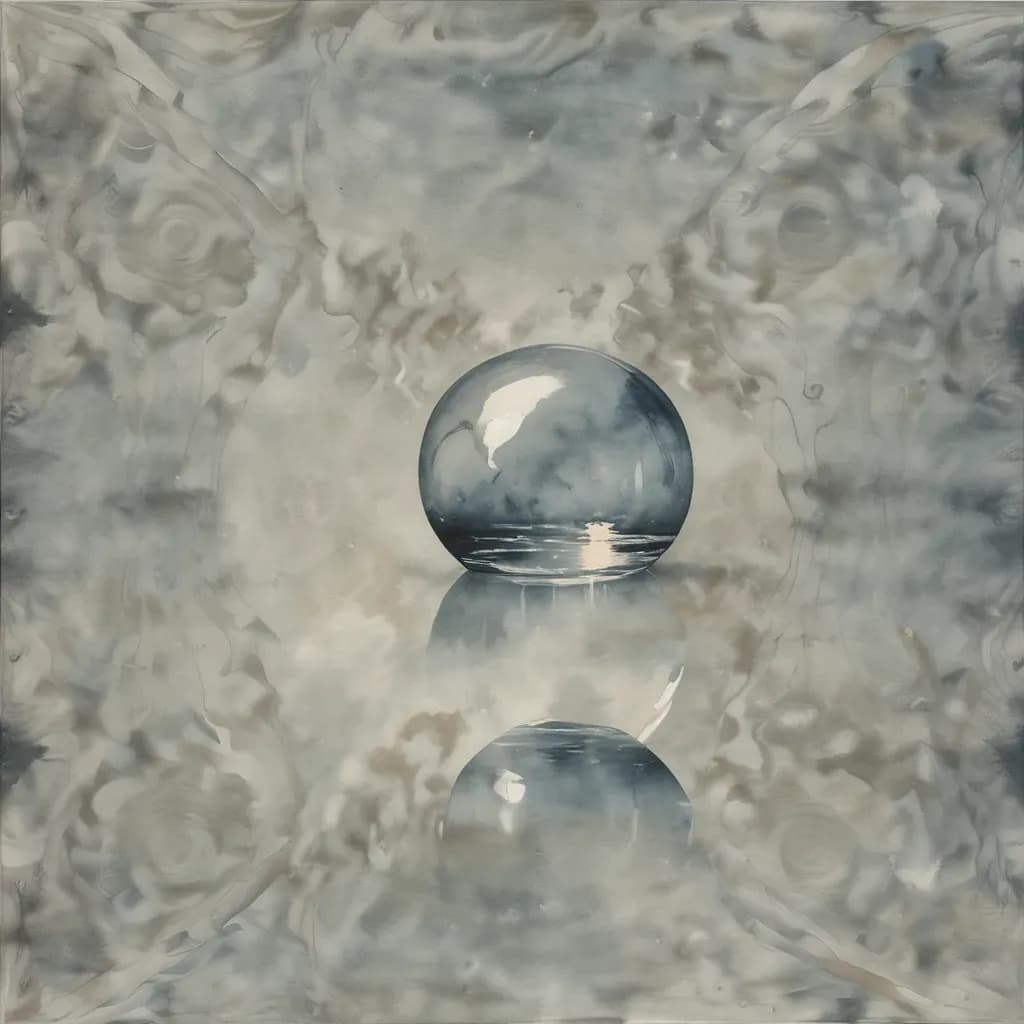
Most songs about regret operate within a single timeline: the life you have, and the life you imagine you might have had if you had chosen differently. "If I'd Known" refuses that binary. It reaches instead toward multiverse theory, the idea drawn from quantum physics and speculative philosophy that all possible outcomes of any decision may exist simultaneously across parallel realities.[7]
This is a genuinely unusual framework for a pop song. But the band uses it not as a conceptual trick but as emotional work. If every version of events exists somewhere, then the narrator has not simply lost the other path. In some sense, they are on it. The life where things went differently is not a fantasy; it is another branch of the same tree.[7]
Analysts have described the song's arc as moving from the recognizable ache of regret toward something closer to acceptance, even serenity. The logic is counterintuitive: if all possible outcomes are real, then the pressure to have chosen correctly is released. You cannot have missed the right path if every path exists. This is not comfort in the easy sense. It is something stranger, a reframing of loss that does not deny the pain but places it inside a structure large enough to contain it.[7]
The song's closing emotional position is one of interconnectedness rather than isolation. The narrator arrives at a place of feeling all possible worlds simultaneously, described not as overwhelming but as something like peace.[7] It is a resolution arrived at through physics rather than spirituality, which is very much a Kero Kero Bonito move.
Sound Supporting Meaning
Musically, the song places its philosophical content inside a deceptively accessible arrangement. The Randy Newman harmonic influence shows in the chord writing: warm and direct, with a folk-like quality that offsets the conceptual weight of what the narrator is working through.[5] The Prince-inspired scream at the opening signals that the emotional register here is not cool or detached. This is someone genuinely grappling with something.
As an album opener, the song carries particular weight. By beginning Time 'n' Place with a meditation on indecision and alternate realities rather than an immediate hook or emotional payoff, the band signals what kind of record this will be. The listener is invited not simply to be entertained but to think alongside the artists about something difficult.
The album performed strongly on release, debuting at number one on Billboard's Heatseeker Albums chart, reaching sixth on Independent Albums, and placing fifth on Vinyl Albums.[1] Anthony Fantano and Exclaim! both gave it scores of eight out of ten.[8] For a band that had pivoted this dramatically from an established sound, that reception suggested the audience was not only ready to follow but grateful for the turn.
A Song for an Uncertain Moment
"If I'd Known" arrived in October 2018, in the middle of Brexit negotiations and a period of sustained collective anxiety in the UK. Lobban addressed this in interviews: the feeling was not only personal grief but something shared, a sense that the future had become genuinely unpredictable and that getting things right felt harder than it should.[3] His characterization of the mood, offered to The FADER, was that things were difficult but that hope for better times remained.
In that context, a song about the impossibility of knowing whether your choices are right, and the possibility that all versions of events exist anyway, resonates beyond the personal. The multiverse framework is not just a clever conceit. It is a way of holding collective anxiety without collapsing into paralysis. If everything plays out somewhere, then the shared feeling of having made wrong choices as a society is not the end of the story.
The band also positioned the album against the logic of streaming-era releases, explicitly designing it as a cohesive artifact with a beginning and an end rather than a playlist of disconnected singles.[4] "If I'd Known" is the door into that artifact. It establishes that the album will not offer easy answers, and it models how to sit with unanswerable questions.
What the Song Leaves Open
There is another way to hear "If I'd Known" that does not require the quantum physics framing at all. At its most personal, the song is about growing older and realizing that the self you are now could not have been predicted by the self you were. The gap between who you were and who you became is precisely the space where regret lives, and the song does not pretend otherwise.
In this reading, the cosmic imagery functions as metaphor: a way of making the scale of personal change feel as vast as it actually is. The fact that the song grew from something as mundane as the band members' frequent indecision keeps it tethered to the ordinary even as it builds outward toward something more expansive.[1] The intellectual and the emotional are not competing here; they are the same thing approached from different angles.
Both readings are available, and the song is spacious enough to hold them. That openness is part of what makes it durable. The listener who wants to trace quantum possibility chains will find that the logic holds. The listener who simply knows what it feels like to wish they had understood something sooner will find that too.
The Gift of Not Knowing
"If I'd Known" does not answer its own question. It cannot. The nature of the question is that it has no answer: you cannot know what you would have done differently, because you could not have known what was coming. The song's move is to transform the question rather than answer it. Instead of asking what would have changed, it asks what it means that all changes might already be happening, somewhere, in some version of the world you inhabit.
Kero Kero Bonito arrives at this through Randy Newman chords and a Prince scream and a rap verse that sounds like it was written under pressure by someone who had run out of other options. The emotional and the conceptual work together, and what they build is not a resolution but a kind of spaciousness: room to feel the loss without being crushed by it.
Opening an album about impermanence and grief with an act of radical acceptance framed as a question is a bold choice. It works because the acceptance is hard-won, audible in the production, and honest about what it costs. The song knows what it is letting go of. That is what makes the letting go mean something.
References
- Time 'n' Place - Wikipedia — Primary reference for album credits, song co-writing attribution, chart performance, and the note that the song was inspired by frequent indecision
- Kero Kero Bonito - Wikipedia — Band formation, biographical background, and career arc from Bonito Generation through Time 'n' Place
- Kero Kero Bonito Interview - The FADER (October 2018) — Sarah Perry on her demolished childhood home and the physical disappearance of her past; Lobban on the broader cultural moment and remaining hopeful
- Kero Kero Bonito Interview - KEXP (January 2019) — Band discussing Lobban's father's accident, the Jakarta tour catalyst, and the album's design as a cohesive artifact against playlist culture
- Kero Kero Bonito Twitter Listening Party - Randy Newman and Prince influences — Official band tweet confirming the Randy Newman chord influence and Prince-inspired opening scream in 'If I'd Known'
- Kero Kero Bonito Twitter Listening Party - Jamie's first rap — Official band tweet and Jamie Bulled's own words about recording his first rap verse on a KKB track in one frustrated, impulsive take
- If I'd Known - Song Meanings and Facts — Thematic analysis of the song's use of multiverse theory and its arc from regret toward zen-like acceptance
- Time 'n' Place - Album of the Year (aggregated reviews) — Aggregated critical reception including Anthony Fantano and Exclaim! scores