If The World Is At War We Better Not Be
Some songs announce a thesis. This one begins with a boy in a schoolyard, waiting for something he cannot yet name. Midway through U2's Carnaval De Luz, the band stops the carnival to look back at where it all started, in a Dublin secondary school in 1976, and asks what that beginning has to say to a world that seems to be coming apart.[1][2]
The title is a conditional: if the world is at war, then something follows. The sentence is left hanging as a kind of moral dare. It is a quiet, strange, searching song, and a reviewer or two have called it a minor one. It is also the place where the album's politics and its faith meet most directly.
Where it sits on the record
The song is the sixth of twelve tracks on U2's sixteenth studio album, their first full set of new songs in nine years, released on November 13, 2026 as the band marked fifty years together.[1][3] It works as a hinge between Side A and Side B, and it flows straight into the track that follows, "Silencio."[3]
That placement shapes how it sounds. Coming after the dance-floor energy of the album's carnival songs, it slows the pulse and turns inward. One reviewer hears it as closer to an interlude than a full statement, and ranks it last among the twelve.[3] Another hears a terrific song that grows into something sublime.[2] The disagreement is part of the story: the track is built to be a pause, and a pause can be heard as either a lull or a deep breath.
Back to the schoolyard
According to The Guardian's review, the song opens with Bono recalling the band's beginnings at Mount Temple school in Dublin, where Larry Mullen Jr. pinned his notice on a board in 1976.[2] The image is of adolescence as a state of waiting, a young person standing at the edge of a crowd and sensing that some force is about to arrive.
Another critic hears the same opening as a memory of discovering rock and roll, and of how much that discovery mattered to a teenager.[3] The two readings are compatible. For Bono, the band and the music were the thing that arrived, and the song treats that arrival with some tenderness.
The echo of earlier albums is deliberate. Reviewers connect the mood to the Songs of Innocence and Songs of Experience period, when U2 began to write openly about childhood, Dublin and mortality.[3] Here the autobiography is shorter and more compressed, but the instinct is the same: to answer a frightening present by remembering the first friendships that made a life possible.
A shelter from division
Why dwell on the past in a song with this title? The Guardian's reading is that the friendships formed in that schoolyard stand as a kind of shelter from division.[2] The bonds of four teenagers who found each other are offered as proof that people can build a durable common life out of very different backgrounds and temperaments.
That claim is more pointed than it first appears. U2 is a band whose members have stayed together for half a century through arguments, tragedies and fashions. To mention that longevity in a song about war is to suggest an answer to the title's dare: whatever the world does, we can at least decline to be enemies of the people next to us.
The phrasing of the title carries this. It is not a prediction about armies. It reads as a statement about how the speaker intends to behave if the larger world goes wrong. If the outer conflict is real, the song says, the inner and personal one is optional, and we have a say in it.
Faith without certainty
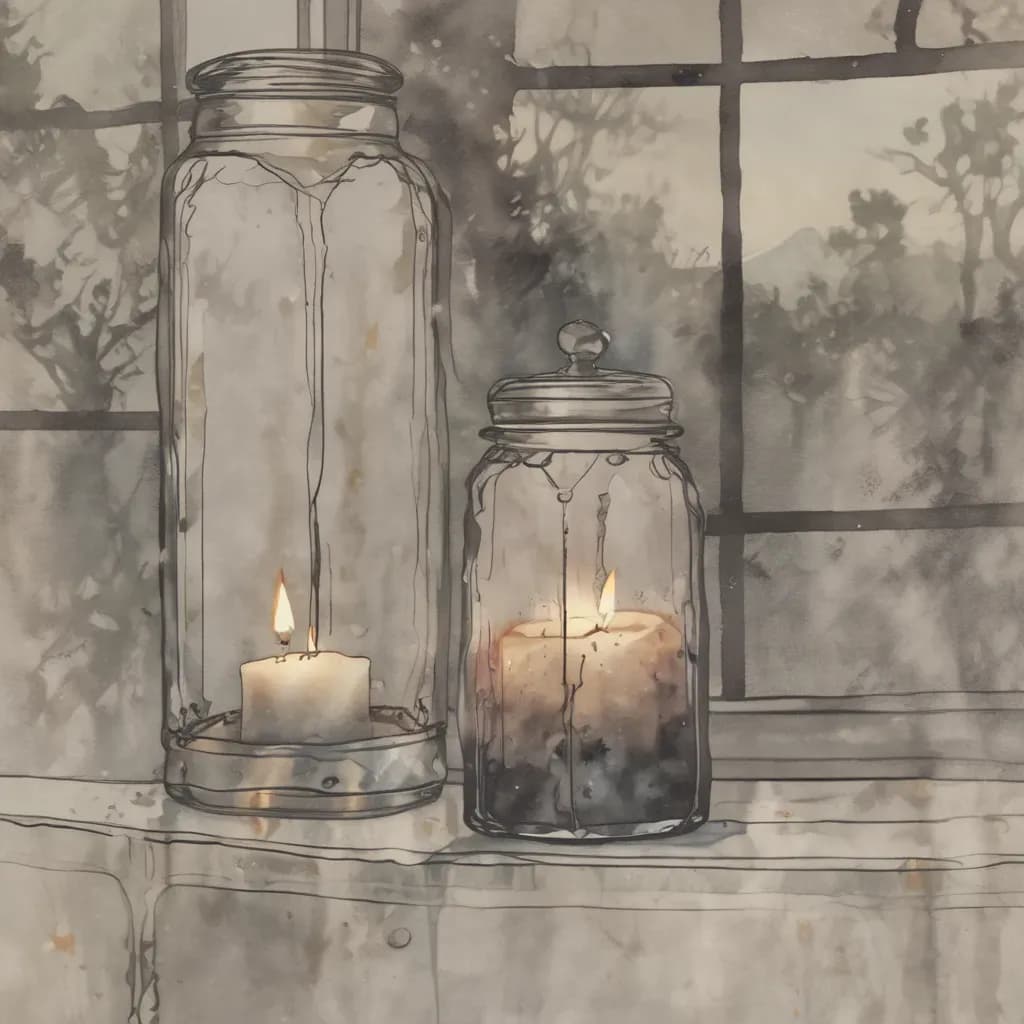
The song's second movement turns to belief. The Guardian calls it a sublime reflection on faith and on the preciousness of ordinary lives.[2] The writer of Vinyl Theology goes further and hears Bono giving his own translation of the opening of the Gospel of John, in which light enters the dark and the dark cannot extinguish it.[5]
A third reviewer notes that the closing lines concede there is no such thing as certainty, then sing anyway without doubt, and end on that same image of a light that stays lit.[3] The structure matters. The song does not claim to know that things will turn out well. It admits uncertainty in plain terms and then chooses commitment, which is a more honest form of hope than confidence would be.
That posture fits the album's wider design. Bono has described Carnaval De Luz as a messy, provocative, sacred collection of songs, and Vinyl Theology suggests two spiritual realities run through it, the second being that everyone can help the light break through.[5] In that framing this song is the quiet thesis, spoken softly between two louder movements.
The devil and the stage whisper
The Irish Times track-by-track guide gives a rather different angle. In it Bono says he surprised himself with how gothic the song became, and describes a journey from his old school to the devil.[1] He offers a brisk piece of advice about that figure: do not fear him, because mockery sends him running.[1]
The guide also contains a notable bit of theology. Bono says he finds it easier than many of his friends to believe that a force of love and logic stands behind the universe, a love that he says could appear as a child born into poverty. He is far slower, by his own account, to accept evil as a real power, and slower still to accept that people can serve darkness without knowing it.[1] He adds that evil now seems to operate much more in the open, which has forced him to change his mind.[1]
He ties this to Mikhail Bulgakov's novel The Master and Margarita, whose central idea, as he takes it, is that the devil does his best work when nobody believes he exists.[1] Finally he says there is a level of darkness in the world too heavy to carry, and that we are not meant to carry it.[1]
That last remark is the key to the song's tone. The response to overwhelming evil is neither despair nor bravado. It is a refusal to be crushed, a decision to let the light be the thing one holds. Bono's mention of a sacred site surrounded by barbed wire in the same passage shows what he is thinking about: real places and real wars, and the way holy ground can itself be fenced and threatened.[1]
Politics at one remove
Carnaval De Luz is widely described as a political record, one that sets its songs against cynicism, uses Spanish prominently and responds to the climate in the United States.[4][5] This track does not name any country, leader or conflict. That restraint is a choice, and probably a wise one, since the song's argument is about posture rather than policy.
The Spectrum Culture review is less taken with it. Its critic counts the track among the album's weakest moments, calling it a maudlin piece of historiography, and argues that Bono gets in the band's way when the words take over.[4] It is a fair objection. A song that reaches for large meaning from a small autobiographical moment can feel self-regarding, especially from a band that has spent decades being accused of exactly that.
The counterargument is that the self-regard is the subject. U2 has always been a band that tells its own story as a parable, and at fifty years in, the parable has earned some leeway. The people most likely to be moved by a song about a schoolyard and a friendship are those who have lived long enough to have one.
Other ways to hear it
One reading is nostalgic and affectionate: a birthday song for a band, a thank-you to the three people Bono started with. On this view the war in the title is background noise, and the real story is how rare it is for friendships to survive fame.
A second reading is devotional. The light-in-the-dark closing and the talk of the devil make it a small hymn, a statement of faith that pairs well with the scriptural passage on overcoming evil with good that Vinyl Theology links to it.[5] Here the song is not about nostalgia at all. It is about what to do in a world that tempts us toward cynicism.
A third reading is the sharpest: that the conditional is a warning. If the world is at war, we had better not be, because a divided band, family or country gives the war its easiest victory. The title becomes an instruction, and the schoolyard memory becomes evidence that the instruction can be followed.
Why it matters
The song is modest, and its modesty is the point. Most protest songs shout. This one recalls a playground and a first guitar, then asks the listener to hold a candle. It will not be the track people name when they list the album's highlights, and one critic placed it last of all.[3]
Yet it carries the album's central wager: that joy, friendship and faith are not escapes from political reality but forms of resistance to it. A carnival, in the tradition U2 is borrowing, is a time when the rules of power are briefly turned upside down. In that spirit, a song about refusing to be at war with each other is not naive. It is an old, serious tradition made small enough to fit in a pause between two sides of a record.
Whether it works for you may depend on how you take sincerity. Heard as a plain statement, it is moving. Heard through suspicion, it can feel slight. Either way it makes its case without volume, in a band's own memory and a few stubborn words about light, and that is a more difficult thing to do than it sounds.
References
Keep reading
More by U2
More Rock
- Sad-Eyed Lady of the Lowlands Bob Dylan
- Just Like a Woman Bob Dylan
- My Generation The Who
- Lake Ontario Bryan Adams
- Midnight Sunshine U2
- Can't Stop Us Now U2